Wednesday, May 18, 2016

The Children of Easter 1916- A Moment In History…


At the corner of Varner Street and East Main Street, forming a wedge in front of Phil Larkin’s old beige-bricked high school, ancient Carver High School now of blessed memory stands against all weathers a poled plaque, sometimes, perhaps, garlanded with a flower or flag. From that vantage point, upon a recent walk-by, he had noticed that it gave the old building a majestic “mighty fortress is our home” look. The plaque atop the pole, as you have probably already figured since such plaques are not uncommon in our casualty-filled, war-weary world, commemorated a fallen soldier, here of World War I, and is officially known as Frank O’Brien Square. The corners and squares of most cities and towns in most countries of the world have such memorials to their war dead, needless to say far too many.


That plaque furthermore now competes, unsuccessfully, with a huge Raider red billboard telling one and all of the latest doings; a football game here, a soccer game there, or upcoming events; a Ms. Something pageant, a cheer-leading contest, a locally produced play; or honoring somebody who gathered some grand academic achievement, won some accolade for a well-performed act and so forth. In due course that billboard too will be relegated to the “vaults" of the history of the town as well. This comment , however, is not about that possible scenario or about the follies of war, or even about why it is that young men (and now women) wind up doing the dangerous work of war that is decided by old men (and now increasingly old women), although that would be a worthy subject. No, the focus here is the name of the soldier, or rather the last name, O’Brien, and the Irish-ness of it.


A quick run through of the names of the students listed in Phil’s high school yearbook would illustrate his point. If Irish surnames were not in the majority, then they were predominant, and that did not even take into consideration the half or quarter Irish heritage that was hidden behind other names. His own family history was representative of that social mixing with a set of Irish and English-derived grandparents.  


If Carver in the old days was not exactly “Little Dublin”, the heritage of the Irish diaspora certainly was nevertheless apparent for all to see, and to hear. More than one brogue-dripped man or woman, reflecting newness to the country and to the town, could be heard by an attentive listener at Harry’s Variety Store on Sagamore Street making that bet with Harry’s book on the sure-fire winner in the sixth at Aqueduct but we will keep that hush since, who knows, the statute of limitations may still not have run out yet on that “crime,” although the horse certainly did, run out that is. Or at Doc Andrews’ Drugstore, yah, good old Doc over on the corner of Young Street and Newberry seeking, holy grail-seeking that vagrant bottle of whiskey, strictly for medicinal purposes of course.


And one did not have to be the slightest bit attentive but only within a couple of blocks of the locally famous, or infamous as the case may be, Dublin Grille to know through the mixes of brogue and rough-hewn strange language English that the newcomers had “assimilated.” To be fair, those same mixes could be heard coming piously out of Sunday morning Mass at Sacred Heart or at any hour on those gas-guzzling, smoked-fumed buses that got one hither and fro in the old town. That Carver was merely a way-station away from the self-contained Irish ghettos of Dorchester and South Boston to the Irish Rivieras, like Marshfield and heathen Cohasset and Duxbury, of the area was, or rather is, also apparent as anyone who has been in the old town of late will note.


Today Asian-Americans, particularly Chinese and Vietnamese, and other minorities have followed that well-trodden path to Carver from way-station Boston. They have made, and will make, their mark on the ethos of this hard-working working-class part of town. So while the faint aroma of corn beef and cabbage has been replaced by the pungent smells of moo shi and poi and the bucolic brogue by some sweet sing-song Mandarin dialect the life of the town moves on.


Yet, Phil could still feel, when he haphazardly walked certain streets, the Irish-ness of the diaspora “old sod” deep in his bones. To be sure, as a broken amber liquor bottle spotted on the ground reminded him, there were many, too many, father whiskey-sodden nights that many a man spent his pay on to keep his “demons” from the door. And to be sure, as well, the grandmother, Grandmother Riley in his case, passed-down ubiquitous, much dented, one-size-fits all pot on the old iron stove for the potato-laden boiled dinner (that’s the corn beef and cabbage mentioned above for the unknowing heathens) that stretched an already tight food budget just a little longer when the ever present hard times cast their shadow at that same door.


And, of course, there was the great secret cultural relic; the relentless, never-ending struggle to keep the family “dirty linen” from the public eye, from those “shawlie” eyes ready to pounce at the mere hint of some secret scandal. But also this: the passed down heroic tales of our forebears, the sons and daughters of Roisin, in their heart-rending eight hundred year struggle against the crushing of the “harp beneath the crown” (and even heathens know whose crown that was); of the whispered homages to the ghosts of the Fenian dead; of great General Post Office uprisings, large and small; and, of the continuing struggle in the North. Yes, as that soldier’s plaque symbolizes, an Irish presence will never completely leave the old town, nor will the willingness to sacrifice.


Oh, by the way, that Frank O'Brien for whom the square in front of the old school was named, would have been Phil’s grand uncle, the brother of his Grandmother Riley (nee O'Brien) from over on Young Street, over by the cranberry bogs.
The “Taming” Of The West-Not-Paul Newman’s Hombre-A Film Review


DVD Review

 By Sam Lowell

Hombre, starring Paul Newman, Barbra Rush, Frederic March, Martin Balsam, directed by Martin Ritt, 1967     

When I was growing up in the black and white in more ways than one 1950s “golden age” of the cowboy sagas that festooned the television airways “the only good Injun was a dead one.” Except maybe the sullen closed mouth Tonto but he was sidekick to the Lone Ranger and so that didn’t count. Of course in the wake of the 1960s and 1970s when all kinds of identity groups emerged I, we, some of us anyway, began to get a better idea of what really happened when the white man and woman went to “tame the West” back in the post-Civil War 1800s. Got a better idea about how the Indians, Native Americans, indigenous peoples, take your identifying pick, got the short end of the stick in about twenty different ways when the whites wanted the land, their land, wanted it anyway they could get it. In that sense a film like the one under review, Hombre, couldn’t have been successfully made in say 1955 but could in the late 1960s although even then as this film demonstrates the Native Americans still seemed to be view to be outsiders, as nothing but trouble. 

In the big battles between whites and Native Americans during the late 19th century there were plenty of atrocities on both sides. No question, John Russell, El hombre, played by very blue-eyed white-bread Paul Newman, had been affected by that savagery and by the closing down of Native American hunter-gatherer life literally with a bang (somebody put it very succinctly, somebody in the Bureau of Indian Affairs, or with an ear into that agency-assimilation or extermination, they tried both in policies that sound very familiar to early 21st century ears). He had been captured by an Apache raiding party and had lived among them in his formative years, went back with them too when he grew to manhood although he had been previously raised by a white man, John Russell, who gave him his name. When old man Russell died he left his hotel (a hotel of sorts, a few rooms out in the godforsaken blanched desert) in Arizona to young John. John didn’t want it and decided to sell it for a herd of horses (his profession having been providing wild horses tamed to the stage coach company). To do the deal he needed to get to another town and fatefully wound up taking a stagecoach ride with assorted passengers, a rogue’s gallery of Western misfits and outcasts.

The most important passengers though were an Indian agent (played by weasely Frederic March) and a desperado (played by surly rough-hewn and humored Richard Boone). Two peas in pod. Why? Well the Indian agent was honorably “skimming” government funds supposed to go to the reservation Indians in his charge. Nice, right. The desperado because he knew that the Indian agent was skimming and was nothing but a bad ass bandito. In an isolated desolate area near the desert Mister Desperado and his confederates staged a hold-up figuring to grab the saddle-bags full of dough and let the passengers fend for themselves. But the best laid plans of mice and men sometimes go awry. Especially when a sullen half-breed like Johnny boy decided that the dough should go back to those hungry Native Americans on that stinking reservation.

John Russell, sullen and alienated Johnny okay, listened to his own drummer so rather than letting the banditos grab the dough he shot a couple of them dead, grabbed the loot and was ready to head for the hills on his own. Problem: these white gabachos, this motley crew of misfits and outcasts, who sneered at him and had forced the stagecoach driver to have him ride outside the coach, started following  him figuring he knew the way back to civilization, or to some place. He relented and let himself lead them back toward where they had started from.

But see although Johnny had killed without a thought those two banditos, Mister Desperado and a couple of his henchmen were still at large-with horses and water. So John lead them back to an old abandoned mining camp they had previously passed. As they rested Mister Desperado and his ilk came tumbling after them boxing them in with no safe from his guns place to go. The idea Mister Desperado had was to force them out using the wife of the Indian agent whom they had taken as hostage as bait.

Well one John Russell might have hated the white man for what he did to people who had been in the West long before them, might have listened to his own drummer on all important matters but when the deal went down John Russell honorably went down the hill for the inevitable shoot-out with the bad guys. Yeah, very blue-eyed John Russell, RIP. In its day this one broke away from the normal conventions about the taming of the West-about the hoary cowboy and Injun sagas I had grown up on. Forty years later there is plenty wrong with the story line but it had some high moments of drama and pathos. Enough said.                     

Tuesday, May 17, 2016


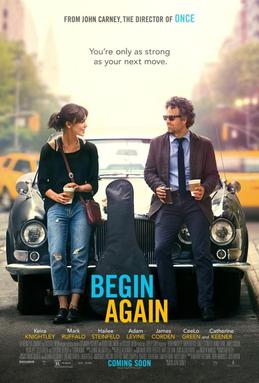
When The Muses Beckon-With Keira Knightley And Mark Ruffalo’s Begin Again In Mind


DVD Review

By Sam Lowell

Begin Again, starring Keira Knightley, Mark Ruffalo, 2013    


No question, as I am personally very well aware of, trying to break into the record business (I know, I know records, vinyl, although making a come-back of sorts are so, well, yesterday) is a hard dollar, a very hard dollar. As it turns out after a look see at this film under review, Begin Again, not only breaking into the record industry as a singer-song-writer is difficult but being an “idea” guy is too. Staying on top might just be harder for a guy who can spot the “next big thing,” the next big sound, the next million plus seller to keep the coffers of the record company filled. Those two themes are at the heart of this movie about the big breaks and bad falls inherent in such an unstable industry based on catering such an esoteric subject as musical tastes-and surviving. Of course this one is latched together with plenty of wry comedy and pathos but the main point in well taken. Luck is good, luck is probably necessary, you know being in the right place at the right time, for example sitting in some coffeehouse in the Village in 1960 just as the vaunted “folk minute” crept up an bit the young before settling back into its now greying demographic niche. But you better have that idea, that sound “wired” that new thing whatever luck you may have or you are cooked.     

Here is how this one played out. Dan, played by Mark Ruffalo, a guy who built the record company he was at by being the big idea guy, being on top of what people, some segment of people anyway, wanted to hear by “hearing” something in his head had been for lots of reason including the break-up of his family life and serious drug and alcohol dependency having a rather long dry spell between “hits” of talent-spotting. Got canned for that, got canned from his own creation once the bottom line trumped creative genius, and other reasons.

So Dan was like a lot of guys and gals who are in such a situation desperate to break out, to find that next best thing-again. One night he was in a bar drinking, heavily drinking to be kind, during an “open mic” when he heard this female singer, hears this lovely English young woman, Gretta, played by Kiera Knightley, playing this mournful tune that the audience was going to sleep over. But to Dan this voice and basic was to be  his next big thing, his comeback trail all a-blazing. His ticket back to the top. (Frankly hearing both the “open mic” version of the song Gretta played on stage and the one Dan “heard” in his head left me dry but maybe I am still too attached to the rock, folk rock, rock and roll of my youth to catch what today ‘s youthful ears might groove on.)     

Problem: Kara was getting ready to blow town after a painful and difficult break-up with her lover-musical partner Don, played by The Voice’s Adam Levine, an up and coming singer, who had blown town for the Coast the with some honey from his record company. Had let some success go to his head, had gone “commercial”, meaning over-produced material, meaning elevator “musak” down the road. So Dan got a “No sale.” Well not “no sale” really once our boy Dan went to work on his concept, his no money, since he had none, big idea concept for her. She bit, bit big time once she got herself committed to the concept, the idea of producing a demo au natural, using New York City and its sounds as backdrop to her songs.

Along the way we get a glimpse at why Dan had been a king hell idea guy. But we also see why his family life busted up and why Gretta was still busted up about her relationship with Don. Although in the end Dan got back with his family and Gretta, gave Don the air after he “flunked” her test about doing her song in a folksy way not the over-produced fluff the record company had talked him into.

You probably won’t get many suggestions about how to break into the music business (if you don’t make it on The Voice, let’s say) from this one but I would point out to you the fate of the guy, the English guy, who befriended Kara when Adam broke up with her, a guy who spent his life singing on lonely street corners near the subway entrances in New York City. That unfortunately is the fate of many very talented, and not so talented, musicians who don’t get on somebody in the industry’s radar. Nice in the end “feel good” film though.     

Monday, May 16, 2016

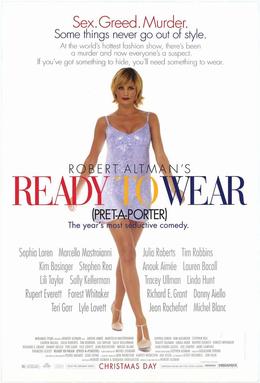
Ain’t No Fashionista Corner Boy-With Robert Altman‘s Ready To Wear In Mind   


DVD Review


By Sam Lowell


Ready To Wear, starring Sophia Loren, Marcel Marstrioanni and a cast of cameo performances by young and old actors, models, designers and assorted hangers-on, directed by Robert Altman, 1994    


Hey, I ain’t no haute couture guy, I ain’t no fashionista. Don’t give a damn about Pret-a-Porter or Seventh Avenue. Only time I was on that latter street was to score some righteous dope from a foxy ready to wear model that a friend of mine knew and who was foxy in other ways too. Hell growing up I was into flannel shirts (brown checkered ones), black chino pants, uncuffed, cool in my circle then as against nerds who wore cuffed pants if you can believe that, clunky work boots and midnight sunglasses wore especially after midnight. Not much more differently than I am attired these days except when for professional reason I suit up with the rest of the nine to five crowd.


Yeah, I was a faux “beat” guy, emulating Alan Ginsberg, Jack Kerouac and the crowd a little after their time but before the “hippie” garb of my own generation took hold. That garb of mine which drew mostly weird stares in high school and few dates from girls except the ones who wore all black and were as alienated as I was, would translate not too badly in the later counter-cultural “fashion” statement. A time when lots of off-beat stuff got a reprieve for a moment before the world went back to business as usual and us, most of us with it.


So that is the sum of my fashion statement. Except I know what I like, know what I like when it comes to movies, you know films, and so if I see the name director Robert Altman attached to a film then I am in for a look almost despite the subject matter. Despite the fact that this film, Ready to Wear something of an oxymoron if you ask me if you looking even as a goof into the world of high fashion, deals exclusively with the going and coming during the annual Paris fashion week.           


The fact of the matter was in grabbing this one an all-star cast, an ensemble all-star cast as was Altman’s favorite way to address some subject he was interested all the way back to his classic Nashville and before, also made me inquisitive. Such old (okay, okay mature) stars as Sophia Loren and Marcello Mastrioanni as head-liners, young ones like Tim Robbins and Julia Roberts early in their careers and a whole who’s who of middle-level Hollywood film names added to the pot. Of course the plot line in this one as in many of Altman’s films (that Nashville again being an early model) is a throw away as he is looking at the foibles of whatever cultural gradient he is taking aim at. An alleged murder of a high ranking bureaucrat in the fashion industry by Marcello raising a “red flag,” a false red flag as it turned out in the end, was the vehicle used by Altman to take a “slice of life” look at the very high end of the fashion industry, the place where price does not matter, is not even mentioned in gentile society as long as people, the right people look in the right way. High fashion has gotten so much play lately, is “in”  with its own series of “reality” television shows showing a candid world how pieces of cloth get turned into, okay, okay beautiful if in some cases off-the-wall clothes.         

Along the way there are many sub-stories, some rather mundane like the wife of a retail buyer’s shopping spree. A few worthy of note like the “race” between three high-powered fashion editors for a well-known fashion magazines over acquiring a certain highly regarded fashion photographer and how he turned the tables on all three, a fling between Tim and Julia who wind up never leaving their hotel room the whole week and watching the thing on television between bouts of love-making, and the various sex-apades of the well-known designers and their consorts and lovers running the gamut from assumed heterosexual love to the well-known gay life epidemic in the industry and everything in between-and outside.     

Of course there was that silly over-riding faux murder plot that was so much hot air but the real star, the real story here is the incredible efforts necessary to produce high end fashion. That and the intense competition among the designers to be the new “next best thing” the thing that women talk about over lunch or at the water cooler although stuff they are very unlikely to buy whether they could afford to or not. This old “beat” flannel shirt, chinos, work boots guy has to admit that while some of the fashions might be over the top some of them are really works of art. This confirmed to me that the trend toward showing fashion trends past and present in art museums is the right move. If you like Robert Altman films or like high fashion this one is for you.  And no I still ain’t no fashionista-okay.      

Sunday, May 15, 2016

Rock And Roll Will Never Die- On Super-DJ Alan Freed Who Made That Possible 

Click on link to a story about the whereabouts of legendary rock and roll DJ Alan Freed:


Frank Jackman comment:


I have made no bones about the fact that I am a child of rock and roll, a generation of ’68 child of rock and roll which meant that I was there at the beginning no matter whether I understood all that was going on culturally with my slightly older brethren who were “hip” to the music or not. I thus have it on good authority that half of what got played out in the early to mid-1950s that laid the groundwork for the rock jailbreak from our parents’ music involved the “godfather,” involved one Alan Freed who played the stuff that we had been craving to hear deep in our subconscious little minds. Oh sure Elvis, oh yes Elvis above all, Chuck, Jerry Lee, Bo, Buddy and a fistful of others including a few, too few women, like Wanda Jackson sung the stuff we were desperate to hear but guys like Alan Freed, no, Alan Freed was the transmission belt, the disc jockey, D.J., who endlessly played those platters until we collapsed. So yeah in 2016 it is nice to hear a story about the man and about him, or rather his ashes, finding some final resting place. Be-bop, be-bop.  


Wednesday, May 11, 2016


One, Two, Three Steps-Strictly Ballroom-A Film Review


DVD Review


By Sam Lowell


Strictly Ballroom, Paul Mercurio, Tara Morice, 1992  


There have been a long line of “feel good” movies that have come out of Hollywood and now out of Australia with the effort under review, Strictly Ballroom, a film dealing with the rigors and stamina necessary to be a successful ballroom dancer, a discipline that from a look at the work ethic portrayed in this film rivals any more overtly recognized athletic endeavor like gymnastics or swimming. A “feel good” movie being one where some problem is overcome during the course of the film involving a struggling person who teams up with another struggling person to overcome some problem and then there is a little off-hand romance to keep the air light. Oh yeah and it helps if in the “feel good” film where a female is involved that the female turns from an unwanted “ugly duckling” into a fetching woman. Under that standard this effort qualifies in spades as a “feel good” movie.     


Here is how it played out. Down Under in Australia Sandy, a second generation ballroom dancer whose star is rising in that rarified world, and who is the great hope of his dance teacher mother and his defeated (by his mother) father who as the film unfolded turned out to have been the great rising star of his generation-except he listened to his own drummer and wound up on cheap street. Sandy faces that same future, it might have been in the DNA, to listen to a different drummer. What was gnawing at Sandy was that he was confined to what had become the same old, same old of ballroom dancing. He wanted to take his dancing to a different level.


Alone comes “ugly duckling” and wannabe big-time dancer Fran who badgers Sandy, against his better judgment at first, to teach her to dance, dance what is in his head winning dance contests be damned. Naturally they “click” first at the dance level, then at the romantic level (as she gets better looking along the way). The key is the Latin beat that white bread Sandy has hidden in him which can be brought out by Latina immigrant Fran, or better her father a master as the Latin specialty -the paseo robles.


Needless to there have to be challenges along the way to “feel good.” Defeat at Fran’s inabilities at first, the demands of Sandy’s mother along with the edicts of the ballroom dancing establishment in Australia to toe the classic line. And then the moment of truth-will Sandy go along with the old school or grab Fran and go for glory if not fame. You can guess the result. See this one if you are feeling blue-and if you are unfamiliar with ballroom dancing as a career. It is fun.     


Sunday, May 8, 2016


Of The Seamy Side Of Human Nature- Tennessee Williams’ The Night Of The Iguana


DVD Review


By Sam Lowell


The Night of the Iguana, starring Richard Burton, Ava Gardner, Deborah Kerr, directed by John Huston, based on the play by Tennessee Williams


Elsewhere in an earlier run through of Tennessee Williams’ plays I noted that he was always interested in taking a peek at the seamy side of human existence, liked to look sometimes I think morbidly, or too closely anyway, at human beings ability to deceive themselves  and to make horrible errors of judgement that will come back to haunt them. The classic case I referred to was Williams’ look at his own foibles disguised as a play in The Glass Menagerie. In the film adaptation of his The Night Of The Iguana John Huston has presented us with another look at the contrast between what we believe we are doing on this good green earth and what we are fake ourselves into believing in order to take that dreaded next step forward each day.  


The protagonist here The Reverend Lawrence Shannon, he of the several generations of gentile clergy now in decline in his branch of the family, played to a tee by Richard Burton in his younger days before the drink got to him and took the edge off of his looks and of his acting ability, is a fallen man of God. A man who has been chased out of his living by a scandal with, well, a younger woman, a very much younger woman, still a very strongly held taboo even today. He finds himself in reduced circumstances acting as a tour guide for a low-rent no frills travel agency down in hot, humid sultry sunny Mexico. His charges this time are a female coterie of varying ages and shapes from a Baptist bible school in Texas. (Heaven help him if those old biddies turn on him as they will, no question). Among those in need of guidance a young budding female, played by Sun Lyon, a niece of the coterie leader whose own hormones are raging strong enough to get Shannon’s raging as well. No good can come of that, no question, nor of his love of the bottle.           


But if we speak of the foibles of humankind we must also speak of redemption, or at least a settling of accounts and so while our good Reverend is tempted by the devil with that young bud he also is ready for salvation-whether he wants it or not. The salvation in the end not coming from a wandering female prophet disguised as an itinerant artist, played by Deborah Kerr but by the devil-may-care widowed owner of a run-down hotel, played by a frothy Ava Gardner, a hotel that Brother Shannon has used previously as a sanctuary/hideaway. While that artist knows what Shannon needs that good widow knows what he wants as they settle into the sunning hotel sun-light (and that artist once again glances as love and spurns it.). By the way if you want to know why Richard Burton in his prime was a sought after actor who knew what to do with his lines, knew how to get everything a writer like Williams and a director like Huston had to offer and why Ava filled many a screen with thoughts of sexual desire, especially in a scene with two young beach boys in the surf below the hotel one midnight, then this is one to watch.       

Wednesday, May 4, 2016

A Guy Has To Do What A Guy Has To Do-With Glenn Ford’s The Big Heat In Mind


By Zack James


Phil Larkin here, Phil Larkin who a lot of you know, and I am not ashamed to admit it like a lot of guy are these days, and gals too, now that they are in the profession, a real hard nose old school private detective. And all that means is, all I mean by that is, that unlike the fluff that you read in the high-priced hard cover so-called crime detection novels and worse on the screen, television or theater take your pick I tell the story straight. Take all the silly romance and intrigue out of what is for real P.Is ordinary to the grindstone work. I’ve told a million stories about my experiences and they are nothing but humdrum; real low-rent missing persons on the lam for some reason; real people trying to hide their assets from banks and loan companies when those institutions come looking for their chattels back, you know the plight of the “repo” man; and real people, real women mostly trying to track down some bum who is behind on his alimony/child support/whatever payments. No sex, drugs and rock and roll, although every seventh year you might get a tumble under the downy billows if some dame is short of cash and pretty please needs some heavy work done. But that is the exception. Yeah stuff that people who live to read crime detection novels and watch such movies for kicks would not believe because it is too much like their own lives but there you have it. I’m off my soap-box now.  

I have never been much for reading, any kind of reading except what I needed to just barely get by in school. Read Dashiell Hammett, Ray Chandler, Mickey Spillane, mostly and re-read them too. More to my liking, more my style ever since I was a kid going Saturday afternoon up to the Strand Theater in Riverdale Square was watching the old time black and white movies, two for matinee, plus a hidden bag of popcorn from Stop & Shop which my mother bought for me to survive those hungry three plus hours (two one and one half films plus intermission to take me to suppertime). Oh sure I like to watch the old time private detective movies too. I never learned much from them about private detection but one, and if you are a film aficionado you will know which I mean and why right off, The Maltese Falcon did teach me something, something I’ve kept with me ever since I first saw the film when I was a kid and then later as a young man, a young cop just starting out (and about five times since then).

I have looked for that lesson in other films that I have watched over the years, one of which I am going to tell you about in a minute but they didn’t come up often. If you know the Maltese Falcon story line bear with me for a minute. If you don’t here is the “skinny” which might just get you hopping to buy it cheap on Amazon or rent it out on Netflix whether you get any “life” lessons out of it or not. This one is about a an average just getting along private dick, Sam Spade, played by Humphrey Bogart who is, or was, every young bud’s idea of a great macho private eye, set the gold standard even if he got twisted up and almost thrown away with the wind before he was done. Sam and his partner, Miles Archer, the late Miles Archer before the film goes too far when he gets knocked off by a party, or parties, unknown got involved with a frail, with this, there is no other way to say it, deadly femme fatale who leads them, leads Sam really on a merry chase for a freaking statue of a bird.

But see the femme, this Briget, played by Mary Astor, was, is nothing but poison from the minute she walked into their low-rent San Francisco seen-better-days office in a then rundown part of town. In the end she was responsible for Mile’s death, big time responsible. And as the bodies kept piling up who knows how many others as the plot thickens and things got desperate. Naturally for a 1940s war-time movie you needed the added attraction of a little off-hand romance, sincere by either party or not. See as much as Sam wanted to let things go for the sake of the romance, let things that he knew straight up in his mind didn’t figure with this dame, even that she might have killed Miles, or had him killed by her actions, had him set-up since he got in the way of her plans and that kind of thing he decided in the end, rightfully so, that as a private detective, as a cop really, he has to send her over, has to avenge his partner’s death, has to look out for the good of the profession. Once he made up his mind-boom she was heading for the big step-off. That was a big lesson for me, a very big one.          

Here’s the funny part it works both ways, works both ways in the detective business, public cops or private. That’s the grift in the film I was watching the other night, this The Big Heat with Glenn Ford who did a lot of cop films like this one and the great “queen of the ‘1940s-1950s B-movies actress Gloria Grahame. I know all about the public cops because like I said once time when I telling another story I started out with the cops after I got out of the Army. I had been an MP where you didn’t learn squat about investigative work but mainly rousting drunk soldiers on Saturday nights and because of that leg-up as a veteran.  I joined the cops in Riverdale, my old hometown.

Now Riverdale isn’t like New York City where the action in The Big Heat takes place, or any  big city but the ethos is the same-actually the same as in the Army-“go along to get along” which is where most cops pick up the song. It also has about the same social structure, the social structure that counts, who is on top and untouchable and who isn’t-everybody else really. I ran into a snag with the public cops when I forget that “lesson number one,” when I wouldn’t look the other way when our Mr. Big in town drunk as a skunk one rainy night went off the highway and killed the woman he was with, a woman not his wife although he had had three of those previously including one just then at home. And Mister Big walked away clean, didn’t have a scratch on him, and walked away from the law clean as a jaybird. Nothing happened to him not a damn thing event though I, as the guy who was the lead investigator on the case wanted to throw the book at him for manslaughter. Upstairs said close it down, close it down tight. The girl’s parents, and she really was just a girl at eighteen just barely out of the local high school and who had tangled up with Mister Big when she thought he could get her places, couldn’t even get a peep of justice on that one. So I walked, walked into private detection and I have been glad as hell I did ever since. Maybe that too was my way of saying for the “good of the profession” like Bogie’s Sam Spade.   

Once in a while a public cop in the films will too. Take Bannion, the role played by Glenn Ford in the film I am talking about. He starts out as a kind of “go along” guy, has a wife and daughter, making payments on a nice leafy neighborhood house he doesn’t see often enough, likes his work enough that he sees thirty years and nice pension from a grateful citizenry while he plays with those grandchildren that he never had time for with his daughter. Nice scene. Except that “goes along” got pulled up short one day when he had to investigate the “suicide” of a fellow officer, a guy he barely knew but knew was on “the take” was in Mister Big’s pocket. Mister Big who doesn’t need to be named any more than that moniker because every town outside some small hamlet in mountainous New Hampshire or out in the desert in old-time Joshua Tree and maybe there too I don’t know for sure as some variation on that “leading citizen” theme. Half the force was in the pocket one way or another and the other half, most of the other half, was looking the other way.    

Bannion decided that he would do his normal full throttle investigation except he knew enough to pull up a shade bit short because it was a “department matter.” But every time Bannion tried to figure out why a cop on “the take” took his own life, why his wife was “blowing smoke” his way he kept getting signals that he should lay off. That only made him dig in his heels. (A public cops brother of Sam Spade for sure). When that dead cop’s bar-fly mistress turned up dead after talking to him he made some mental calculation that for the good of the department he was going to the mats on this one. And he did, except don’t forget Mister Big knows all, sees all, does all. Oh no not him personally for he like milords of old has personal retainers, thugs, to take care of business. How do you think that poor harmless bar-fly wound up face-down in the East River?  Yeah Mister Big’s hatchet man Lenny, let’s call him Lenny but like Mister Big it could be any moniker, took care of business, took care of that poor bar-fly who was slated to get even less justice in this wicked old world that that poor teenage girl back in Riverdale when I walked away.

Of course when you surround yourself with stooges you have to make sure they don’t make matters worse than when you started out. All Mister Big cared about in the beginning was to keep a lid on that “on the take” cop’s death since his widow had a piece of paper in a safety deposit box which would put him in the ditch with all the other geeks and losers. No way was Mister Big going under for that silly rap. Lenny made a cardinal mistake though he sub-contacted the work of getting rid of that bar-fly to out of town talent. The tough guy talent pool must have been getting thin though because this guy was something out of the “gang who could shoot straight” school of hard-knocks. He botched the bar-fly killing, worse, much worse, let’s call it fatal, the hired-help had the bright idea of planting a bomb in Bannion’s car-but Bannion’s wife got to the car first. BOOM. And now you had a man driven, a man driven to eradicate the cockroaches like Mister Big and his henchmen.

The man did it too. Almost single-handedly since most of the police department was still “on the take” or more than happy to keep looking the other way. Got some nifty help from that playgirl, Debby, played by Gloria Grahame, Lenny’s plaything, any man’s plaything as long as he kept playing the bills, kept the booze flowing and kept not asking too many questions about what she was doing in her off time. But guys like Lenny, hard guys when it comes to soft women made his own fatal mistake. Tramp or not Debby didn’t take kindly when in a fit of rage Lenny threw coffee in her face, her money face. Lenny got the big kiss-off. So did Mister Big when he tried to use Bannion’s young daughter as a shield against him. Too bad it wasn’t so easy to get rid of real Mister Bigs. But you know Bannion was right, Bannion had it figured just right because he knew if you could take down a cop like him, a straight and narrow guy, it was bad for the profession bad for every cop, good or bad. Maybe he too had watched Bogie’s Sam Spade go through his paces.            

Tuesday, May 3, 2016

Before The Deluge-With Jean Renoir’s The Rules Of The Game In Mind


DVD Review

By Sam Lowell

The Rules of the Game, starring Nora Gregor, Marcel Dalio, Jean Renoir, Roland Toutain, directed by Jean Renoir, 1939         

Here is one film, Jean Renoir’s classic The Rules of the Game, that a look at the release date tells a lot.1939 as Europe, as the world eventually, was on the eve of war, tells even the naïve that a film about the decadent morals and devil-may-care attitude about what was coming among the upper crust would not sit pretty with a government that itself was decadent and ill-prepared to fight a second war in a generation. That notwithstanding this is a great film of manners and a bit of a sent up of life among the upper set and their foibles in the late Third Republic. The nice trick is that these foibles are placed on display by Renoir for the servants and for us to see-and comment on.         

The storyline is pretty convention as such comedic efforts go. It is the cinematography and scene-settings that are the remarkable parts of the film. Here a famous French aviator on the order of Charles Lindberg in his country, Andre, is head over heels in love with Christine the wife of rich landowner, Robert, with a country estate well outside of Paris (of course having a place in town as well). Robert has his own liaisons and life but one must keep up appearances. The long and short of the situation is that Octave a mutual friend of Andre and Robert’s wrangles an invitation for Andre to go to the country estate for a time. There all hell breaks loose as all the various romantic machinations are played out between Andre and Christine, Robert and his lover, Christine’s maid and her husband, the gamekeeper of the estate, and a budding thing the maid had with a poacher.     

Nothing good can come of this and nothing does, at least for Andre who winds up dead, very dead after a famous scene where the gamekeeper who had spied in the greenhouse someone whom he thought was his wife with Andre and after a couple of identity miscues shot him dead. After all this high speed romance and intrigue the highest level of energy the landowner Robert could come up with is that the whole thing was an accident. This is one time that the simplicity of the plot-line does not convey the intricacies of the goings-on. So see this world classic film that back in the late 1960s and early 1970s was playing almost continuously at the Brattle Theater in Cambridge as a whole generation rediscovered what great film-making was all about. Rediscovered those foreign film gems that the French in particular were producing before film noir hit the world.   
Ménage a Trois Writ Large- Francois Truffaut and Jean Moreau’s Jules et Jim 


DVD Review

By Sam Lowell

Jules et Jim, starring Jean Moreau, Oskar Werner, Henri Serre, directed by Francois Truffaut, 1962

Recently in reviewing, inadequately reviewing in many way, the late 1930s classic French film, Jean Renoir’s The Rules Of  The Game, I mentioned that at certain points in the late 1960s and early 1970s you could see that film often as part of the French Cinema cycle periodically run at the old Brattle Theater in Harvard Square. Those were the days when many, including this reviewer lived to see what the latest cinematic concoction from France would be or caught up on what we had missed by being too young to have seen some of the 1950s film noir classics, used the experiences to brush up our misbegotten French rusting since high school, and to consciously thumb our noses at Hollywood-derived films which were not nearly as intellectually exciting. Yeah, we were still wet behind the ears in lots of things, cultural and political things, but I think were on to something because as many of the Hollywood films from the period now seem extremely dated many of the French and other foreign films seem still fresh. Still have something interesting to say about the mores of the times.  

Of course at one level the adventures of three young early 20th century bohemians in Paris, two males and one female, and their love triangle is an old story told many times in literature and film. But at another level, the level that I and my then girlfriend experienced the film it dovetailed into questions we had about male-female relationships and about marriage. That latter idea we saw, and there is nothing in this film to contradict that notion, we saw as suffocatingly bourgeois (a term we freely used at the time to deride anything very conventional).

Here’s the way it played out in the first third of the 20th century, the time line of the film. In the immediate pre-war period, pre-Great War as it was called then Jules, an awkward young Austrian intellectual, played by Oskar Werner, and Jim, played by Henri Serre, a more outgoing young French intellectual form a fast male-bonding friendship in Paris while hanging out searching for, well, searching for something beyond the humdrum existences they were expected to live, searching for some deeper meaning to life as the young often will.

They have their fair share of excitement …and women along the way. Then a breath of fresh air, a free-spirit, something out of the Greek calends, Catherine, played by Jean Moreau, comes in to confuse and upend their lives. (At the time of my first viewing of the film my girlfriend of the time, a graduate psychology student, had described Catherine as being manic-depressive what is now called a bi-polar disorder which I dismissed out of hand as so much showing off. I preferred, reflecting the Age of Aquarius “hippie” counter-cultural wand we were working under that free-spirited designation. On the re-viewing my companion called out Catherine’s behavior as a bi-polar disorder. Sometimes you cannot win.)    

Both men are attracted to Catherine no question but Jules needed, desperately needed, Catherine and so despite the upcoming war that would separate the two men, despite Catherine’s general favoring of Jim over Jules he after the war, which gets relatively little play as decisive in the lives of the two men, married her. She thereafter leads his a merry, or really not so merry chase, as Jules allows her to lead her own life, have her affairs as long as she does not in the end leave him. And despite her at times odd behavior she does stay with him until the end. A very strange end, indeed which I will let the reader discover by watching the film. It is the built-up to that end, the various twist and turns of their love triangle that makes this a great film, that and the acting of Ms. Moreau in particular which makes this one of the great French and world films of all times.   

Monday, May 2, 2016

The Walking Wounded-The Never-Ending Trials and Tribulations Of Golfer Sand-Bagger Johnson


“Jesus,” Sand-Bagger Johnson shouted out, hereafter Sandy to save precious cyberspace and to not tax the mental capacities of Casey as he skims through this sketch, “this ninth hole is turning into the Battan Death March, turning us into the walking wounded.” The diminutive Irishman, Ammon, a stand-in for the missing Lucky Pierre who was off on a golf outing, no make that a business conference in Arizona just in case the boss sees this e-mail, picked up on the reference and merely snickered. That snicker said it all for the kind of hole it had turned out to be. First off Sandy, the likable if injured Zowey, and the svelte and uninjured Casey (or at least he had not used that chestnut of an excuse that day but some other preoccupation probably was offered although Sandy tended to ignore all those excuses out of hand as so much hot air) had all put their tee-shots in the ditch (really the nature area, the nature area being a place by agreement in the interest of conservation/ecological preservation that no one was to allowed to enter but one was to take a stroke penalty and after taking a two club length position no closer to the hole drop another ball and play from there). So they all hit three from the drop zone thoughtfully provided by the wizen but wise greens-keeper on orders from the ornery club professional at prestigious Pine Pond Golf Course who in his frenzy to maximize profits didn’t want to slow up play one minute longer than necessary. (The fill-in fourth, the sullen Irishman Ammon had his own troubles almost as bad as those “up in the North” in the days before the Good Friday Peace Accord if you heard him tell the tale but since he was not part of the day’s betting propositions his progress down the ninth hole can be dismissed out of hand.)

Let’s in the interest of a faster pace tell what happened to Sandy first. That now third shot landed in the first left bunker. He hit a sand shot out about fifty yards now lying four, booted one in the green side front right trap (really the “s” word, hell we are all adults-shank-just in case somebody might think I was referring to sex with that “s” word business), five, out in sixth, and with two indifferent putts an eight. I will dispatch with Casey forthwith since he had already had been beaten like a gong by both his other rivals and so his continual booting the ball down the fairway, rough, water, traps, whatever is of only marginally more interest than Ammon’s. The wily Zowey is another story his third shot landed in the right side pond. Hitting out five. Next shot about fifty yards six, Next shot over the green seven, a booted chip eight and two breath-taking putts for a ten. No question the Battan Death March was a piece of cake compared to the travails the lowly linksters that brisk Saturday morning.

What makes this last hole of interest and understandable even with  Casey’s short attention span is that Sandy’s glorious eight grabbed him an Uncle Sammy Hammy for his efforts, a sawbuck for the clueless. We already know Casey was built to be the fall-guy for the day since he found every tree, sand trap, water and out of bounds marker he could shake those sticks at. He was the paymaster. Zowey had actually had a good day beating Sandy like a gong in six holes which included his first precious birdie of the year. Sandy pressed and won holes seven and eight. Match. Zowey pressed and we know how ill-fated that decision was. As for Ammon he got off with just that “walking wounded” snicker. Selah.                   

   
When The West Was Tamed-With Marilyn Monroe’s Bus Stop In Mind   


DVD Review

By Sam Lowell

Bus Stop, starring Marilyn Monroe, Dom Murray, based on work by William Inge, 1956    

 No question men, many men anyway, of my father’s generation, those who fought their way through the dregs of the Great Depression of the 1930s and sloughed their way through the various theaters of World War II thought that Marilyn Monroe was the cat’s meow. Was the epitome of what we would today call “hot.” Certainly in an age which saw the rise of the busty full-bodied calendar girl which graced many GIs lockers and then the explosion of a mainstream “girlie” magazine like Playboy which helped her career immensely one would be hard-pressed to name an actress who met the fantasies of more guys from that generation.     

Me, and while I won’t speak for my generation I think a lot of guys would agree with me, favored the softer sexuality of somebody like Julie Christie but that is just generational preferences. It took me a long time to not totally dismiss Ms. Monroe as anything but a face and figure until I saw her in the recent past in Some Like It Hot which showed her real comedic talents and then in the great if ill-fated The Misfits. She was still not the kind of woman who would keep me awake at night but an actress who could act more than just fill the screen with a busty figure and ruby red lips.

Of course for some men, some men like Bo in the film, the cowboy rancher from the lost planet of Montana, played by Don Murray, Cherie, Ms. Monroe’s role, the sight of seeing that pathetic nightclub singer whom he ran into heading west was something to keep him up at night. Keep his untutored school-boyish notions of “dating” and marriage on edge. And many an adult male in the movie audience back then would have liked to “rope” her in no questions asked.

Here is how love played out in this one. Bo, an ace cowboy, his true enough skill, was all set to set the world of the rodeo on fire with his skills. All set too to “discover” girls despite his advanced age of twenty-one as a result of leading sheltered life on the ranch. So he and his trusty companion set off for Phoenix by trusty transcontinental bus to the rodeo which will win him his fame. Of course the rodeo, like the carnival, like the gambling towns, has its fair share of distractions. In this case Cherie, a torch-less torch-singer seen in flash got Bo all riled up. Got him thinking that he could rope her in just like those calves he has been roping for years. (He might literally have believed that from some of his antics. Antics which would rate very high on today’s politically incorrect meter, mostly rightly). Cherie, a girl who whatever her lack of musical talents had been around the block more than once, did not know what to make of the kid cowboy. Mostly she spent her time trying to keep away from the grabby Bo.         

After winning almost everything there was to win in the rodeo Bo decided that he needed one more trophy, Cherie, who at best was lukewarm about him and his silly country ways (herself from the country well-versed in such foolishness). So he “kidnapped” her, took her on that forlorn bus back to Montana. Along the way the got stalled by a blinding snowstorm where Bo and the bus-driver finally have it out about leaving Cherie alone to do whatever she wanted. After being wailed by that bus-driver, sufficiently chastised Bo apologized for his misbehavior to Cherie and they part ways. Well not quite part since now that Bo seemed like he was not an escapee from an institution she saw where he might not be such a bad guy after all. And maybe the big sky country wouldn’t be so bad after all for a rolling stone like her. A cotton candy plot but enjoyable enough even if Ms. Monroe was/is not your cup of tea.           
The Cantonsville Nine’s Father Daniel Berrigan Passes At 94  


By Frank Jackman


The Oakland Seven, The New York Twenty-One, The Chicago Nine (later Eight), The Harrisburg Six, The Fort Dix Twelve, The Fort Sam Houston Eleven, Free Huey, Free Angela, and of course the case I want to highlight this day after hearing on the radio of the passing of Father Daniel Berrigan at 94, the Cantonsville Nine, a name which he will be forever associated with. And forever honored for as a participant in that antiwar, anti-draft action.

Of course bringing up that litany of political defense cases that ran through the mid-1960s to the mid-1970s only brings home once again what an extraordinary time that was, a time like a few others in our checkered history to try men’s and women’s souls. The distance between being catch up in the government’s dragnet and placed behind walls and staying on the streets to fight another day was sometimes just a matter of luck, of happenstance. What everybody knew though, everybody who was worth their salt was that whatever you did, or didn’t do, in those days would shape your life forever. How were you to talk your children, somebody’s children, tell your grandchildren, or somebody’s grandchildren that you kept your head down, that you kept your eyes on the ground while all hell was breaking out around you? The political rock group Steppenwolf maybe put it best:

America where are you now?
Don't you care about your sons and daughters?
Don't you know we need you now
We can't fight alone against the monster


Looking back on the times now there were actually relatively few of the older generation who stepped up to the plate, took a stand and we were mainly left on our own to make every mistake in the political book. Although when you think about the monsters were we up against those mistakes were innocent child’s play against the carnage they, the government and their hangers-on, were wreaking on foreign lands, and America cities alike. We had and HAVE nothing to regret, nothing to apologize for against that dark night in America

Father Daniel Berrigan, his brother Phil, and a whole lot of what would become Catholic “liberation theorists” later condemned in Rome did step up to the plate, did commit acts of resistance to evil. Did a very practical thing. Took out a draft board in Cantonsville, Maryland, destroyed or tries to destroy draft records, the life-blood of the draft system as a symbolic gesture of opposition to the slaughter of American boys (only boys then) in their slaughter of Vietnamese boys and girls. (Remember the old call the fights, they don’t do the actually fighting.) And stayed around to get arrested, went to trial.     

Now in those days when I was having my own struggles against the military, when I was trying to resist going to Vietnam while in the Army knowing that guys, good Irish Catholic brethren, Society of Jesus guys, the soldiers of the Church, guys who would give the lessons to be learned about life at Sunday school or at Boy Scout retreats were breaking ranks and coming over to the people’s side meant a lot to me whatever I would come to later think about the value of such actions in the great scheme of things. Like I said the Cantonsville Nine will always have an honored place in the pantheon of the anti-war struggles. And Daniel Berrigan too.      

Sunday, May 1, 2016

When The West Was Wild-Literally-With Alan Ladd’s Shane In Mind


When The West Was Wild-Literally-With Alan Ladd’s Shane In Mind


DVD Review

By Sam Lowell

Shane, starring Alan Ladd, Van Heflin, directed by George Stevens


Nobody, nobody at least for a long time in America, could go wrong in trying to depict what the old West, the Wild West of generations gone by, looked and felt like in song, storybook or on film. They, those who tried, usually did it in one-dimensional way, saw whatever romance could be squeezed out of their looks need not be leavened by the ugly undersides of what really happened going west to the ocean’s edge. George Stevens’ Shane fit rather nicely into that starry-eyed view of how the West was won. How certain types of men, and their “little women” brought the land under cultivation and a veneer of civilization before the deluge of modern industrial, and now post-industrial, society put its chain-link fence mark on the locale.

There are many stories about going west, and who went there but mostly those who went west were those who had run out of chances back East. Maybe the land ran out after too much indiscriminate cultivation, maybe the banks took over, maybe the song wanderlust and “streets” paved with gold proved irresistible, maybe a man or woman just got tired of being in the same place. What was known for sure though was that just like those who immigrated to the American shores from Europe those who headed west had exhausted their possibilities in the where they hailed from, felt they had to move on. Or were pushed. They could be solid citizens like hard-working homesteader Joe (played by Van Heflin), and his wife Marian or mad monk adventurers like, well, like Shane (played by Alan Ladd) but they had to have something eating them inside to wander into that deep unknown.     

Of course the lure of land, fertile, beautiful land, was great and Joe and a whole generation of Americans, those who had been around for generations or immigrants, went in search of the land being offered in the post- Civil War period. And that is where the tension comes in, one of the tensions of the westward expansion. The tension between big ranchers already there running huge herds to market for a meat-eating hungry world and homesteaders, what did they call them, yeah, pig farmers, homesteaders, “sod-busters” who were working a more subsistence type of using the land. No question the tensions were real and in the end hard to reconcile, reconcile short of a mini-civil war out on the range.    

Enter one ex-gun-fighter, or wannabe gun-fighter who was just drifting from pillar to post, just heading west and would probably wind up in Professor Turner’s land’s end, frontier’s end, California except he stopped by Joe’s place on the way west and wound up getting caught up in a small version of the range wars that plagued the West then. Of course a guy like Shane, torn between a weariness of gun-fighting which was his only stock-in-trade, and seeing the justice in the cause of those like Joe whom he came to know and respect had to choose a side, had to decide to put his money where his mouth was. In the end a stand-up guy like Shane really had no choice, no choice but to stick up for the little guys. But also no choose but to follow his trade, follow what made him Shane.     

When the historians write the history of the West there is plenty of ink spilled about guys like Joe the homesteader, hell, even Ryker the wild and wooly rancher but there also should be plenty of ink about guys like Shane who gave the place character and in a rough-hewn way did their part in civilizing those great lawless expanses before the hammer came down.