Monday, June 5, 2017

*From The Archives-The Streets Are Not For Dreaming Now- Chicago 1968-Norman Mailer's View


Commentary/Book Review (2008)

This year, also a presidential election year, marks the 40th anniversary of the bloodbath in the streets of Chicago during the 1968 Democratic Convention. I have reposted Norman Mailer’s work Miami and the Siege of Chicago originally posted on this site in September 2007 that recounts many of the incidents that occurred during that week. Mailer’s work is as good example as any that I have read from a journalist’s perspective so can stand here, as well.

Parts of the review also detail my own political positions during that period. Readers can get the gist of those positions below. I would only add that during this particular week I was in Boston manning the phones while others in the Humphrey campaign had gone to Chicago. In retrospect, the most painful detail of that week was the necessity of answering many irate calls from Gene McCarthy supporters and others about the police riot in Chicago. Even stranger was being denounced as a “hawk” for supporting Humphrey’s Vietnam position. Oddly, my own position at the time- for immediate withdrawal- was actually far to the left of what the irate callers were arguing for. Such is the price of my youthful opportunism though.


The Streets Are Not For Dreaming Now

COMMENTARY/BOOK REVIEW

MIAMI AND THE SIEGE OF CHICAGO, NORMAN MAILER, THE NEW AMERICAN LIBRARY, NEW YORK, 1968


As I recently noted in this space while reviewing the late Norman Mailer’s The Presidential Papers at one time, as with Ernest Hemingway, I tried to get my hands on everything that he wrote. In his prime he held out promise to match Hemingway as the preeminent male American prose writer of the 20th century. Mailer certainly has the ambition, ego and skill to do so. Although he wrote several good novels in his time like The Deer Park I believe that his journalistic work, as he himself might partially admit, especially his political, social and philosophical musings are what will insure his place in the literary pantheon.

With that in mind I recently re-read his work on the 1968 political campaign Miami and the Siege of Chicago -the one that pitted Lyndon Johnson, oops, Hubert Humphrey against Richard M. Nixon. This work is exponentially better than his scatter shot approach in the Presidential Papers and only confirms what I mentioned above as his proper place in the literary scheme of things. Theodore White may have won his spurs breaking down the mechanics of the campaign and made a niche for himself with The Making of a President, 1960 and his later incarnations on that same theme but Mailer in his pithy manner gives an overview of the personalities and the stakes involved for the America in that hell-bent election. I would note that for Mailer as for many of us, not always correctly as in my own case, this 1968 presidential campaign season and those conventions evolved in a year that saw a breakdown of the bourgeois electoral political process that had not been seen in this country since the 1850’s just prior to the Civil War.

The pure number of unsettling events of that year was a portent that this would be a watershed year for good or evil. Out of the heat, killing and destruction in Vietnam came the North Vietnamese/National Liberation Front Tet offensive that broke the back of the lying reports that American/South Vietnamese success was just around the corner. Today’s Iraq War supporters might well take note. In the aftermath of that decisive event insurgent anti-war Democratic presidential hopeful Minnesota Senator Eugene McCarthy’s seemingly quixotic campaign against a sitting president jumped off the ground. In the end that Tet offensive also forced Lyndon Johnson from office. And drove Robert Kennedy to enter the fray. The seemingly forgotten LBJ spear carrier Hubert Humphrey also got a new lease on life. I will have more to say about this below. Then, seemingly on a dime, in a tick we started to lose ground. The assassination of Martin Luther King and the burning down of the ghettos of major cities in its aftermath and later in the spring of Robert Kennedy at a moment of victory placed everything on hold.

That spring also witnessed turmoil on the campuses of the United States exemplified by the Columbia University shut down and internationally by the student –ignited French General Strike. These and other events held both promise and defeat that year but when I reflect on 1968 almost forty years later I am struck by the fact that in the end one political retread, Richard Milhous Nixon, was on top and the front of an almost forty year bourgeois political counter revolution had began. Not a pretty picture but certainly a cautionary tale of sorts. The ‘of sorts’ of the tale is that if you are going to try to make fundamental changes in this society you better not play around with it and better not let the enemy off the hook when you have him cornered. That now seems like the beginning of wisdom.

I have written elsewhere (see archives, Confessions of An Old Militant- A Cautionary Tale, October 2006) that while all hell was breaking loose in American society in 1968 my essentially left liberal parliamentary cretinist response was to play ‘lesser evil’ bourgeois electoral politics. My main concern, a not unworthy but nevertheless far from adequate one, was the defeat of one Richard Nixon who was making some very depressing gains toward both the Republican nomination and the presidency. As noted in the above-mentioned commentary I was willing to go half the way with LBJ in 1968 and ultimately all the way with HHH in order to cut Nixon off at the knees.

I have spent a good part of the last forty years etching the lessons of that mistake in my brain and that of others. But as I also pointed out in that commentary I was much more equivocal at the time, as Mailer was, about the effect of Robert Kennedy the candidate of my heart and my real candidate in 1968. I have mentioned before and will do so again here that if one bourgeois candidate could have held me in democratic parliamentary politics it would have been Robert Kennedy. Not John, although as pointed out in my review of The Presidential Papers, in my early youth I was fired up by his rhetoric but there was something about Robert that was different. Maybe it was our common deep Irish sense of fatalism, maybe our shared sense of the tragic in life or maybe in the end it was our ability to rub shoulders with the ‘wicked’ of this world to get a little bit of human progress. But enough of nostalgia. If you want to look seriously inside the political conventions of 1968 and what they meant in the scheme of American politics from a reasonably objective progressive partisan then Mailer is your guide here. This is the model, not Theodore White’s more mechanical model of coverage, that Hunter Thompson tapped into in his ‘gonzo’ journalistic approach in latter conventions- an insightful witness to the hypocrisy and balderdash of those processes.

Sunday, June 4, 2017

“Hitting the sawdust trail”-Preacher Jack Holds Forth     


By Zack James


“I am saved, I am saved, I am finally saved. I had sinned against the sanctified sons of Adam, blessed Cain for his courage and fallen Abel for laughing at him for falling down after the serpent screwed up their former digs East of Eden. Had flung my seed far and wide among comely women, tarts and the just curious who got the big brush off when I took off with some latter apple-fetching Eve leaving them barren for a time. Had spent my hours in avarice, the midnight sneak a specialty but armed robbery if necessary starting that first night at the Citgo gas station and debauchery-wine, women and song if I haven’t covered all of them previously. Had coveted, coveted wives, land, pigs, plastic, pottage. Had been lost in the rain outside the gates of Eden looking for Saint Anne up on some faraway hill but hitching up for a three day crawl and sheet fest  with sweet Melinda who could cure all your nightmares with those bloated lips made for undercover sheets. (She said she was just a girl who like to play the “pennywhistle” as long as a guy didn’t try to con her with crazy talk of love and going places.) Had trammeled the hedges of the wise and the thoughtful hags of evil misdoing showing old Macbeth what was what and that damn psycho he was hitched up to as well so much for the sirens of thickets and brews.

“Had been bent around a stick of jade, a stick of hash, a stick of jimson, a stick of the everlasting good and said my say in the midnight hours around the black hole of Calcutta. Had worshiped Stone Age totems from afar and prayed for dinosaur-etched dreams. Had been in that windswept night when all the cauldron of sinners were lined up for their daily soup. Had seen visions of cocaine codeine elixirs mired in sweated muddy fields of May. Had spoken ill of virgin sisters who repented their lustful ways to find chastity in the nomad hills out around Big Sur. Had been the poster boy for 24/7/365 sprees unto the death totems along windswept California beaches that Big Sur I mentioned when the virgin sisters had repented their lustful ways. Fuck them, sorry. Had drawn blasphemous guns in the desert night facing tommy-hawks and tommy guns. Had blanketed seven vestal virgins down in Delphi town and cast them out like lost sheep looking for fodder. Had sworn a sacred oath to Baal in the secret crevices of my mind. Had not thought twice about the slaughter and mayhem when Baal went behind the clouds looking for sweet Melinda and her long-line penny-whistle.   

“Had repented, how I had repented, for an hour, a day, and then murdered sleep. Had told death straight out that I did not believe in him, her or whatever gender-bender was being played out. Had seen visions of the great unmasking on the seven hills but I would be damned which seven hills seeking a sign that maybe Saint Francis would come and rescue a poor sinner. Had swollen my tongue unto the seventh generation of the seventh son and me an only child. Had been conceived in a dark cave by midget anglers who sent me forth to reek of whiskies, of fetid dopes, of sexed-up layaway plans. Had blasphemed against the sons of evil’s sons. Had laughed when the angels came by and spread their noisy wings. Had been a harlot with my head on fire swaying gently in the crosswinds of desire. Had seen the land of the righteous which some call milk and honey and detonated a time bomb box for the eternal. Had lifted up my head toward the sky seeking praise and pissed in rivers of pure noxious gas. Had seen lights in the sky giving me the okay to drive the pure from their abodes and sink them in clammy sea-beds beyond tepid seas. Had burned amulets and charred my face with the residue of empty desire against the great Western blue-pink night. Had danced the Day-Glo canyons around Death Valley and known what the ancient heathen warrior had craved when they reached for a man’s scalp. Had been besotted and wetted by pure rage against the coming of the light. Had done all of these things in fearless desire to crush whatever profit I could out of the flinty stone of Smith& Wesson,” cried out Preacher Jack.

Cried out to the throng that was standing, mostly standing except the few cripples, no they don’t call them that anymore even if they are all crippled up, something like handicapped or disabled or differently abled, under the big circus-style tent where he was have his yearly revival meeting in Peoria. That is in Illinois for those who have forgotten that town used to be a bell-weather for a million trends from the latest in overalls wear to skinflint motion pictures. Preacher Jack had just then completed the “call” part of his sermon to those who were in the audience who had traipsed from far and wide to hear his yearly message to the fallen angels of some strange Miltonic dream fest.  

Preacher Jack had been being calling out the saved message for at least the previous forty years ever since he had come back to the “real” world from over the Japan Seas in Asia where most of the stuff he declared himself saved from had occurred. Most of the rage, pillage, murder, arson. Had found himself beached in Southern California after running through a couple of marriages, run through a couple of benighted fortunes on dope, women, sin, gambling, more women, more sin and tagging along with a bunch of “brothers” from ‘Nam who also were having a tough time coming to terms with the real world after they got back. It had been there that Preacher Jack, then just Jack, John Lewis Jackson, Junior first heard the word, first got his senses back and began that long uphill climb to speak to those laid out before him in the seats between the freshly laid sawdust aisles. As he waited his usual few moment before he came to the “response” part of his ceremony he could, he could as he had counted on some many times, hear the soft sound  of moaning of those out there in the dark as they ran through their own sinful litanies in word silence.

Here’s the pitch as he continued, “Sinners against the bedeviled blessed night, the devil’s blessed night for that is his calling card time who will be saved” [Not a question and no response but some shuffling-the “no response” an expected one since Preacher Jack was just warming up to his subject and the crowd was still taking in his own confessions against their expectations and were not ready to “hit the sawdust trail” leading to the redemption center behind where Preacher Jack was holding forth.] “Ah, shy, huh, shy or sly thinking that no judgement can penetrate you can take you away from your worldly profit-gouged sins. Thinking that Preacher Jack will absolve you with merciless attentions for your intentions. You brother, you over there with the Robert Hall suit on and lust in your heart, be gone, take off your cloak, go back out into a candid world and tell the brethren of your new found understanding of what makes the world go round, about who shall be the king of kings, who shall benefit from your new-found nakedness.” [And on cue the man in the Robert Hall suit who just so happened to be one of Preacher Jack’s confederates, Jimmy Jamison, a guy who he had met under the bridges in Southern California, a fellow ‘Nam veteran who when he, Preacher Jack, “got religion” after attending a revival tent meeting near Saddleback Valley and saw the profits to be made getting the world-weary to cough up some salvation dough was when cleaned up was the perfect non-descript guy to pull off the “naked go forth” routine off and get people a little antsy seeing a totally naked guy heading out the back of the tent, or wherever the Preacher was holding forth, and would draw many disbelieving stares but no followers. No followers as expected since the idea was not to lead the sheep out the back door but up the sawdust strewn aisle to show true repentance with cash, credit card, no personal checks, in hand to continue the work of the, well, of the lord]              

After due time for the Robert Hall man to clear the premises the Preacher went in for the kill, went into the long harangue which produced the dough just as long as the “saved,” getting salvation on the cheap if you think about the matter closely did not have to show skinny shanks, desiccated stomachs or ground-sagging breasts. Beautiful.             

“You, you madam, you with the short dress on and the young children hanging off your arms, what evil thoughts drove you to cloak yourself in garb unfit for the Lord’s eyes. Did you come here for salvation or to continue your wicked whorish ways, looking to smite Adams once more before the Fall. Looking for a whore’s bounty in your hour of need. Speak up, sister, speak up we are all sinners her.” The women immediately put  a sweater she was wearing over those tender knees and spoke of how in the past she had had to take any man’s offer to provide for her children, had to  do things against the Lord’s word.      

[Preacher Jack had a habit of scanning the crowd in front of him before his performance or during the “call” section to eye who he would bed that evening. Usually it was a good-looking woman like the called upon one with the kids hanging her but sometimes it was some young thing that had a virginal look about her, and very occasionally a married woman who took his talk for good coin. Amazingly he was able to con them into bed by the old “hook” that they were serving God’s message or messenger by “putting” out for the good man of the clothe. Preacher Jack called it a fringe benefit of the job and claimed, without proof, that half the time he would be confronted by a woman who propositioned him. In any case on the night in question that short-skirted woman did give herself to the Preacher in order to be “saved”. ]      

He asked the woman, not expecting her to, to come forward and testify, to “hit the sawdust trail,” to come and be “saved.” (As mentioned above he had other plans for her salvation.) As he warmed up to the audience he sensed a certain reticence in the crowd to bear witness after that woman did not come forth. He then went into overdrive. To a male cripple [disabled person] on the ground in front he said “Fallen brother I know your affliction, I know you have sinned against the father of us all [the man lowers his head], have had evil thoughts in your heart, have cursed the Lord, his son, for putting in your condition. Have called on the demons to restore you to no avail. Look up brother, hear my words, hear what the Lord has directed me to say to you. Get up, walk, walk the sawdust trail, for a sign. [The man dumbfounded cannot move just yet.] Come now believe, believe in the word, believe in the holy word of God which I bring forth unto you, unto this crowd of sinners. [The crowd a little restless stirs.]  Walk dear brother and accept the Lord’s bounty. [The man makes the first struggling inept attempts to stand up and falters.] Come now the Father of us all will take away the stain of your misbegotten sins, will free you from your affliction if you believe in him. [Once more the man, now in focus to the Preacher, a young man, moves, drags himself forward a bit, pushes on his arms to rise and falls back. The crowd begins to become fixated on the man’s struggle.] I am an agent of the Lord, come and join me, come up the sawdust trial which in the end times will insure the ‘rapture.” [On hearing the word ‘rapture” the young man moves with his arms forward some more the crowd softly urging him on.] Come brother a few more steps and you will be free. [The young man moves close enough for the Preacher to grab and raise him up to a standing position giving a victory sign before quickly sitting him down on the chair behind him. The crowd visibly draws collective sighs and some motion forward is to be seen.] This brother has been raised by the Lord who can deny it. He is saved, he will walk henceforth. Who else will be saved. [The Preacher points to various hearers and direct them to the sawdust.  Several come, eyes closed, hands raised in praise of the Lord.]


The pitch over Preacher Jack said to himself that that night’s take would be good, very good. This saving souls business was good, very good to him. Strangely he had had to exert very little effort to raise that young man so for a moment he thought maybe there was something to this whole thing, began for a just a slip of a minute to believe his own bullshit. Then suddenly his thoughts turned to that short-skirted woman and the kinky little things he would have her do that night in order for her to gain salvation.                       

Saturday, June 3, 2017

Tales From Out In The 1960s Be-Bop Night: In The Time Of The Soviet-American World War II Fr...

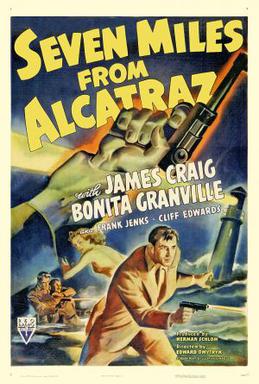
Tales From Out In The 1960s Be-Bop Night: In The Time Of The Soviet-American World War II Fr...: In The Time Of The Soviet-American World War II Friendship-With Edward Myrtryk’s  Seven Miles From Alcatraz  In Mind   By Film...
In The Time Of The Soviet-American World War II Friendship-With Edward Myrtryk’s Seven Miles From Alcatraz In Mind  


By Film Critic Emeritus Sam Lowell


Okay, okay regular readers of this space (and of the on-line version of the American Film Gazette) know that I have, how did Pete Markin put it, oh yeah, put myself out to pasture. In other words retired from the day to day grind of film reviews what with the inevitable deadlines sneaking up and giving me heartburn when I haven’t figured out a “hook” to tie the review up with and Pete is e-mailing every other minute I had had enough. I had conned my old friend, colleague and competitor Sandy Salmon (from that same American Film Gazette where he was a regular film critic with a by-line long before I began to occasionally write for the publication) into doing the yeoman’s work until he in his turn will retire and let younger hands get their chance. I also mentioned in that notice of retirement that I would occasionally comment on whatever I felt like commenting on as long as I didn’t have to meet some damn deadline.     

I have of late been impressed by some of Sandy’s reviews which are pretty good and which I have no quarrel with. What I have noticed when he reviews older films which is what this space is more and more dedicated to is that some remark he makes or some insight of his gets me to the computer to make a comment. That is what I am up to today in regard to a recent review he did of a 1940s World War II film, part propaganda, part action thriller entitled Seven Miles From Alcatraz. The “hook” for me was not the fact that it was directed by Edward Myrtryk who would after the war be red-baited and scapegoated as one of the Hollywood Ten, guys who wouldn’t snitch on their fellows who might have in the past been reds, you know, communists . Honorably done at the time although unlike Howard Fast and Dalton Trumbo he eventually spilled his guts to whoever would listen to save his career. That direction might have been part of what I was looking at which I will explain in a minute since the thrust of the film fit in very well with what the American Communist Party on orders from Moscow were doing to help the war effort once the Soviets became allies in 1941.        

No, what got me about this film was that even hardened criminals could under the story-line presented aid the war effort, could in this case be anti-Nazi fighters. My first reaction was WTF, yeah, that is exactly what I thought. Here is the gist of the story. A couple of hard cases tired of Alcatraz, the “Rock”, the supposedly inescapable Rock out in the dangerous Frisco Bay escaped to a lighthouse out in the harbor, out by the Japan currents from what I could gather. At that lighthouse there was the lighthouse keeper (an important job in the treacherous waters in the Bay), his daughter and a couple of other guys, one a goof but the other who just so happened to turn out to be a Nazi spy. A Nazi spy who is connected in with a group of fellow conspirators who have plans to blow up half of Frisco town once they grab a submarine off that lighthouse and get back to the Fatherland. Naturally they get nowhere once these cons get their patriotic fervor up after they “realize” that if Frisco town goes the Rock goes too if they get captured and are returned there before that event takes place. The conspiracy and the sub once the military gets a fix on them from the lighthouse keeper after the cons struggle with the Nazi agents trying to get back home goes to the briny deep. Fair enough nobody liked the idea, least of all me, of half of Frisco town being blown up.

What is really galling though is the idea that these hardened hoods were to be considered cinematically part of the great united front to wipe the Nazis and their allies off the face of the earth. Such guys from Steubenville, Ohio and Hazard, Kentucky who were itching to volunteer once the Japanese did their dastardly deeds at Pearl Harbor I understand as part of the front. Guys building ships, welding like crazy on three shifts to produce a ship a day I get it. Rosy the riveter picking up the slack when the menfolk went off to war great. Granny planting her Victory Garden, nice work. Kids running around getting string and aluminum foil for the war effort good young citizens. But cons who would as soon as put a slug in you, hey, in that light-keeper if it came to it before they “got religion” on what was what with the damn Nazis no I cannot buy that. What was Dmytryk thinking anyway when he took on this film.                

  
Out In The 1940s Crime Noir Night –Humphrey Bogart and Lauren Bacall’s “Key Largo”


DVD Review

Key Largo, starring Humphrey Bogart, Lauren Bacall, Edward G. Robinson, Lionel Barrymore, and Claire Trevor, Warner Brothers, 1948


“One Johnny Rocco, more or less, in the world is no business of mine.” So says one world-wise, world weary, been-through- the-mill ex-World War II military man, Frank McCloud (played, understatedly, by one cinematic 1940s tough guy, Humphrey Bogart) in the film under review, Key Largo. And he was right, dead right that a single guy , a single guy singed by life’s pitfalls could, would, or should take on one more hoodlum in this wicked old world.

But, of course dead right or not, this would be an exceedingly short film if Frank threw in the towel when he faced one real live Johnny Rocco hoodlum (played to a sleazy tee by serious 1940s gangster-type Edward G. Robinson). Moreover I set up the last paragraph to see if those who follow crime noir in all its glory were paying attention. Crime noir, for the one hundredth time, no, the one thousandth time, is based, for good or evil, on one premise, crime at the end of the day does not pay. And criminals must pay, either forfeiting their lives or doing one to ninety-nine in stir, the can, prison, okay.

And so world-weary, world wary, seen it all Frank McCloud must once more call on the better angel of his nature to eradicate one very live Johnny Rocco. Let’s give a few plot details to flush on this story and see why Frank had to bust up some two-bit racketeer. One Johnny Rocco and his courtly entourage of petty thugs decided to hit Key Largo, specifically the Key Largo Hotel, off-season, maybe to save a little dough on the room rates. No, no, no to make a score off of some counterfeit dough hot off the presses that his old crony Ziggy will pass off as real kale. But see Johnny has a problem because although a few years back he was king of the hill up in the Midwest he has been deported as, if you can believe this, an undesirable alien and has been cooling his heels in anything goes Batista-era Cuba waiting for his big comeback. So this deal, real dough for fake (at a serious discount of course) brings him back to old Estatos Unidos, well, Key Largo which is only a stone’s throw from Cuba.

And everything would have been fine except just then one ex-serviceman, our friend Frank McCloud, who happened to have been the hotel owner’s (played by Lionel Barrymore) killed in action son’s commanding officer in the European Theater, decided to stop by and commiserate on his way to Key West. And everything would have been very fine if a big blow, a hurricane, did not also gum up the works forcing everybody (everybody except the Native Americans left to fend for themselves during the storm) into the claustrophobic hotel lobby area where the frayed nerves of all were exposed.

Naturally since old Johnny had all the guns, all the gunsels, and a very nasty disposition when he was crossed he was hands down the winner, right. No, no you were not paying attention. See a dame, well, actually two dames, come in to muck things up. No femme fatales here though, just Nora (played, very understatedly by Lauren Bacall), who was married to the owner’s deceased son and is pretty easy on the eyes. While the sparks between Bogart and Bacall do not light up the screen like they did in To Have And Have Not they go for each other. So Frank’s hands off the world approach is doomed, doomed big time, if he wants to get anywhere with Ms. Nora. And then there is Johnny’s lush girlfriend, Gaye, who old Johnny does not treat right, no way. Add a slap or two to Nora by Johnny and Johnny is doomed, doomed big time. RIP. Thus there is, whether it makes any different in the great mandela in fact one less Johnny Rocco in the world. Got it.
"Man and Superman"-The Immoralist, Andre Gide-A Book Review 


BOOK REVIEW

The Immoralist, Andre Gide, Penguin Classics, New York, 2001


Andre Gide was always justly famous for writing tight little novels that presented unusual moral dilemmas that did not, as in real life, necessarily get resolved or resolved in a way that one would think.  That is the case here with one of his early and perhaps most famous offerings. The story line centers on the bedraggled life of a consummate French bourgeois scholar who is going through a personal crisis after the death of his father and his unsought `shot gun' marriage in the early part of the 20th century. The newly weds travel to various exotic outposts of French imperialism, including the dry Northern African coast. Along the way he becomes sick with a life-threatening illness but by an act of will, and the extraordinary care of his new wife, overcomes that crisis. As a result of her loving efforts she in turn gets sick (during her pregnancy). He is decidedly inattentive to her illness. The scholar, in the final analysis, permits her to die by his self-centered actions.

Now, after his illness, and as a result of overcoming that experience the scholar begins to believes that he is `superman' a la Nietzsche and therefore consciously or unconsciously becomes the agent of his wife's descend into greater illness and eventually death. Quite a dilemma, to be sure, but he is not crying over it. The real question here is whether, in a hard and unforgiving world where each person is his or her own agent, that it was his duty to thoughtfully care for his wife or whether his need to take actions to `understand' himself was paramount.

Some other moral questions concerning his role as landlord in his inherited rural estate pop up along the way, as well. Also, just a hint of homosexual tension in his dealings with the young Arab boys in the neighborhood hovers in the background. This is a subject that then was almost always covered in discreet language so it is hard to tell the full extent of the attraction. And whether he did anything about it. This is a question that concerned Gide personally, as well.

I would note that this theme (and the sub theme of homosexuality) and the book itself at the start of the 20th century may have been somewhat scandalous but reading it after some of the harrowing events done by humankind in the last century has cut deeply into the impact that it was intended to have. Still it is a great book and a quick read. Any lessons to be drawn about the dark side of human nature, as it has evolved thus far, take a lot longer.
An Encore -Out In The Be-Bop 1950s Night- The Time Of Motorcycle Bill-Take Two


From The Pen Of Joshua Lawrence Breslin

[My old friend, Sam Lowell, whom I have known since the summer of love days out in Frisco days in the late 1960s when we though all the world could be turned upside down and we were the hail fellows, well met who were going to help do it and all we got for our troubles was tear gas, cops' nightsticks and the bastinado for our efforts, oh yeah, and forty year blow-back from the night-takers, and who hails from Carver down in Massachusetts asked me to fill in a few more details about this relationship between Motorcycle Bill and Lily. He thought I was originally kind of skimpy on why a nice Catholic girl would go all to pieces over a motorcycle guy, would get on his bike like she was some low-rent tart from the wrong side of town the usual type that went for motorcycle guys in his book. Sam didn’t get the idea that when that cycle surge came along just like us with the heroic antics of the summer of love lots of ordinary teens went with the flow. So here is a little extra, a take two for Sam, and maybe for others who missed that big motorcycle moment.]      

 ********

There was a scourge in the land, in the 1950s American land. No, not the one you are thinking of from your youth or from your history book, not the dreaded but fatalistically expected BIG ONE, the mega-bomb that would send old mother earth back to square one, or worst, maybe only the amoebas would survive to start the long train of civilization up the hill once again. Everybody expected that blow to come if it did come and we in America were not vigilant, did not keep our shoulders to the wheel and not ask questions from the nefarious Russkies (of course we that were just coming to age in the rock and roll night would not have had a clue as to what questions to ask if asking questions was acceptable then and it was not and we as young as were knew that it was not from parents to teachers to Grandpa Ike and his cabinet). We, if not vigilant, would take it in the back from a guy named Joe Stalin which one of our teachers said meant “steel” in Russian but it could have been from any Russian guy as we learned later after Stalin died and other atomic bomb-wielding guys took over in Red Square.

Sure that red scare Cold War was in the air and every school boy and girl had their giggling tales of having to hide, hide ass up, under some desk or other useless defense in air raid drill preparations for that eventually. I wasn’t any revolutionary or radical or “red” although one teacher looked at me kind of funny when I mentioned it but I couldn’t get behind the purpose of hiding under some old-timey elementary school wooden desk when every film I ever saw of what an atomic blast looked like said you might as well not have your ass sticking up in the air when Armageddon came. Like I said one teacher looked at me very funny. So sure the air stunk of red scare, military build-up cold war “your mommy is a commie turn her in" (and there were foolish kids who did try to use that ploy when dear mother said no to some perfectly reasonable request and junior thought to get even he would rat her out).

But the red scare, the Cold War ice tamp down on society to go along to get along was not the day to day scare for every self-respecting parent from Portsmouth to the Pacific. That fear was reserved for the deadly dreaded motorcycle scare that had every father telling his son to beware of falling under the Marlon Brando sway once they had seen the man complete with leather jacket, rakish cap and surly snarl playing Johnny Bad in The Wild One at the Strand Theater on Saturday afternoon and deciding contrary to the cautionary tale of the film that these Johnnies were losers spiraling down to a life, a low life of crime and debauchery (of course said son not knowing of the word, the meaning of debauchery, until much later) just shrugged his innocent shoulders.

More importantly, more in need of a five alarm warning, every mother, every blessed mother, self-respecting or not, secretly thinking maybe a toss in the hay with Marlon would bring some spice to her otherwise staid ranch house with breezeway existence warned off their daughters against this madness and perversity in leather. Warned those gleaming-eyed daughters also fresh from the Saturday afternoon matinee Stand Theater to not even think about hanging with such rascals contrary to the lesson that cute waitress in the film gave about blowing Johnny off as so much bad air. (Of course forgetting, as dad had with junior, to bring up the question of sex which is what Sissy had on her mind after one look at that cool attire of Johnny and her dream about how she could get that surly smirk off of his face.)     

Of course that did not stop the wayward sons of millworkers slated for work in the mills when their times came from mooning over every Harley cat that rode his ride down Main Street, Olde Saco (really U.S. Route One but everybody called it Main Street and it was) or the daughters slated for early motherhood under proper marriage or maybe sales clerks in the Monmouth Store from mooning (and maybe more) over the low- riders churning the metal on those bad ass machines when they went with their girlfriends over to Old Orchard Beach on sultry sweaty weekend nights in summer.

This is how bad things were, how the cool cats on the bikes sucked the air out of any other guys who were looking for, well, looking whatever they could get from the bevies of girls watching their every move like hawks. Even prime and proper Lily Dumont, the queen of Saint Brigitte’s Catholic Church rectitude on Sunday and wanna-be “mama” every other waking minute of late. Now this Lily was “hot” no question so hot that my best friend in high school Rene Dubois, the best looking guy around the Acre where we all lived and who already had two girlfriends (and later in life would have four, count them, four wives before he gave the marriage game up and just shacked up with whatever romantic interest he had at the moment), would go to eight o’clock Mass every Sunday and sit a couple of rows in back of her and just watch her ass. (I know because I was sitting beside him watching that same ass).

He never got anywhere with her, she knew about the two girlfriends since they were friends of hers, and neither did I. Lily was a classic French-Canadian beauty long thin legs, petite shape but with nice curves, long black hair and pop-out blue eyes. Nice but like I said but strictly the ice queen as far as we could tell. Especially when she would constantly talk about her friendship with Jesus and the need to say plenty of rosaries and attend many novenas to keep in touch with him.        

In this time of the motorcycle craze though something awoken in her, maybe just the realization that Jesus was okay but guys who thought she was hot maybe needed some tending too. In any case, and I didn’t find this out until several years later after Lily had left town, my sister who was one of Lily’s close friends then and Lily could confide girl talk to her during this motorcycle dust up Lily would find herself restless at night, late at night and contrary to all good Catholic teachings would put her hand in a place where she shouldn’t (this is the way my sister put it you know Lily was just playing  with herself a perfectly natural feeling for teenagers, and older people too) and she was embarrassed about it, didn’t know if she could go to confession and say what sin she committed to old Father Pierre. I don’t know if she ever did confess or things got resolved a different way and that idea was out of play but there you have it.     

And the object of her desire? One “Motorcycle Bill,” the baddest low- rider in all of Olde Saco. Now baddest in Olde Saco (that’s up in ocean edge Maine for the heathens and others not in the know) was not exactly baddest in the whole wide world, nowhere as near as bad as say Sonny Barger and his henchmen outlaws-for- real bikers out in Hell’s Angels Oakland as chronicled by Doctor Gonzo (before he was Gonzo), Hunter S. Thompson in his saga of murder and mayhem sociological- literary study Hell’s Angels. But as much is true in life one must accept the context. And the context here is that in sleepy dying mill town Olde Saco mere ownership, hell maybe mere desire for ownership, of a bike was prima facie evidence of badness. So every precious daughter was specifically warned away from Motorcycle Bill and his Vincent Black Lightning 1952 (although no mother, and maybe no daughter either, could probably tell the difference between that sleek English bike and a big pig Harley). But Madame Dumont felt no need to do so with her sweet sixteen Lily who, maybe, pretty please maybe was going to be one of god’s women, maybe enter the convent over in Cedars Of Lebanon Springs in a couple of years after she graduated from Olde Saco High along with her Class of 1960.

But that was before Motorcycle Bill appeared on the horizon. One afternoon after school walking home to Olde Saco’s French- Canadian (F-C) quarter, the Acre like I said where we all lived, all French-Canadians (on my mother’s side, nee LeBlanc for me) on Atlantic Avenue with classmate and best friend Clara Dubois (my sister was close to Lily but not as close as Clara since they had gone to elementary school together), Lily heard the thunder of Bill’s bike coming up behind them, stopping, Bill giving Lily a bow, and them revving the machine up and doing a couple of circle cuts within a hair’s breathe of the girls. Then just a suddenly he was off, and Lily, well, Lily was hooked, hooked on Motorcycle Bill, although she did not know it, know it for certain until that night in her room when she tossed and turned all night and did not ask god, or any of his associates, to guide her in the matter (the matter of that wayward hand for those who might have forgotten).

One thing about living in a sleepy old town, a sleepy old dying mill town, is that everybody knows everybody’s business at least as far as any person wants that information out on the public square. Two things are important before we go on. One is that everybody in town that counted which meant every junior and senior class high schooler in Olde Saco knew that Bill had made a “play” for Lily. And the buzz got its start from none other than Clara Dubois who had her own hankerings after the motorcycle man (her source of wonder though was more, well lets’ call it crass than Lily’s, Clara wanted to know if Bill was build, build with some sexual power, power like his motorcycle. She had innocently, perhaps, understood the Marlon mystique). The second was that Bill, other than his bike, was not a low life low- rider but just a guy who liked to ride the roads free and easy. See Bill was a freshman over at Bowdoin and he used the bike as much to get back and forth to school from his home in Scarborough as to do wheelies in front of impressionable teenage girls from the Acre.

One day, one afternoon, a few days after their Motorcycle Bill “introduction,” when Lily and Clara were over at Seal Rock at the far end of Olde Saco Beach Bill came up behind them sans his bike. (Not its real name but had been given the name Seal Rock because the place was the local lovers’ lane at night and many things had been sealed there including a fair share of “doing the do,” you know hard and serious sex. During the day it was just a good place to catch a sea breeze and look for interesting clam shells which washed up in the swirling surf there.) Now not on his bike, without a helmet, and carrying books, books of all things, he looked like any student except maybe a little bolder and a little less reserved.

He started talking to Lily and something in his demeanor attracted her to him. (Clara swore, swore on seven bibles, that Lily was kind of stand-offish at first but Lily said no, said she was just blushing  a lot.) They talked for a while and then Bill asked Lily if she wanted a ride home. She hemmed and hawed but there was just something about him that spoke of mystery (who knows what Clara thought about what Lily thought about that idea). She agreed and they walked a couple of blocks to where he was parked. And there Lily saw that Vincent Black Lightning 1952 of her dreams. Without a word, without anything done by her except to tie her hair back and unbutton a couple of buttons from her starched white shirt she climbed on the back of the bike at Bill’s beckon. And that is how one Lily Dumont became William Kelly’s motorcycle “mama” when the high tide of the motorcycle as sex symbol hit our town.

Friday, June 2, 2017

The 50th Anniversary Of The Summer Of Love-Ivan Koop Kuper : Ken Kesey's Houston Acid Test


01 December 2010

Ivan Koop Kuper : Ken Kesey's Houston Acid Test 
The original "Furthur," the magic bus of Ken Kesey and the Merry Pranksters, on the road. Photo from NoFurthur.

Paying Larry McMurtry a visit:
The Merry Pranksters' last acid test

By Ivan Koop Kuper / The Rag Blog / December 1, 2010

HOUSTON -- In the heat of a July Houston morning in 1964, residents of the quiet Southampton neighborhood woke up to find a strangely painted school bus parked in front of an unassuming two-story brick house in the middle of the block.

The vintage 1939 International Harvester with its passengers of “Merry Pranksters” drove half way across the United States and was now parked in front of the house of novelist and Rice University professor, Larry McMurtry. The Southampton neighbors would learn that the brightly painted bus whose destination plate read “FURTHUR,” with two u's, was filled with strangely acting and even stranger looking people from California.

The leader of the Merry Pranksters was author Ken Kesey, whose novel, Sometimes a Great Notion, had just been published that summer. Their cross-country road trip to New York City was in part a celebration to commemorate the publication of his second novel, as well as the fulfillment of a request by his publisher for a personal appearance and an excuse to visit the World’s Fair taking place in the borough of Queens.

Fueled by the then-legal hallucinogenic drug LSD, Kesey and the Pranksters stopped in Houston along the way to visit McMurtry, who Kesey knew from their days at Stanford.

McMurtry lived with his 2-year-old son, James, on the oak-lined street near Rice University, where he taught undergraduate English.


Larry McMurtry and son, James, 1964. Photo from The Magic Bus.

McMurtry was also experiencing success in his life during this time. His inaugural novel, Horseman, Pass By, had been adapted into a screenplay and released as the feature-length movie, Hud, staring Paul Newman and Melvyn Douglas, the previous year.

“I remember walking down Quenby Street one afternoon and seeing the school bus parked in front of the McMurtry’s house,” said Kentucky-based artist Joan Wilhoit. “It was very atypical and pretty damn psychedelic with lots of colors. The Pranksters were very accommodating and invited us on the bus. They were very different, sort of proto-hippies, and I remember they painted their sneakers with Day-Glo paint. My parents befriended them and brought old clothes and hand-me-downs to those who needed it. My parents weren’t rude like some of the other neighbors were.”

Wilhoit, who was nine at the time. remembers that not all the neighbors were as welcoming as her parents and that some made sarcastic remarks about the Pranksters.

“’Do you have a bathroom on that bus?’ I remember one our neighbors asking the Pranksters through the school bus window,” the former Houstonian recounted. “I also remember hearing about the ‘naked girl’ and I thought it was the strangest thing how the police were called and how she had to be admitted to a psych ward of some Houston hospital.”

“Stark Naked,” as she was referred to in Tom Wolfe’s Electric Kool-Aid Acid Test, the novel that chronicled the exploits of Kesey and the Pranksters in the 1960s, was a bus passenger apparently “tripping” throughout her bus ride to Houston, who discarded her clothing in favor of a blanket that she wore for the duration of the journey. Upon her arrival in Houston, she experienced an episode of “lysergically-induced” psychosis, and confused McMurtry’s toddler son with her own estranged child, “Frankie.”


"Stark Naked" (aka "The Beauty Witch") wore nothing but a blanket. Photo from The Magic Bus.

Three years later, the brightly painted bus was parked once again in front of McMurtry’s house on the oak-lined street near Rice Village. Kesey and the Pranksters returned to Houston in March 1967 to visit their old friend and to conduct what is purported to have been the last “acid test.” The social experiment was staged in the dining room of Brown College, a residential facility on the campus of Rice University, with McMurtry acting as faculty sponsor.

“I would have been 14 years old when they returned,” said Pricilla Boston (nee Ebersole), an employee of the department of state health services in Austin and the mother of two teen-aged sons.
I remember getting off the school bus from junior high one afternoon and seeing that the painted bus was parked in front of Mr. McMurtry’s house again. It was immensely colorful and there was no missing it, that’s for sure. All the kids in the neighborhood used to play street games at night a lot and it was almost like there was another set of kids in the neighborhood.

They had a youthful, fun vibe about them. I remember this one skinny guy in particular who would interact with us; he was younger than the others and he showed us the inside of the bus. He once asked us to go home and look in our parents’ medicine cabinet to see if they had any bottles of pills and bring them to him. I was asking myself "Why would he want those?"
Boston recounted following the skinny Prankster’s instructions and looking in her parent’s cabinet. “I don’t remember whether I brought him anything or not,” she said, “I just remember having a sense of what I was doing as being a little bit naughty.”

Although Kesey’s arrival and the ensuing acid test were promoted as a “concert” in the March 9 issue of the Rice Thresher, the campus student newspaper, this non-event turned out to be an acid test in name only. The promise of a reenactment of the “tests” conducted in California between 1965 and 1966 never materialized. Absent was the liquid light show, the live, amplified rock music, the pulsating strobe lights and movie projector images on the walls.

Also conspicuously absent was the mass dispensation and ingestion of psychotropic drugs by the Rice student body and other “assorted weirdos” in attendance. Instead, the Pranksters indulged the more than 200 attendees with a “madcap improvisation” of toy dart-gun fights, human dog piles, deep breathing demonstrations by Kesey himself, and rides on the “magic bus” around the Rice campus.

“The great Kesey affair was an absolute dud,” reported the Houston Post on March 21. “Some of the kids hissed while he [Kesey] read some kind of incantation, and others just left talking about what a drag it was.”

[Ivan Koop Kuper is a graduate student at the University of St. Thomas, Houston, Texas, and maintains a healthy diet of music, media, and popular culture. He can be reached at kuperi@stthom.edu.]


Merry Pranksters in the news, 1964. Top, in Houston, and below, in Springfield, Ohio.


Prankster Hermit and the original bus. Photo from Lysergic Pranksters in Texas.


Top, Ken Kesey with restored bus, by then renamed "Further" with an "e". Below, the 1939 International Harvester, before restoration, at the Kesey family farm in Pleasant Hill, Oregon, after being stored in the swamp for 15 years. Photo by Jeff Barnard / AP

The Rag Blog

Posted by thorne dreyer at 10:50 AM
Labels: American History, Drug Culture, Houston, Ivan Koop Kooper, Ken Kesey, Larry McMurtry, LSD, Merry Prankstes, Psychedelics, Rag Bloggers, Rice University, Sixties, Tom Wolfe
The Ghost Of Lawrence Landon-With Hank Williams’ “Cold, Cold Heart” In Mind   


By Zack James


[The Pete Markin mentioned in the sketch below and in a previous one about Delores Landon, Lawrence Landon’s wife and Si’s mother, is the late Peter Paul Markin who despite a lot of serious work as a journalist back in the early 1970s fell off the edge of the world down south of the border and fell down shot dead with a couple of slugs in some desolate back alley in Sonora after a busted drug deal as far as anybody in America was able to find out (after being seriously warned off the case by the Federales and some guys who looked like they ate gorillas for breakfast). The Peter Markin who moderates this site is a pseudonym for a guy, Frank Jackman, who along with Si Landon, Jack Callahan, Frankie Riley, Josh Breslin and a bunch of other guys knew Markin in the old growing up days and has taken the pseudonym in honor of his fallen comrade who before his untimely end had taught him a lot about the world and its ways, quite a lot. “Peter Paul Markin”]         

Memory floods. Memory flows unstaunched down to the endless sea of time. Some people shut off that memory flow to preserve their sanity others, others like Si Landon from the old corner boy Acre neighborhood in North Adamsville make it their business, go a long way out of their way to make it their business to remember, to be known among their circle as great rememberers. Si Landon had recently had occasion to test that theory out in a sort of roundabout way. He had been driven to remember one set of memories and that exploded another set in his face almost by happenstance.    

The whole episode had started when due to irreconcilable differences with his third wife, Maria, he had been given “the boot,” had been given his walking papers by her after almost a decade together. We will not get bogged down with the particulars of the causes for the separation except to say that Maria’s complaints were centered on Si’s increased moodiness and distance (that was Maria’s polite way, as was her way, of putting the matter) as well as her own need to “find herself”. The long and short of the situation was that both had agreed that “rolling stone” Si would leave the house they had shared for the previous decade. He wound up for several months staying at various friends’ places and in a sublet from a friend’s daughter before he realized that he needed some rootedness, some familiar surroundings now that he was alone again with only his thoughts and memories.

One tough “exiled” day, that was the way Si described his various experiences since the breakup with Maria he had an epiphany which led to his decision to head back to the old neighborhood after an almost fifty year absence. After a certain amount of searching he was able to find a condo for rent (he was not ready to seek a permanent condo-type situation or quite sure that he was up for that experience since he had spent the previous forty or so years in single family housing so a rental was testing the waters). The condo was located a couple of blocks from his growing up family tumbled down shack of a house in a school which had been closed when the demographics in the area changed and converted to the condo complex. Although he had not gone to school there since his family had moved from “the projects” back into his mother’s old neighborhood when he was in junior high school three of his four younger brothers (no sisters to his mother’s dismay) had gone there and that memory had helped determine his move to location.                     

He had strong recollections of his brothers’ time there and that was a source of some solace once he got settled in. Then a couple of days after that moving in he noticed in the front foyer that the developers of the place had kept some of the historic aspects of the place by keeping a series of graduating class photographs on one wall. On another was the 1907 announcement in the North Adamsville Gazette of the opening of the school. That hard fact triggered a sudden re-emergent long suppressed fear in Si once he realized that that 1925 date meant that his mother had also gone to school there something that he probably know way back when but had forgotten about. Sure enough looking at those old graduating class photos there was Delores Landon (nee Riley) sitting in the front row. All the battles from early childhood until just a few years before her death came rushing back into his head.

[Their relationship as described in a previous sketch had consisted of longer and longer periods of withdrawal after recrimination until there was a point of no turning back reflected in the fact that Si had not even attended his mother’s funeral for a lot of reasons but that one primarily.-Markin]

One late night when he could not get to sleep a couple of weeks after he had moved in Si thought he heard his mother’s voice calling out to him from the foyer that he would never amount to anything her favorite taunting mantra for him whenever he got in trouble.  Si freaked out over the idea that he would have to re-fight all the old memory battles. Damn. (Si by the way turned out to have been a better than average lawyer so he put paid to that eternal standard Delores notion.)              

No question the dominant force in the Landon household, the five surly boys household, was one Delores Landon. That sad fact was no accident, or if it was accident it was so by virtue of the circumstances which befell Delores Riley and Si’s father, Lawrence Landon. Delores and Lawrence had met through the contingencies of World War II when Lawrence Landon had been stationed before being discharged from the Marines at the famous Riverdale Naval Depot, a place which had earned its fame then for producing something like one troop transport vessel per day on those manic twenty-four-even shifts throughout the war. Delores had worked in an office in the complex doing her bit for the war effort. They had met at a USO dance one Friday night and the rest was history for the next forty or so years until he passed away at 65. Part of that history was the production of a crop of five boys, five hungry boys as it turned out led by Si. The other part was that Lawrence had originally come from the south, had been born and raised in coal country, in Harlan County down in Kentucky in the heart of “white trash” poor Appalachia. Before the Marines broke the string he had been the latest in about five generations of Landons to work the coal mines.

Coming and staying in the Boston area with nothing but a tenth grade education and useless coalmining skills meant that Lawrence was always scrabbling for last hired, first fired work. It also meant that scrambling to do his best as a father to provide for his own that he was a very distant figure in the day to day Landon household which in practice meant that Si was from an early age the “surrogate” father a fate which almost destroyed him before he finally left the family house. It also meant that beyond the distant figure of his father he also knew next to nothing about him. Except, and this was a big except, Lawrence Landon never ever sided with Si against his mother whether she was right or wrong in whatever accusations she made against him. Tough work, tough work indeed although he never was as bitter against his father as he had been against Delores. (A lot of what Si would learn about his father would only come after Lawrence had passed on from his youngest brother Kenneth who made serious effort to try and understand what his father had gone through. So Kenneth had known, which will become important in a minute, that his father had been called “the Sheik” by his fellow Marines for his abilities with the women what with his soft Southern accent and black hair and eyes. Kenny had known as well that beyond a young coal-miner’s skills his father had some talent as a musician, as a better than average guitar player and singer who was locally known in the Saturday night “red barn” circuit throughout Appalachian Kentucky for his prowess in song and with the girls along with his band The Hills and Hollows Boys.)

That is perhaps why when Si was old enough and thoughtful enough to know better he recognized that Lawrence had done the best he could with what he had to offer. It had been a hard lesson to learn even with some leeway. So it was no accident that a few weeks after Si’s strange nocturnal “encounter” with his mother (being a man of science he had eventually dismissed, or half dismissed that “voice” as just some gusts of wind coming from outside his windows) he had an “encounter” with the ghost of his father. Si had for many years, going back to his college days been something of a folk music aficionado. Had breathed in the folk minute that passed through the world starting in the very early 1960s.

For some thirty years previously well after the folk minute had burst and the remnants were to be seen playing before small crowds in church basement monthly coffeehouses Si had dilly-dallied with playing the guitar and singing along some folk songs which he had picked up through a famous folk music book which had the imprimatur of the late folksinger extraordinaire Pete Seeger (and lately had picked up songs from another source-the Internet- which moreover provided the chordal arrangements for many of the songs requested). His attention to the guitar and to practice had always been a hit or miss thing through three marriages and an assortment of children and lots of work to keep them in clover (and alimony and child support when those times came). Still Si never completely abandoned either singing or playing. (For lots of reasons but mainly to keep out of the family’s hair during the Maria marriage he had done his sporadic efforts on the third floor of their house far away from other distractions. But also to be able to say when serious folksingers, including Maria, asked about his abilities that he was a “third floor” folksinger, meaning third-rate which seemed about right. That would draw a laugh from those, again including Maria, whom he considered “first floor” folksingers.)            

While he was in “exile” Si had had a fair amount of time on his hands not having to attend to family matters or the million and one other things that are required in a relationship. (Si had had to laugh, a  bitter laugh, one night when he was thinking about those million and one things that he had been about nine hundred thousand, maybe closer to a  million short on keeping the Maria relationship going.) He began one of the most consistent sustained efforts at playing and singing that he had ever done. He continued those efforts when he moved back to his hometown.

What he had begun to notice in exile was that the new material that he was picking up from the Internet or from song books were a lot of old time Hank Williams ballads. Now Si was a city boy, always made it clear when younger that he hated country music, the music of the Grand Ole Opry being his standard for what passed for country music except for one very brief period in the early 1980s when he was attracted to the music of “outlaw” country singers and songwriters like Willie Nelson and Townes Van Zandt. But he always had had something of a soft spot for the anguished Williams. Had done so ever since not knowing that it was country music at the time he would pester Lawrence to play Williams’ Cold, Cold Heart for him when he was a kid. (Lawrence always had a guitar around the house and always like Si would sporadically play when he had a few minutes from the never-ending toil of providing for the five hungry boys and the one overwhelmed wife.)                       


One night in his condo in North Adamsville he began to practice on the guitar when he suddenly thought about his father’s playing of that Williams’ song. He went on the Internet to get the lyrics and chords and began to play. As he played a few times he got a very strong feeling that something was pushing him to play that song far better than he played most songs. On a final attempt Si felt that he had played the song almost like he had heard his father cover the classic. That night he began to realize that the ghosts of his youth weren’t always going to haunt his dreams. That present in that old neighborhood former schoolhouse were lots of things that would surface. Mostly though that night he shed a tear as he finished up knowing that he had cursed his father more than he should have and he once again called out to the winds “Pa, you did the best you could, you really did.”      
“Even The President Of The United States Sometimes Must Have To Stand Naked”- Tales From The “Pennsylvania Avenue Bunker”-In Defense Of Science


By Political Commentator Frank Jackman

Yeah, the legendary now Nobel Literature Laureate Bob Dylan had it right way back in 1965, in the time of Lyndon Johnson, President of the United States and major war criminal when he wrote as part of the lyrics to the early folk rock song It’s All Right Ma (I’m Only Bleeding) the following “… even the president of the United States must have to sometimes stand naked.” Maybe he was thinking LBJ but somehow the current occupant of the White House seems more appropriate. See it took LBJ almost four years to get down into the bunker and today’s occupant, do I need to mention his name, has gone down into the bowels of the Pennsylvania Avenue bunker after only four months. That is newsworthy, worthy moreover of some extended commentary in this space as we begin the “death watch” that has become something of a familiar part of the modern American presidential landscape.     

My, our, motivation on this site for this new series of commentaries is that we are truly worried about the fate of the Republic, the American Republic, republican government, these days. That overarching fear is something that even in the darkest days of the Lyndon Baine Johnson administration and the criminally dark days of his successor one Richard Milhous Nixon, a lowly common criminal as it turned out we did not see tattering. I have “confessed” elsewhere that I had seriously underestimated the differences between the wretch Hillary Clinton and this sociopath we are contenting with now and that underestimation has only led me to become haunted by the specter of having to fight in the streets to defend the hard-fought democratic gains of the past couple of centuries that are now on the chopping block. We are in hard and troubled times and as much as I like to give conventional bourgeois politics the back of my hand the times demand more-demand some contributions to build the resistance, build it right now as a firewall against the time when these guys come up and out of the bunker one more time. Starting with the commentary below we will occasionally chronicle this cheapjack soap opera unfolds before our disbelieving eyes. I can only add where is “Doctor Gonzo,” the late journalist Hunter S. Thompson when you need him. He would have jack-hammered this thing picked lean already. Stay tuned for the, maybe, next four year of the race to the bottom.              

********
In Defense of Science-June 2, 1917
I really, really and truly, believed that somewhere in say the 18th century we began to put our “faith” increasingly in scientific investigation of whatever ailed us, whatever mysteries of the universe which seemed inexplicable needed some rational explanation. And that was a move forward for humankind.  I was, having been steeped in that tradition, prepared to let fact and figures, real facts and figures, not stuff found on the ground, taken from some fortuneteller’s table (sorry fortunetellers of the world this diatribe is not directed at your profession), or made up to score points in a governmental policy argument drive my own sense of the world. Apparently that admittedly quaint notion has taken a beating of late in many quarters from those who found those “facts” on the ground.

That is the only way to explain the inexplicable announcement by one Donald J. Trump, President of the United States in the year 2017, to take this country, America, out of the Climate Change Accords (I will not preface that title with Paris since it was never about the country where the damn thing was hammered out, and that term is no hyperbole as the infighting was fierce). Apparently the nationalist America First wing of what passes for the White House governing group has won the day based on from all reports bad information, spurious arguments, cooked data and that stuff just mentioned found on the ground. Not on any look at scientific evidence. Of course if the “rapture” is your frame of reference then fact and figures are silly. 


This is not the place to detail the manifold reasons why an even non-binding treaty should or should not be adhered to but rather what the withdrawal means about a trend that had previously been slowly (and now more rapidly) creeping up on us about the value of the scientific method that guys like Galileo went to the mat trying to defend. Tried to take out of snake charmer realm and put the evidence from nature, society, on firmer footing. Not infallible, or at least I do not believe that was the intent of those who strove to create what we have come to call what seemingly is also a quaint idea-The Enlightenment. Unfortunately that progressive trend is under assault and while if I had my druthers I would prefer to fight from a more socialistic perspective I am more than willing to fight for the heritage of that very Enlightenment that has gotten us pretty far in the past couple of centuries. If you fear for the Republic, the American Republic, then you too should join and built the resistance. The fight is on and you had better start taking an active side before the waters, winds, fires, and the deluge that we will now stand even more defenseless against take us all down.