Monday, January 9, 2017

Rage Against The Dying Of The Light-With Dylan Thomas’ Poem "Do Not Go Gentle Into That Goodnight" In Mind


By Fritz Taylor

Richard Roche, normally for public consumption an easy-going, laid back and kindly man, was angry, no better, in a rage. (Somehow the anger of his wickedly harsh childhood had gotten dissipated over the years for let’s say when he was in his late teens or early twenties he was as likely to throw fire and water as to seek to reason with anybody. So much for a little backdrop to fill the reader in on where he had come from to earn that easy-going demeanor.) That rage came with a name Lila Crawford, his long, long time companion who had recently given him his walking papers. That “recently” was well over two months before the time in question so his anger, his rage needs some explanation. No question that Richard (not Rich or Rick) and Lila had had their share of problems in their relationship which had spanned three decades. Somehow, some way, Lila a few months before had decided that whatever ailed the relationship could no longer to fixed, except by separation, a final separation.            

Who knows what might have sparked her anguish, maybe it was that since her retirement Lila was at wits end about what to do with the rest of her life. A big theme when she gave Richard his walking papers had been that she had to find herself, had to figure out who she was and that the journey had to be alone. Richard tried to reason, argue really, that he did not understand why her angst and alienation could not be addressed in the context of the relationship like it had been on several previous occasions. Lila had said that this was different, this was deeper. Closer to the nut was what Lila had sensed were dramatic changes in Richard’s demeanor which had created what she called, and he agreed when it was pointed out, undue tensions in the household. He admitted that his health issues over the previous several months had made him cranky, irritable and a pain in the ass.

He had been poked and prodded some many times by doctors and their cohorts that he was sick unto death, well almost unto death, of the whole thing. And then there were the medications, plural on that word, which were making him crazy (and one of them was doing some damage that way as he later found out, too late later found out). That, the diagnosis of bladder cancer which he had been battling (which he had been in denial about for a period), and his turning sixty had unwound his usual public consumption easy-going ways. From her perspective, from her own considerable health issues point of view she had cut him to the quick when she said that a major cause of her recent illness problems could be laid to the tensions created in the household by him, that he was causing her illnesses to rage unabated. That was the final sting that told him that whatever had happened over the recent past they needed what in his mind was a separation. That like in many interpersonal relationship matters between them she was miles ahead of him.         

After finding a temporary place along the seacoast in Maine for a month through the good offices of Air B ‘n’ B Richard moved him small bundle of precious and necessary goods (okay, clothes, books, a few utensils and the mandatory computer complex complete with printer). The place was to be rented for a month (the limit of the stay in any case since the owners were closing up for the cold weather Mainer winter) at which time Richard had figured that Lila would have come to her senses and be welcoming him back into her embraces again. Even before that month was up Lila made it clear that the separation in her mind, at least the living together part, was final if not irrevocable and they had argued over that since, as usual Richard had assumed that they had agreed on the month and that was that. Naturally he was dead-ass wrong about how serious she was about the break, about the need for the break. She cut him to the quick again by telling him that her health had improved with the lack of tensions around the house in his absence (they had agreed that she would stay in their long time residence since he was more of a rolling stone in his ability to move and then there were the cats who knew no other abode but that place, and incidentally were a separate cause stress for her since they were young and full of pent-up energy.    

Although Lila had gone up to the place Richard had in Maine to signify in her mind that her earlier idea that they would never see each other again had been premature and not well thought out she nevertheless insisted that she need an undisclosed amount of time to get her own life in order (her term had been the diplomatic wishy-wash “for the foreseeable future”). The net effect, no the gross effect, remember Richard had been angry, no again, in a rage over this latest set-back but he had to go along with it-what else was he to do when she didn’t want to  live with him. He then took a place, a winter rental in a seacoast town in New Hampshire under loose tenant at will conditions (meaning that with thirty days’ notice either party could break the lease). His idea was if the Empress recalled him he could get out from under without too much financial damage (moreover he wanted to be by the ocean for reflection and an occasional run to keep in shape so there was a certain method to his madness). And so he moved south closer to Boston where all his connections to the known world were.     

Richard had made some changes though during the separation, which Lila had commented on positively although without giving in an inch. He had under her initial guidance taken up meditation daily in order to get some peace within himself, to calm down and to accept the idea that he had both cancer and had slowed down with age both ideas repugnant to his psyche but there it was. The meditation, something he had laughed at in previous suggestions by Lila had actually helped. When Richard got into something he believed in he was “all in” and he was in that kind of mood (‘all in” a term he had used a couple of years previously when they had been under Lila’s suggestion again in couples counselling and once he got his head around the idea he actually like it, certainly thought it was useful). 

Moreover having been cut to the quick by Lila’s remarks about how he was affecting her health something that had plagued her as long as he had known her he started reflecting on where things had gone some badly, where their early love had drifted to a very bad place. He was determined to “win” her back.      

Now all of these Richard insights were well and good but it takes two to work this kind of thing out even though he now had gotten “religion” but her continual rebuffs of his attempts to reconcile had, well, left him with feelings of rage, with a sense that he was lost. This rage had no place to go, had to break or it would put more fire in his head than he could he use (the “put out fire in his head” a phrase he picked up from a song by Patty Griffin where her lover was in his own problematic world). That rage in his head had initially driven him to seek another companion via a senior citizen on-line dating service which proved fruitless to quell his angst.

The thing finally blew up in his head around Thanksgiving, around the season where family and community come into play. He had had, and Lila had as well which is where they “saved” each other during this holiday season, horrible times around holidays when they were kids and even sixty years later Richard could feel the sting of the past coming on with nobody to help him get through the thing-his Lila a distant memory for that purpose. He determined that he was through with her, decided to let her have the house, having nothing more to do with her, to drift to California and start anew, maybe some find somebody out there so that his morbid fear that he would die “alone” would not come true. So filled with rage for several days which even multiple daily meditations would not curb he was about to call her. Before he could do so she called him, said she had been depressed around the holidays and could she come up and see him. Yeah, sure. That is what their thing had always been, why he always liked the pleasure of her company. “Yeah, sure come on up.” Sometimes raging against the fading of the light is the only course though.             


[Although Lila was adamant for the “foreseeable future” about not living together they did agree to see each other on occasion as a result of that meeting but who knows where that will lead if anywhere. F.T.]  

Sunday, January 8, 2017

He Belongs To The Ages-Daniel-Day Lewis’ “Lincoln”-A Film Review (2012)


DVD Review

By Sam Lowell

Lincoln, Daniel Day-Lewis, Sally Fields, David Strathairn, directed by Steven Spielberg, 2012    

A while back somebody asked me when we were talking about Presidential voting history not only our personal votes during our lifetimes but who we would have voted for had we been around at the time at various stages of American history. The caveat as well had been who we could have enthusiastically voted for as opposed to just pressing the lever like we had wound up doing too many times in our lives. (Yeah, the person who I was talking to and I are just the kind of people who find such speculation interesting over a couple of drinks on an off-night.) The other person stated that undoubtedly that had to be Lincoln, Lincoln of the 1860 race when the Republican Party first took power with the idea that they would both try to keep the frayed Union in tack and get rid of or keep slavery in check somehow, mostly the latter.

I hesitated on that vote but I agreed that it would be Lincoln, although I felt stronger about the vote in 1864 after the Civil War had been going on for several years which he waged relentlessly if with some sadness with the idea of bringing the Confederates back into the fold and after he had issued the Emancipation Proclamation. That brings us to the film under review, Daniel Day-Lewis’ portrayal of the man in Lincoln. I think based on the thrust of the film in closely looking at the last few months of Lincoln’s life after his re-election that my vote for him in 1864 would have been made with plenty of positive energy.  

There are many ways to look at the Lincoln legacy and probably most of them have had their time from hagiographic (despite the warts, and all) to more recent time when the politically correct if rather anachronistic have ridden him off as another racist cracker in the legions that have had that title bestowed on them. Looking specifically at the end of his presidency when many things were going on from the military wrap-up of the war which seemed no too far away to the fight to have the 13th Amendment adopted to the Constitution forever banning slavery in areas under the control of the United States government.

That fight to have slavery abolished and codified into the Constitution is the central theme of this film showing the artful politician Lincoln to great effect. He firm belief that the amendment needed to be ratified before war’s end was unerring since the possibility that “reconstructed” slave states returning to the Union could have thwarted the efforts he had made to liberate as many slaves as came under Union jurisdiction as a military necessity by the Emancipation Proclamation of 1963. So everything is concentrated around this one great act in early 1865 in the “lame duck” period before his second term starts (in those days in March not January as now). Lincoln has to juggle about twelve different balls in order to get the House to pass the bill (the Senate had already done so earlier).

He had to keep his own conservative Republicans on board, had to satisfy leader of the conservative Republicans Preston Blair’s desire to go to Richmond and begin peace talks, have the South put together a delegation of peace commissioners to meet with Lincoln (which proved to be dicey except for his quick wit about denying the commissioners were IN Washington when asked by the House). Had to “bribe” some lame duck Democrats to vote yes for jobs or other favors. Had to keep peace within his own Cabinet (a subject covered by Doris Kearn Goodwin in her book Team of Rivals which a great deal of the film uses as context for what happened during that final period of Lincoln’s career), Had to keep one Mary Todd Lincoln, his wife, played by ex-flying nun Sally Field from going off the deep end and bringing him down there with her.                 

Yeah I would have voted for Lincoln with both hands in 1864. I wish I could say that about some of my later real votes. Enough said. No, War Secretary Staunton said it best and will get the last word, “now he belongs to the ages.”   


Saturday, January 7, 2017

Redo The Do-Ethan Hawke and Julie Delpy’s “Before Sunset” (2004)-A Film Review


DVD Review

By Sam Lowell

Before Sunset, starring Julie Delpy, Ethan Hawkes, 2004 

Sometimes I pick up a film for no other reason than I like the actor. In this case the actor is Ethan Hawke so when I saw the film under review Before Sunset I grabbed it not knowing that this film was a sequel to a film he and Julie Delpy did together in 1995-Before Sunrise (and if I am not mistaken this one has a sequel done in 2013-Before Midnight so if they want to do another they may have to start titling them with something like Before Breakfast or some such thing). In any case this one could stand alone since there are many references to their first meeting in Vienna nine years before so the conversations which drive the film make sense. Also makes me want to go and get that first film-and maybe the third one as well.  

Here’s why. Jesse, played by Hawkes and Celine, played by Delpy meet in Paris not quite by accident. He is on an international book tour touting his best-seller which was based on the hot night they had at their last meeting nine years before in Austria. All the conversation revolved around the “what if” of that first meeting. They get caught up on each other’s lives since then. Jesse is in an unhappy marriage with a child and Celine has had a series of disastrous affairs that make her question whether she is capable of love since she had returned to her home in Paris after stays in New York City and other locales. The important parts though are how much of what had passed over the previous nine years was regret over not having exchanged telephone numbers and continued their relationship-the almost classic one night stand. 

As the film moves on it is clear they are still attracted to each other and it is just a small question about whether they will see each other again or not. That gets resolved at the end (which is okay to give since this one is worth seeing for the conversations and attractions between them more than whatever plot is supposed to develop) by Nina Simone, well, a song of hers anyway although poor Nina had her fair share of unhappy romances. Of course when the deal went down Jesse stayed.               


Friday, January 6, 2017

When Superman Cashed His Check- Ben Affleck’s “Hollywoodland” (2006)-A Film Review  


DVD Review           

By Sam Lowell

Hollywoodland, starring Adrien Brody, Diane Lane, Ben Affleck, Bob Hoskins, 2006    

No question Hollywood knows how to make good noir films ever since they put classics like The Maltese Falcon, The Big Sleep, and Out Of The Past among others together back in the 1930s and 1940s. And that genre gets a modern workout here in the film under review, Hollywoodland, centered on the death of actor George Reeves who won a certain amount of fame as Superman in the hit television series in the 1950s (a series that I watched faithfully early on when I was a kid although I don’t think I took the news of his death all that personally unlike the boy in the film but that death had occurred later when I had stopped watching the series). The noir part is the intrigue that builds up over the possible ways he might have died although for the record everybody wanted the thing put down as suicide-just another guy who couldn’t hack the fact that his show had been cancelled and that he had been type-cast as a guy in tights and a muscle shirt with funny lettering, maybe gay but nobody publicly said anything about that until Rock Hudson’s AIDS time blown the lid off the whole thing. Yeah a has-been guy who had only the acting range for such kid-appropriate roles.      

Let’s see where the trail leads here. George Reeve, played by Ben Affleck, committed suicide in 1959 by shooting himself in his bedroom while his fiancĂ© (as you know that status did not preclude a little gayness in those uptight times when guys would seek marriage for cover against the “light on your feet” charges) and others were down stairs. That hard fact is part of the historical record, the police record. But there were enough contrary statements and allegations to, well, fill a book which in fact happened and allowed a fictionalized film to try to fill in the blanks-or create a nice noir story about the prizes and pitfalls of Hollywood in the 1950s.     

Naturally, although a noir can survive without one, murder always spices one up. As does having a fictionalized shoulder to the wheel private detective look for leads on a dead-end trail after the “too busy” cops have thrown the case into the cold files. Enter one Louis Simo, P.I., nicely understatedly played by Adrien Brody, a been around the block once too many times down at the heels divorced father of a young son who was Superman series devotee (and a kid who took the death of the super hero pretty hard including almost burning the house down trying to get rid of his Superman costume since suicide was not a manly way to solve any problems among the young anyway). He takes the case when Reeves’ mother is unhappy with the Los Angeles Police Department’s work on what happened to her son.   

Brother Simo might have been a two bit, second-rate private detective but he was tenacious, was committed to seeing what was to be seen to the end which placed him in the company of guys like Sam Spade and Phillip Marlowe. Ready to take a fist or too, a slug in his body if need be, to see if there was a way to grab some rough justice in the world. See if the rumors of a “hit” doing the deed to poor George for some unknown agent or if that lovely fiancĂ©e accidently pulled the trigger. The three theories mix and match in flashbacks throughout the film, although in the end that suicide seems the mostly like answer.   

But along the way there was enough confusion about motives, enough questions about who in Reeves’ life might want him out of the way to keep things moving. The prime “evidence” for the hit-man theory was the woman scorned always a good choice when murder, murder most foul is in the air. The woman scorned, an older woman scorned, Toni Mannix, played by Diane Lane, the paramour of Eddie Mannix, played by Bob Hoskins, had plenty of reason to have done the deed, or had it hired out. She had picked Reeves up one night at a party and they quickly became lovers (it was okay old Eddie had a mistress so “no foul” as they say). Including her setting up house with Reeves (she paid, or rather Eddie paid). They went along for a few years, years when Reeves became a big television hero among the younger set (me).     

After the Superman show was cancelled though our George was at wits end, needed a project (interesting he accused Toni of not lifting a finger to help his career even though she was well-connected through Eddie). He headed to New York where he met his fatal mistake-his- Lenore who wound up as his fiancée as they headed back to the cesspools of Hollywood. Needless to say Toni is beside herself and it is that fact that drives the hitman theory full force. And our man Simo is living proof since as he digs deeper into the cold, cold case he is warned off about seven different ways by various private dicks and security guys who work for guess who-Eddie Mannix who whatever else he might be does not want to see Toni bothered.


In the end we are left with nothing but pure speculation just where we started about what happened the night of Reeves’ death. But you know with the gritty feel of this one, the familiar menacing background music and period piece cars and costumes made me think that Hollywood still knows how to put a noir together when it wants to. Thanks Adrien, Ben, Diane and company.  

Thursday, January 5, 2017

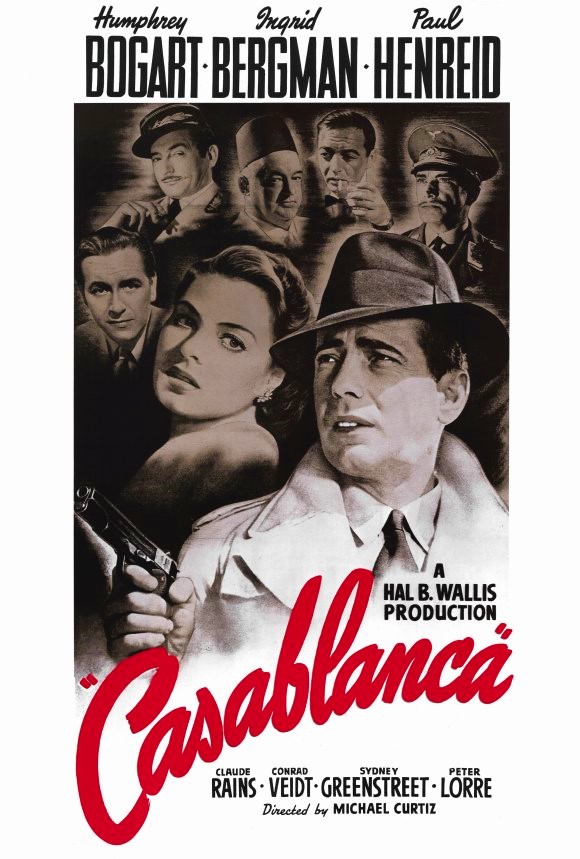
Memories Of Rick-With Humphrey Bogart and Ingrid Bergman’s “Casablanca” In Mind


By Seth Garth

[Before he passed away in the late 1980s the long time French police officer, Commandant Louis Renault (everybody, everybody but the bad guys who crossed his path and there were plenty and not all of them Germans, called him “Louie” for his mild-mannered easy style when he was not in hot pursuit of some nefarious types)who had worked both in colonial Algeria and French Morocco before heading back home to work with the National Police in his hometown of Lyon, liked to sit in the CafĂ© Algiers there and reminisce about all his adventures as a cop. When asked about the most memorable person, friend or foe, he had been up against in his times he would without much hesitation blurt out the name of Rick Blaine.

Rick of Rick’s CafĂ© in Casablanca when Louie had worked in French Morocco early in World War II after the fall of the French Republic and the rise of the Vichy government which controlled that colony then. He as a police officer noted the changing of the guard and went about his business as usual-regimes come and go he had always said but the cops are forever. After investigation of Rick’s past, most of the early part as a tough guy out of Hell’s Kitchen in New York City a place where Rick would make people laugh when he said even the mighty Germans would think twice about occupying and had included some troubling adventurous activity for the “wrong” side in Ethiopia and Spain during the 1930s, he, after having had his palm “greased” issued the liquor and nightclub license for Rick to keep his Cafe Americian open under his prefecture.
For most of the time he knew Rick in Casablanca they had had a good working relationship. Rick would let him “win” at the roulette wheel as his pay-off for letting illegal gambling go on in full sight, “comp” him for drinks and dope, mostly hashish, and let him have his women “rejects” on the rebound. Then she came in, came in as Rick said one drunken night when she had her claws in him bad again “of all the gin joints in all the world she had to show up at his door.” From then on things got interesting, very interesting. The following is a translation by Jean Marais of what Louie had to say when he was asked by a National Police archivist for details of his relationship with one Rick Blaine (1920-1982)-SG]             

“That Rick Blaine was a piece of work, one of the last of the pre-war, pre-World War II if anybody is asking which war we are talking about, romantics tilting his lance at the windmills in the name of love-or the thrill of adventure, maybe even the thrill of tweaking somebody’s nose just for the hell of it, Louie Renault was reminiscing out loud to those who were attending his retirement party. Retirement from the National Police, [the French coppers although they are not national cops like the FBI in America but just like city and town cops there run through the central government], the guys who keep order in places like Paris and Lyon (since it was a governmental pension he was about to receive after much haggling his service during Vichy times first in Algiers and then in French-controlled Morocco, in Casablanca, was included as well as his Lyon assignments). He had been asked a question by one of the younger policer officers about what was his most memorable episode in a long and illustrious career. Of course Louie had to go back to those early war days when he ran the operation for Vichy in godforsaken Casablanca to find some events, some characters who could qualify for what that young officer was asking about. Had to go back to Rick Blaine without question.             

“Yes, Rick was the real thing, I wasn’t kidding when I mentioned his name,” Louie blurted out when the officer did not comprehend why a guy whom he had on other occasions called nothing but a saloon keeper, a guy out for himself whatever checkered past he might have had rated so high. “Let me fill you and see if I am not right about this whole matter.” He would say out of earshot that even De Gaulle would gladly take a back seat after hearing this story since he was safely in London being a pain in the ass to the British and American while “little guys” like Rick and a guy who looked pretty big even by De Gaulle standards Victor Lazlo were mercilessly tweaking the German’s tail.        

“Once the Germans marched into Paris they controlled the whole political situation but since they couldn’t handle a total occupation of France and wreak havoc on the rest of Europe at the same time they left part of the country to the French military, to General Petain who worked out of Vichy, the place where the specialized water comes from. Yeah, collaborators, liked they used to try to hang on me before Rick came to Casablanca, Lazlo too, and got everybody well. I had been in Algiers during that time but once the new political reality hit I was assigned to run the police operations in bloody Casablanca-a backwater where every odd-ball thing could and did happen as well as plenty of illegal stuff from dope to women to smuggling. Just my cup of tea. I figured that I could make more graft there in the Casbah than staying in Algiers once the British and Americans got serious about dislodging the Germans from Northern Africa.   

“No sooner had I landed in Casablanca then I spied Rick’s place, Rick’s CafĂ© Americian he called it, a place where there was plenty of booze, women, gambling, dope and whatever else you wanted. Or wanted done-life was cheap there-dirt cheap. The bloody Arabs could barely keep themselves busy except when some silly “blood honor” thing came up and we had to pick up the mess after the killings. Some he said, the other guy said stuff and then bang-bang. Had to arrest about fifteen people, family members from both sides and show them a little baton to the head just to let them know we meant business. Nobody ever faulted me on that score. I walked in and introduced myself to Rick without saying anything further. He looked at me with a twinkle in his eye he said later after all the smoke had cleared and we could be honest with each other, sized me up and down and knowing that I would do “business” after that appraisal said would the previous arrangement with the Prefect I was replacing be okay- a cut of the profits, a slice of the gambling [paid out by his “winning at roulette” with lucky red 22], my pick of women, free liquor and dope, and deep discounts on anything else I needed. Also told me of his dealings, his working relationships for dope, booze and Moslem women which it seemed some of the Europeans were crazy for although I was strictly for the low-rent French tarts who found Casablanca easy on their virtue, with Sydney Greenstreet, an Ă©migrĂ© merchant of sorts from England over in the Casbah. I immediately issued the necessary licenses that each new Prefect was entitled to issue as was my prerogative. Done.

“This Rick was a hard guy to figure though the more I ran into him on the street or more regularly in his place either to grab some young woman, to grab my cut, to “win” at roulette, or just to have some high shelf bonded whiskey that I became very fond of. Somebody said, I think it was Frenchie the main bartender, that Rick had had some kind of an adventurous past, had run some guns to Ethiopia when they were trying to hold off the Italians when Mussolini was flexing his muscles and later fought with the International Brigades, with the Communists in Spain when Franco was working up to flexing his muscles. I had already known that past from the files the previous Prefect had left and from a couple of snitches I had run through Rick’s place but the “grease” from Rick’s deal said otherwise in my eyes.   When I first met him he was all business like I said, if you said green he said okay what shade, that kind of thing.

“Somebody said, maybe it was Frenchie again since I sat at the bar of the joint many a night to “enforce” the no gambling regulation and to drink a few high shelf scotches, that Rick had been unlucky in love and that was why when he, Rick,  had his choice of any girl he wanted, two if he was feeling frisky, would take them up to his office and apartment upstairs from the club, do whatever it was that they did, some wild stuff I heard from a couple of them that I caught on the “rebound” especially from one who took him “around the world” which she would later do with me and the next night would not know them. Tell them to sell their wares in the Casbah, a low thing to say to a European woman if you knew anything at all about what went on in the Casbah. I never went there personally but would sent for this Greenstreet to deliver me my graft and whatever dope I was looking for at the time. Like I said mainly hashish from the pipe. In the end it would be that lost love that had been bothering Rick once she came to town but early on you couldn’t tell what was eating at him. Just knew that he had a chip on his shoulder which would not fall off.

“Jesus, in those days there were all kinds of people as you can imagine trying to get out of Europe for one reason or another and once France and the countries around it fell to the Germans that was doubled up. Homeless, stateless Jews, who we all knew were being savaged by the Germans and by Vichy too, International Brigaders who couldn’t go back to their occupied homelands, local Communists who didn’t get or who couldn’t get underground, anybody out of the ordinary, we even had a couple of kids, rich kids who had left Hamburg once Hitler said that jazz was a Negro-Jew conspiracy and banned the music. If you looked at a map of Europe in say 1941 you would notice that there was not much wiggle room to work with in order to get out of some occupied spot. The road out though however they got there led to Casablanca no matter what the individual reason for leaving Europe was. The link. The air flights to Lisbon and from there anyplace but the old canard Europe.

“So you know that there was plenty of money to be made by those daring enough to act as smugglers to get these desperate people out one way or another. I could have made plenty if I had decided to use my position to get real greedy but I didn’t want to deal with a bunch of desperate people bothering me about why they weren’t getting out fast enough. Rick and the Casbah made me plenty-for a while. All the action either went through that guy Sidney Greenstreet who ran his operation out of the Casbah where he mainly handled small fry, people of no account but with money, or at Rick’s for the higher class clientele. Mostly the wealthier Jews and previously high placed officials of democratic governments who the Germans were desperate to find and make an example out off for their compatriots under occupation. Some seriously shady characters, art forgers, crazed jazz aficionados, con artists, three card monte hustlers, independent dope dealers-mainly heroin out of the Afghan fields working their way West to the cities, jack-rollers, rapists and assorted slugs, characters who even we had to keep an eye on to keep any kind of order plopped themselves there.          

“Things though were going fine until some horse’s asses, as it turned out guys we had on our radar but couldn’t quite nab, decided they would murder a couple of German couriers and grab a couple of letters of transit they were travelling with. Now these letters of transit were like gold-would make their possessor a pot of gold. Maybe two pots if they worked it right. These were no questions asked documents which only had to have names filled in order to catch a flight to Lisbon and from there wherever else they wanted to go. This weasel, well known to us from a couple of rip-off jobs he did on unsuspecting travelers, a guy named Peter Lorre was part of the gang who took the couriers down. One night he showed up at Rick’s the natural place to start looking for high-end buyers and we nailed him-took him in “custody” but he didn’t have the letters of transit on him. He hanged himself in his cell before we could get much more out of him. Rick had been as cool as a cucumber when this weasel, this sweaty little nobody showed his ugly face there. This Lorre begged Rick to hide him. Rick just blew him off, told him to get lost. A couple of customers made noises when we grabbed and manhandled Lorre saying they wouldn’t patronize Rick’s again because of his attitude in the matter. Rick told them something that impressed me at the time-he wasn’t sticking his neck out for anybody. Those customers by the way were back the next night when I let Rick reopen the place and he sent them over a couple of drinks. They were his best buddies then.   

“That courier murder business though would lay us all low. See the Germans had sent over this hard-ass major, Major Veidt (sic) I think his name was if I remember the name correctly, to look into the matter. I was trying to impress him so he would put in a good word for me with Vichy. That was the whole idea behind making a big deal out of the Lorre arrest (and I was happy when he hung himself because he would have not stood up well under German methods and he might have spilled who knows what about what was going on in Casablanca at the time). That made Rick’s gesture at the time this guy Lorre begged him to save him from my men even more important. Rick just looked the other way and Lorre was a goner. We never did get the other guys in with Lorre when we rounded up, our what did we call them, oh yes,  “usual suspects”, Communists and con men and a few whores who we regularly rounded up to fill the jails full and make it look like we were doing our jobs. Some wound up out in a desert graveyard once we were done with them.                                                                                                                                             

“Like I said in those days all kinds of people were coming through town. One of them a guy I mentioned before and said I would speak of again named Victor Lazlo had escaped from a German concentration camp and somehow he had worked his way through whatever network he had in Europe to Casablanca. This Lazlo was well-known as a leader of the resistance to the German occupations of half of Europe so a guy whom the Germans, especially this Major Veidt, were foaming at the mouth to get their hands on. But as long as he didn’t do anything illegal I had no reason to arrest him. I had half-figured when I heard he was in town to see who the highest bidder, strictly cash, was for his hide and take my cut that way. 

“But here is where things got interesting. This Lazlo, a good-looking guy with good manners and a good tipper according to Frenchie, was not travelling alone. He had this beautiful woman with him, one of the most beautiful I have ever seen then or now, Ilsa something, I am not sure we ever knew her last name and it didn’t matter with a beauty like that. When she showed up our Rick went crazy, went crazy like a loon. See he had come to Casablanca just ahead of the German armies advancing on Paris with this black guy who was an entertainer, a singer and piano player named Sam and a sour look on his face. He had “known” Ilsa in Paris, had been her fancy man from what I could tell. They were supposed to blow town together and meet at the train station one evening on the last train out of Paris before the Germans stopped the trains. She was a “no show.” She was in living color the reason that Rick had been so indifferent to everything. Why he turned over perfectly good women to me without batting an eyelash.            

“Of course the minute she showed up the old flames were re-kindled-for both of them. She had spied Sam at the piano through the heavily smoke-filled room, had forced him to play “their” song, If I Didn’t Care I think and when Rick heard that he went ballistic, was ready to come to blows with Sam since Sam had been ordered never to play the song. Then he spotted her across the piano and he melted down like an ice cube. It seems that in Paris she had assumed her husband, this Lazlo was dead, had been killed by the Germans. False report. That last day in Paris she found out through some underground source that Lazlo was still alive and she had gone to him. Leaving Rick standing in the rain at the fucking train station. Naturally all of this stuff I learned later but that “left standing in the rain” is what drove Rick to get up on his high horse and create nothing but trouble for me and my men once she came into view.  

“That long gone Lorre had given Rick the letters of transit to keep for him the night Rick looked the other way when we grabbed the weasel and made him squeal or whatever weasels do when they are caught. When with Rick’s help he fell down, wound up at the end of his checkered tie, Rick figured that he would use the letters to get himself out of hellhole Casablanca. He said that even Hell’s Kitchen in New York where he had grown up (and had “advised” the Germans to think twice about trying to occupy if you recall) was less dangerous than Casablanca so you get an idea how bad things were-how cheap life was on in the desert. Worse than the bloody wogs the British were always moaning about in the Raj, in India. He wasn’t going alone though. She, Ilsa, was going with him. She had snuck up into his apartment one night when Lazlo was out doing his organizing of the local resistance. As a result of that outlawed meeting I had Lazlo picked up when he surfaced, you couldn’t have such meetings and I knew that German major would be happy to hear that I had the great Victor Lazlo locked up like a caged animal.

“Whatever Rick and Ilsa did and from what Frenchie said Oscar the head waiter told him they had definitely gone under the sheets from his disheveled look and the blush on her face when Rick told Oscar to escort her home they were blowing town together. When Oscar told me that story a few days later I wondered about what had happened. What had made sour Rick decide to blow a good thing in Casablanca (my good thing too don’t forget). No question Ilsa was a beauty, an exceptional beauty but after the way she had left him high and dry in Paris I figured maybe a quick roll in the hay and then off alone. But you never know about beautiful women, sometimes they can be just as kinky as any whore or any low-rent tart. She didn’t look that way but maybe with a few drinks and an agenda of her own-like getting Lazlo out- alone- she took him around the world like that ex-flame Lisette had.      

“Somehow and I never could get him to tell me exactly what happened he had had an epiphany after that night some kind of turnaround. All he would say back then was the way the world was just then the troubles of three people, him, Ilsa and Lazlo weren’t worth a hill of beans compared what was going on. But whatever the source from then on he was on fire, was maybe thinking back to that old fight in Spain, thought about some payback for lost comrades, maybe what would happen if the Germans won, maybe he just didn’t like that Major Veidt and his arrogant ways closing up his cafĂ© when the high rollers were coming in for their weekend beatings.

“So he gave Ilsa one story about how they should meet at the airport and blow town. She was all over that idea and had dropped any mention of Lazlo. He told me another. Talked me into a deal that when I thought about it later I should have figured was bullshit from minute number one. Confessed to me that he had the letters. Was blowing town with Ilsa and that was that. He said -let’s do this though. Let Lazlo out, let him get to the airport with the letters and grab him as an accessory for the courier murders. A feather in my cap was all I could think of. Would get that fucking Major Veidt off my back about picking up Lazlo and showing him the desert sights. When the deal went down though Rick was faking the whole thing. Maybe not about wanting to flee with Ilsa but about his attitude toward Lazlo. He had convinced me of his plan but when the deal went down I was the fall guy, well, one of the fall guys. That German major took the big fall when he tried to stop the plane to Lisbon as Lazlo and Ilsa got on the plane. Rick took him down without a murmur in one clean shot making me wonder how the Loyalists lost in Spain with a guy like that working with them.
         
“Needless to say when I was caught in a bind I stepped away from danger by refusing to arrest Rick. I went into the usual dodge-round up the usual suspects, double it up this time since a goddam German major was under the ground. I resolved the bind I was in pretty simply. I figured my days in Morocco were finished and so I saw the writing on the wall. I walked away with Rick (an action that I was successfully able to use in order to have my service time there count toward my retirement which I had many hassles over before I won). We made our way to Brazzaville with the dough Rick grabbed from Greenstreet when Rick sold him his interest in the cafĂ©. I stayed there grabbing my graft until the end of the war and had worked various grifts with Rick until he went back to Europe a few months later where he joined up with the French resistance, worked with Samuel Beckett the exiled Irish playwright who was deeply into the organization from what I heard later. I heard from him a few times over the years before he passed away a few years ago. I guess Casablanca was in his blood because after the war he ran the CafĂ© Casablanca in New York City for some thirty years before he gave it up to retire. But what a guy that Rick was, giving up that luscious piece for unsung glory underground in France. Making that big gesture for love. Yeah, the last of the pre-war romantics.


 [A1]
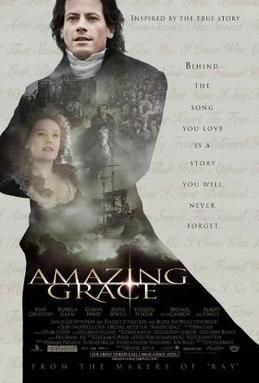
A Poor Wretch Like Me-William Wilberforce’s “Amazing Grace” (2006)-A Film Review


DVD Review

By Sam Lowell

Amazing Grace, starring Iaon Gruffudd, Romola Garai, Albert Finney, 2006   
More than one commentator, especially economic historians not all of them neo-Marxists or leftists, has noted that the bedrock of the American capitalist system was built on the bondage of slavery. Meaning that peculiar combination of slave labor, various plantation products, and mercantile commerce contributed to the accumulation of capital to push the system forward to the next level. Of course if those conditions were truth then since black slavery was introduced into the North American continent early in the 17th century then the mother country, Britain, can also have been to have founded on the lucrative slave trade. All of this to introduce the idea put forth in the film under review, Amazing Grace, of the struggle to abolish the trade in Britain. As the film makes pains to point out even in vaunted democratic countries that abolition would be no easy task when special interests benefited enormously from the trade, directly or indirectly. In America a bloody civil war was necessary and at point that was a close thing as well.           

Like many historic movements the struggle to abolish the slave trade had very few adherents at first for a whole lot of political, economic, and social reasons. In this film a key figure, as in the history books, who helped stop the trade in the British Empire was William Wilberforce played here by Iaon Gruffudd. Wilberforce had been just another promising parliamentary politician, a rising star in the ebb and flow of British politics in the late 18th century until he “got religion,” literally got religion through an evangelical conversion since usually when I use this term in quotes I am using it to signal a secular conversion like going from pro-war to an anti-war position, things like that. The key figure in pushing his conversion was the evangelic leader John Newton, played by Albert Finney, a former slave ship captain turned righteous slave trade opponent. Newton was the man who wrote the poem Amazing Grace of the title which later became a hymn among the evangelicals signifying a spiritual conversion-having been lost but now found.             

Of course in late 18th Britain, having shortly before lost the key colonial possession of what would become the United States, there were many opponent to the idea of stopping the slave trade from the actual slave-traders to shippers to plantation owners to merchants all well represented in Parliament so Wilberforce and his few early allies were up against some mighty interests. Those interest pushed back, pushed back hard, aided by various court figures who also had an interest in the trade, and so Wilberforce was continually up against it for a long time. Of course at points the success or failure of the effort was driven by other forces as well as when his friend Pitt, the Prime Minister, told him to back off in the 1790s when the British were going toe to toe with French revolutionary forces and needed a united country to beat back the enemy.  


This film also deals with various crises of confidence on Wilberforce’s part as he ebbed and flowed in his efforts to stop the trade. Part of his crises stemmed from his chronic ill health and part his desired marriage to Barbara Spooner, played by Romola Garnai, who in the end encouraged him to keep up the fight. So Wilberforce plugged on and in the end through a clever parliamentary ploy was able to get passage of his bill in 1807. Yeah he was blind but now he saw, got that religion I mentioned before. Kudos Brother Wilberforce.   

Wednesday, January 4, 2017

The War Against Drugs Up Close And Personal-Harrison Ford’s “Clear And Present Danger” (1994)-A Film Review  


DVD Review

By Sam Lowell

Clear and Present Danger, starring Harrison Ford, Willem Defoe, based on the suspense novel of the same name by Tom Clancy, 1994  

The concept of “clear and present danger” has a long legal and constitutional pedigree although of late it has been used rather over-abundantly in presidential decisions, great and small. The concept “clear and present danger to the national security interests of the United States” usually invoked on anything from the “war of terror” to classifying documents which should see the light of day in a working democracy. In the film under review the cinematic adaptation of Tom Clancy’s best-seller Clear and Present Danger  the concept is invoked in the pre-9/11 war of drugs which took up a great deal of the political and social air in 1990s.

Here’s the play on this one. A close friend of the President (fill in the blank for a surname from Washington to Trump), a businessman, had been killed along with the rest of his family on a sea-going yacht in what seemed at first like just another bizarre killing spree, maybe drug addled pirates or kill-crazy teenagers looking for kicks on the high seas. No so fast though. Said businessman had serious and close connections with the cocaine-rich drug cartels down in Columbia. Ran a nice little profitable for all concerns laundry business when nobody needed quarters for the washer. To get to the bottom what happened to his friend, and to help his scandal-ridden administration in need of a boost come the next approaching election, the President invoked the “clear and present danger” policy.

That hem haw decision made by indirection rather than strange out since it involved covert operations using American troops triggered two movements-one, setting up a clandestine para-military operation led by John Clark, played by a made for Special Ops roles Willem DaFoe, to smash the drug lords, or create a certain amount of good election winds havoc  and-two, sending acting-Director of Intelligence Doctor Jack Ryan, played by Harrison Ford,  on the trail of the whereabouts of a few hundred million laundered dollars which the fallen President’s friend had been knee deep in turning over.          

Of course in any war, in anything involving drugs and huge sums of money, there is more duplicity, more big career moves and thought of secure private contractor employment after the cheapjack public service by the Administration’s lackeys and the over-the- top drug kings and their confederates than you can shake a stick at from the sabotages of that black-ops operation to working hand-in-hand with a high-ranking officer of one of the cartels. Here’s the beauty of high-end politics-one of the drug lord’s underlings, a seasoned ex-intelligence officer in Cuba now a hired gun for one of the lords offered to make the drug trade reasonable including many photo ops of DEA-types busting big loads in exchange for letting him waste the cartel leaders-and the Administration through the National Security Advisor signed on. Problem: that high-end Special Ops team was going to be left hanging in the wind-cooked with no way back.


That is where our man Jack, straight-shooter Jack, a guy who does not leave his men behind get that straight gets into the act. Like I said there is a Washington-drug lord conspiracy formed to make the President look like he is on top of the war as in any other war-time situation. But it is all a house of cards after the President’s national security advisor brokers a deal with that high-ranking official to kill his boss and take over the operations. Nice, right. Well Jack finds out about this and spends the rest of the film attempting to expose the budding conspiracy while naturally in a suspense thriller dodging bullets at every turn in order to get Clark and whoever was left in the rotting jungles of Columbia. Yeah, even I know you don’t let the guys who you sent on dangerous missions hang in the wind. When Jack figures out the high level of duplicity going all the way to the President (remember fill in the blank for a name) he screams bloody murder before a Congressional oversight committee. Good thing he had old Clark and his men at his back. Pretty good thriller.         
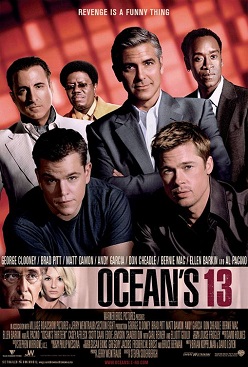
Ocean In The Desert, Redux-Redux -George Clooney And Brad Pitt’s Ocean’s Thirteen (2007)-A Film Review


DVD Review

By Sam Lowell

Ocean’s Thirteen, starring George Clooney, Brad Pitt, A Pacino, Elliott Gould, Andy Garcia, 2007 

Recently I noted in a review of what amounted in the end to the first film in the Ocean trilogy and what might serve as a reason for its popularity that everybody loves a con, loves a con artist at least since old Herman Melville made a big literary deal out of such characters in his 19th century novel The Confidence Man. I was also careful to mention that statement that everybody loves a con, a con artist as long as that personage is conning somebody else and not one’s good self-or one’s own. I also said that an appreciation of a con, and of a master con artist goes down much better if the con is on some super-rich guy or gal who made his or her dough by walking over a pile of people, hell, maybe a pile of corpses. That latter premise is what made George Clooney’s remake of the 1960s Frank Sinatra-led classic con story Ocean’s Eleven so satisfying and perhaps with a little less satisfaction since this road had already been travelled this third film in the trilogy, Ocean’s Thirteen

Here’s the “skinny” on the con in this final con of the series. Reuben Tiskoff, played by Elliott Gould, who fronted Danny Ocean, played by George Clooney, dough in the original caper, the dough for the big caper against his nemesis Terry Benedict, played by Andy Garcia, has been stiffed yet again by a partner who wanted to grab all the greed dough and glory for himself. (Reuben’s track record making me wonder how he survived in Vegas for two minutes and had not been ground to dust for coffee and cakes long ago in the dog eat dog gaming world.) This time Reuben took the hit from Willie Bank, played by Al Pacino (playing his usual gruff stage persona), who owned a sting of five star hotel-casinos around the world (five diamond-literarily a fact which helps push the plot along which) and wanted no partner’s to hog his glory as he opened a high-end resort in Vega. 
I mentioned in the review of Ocean’s Eleven  that in the old days if you wanted to run a scam you brought in a bunch of heavy yeggs and mugs and strong-armed your way around the caper. Not these high tech days. Now you need tech savvy guys with brains and cunning (and a little old time off-hand muscle never hurts). The caper here depends on trying to financially ruin Bank and therefore handing over his operation to his board leaving him flat-footed. On the side also take a few hundred million by stealing his precious five star diamond collection from his previous hotelier efforts. The deal here is to rig all the games in the casino so that the high end rollers take Bank’s shirt off his back. Without them returning to inevitably lose their dough the next minute (remember the first rule of gaming-the house in the end always wins). How to do that. Easy-simulate an earthquake which will have the customers-high- end or low fleeing like rats for the exits.

Danny has a pretty good revenge idea working here this time (and don’t forget the added theft of the diamonds which is the crew’s service charge-fair enough, right).Except the big time high tech drilling machine that was to be used to create the earthquake broke down. While Danny and the boys are good they don’t have enough dough to get a new one. Enter one Terry Benedict (another guy whose ability to survive in Vegas   I wonder about), you remember Terry, played by Andy Garcia, the “mark” in the big casino heist of the proceeds of three casinos-his. He fronts the dough for a cut of the “profits” since he and Bank had a falling out earlier in their careers.  So the “job” got done on old Bank, he lost control of his casino-hotel, lost his five star ratings and his nice diamond collection. This third film had the weakest plot line so it was just as well that the director called it quits at a trilogy. Yeah, but revenge is sweet and I cried not one tear for this palooka Bank. Of course Danny and his crew were not targeting me-or mine.         


Tuesday, January 3, 2017

Ocean In The Desert Redux-George Clooney And Brad Pitt’s “Ocean’s Twelve” (2004)-A Film Review 


DVD Review

By Sam Lowell

Ocean’s Twelve, starring George Clooney, Brad Pitt, Andy Garcia, Julia Roberts, 2004  

Recently in reviewing the original Ocean’s Eleven (not the original Frank Sinatra/Rat Pack one done in the early 1960s but the first in what would be a trilogy of George Clooney-Brad Pitt vehicles) I noted not without some blow-back probably from people who have been conned I mentioned the following which applies to the film under review here –the sequel Ocean’s Twelve:    

“Let’s face it everybody loves a con, loves a con artist at least since old Herman Melville made a big literary deal out of such characters in his 19th century novel The Confidence Man. Well everybody loves a con, a con artist as long as that personage is conning somebody else and not one’s good self. Better if the con is on some super-rich guy who made his dough by walking over a pile of people, hell, maybe a pile of corpses. And that latter premise is what makes George Clooney’s remake of the 1960s Frank Sinatra-led classic con story Ocean’s Eleven.” That rather obviously sound reasoning gets another work-out in this sequel where the original crew plus Tess, played by Julia Roberts, who makes the twelve of the title.  

Here’s how this version played out. Terry Benedict, played by Andy Garcia, a Las Vegas casino owner who was bulked out of $160 million dollars in the original Ocean Eleven caper did not get to own casinos by being conned by tricky con men, or so he thinks. Through his intelligence apparatus he finds all the gang members and gives them an ultimatum-return the dough plus about thirty million in interest since the caper occurred three years before his round-up-or else. Problem: these guys, these cons didn’t invest their ill-gotten gains in nice municipal bonds but spent it like, well, like drunken sailors. When they add up the tally they are about ninety-seven million short (that includes the interest as well). They are given two weeks by Terry to ante up or once again-or else.          

What to do? Well it won’t be by applying for bank loans or such but back to the old hunting grounds, back to the big time con. Their first caper backfired since the rare item they were after had already been filched. Somebody else was working the same street. Moreover a Europol detective Lahari, played by fetching Catherine Zeta-Jones, was hounding their footsteps as she pursued a thief whose moniker was The Night Fox an acolyte of master thief “LaMarca.” It was the Night Fox, a member of the aristocracy who had plenty of time on his hands who had beaten them to the rare document that would have gotten them well. The cocksure Night Fox challenges Danny and the boys to a match to see who was king of the con hill. Steal the then incredibly well-guarded Faberge Imperial Egg. The reward for his failure would be that he would pay out the ninety-seven million to Benedict (presumably from his household funds or walking around money).


The chase was on. Not to worry though Danny and the guys have this one mapped out to perfection-have got all the angles covered. In the old days this kind of caper depended on muscle and maybe a few inside job participants. Now it is all craft. The solo Night Fox figured after his assault on the museum where the egg was being shown that he had won. Sorry, not against Danny and the boys. Why? Well they had an inside advantage. They had made contact with LaMarc who gave them the details of when the egg was going to be in transit. Piece of cake. Terry Benedict take your dough and beat it. Along the way Rusty goes under the sheets with that Detective Lahiri who as it turned out was the long lost daughter of LaMarc. She crosses the line to his side. Must be in the genes. Not as good at the plot-line in the first one but okay.         

Monday, January 2, 2017

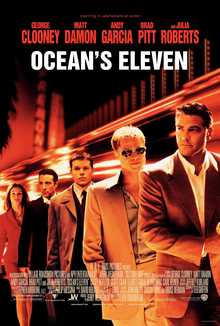
Ocean In The Desert-George Clooney And Brad Pitt’s “Ocean’s Eleven” (2001)-A Film Review 


DVD Review

By Sam Lowell

Ocean’s Eleven, starring George Clooney, Brad Pitt, Andy Garcia, Julia Roberts, 2001 

Let’s face it everybody loves a con, loves a con artist at least since old Herman Melville made a big literary deal out of such characters in his 19th century novel The Confidence Man . Well everybody loves a con, a con artist as long as that personage is conning somebody else and not one’s good self. Better if the con is on some super-rich guy who made his dough by walking over a pile of people, hell, maybe a pile of corpses. And that latter premise is what makes George Clooney’s remake of the 1960s Frank Sinatra-led classic con story Ocean’s Eleven go the distance.
Here’s how this version played out. Ex-convict Danny Ocean, played by George Clooney, freshly paroled out of prison automatically begins to set in motion the plans he had spent four years in prison working out. (Yeah, not all cons work out and sometimes you face hard time if the caper goes south on you either because the plan had too many moving parts or because once you knew you couldn’t get all the first-rate accomplices you needed you made the mistake of going for second best-ouch!)With that much time you know Danny has a big score in mind-a plan to get well in a hurry.     

Naturally he needs to grab a crew of reliable cons to work this caper and above his old confederate Rusty Ryan, played by Brad Pitt. For the first part of the film after Danny has tagged Rusty for the caper the play is to line up nine other guys (two and nine makes eleven if my math is right) for the primo caper of capers-knocking over the three biggest casinos in Vegas. Piece of cake. No sweat. The payoff-about a hundred and fifty million a little bit more than walking around money (and many times the take in the Frank Sinatra original where the take was a few million-a lot of dough back in 1960 if only coffee and cakes money these days). Now such a caper seems to me to need no additional hook- I know I would be in if asked. But see Danny is a thoughtful reflective type and so he had pitched the idea to an ex-casino owner with two things in mind. Grab some much needed front money from that casino owner who just so happened to have been stiffed by the owner of those three casinos-Terry Benedict (played by Andy Garcia). Here’s the dicey part, the part tailor-mind to lead to trouble in most cons-Danny is trying to get his long-suffering ex-wife back. An ex-wife Tess, played by Julia Roberts, who did not pine away while Danny was in the can but who now was Terry’s girlfriend. Bad business mixing the love and money combination-no question.            

Not to worry though Danny and the guys have this one mapped out to perfection-have got all the angles covered. In the old days this kind of caper depended on muscle and maybe a few inside job participants. Nowadays though the yeggs and mugs are excess baggage what you need is larcenous guys into high technology to over-match the technology something like the gaming industry can bring to bear to protect their profits. So this caper need guys who can work through the high tech master vault where all the money from the three casinos is centrally located (bringing to mind old bank robber Willie Sutton’s remark about he robbed banks-that is where the dough is so Danny and company are on the right course). Naturally there has to be a few tense moments where the whole thing could fall apart because the usual something unexpected happened but mostly this was clear sailing. Danny and his guys did a good job. And nobody was left crying when Terry lost his dough-and Danny’s ex-wife to boot.        


Sunday, January 1, 2017

A Mother’s Story-Of Sorts-Ashley Judd And Tommy Lee Jones’ “Double Jeopardy” (1999)-A Film Review


DVD Review


By Sam Lowell

Double Jeopardy, starring Ashley Judd, Tommy Lee Jones, 1999

The film under review Double Jeopardy was/is billed as a suspense thriller and at a certain level that is true with a few scenes that qualify for that title. But in the end, literally in the end, this is essentially a mother’s story wrapped up in a thriller. A mother’s story of never giving up that primordial bond between mother and child (and as the film postulates child and mother). The film shows in extremis what a mother will, and will not do, to cement that eternal bond.         

Here’s how that idea played out in this film. Libby, played by fetching Ashley Judd, is married to Nick, a financier, and they have a son. They are wealthy residents in an up-scale community on an island in Washington. Nick suggested at one point when they were having some marital difficulties they “get away” on a sailboat. Libby, a lover of boats and the sea, agreed. During that weekend though all hell broke loose. After making love one day Libby woke up from her sleep to be confronted with much blood, including on a knife, the presumed item that caused the scene –and no Nick. The whole set-up looks like Libby murdered him, especially after the authorities found out that Nick was on the financial skids-and had a two million dollar life insurance policy payable to Libby (although I am not altogether sure that she could collect on a murder to grab the dough as suggested by the film-in any case any insurance company would fight that battle with that much dough at stake.   

Frankly, I think that Libby had a good case for ineffective assistance of counsel on appeal since not only did the authorities try her for murder but a jury convicted her on pretty flimsy evidence-and no body. That aside Libby drew a long sentence at the women’s prison-and “lost” her son-has a friend adopt him to avoid the trauma of knowing his mother was in stir for murder. This is where the mother’s story begins to play out. While in jail she was in contact with her son via the phone. One day when talking to him he let the cat out of the bag by saying “Daddy” when Nick entered the room. Yeah, Nick was not dead, far from it, had flown the coop on the financial difficulties with that staged blood bath. Libby, now wised up, went into overdrive (literally at some points) and sought and received a parole after having spent six years in prison.

Parole though meant she had to stay in a half-way house and keep to a stringent set of rules laid down in the person of the parole officer, Lehman, played by Tommy Lee Jones. Needless to say in search of Nick (or whatever alias he was using at the time as it turned out) she would break those rules and run into serious controversy with the hard-nosed Lehman. Libby through foul means and fair eventually caught up with Nick’s trail in New Orleans with Lehman in hot pursuit behind her since she had escaped his clutches at one point when he was trying to bring her in. Before too long she caught up with Jonathan (Nick’s new moniker) and tries to negotiate with him for her son. No dice. No dice until the final confrontation with Lehman in the room where she shoots her already dead husband to death.              


That last sentence is what double jeopardy is all about in the context of this film. See she had already been tried and convicted for “killing” Nick on the boat. Although this may strain credibility under Anglo-Saxon law once you have been convicted of a crime the authorities can’t double-down on you. For Libby that meant that even if her intention to really kill Nick happened, and she had plenty of good reasons to, good case for self-defense could be made as the shoot-out played out though, she would “walk.” Lehman made sure she was pardoned for the original “crime” and she got her son back. Interesting film