Sunday, April 9, 2017

Remembrances of Fair Angelina-With Bob Dylan’s Farewell Angelina In Mind


By Sam Lowell


Josh Breslin, the fairly well-known writer of articles and essays by conscious choice when he first started out in half the unread and coffee table small press journals, magazines and newspapers in America, recently retired from steady writing as a profession and thus given of later to memory thoughts of his youth as part of his plan to write a semi-memoir of his growing up times in the 1960s automatically thought about his big time love affair with fair Angelina. Well maybe Josh had not automatically been thinking about that affair but had been led to those thoughts by two prompts, one good, one bad. The first one, the good one, listening while working on his computer which had become also of late his favorite way to listen to music to one of the never-ending bootleg series CDs of Bob Dylan where a version of his Farewell, Angelina came on. The second, the bad one, very bad for several days, an obituary in the New York Times which reported that the once well-known former 1970s and 1980s movie actress and commercial spoke-person Angelina Farrell had passed away at 70 after a long battle against cancer. That Angelina, his Angelina, Angelina Donnelly, when he knew her before she went into the movies and changed her name was that big affair from his youth that he was drifting back to in memory time. Sad day, sad days.

Looking back from grim memory think Josh thought it funny that probably in no time but the middle 1960s when all hell was breaking loose but all kinds of possibilities were also opening up that he would have run into a woman such Angelina. Josh had met her, met vivacious Angelina Farrell, when he decided to hitchhike west to see what all the commotion was about in the summer of love, 1967 version, just after he had graduated from high school and was aimlessly wandering around his hometown of Olde Saco up in Maine waiting to start college at State U in the fall. That decision had come about as a result of his having run into a wild man “hippie” in full regalia, long hair, pony tailed, wispy beard, the fate of many a youthful male, blue jeans, Army jacket, and bottomed off by roman sandals. No, bottomed off by that wild look Josh was beginning to see on more and more young people which indicated too many long nights around a corn cob pipe full of marijuana, a bong bowl of hashish, a rolled dollar bill of cocaine, or, more probably a Dixie cup full of acid-etched Kool-Aid, you know LSD. He, Lenny Josh thought his name was but don’t hold him to those memory names, had just gotten back from the Coast and had been visiting his grandmother in Portland who told Josh about the doings out there and about what was expected to happen that summer. He was intrigued, so intrigued that he gave up, to his father’s anger, a job working as a janitor in the textile mill where his father had gotten him a job for the summer. Packed up soon after meeting that wild man “hippie” (a term not widely used in 1967 but very descriptive now) and started hitchhiking west to save precious money needed for tuition in the fall, although he lied to his parents and told them he was taking the bus out when they tried to argue him out of such a forlorn adventure.

Of course as anybody who had read Jack Kerouac, the “king of the beats” author of On The Road who got many youth started, well, on the road as Josh had earlier that summer, could tell you the vagaries of the road, of hitching then, maybe now too if any ill-advised person still does that form of travel, was that you would not necessarily get to where you wanted to go in a straight line but where whatever ride on whatever road you hitched and accepted took you. That vagary had been how Josh wound up at Jimmy Jack’s Diner on the outskirts of Steubenville flat up on the Ohio River after being left there by a good guy trucker, Denver Slim (who was neither from Denver, nor slim, go figure) who had originally planned to drive directly to Chicago with his load but had changed his mind when he decided he needed to see his girlfriend who lived in Steubenville (his wife lived in Toledo but that was another story). So Jimmy Jack’s outside out of the way southeastern Ohio it was on that first run out to search for the great blue-pink American West night as another writer he would meet out in San Francisco put the matter. Yes, nowhere backroad truck stop Jimmy Jack’s Diner was where he met Angelina Donnelly from Muncie out in the wilds of Indiana who was serving them off the arm at the diner when he wandered in to grab a quick bit, a bowl of beef stew in the days when he ate meat which had the virtue of being cheap, hearty, in the way diner food was always hearty, and filling, before heading on the road again.      

Something about her as she served him his beef stew well before other patrons who were impatiently waiting for their cooling meals on the pick-up counter, something about him with that sly grin spoke to her,  spoke to both almost immediately of attraction. Angelina, young, pretty, very pretty in a Midwestern way, a way as he would later put it as fetching to others when she began to appear in films and commercials. Not the drop dead ice queen first female lead who would never disturb your dreams because you could never get through the layers, layers of every possible description to block your way, but the one you think about later, think sexual thoughts about, think about how if you played your cards just right you could probably find yourself under silky sheets. The kind of woman too who once she got you on her wavelength whatever ever she was selling you would buy whether you needed it or not just because she had that effect on you. A look to make a film career out of, no question although such thoughts never passed her lips. The attraction for her, just out of classes in business school, the Bancroft Business School, for the summer in Muncie and looking for “adventure” decided to head East to see what was up there was that he was her very first “hippie,” the first one that she had seen in  person and he seemed as she put it later “nice.” She had heard about such creatures, and been warned away from such evil by her parents and friends back in Muncie, but she was curious, very curious about this example of the new breeze the newspapers and magazines were talking about.                    

So they made a match. Hit it off that very night when after circling each other all day as he took his sweet time finishing his meal and several cups of coffee to make the moments last  they “made the roof shake to the heavens” in the cabin up the road from the diner where Angelina was staying with their love-making. Later on good days, on the sunnier days of their relationship they would tenderly refer to that fresh green lust. It was thus not surprising then when a few days later after Josh had worked the dishes at Jimmy Jack’s to grab some quick dough and Angelina worked double shifts that they headed out on the highway together to see what they would see. They had first headed south to Prestonsburg down in coal country Kentucky to see a cousin of hers and then began heading west again. They had their ups and downs on the road, getting short and long rides, depending on where they were let off. (In those days guys travelling with a young woman, a fetching woman, would grab rides much more easily than if alone although the duration might still be long or short depending on the driver’s destination.

That plan westward so Angelina could see the Pacific Ocean for the first time worked out okay for a while, they had fun meeting groups of fellow spirits on the road, spent an interesting week hanging out in the rustic campsite with a bunch of “freaks” where Josh stayed dope high all week (Angelina a true daughter of the Midwest just then still hearing those warnings against the devil’s doings from her parents in her head). They made great tumbling love, sex which Angelina did not heed her parents’ warning about, praise be, as she was curious, willing and resourceful in that regard. But as the weeks went by, as they were making no serious headway west, as she could not wash her hair daily, as she became less enamored of the small tent they had purchased in Louisville for nighte when they had no other way to sleep Josh could sense that Angelina was not built for the road, was built for other kinds of adventures, was built for comfortable beds and silky sheets.

The whole thing started to come to a head during one tough rainy stretch in Moline when they were forced by the continual bad weather to grab a cheapjack motel. That stuck situation strained their good feelings toward each other as Josh got more into being “on the road” the farther away he got from Maine and the less Angelina cared about seeing the wide Pacific. After the rains stopped in Moline they decided to give it one more try but by the time they got to Neola out in Iowa, got to Aunt Betty’s Dinner where Angelina was working for a few days to make some money and old Aunt Betty, a real Aunt Betty began to work on her to go home, the die was cast. The way they left it, left the situation between them Angelina would head back to school and meet Josh who had along the way decided that he would postpone going to college for a year to “find himself” somewhere out on the Coast during her winter break. Josh headed west mostly alone although he had a wild time with some serious freaks out in Joshua Tree channeling the ghosts of ten thousand years before Apache warriors (under the influence of a bunch of eaten peyote buttons). Several weeks later he wound up near La Jolla north of San Diego joined up as part of a traveling caravan, a yellow brick road converted school bus caravan heading north toward San Francisco where the summer of love was going full blast.      

Josh had thought that Angelina’s decision to go back to school and then meet him out West during winter break was so much wishful thinking but in December Angelina got a message to him through some people he was staying with outside of LA in a commune that she was coming out to see him as planned. Josh met her in car rented by one of the people who was staying at the commune at the LA airport and they headed up the Pacific Coast Highway to an ocean campsite near Point Magoo which Josh had picked out specifically to show her the ocean. There they frolicked in the ocean in which Angelina, not knowing the wild ways of the waters almost drowned in a riptide she was so happy to be in the water, make great love almost as great as that first night back in Steubenville where they made the roof shake. Angelina had on their second night out there also smoked dope for the first time. Josh said he would always remember that star-filled moon-filled night with the ocean waves crashing just beneath them when they seemed as one, that they had shared a Zen moment even if neither could have articulated their feelings exact way. (She said she too would remember that night and occasionally when he thought about her and that night over the years and specifically after he had read of her passing Josh wondered if she did later when she wound up living most of her life in  Southern California not fifty miles from Point Magoo.) But like a lot of things in life, lots of things having to do with timing, with the times, with things that tugged at your whole freaking life parents, home, who you were and how you had been brought up Angelina was not ready to live a nomad’s life and so they departed with some remorse but also knowing that they would not see each other again. 

A couple of years later after Josh had had his fill of the road and the nomadic life and was back in Maine in school at State U he saw a movie advertisement on campus with a photo of  somebody named Angelina Farrell who looked very much like his Angelina. He went to the theater and couldn’t believe that there she was on screen playing a secondary role but he could hardly keep his eyes off the screen whenever she was in a scene. The story that all the film magazines had when he checked later was that Angelina had gone back to California from Muncie a few months after she had left Josh and had stayed at the commune where he had been staying (he was drifting north to Oregon heading toward Alaska at the time). One of the communards was a budding director, Lance Lane, who saw something in Angelina of film star quality (that fetching and that sexually thoughts stuff about downy billows that Josh mentioned earlier which Josh had sensed when he first saw her behind the counter of Jimmy Jake’s in her white uniform and had his lusts up) and cast her in one of his low budget independent films that an assistant producer for one of the big movie companies saw one night and called Lane up to find out who the hell she was. And the rest was history. She has a decent career playing second and third leads and when that dried out she did even better as an ad spokesperson for everything from Ford cars to female products.       

Their paths never crossed again although a couple of times when Josh was on the West Coast on a story he thought to try to get in touch but figured that the studios would block his way as just another Angelina Farrell fan and blow him off. Eventually he heard that she had married a studio executive, had a couple of kids, and gone into retirement, and so his time had passed. After reading of Angelina’s death something gnawed at Josh though. Then he finally figured it out. With three unsuccessful marriages under his belt, years of alimony, child support, and a mountain of debt for multiple college educations for his kids which almost broke him Josh wondered whether if he had had the sense that God gave geese he had grabbed Angelina with both arms and said the hell with the road back then that would have changed the course of his, and her, life. With that thought in mind he played Dylan’s Farewell, Angelina one more time.

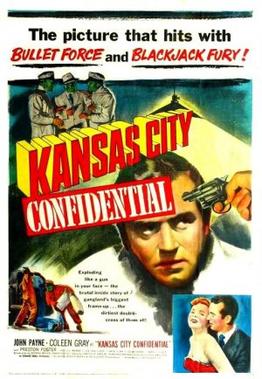
The Average Joe Fall Guy Falls-With Kansas City Confidential In Mind


By Bart Webber 


No question Joe Rolfe, formerly Joey Bops, was built for the frame, built for that frame to fit snuggly around his head. Not that Joe was stupid, far from it he had received his high school diploma and was in his first year of college when December 7, 1941 happened, when the world changed and he was all wrapped in the mess. Not that Joe wasn’t brave either since he received a couple of big military ribbons all shiny bright as a result of his service. And not that he wasn’t good-looking, good-looking to girls good-looking and so always had a girl on his arm in the old days before the war. Still when the deal went down Joey always seemed to be in the wrong place at the wrong time, always seemed to be the fall guy falling.

It had not always been like that. Before the war, during high school, during the days when he wore the moniker Joey Bops since he was crazy for swing music, you know Benny Goodman and Artie Shaw, guys like that, when he hung around with Frankie Riley, James Riordan, Lefty Kelly, and Rusty Shea in front of Harry’s Drugstore in Carterville, that’s out in “show me” Missouri, he could do no wrong. He and what did they call them then, oh yeah, the corner boys, led by the ingenious Frankie Riley, “Sparks” Riley, would carry out every midnight caper in search of loot that one could think of and never got in trouble with the law, any that would wind up on the books. Not even when the very, very suspicious Carterville police thought they had the lot of them nailed tight for the heist at the Lamar mansion. Yeah those were the days when even nice Catholic girls who went to church every Sunday and for the public record said their rosaries and swore they had a Bible between their knees at all other times would that previous Saturday night give up what they had had to give up, those sweet pussies, when they went out on a date with a Harry’s Drugstore corner boy they knew some nice jewelry or maybe some dough would go with the giving that sweet thing up. And good-looking Joey Bops got all he wanted, even from those Bible-worn girls, maybe especially from them.      

But the war, well, the war changed Joey Bops a lot, like I said, Joey had seen a lot of action in Europe, had gotten those medals, those well-earned medals, but he had lost a step, had lost the beat, maybe the be-bop beat of his youth, but most importantly the beat of how to beat the rap on some midnight adventure. Once he got home, after the fanfare was over and he went back to being just average Joey Rolfe citizen, after he decided all he saw and did in Europe made it kind of silly for him to go back to State U even though the newly enacted GI Bill would have pulled him through like it would many other ex-soldiers, he kind of lost his moorings and figured that he would go back to that sweet life of crime. Maybe it was because he went solo (the other corner boys had all dispersed, gone on, except Rusty Shea who was buried over in France during the war after being killed by a German mortar), maybe it was because he had lost the touch, maybe it was because he was crazy to hit a foolish gas station but Joey, Joey Bops of all people, got pegged for the robbery, armed robbery, when he tried to pull the caper just as a cop car was passing by Fred’s Esso station. So Joey got a nickel, did three and that was that.          

That was that until he got out, got his probation. Got himself into another town, got himself into the city, the big city, Kansas City, where he picked up a job delivering flowers, simple stuff, but one of the few jobs an ex-con on probation could get-driving a truck. But getting that job turned out to be the kiss of death for old Joey. See one of the delivery stops that he made was to Jones’ Funeral Home, not the one on Center Street in K.C. but over on Main, next to the First National Bank. One day while he was parked out front of Jones’ delivering a rack of roses for some departed soul next door the bank was being robbed in broad daylight by some guys in masks. They got away with half a million in cool hard cash (just walking around money today but then real dough). Got away clean in a sweet job. Naturally the coppers looking around saw Joey’s silly flower truck, checked it and him out, and once they found out that he was an ex-con and had served time they took him downtown (and they had contacted as well the Carterville cops who put the blast on him for all the crimes that they couldn’t prove he committed). There he stayed for a couple of weeks until the coppers found enough information about the robbery plan to know that he was not part of the caper and they had to let him go.

Here’s the lesson Joey learned though from that experience he was never going to be able to go straight if he didn’t find out who pulled the First National Bank caper. (Or if he decided to go crooked again he would always have that fall guy tag on him for any “cold cases” the cops caught nothing on and he would spent many nights before those stupid police lights blaring line-ups.)  So hunting down the guys who did the deed was his next “career.” His new reason to get up in the morning. For this he needed a little help, help from the only private detective that he could afford at the time, Philip Larkin. Phil had been a guy that he met in the Army overseas and they had been transported home on the troop ships together landing in New York Harbor, spent a few days getting drunk as skunks and laid seven different ways including Joe’s first blow job in a long time, since before the world when some of those Catholic girls in Carterville who didn’t want to “do the do” would piece a guy off with some head to save their reputations, as virgins and yet at the same time as willing to be frisky, and you can figure what that “frisky” part meant  as best you can. They then parted Joe to Carterville and the slammer and Phil up north to Riverdale in Massachusetts to join the cops.        

They had stayed in contact via the U.S. mails and Phil had gone out to the Missouri State pen a couple times to visit Joe after he got himself booted off the Riverdale cops for not going along with the cover-up of a vehicular homicide case involving one of the town’s Mr. Bigs. Those were the days when Phil was just starting out in the private detection business before the Altman case which put him in the local headlines for a while. That had been a whirlwind which soon faded and when Joe contacted Phil he was more than happy to help out an old buddy since he had been shuffling along doing key-hole peeping, getting the goods on adulterous guys or gals for their ever-loving spouses in order for those ever-loving spouses to take to court and get divorces and grab as much dough at the traffic would bear from their shamefully unfaithful spouses. Tough wormy work. That and hitting the bottle stashed conveniently in the bottom desk drawer of his dust-filled office a little too much while killing time between jobs.      

Here’s the stuff they don’t show or tell you on detective shows on television or in those glossy-covered crime detection novels where the P.I. always outsmarts the public cops. Even on the obvious cases like where the distraught wife has a smoking gun in her hand with three bullets gone into a philandering husband now dead who just so happens to have three bullets in his worthless body. Even they, the public cops, can figure that one out, as long as there are three bullets in the body. Less or more all bets are off.  But as a rule a private eye if he or she wants to have any career better either leave the serious crime detection to the public cops or report everything he or she finds out in a case they are handling involving crime to them. That had been Phil’s policy early on in his career and he kept his license no sweat because of that hard fact. What that sound policy had allowed Phil to do for Joe was to get access to the First National Bank job stuff the cops there in K.C. knew about via his connections with a couple of Riverdale detectives whom he had helped out a couple of times.    

Funny the layout of the K.C. job was simplicity itself and even Joe had wished he had thought of the plan rather than having been the fall guy falling. See the truck that delivered the bank its working money, say it  had a half million or so in the back for such deliveries, arrived at the about the same time as Joe made his fucking flower deliveries to the funeral parlor. What happened was that on the day of the armored bank truck robbery the robbers had a replica of the flower truck to throw the coppers off the scent. The robbers, four in all, all wearing Jimmy Cagney gangster masks, pulled the heist of the armored vehicle leaving two guards severely wounded (they would recover), and taking off for parts unknown in the fake flower truck. Leaving Joe the fucking fall guy of fall guys once the APB went out and his truck was the only one still in sight. With Phil’s information as a guide and stuff he had heard when the K.C. cops were giving him the “third degree” Joe figured to figure the whole scam out before he was done. Joe thanked Phil for his help and that is the last we will see of Phil in this caper because Joe couldn’t afford the twenty-five bucks a day, plus expenses, that Phil needed to stay on the case and Joe was itching to blam blam the bad hombres who put him in that tight spot on his own.        

Don’t let the fall guy Joe thing fool you too much, that probation straight and narrow  either since Joe who did his drinking at Matty’s Tavern a well know hang-out for hoods and other loose-livers was pretty well-connected to the underworld even if he had to in the over-world play the probation game. Matty, working the bar himself one night when Joe came, gave him the tip that was the first step in getting his handle on the guys who set the frame on him. One of the hoods, name undisclosed, that hung around Matty’s had told Matty that Zeke Zimmer, a low-life gambler who had owed him money, five Gs, had  blown town  after paying  him off, was headed south to sunny Mexico and the gambling joints there. This Zeke was a serious low-life who half the time didn’t have two dimes to rub together and when he did he bet them on the roulette wheel, the blackjack table, the ponies, or the queen of hearts so his having dough was the lead that got Joe going, had him heading down to Juarez and some Touch of Evil madness.  This tip was proof positive, as much proof positive as Joe needed to follow the trail south since it was much more than likely that Zeke had been in on the bank heist.   

Juarez was and still is a tough town to get anything out of, any kind of information about anything even directions to Rosa’s Cantina and that place to this day is still etched with a huge neon sign so you can see it almost from across the border in El Paso. Back in the 1950s it really was something out of Orson Welles’ Touch of Evil you could smell the corruption the minute you got over the international border, the minute you had to hand some foul-breathed Federale five dollars American to let you through without the usual hassle inspection, maybe planting some illegal drugs or other contraband on you if you didn’t fork over the fiver.  It got worst from there as every con man, hooker, drifter, and all the batos locos descended on your head looking for his or her piece. Joe, after spending an hour in Senorita Santa Maria’s whorehouse since he had not had a piece of a woman’s flesh for a while and the Senorita specialized in fresh young fluff from the country, made his way to Rosa’s Cantina where there was 24/7/365 casino action, action that an in the chips guy like Zeke would naturally gravitate toward to see how fast he could lose his shirt and begin his usual begging gringos for two dimes to rub together. 

Rosa’s like all such places in Juarez in those days was no place to be asking any questions about gringos with money to spend, maybe asking any questions at all so Joe just kind of plunked himself on a barstool, ordered some tequila, and waited until he spotted a low-rent gambler who fit the description given to him at Matty’s. The key piece of information Joe had received had been that Zeke always wore (except when it was in hock) a gold-plated onyx ring with a diamond stud set in the center which you could see from a distance. So Joe waited, waited a couple of hours getting a little blasted on that harsh high-shelf tequila he was ordering (and fending off the barmaids who were offering blow jobs over in a quiet corner if he would buy them a drink, yeah, Rosa’s was that kind of place, you could get anything there you wanted from sex to gold-plated dentures you just had to ask, no, just had to wait long enough and somebody would come by selling themselves or something).

Finally Zeke rolled in and headed to the blackjack table. Joe waited and watched looking for an opening to “talk” to Zeke. About two in the morning Zeke went outside for a breather, went out with a lot less dough that he had come in with. So when Joe approached him with the intend of collaring him to find out who and where the other guys were Zeke surprised him when he asked if he had five bucks he could lend him until “pay day.” Joe flagged Zeke off, gave him the fiver and then quick as a rabbit strong-armed Zeke and force-marched him to a quiet area where they could talk.

Zeke filled with anger, hubris, and morphine was ready to talk, or else as Joe made very clear. Joe was persuasive enough against this low-life punk that he found out that the other three guys were in Sonora further south and that Zeke was supposed to head there in a couple of days to meet up with them and divvy up the rest of the dough. Zeke even under extreme pressure from the gun that Joe had at his head could not come up with the names of the three other guys because they had all worn masks at all meetings and on the job. The only name Zeke knew was of the guy who planned the whole caper, a guy who called himself Mister Big, a lot of help that was. At the meeting in Sonora Zeke was to go to the El Dorado Cantina and present his calling card-a sad ass joker from a special deck of cards Mister Big gave each confederate.      

Joe convinced Zeke in the most dramatic way possible that he was going to Sonora with him and that dramatic encounter was enough for Zeke to see the light. The very next morning after some tacos and tomales one Joey Bops and one Zeke Zimmer were seen heading taking a dusty old bus headed south to Sonora. The ride down was uneventful except the endless dust, the locals with their Mexican luggage and their sweaty smells and goddam fowls brought along like children, and the story that Zeke, going slightly cold turkey from the morphine, had to tell.

Tell about how Mister Big put the whole production together. It was Mister Big who had figured out that the similar arrival times of the flower truck at the funeral home and the armored car at the bank gave a few minute opportunity to grab the cash and take off in a “fake” flower truck. They had practiced the route and run about twenty times before Mister Big told them they were ready. It was also Mister Big who thought of the idea of the masks so nobody could fink on the other guys to the coppers if caught and of laying off for a while before splitting up the big dough. It was his caper but they were to split four ways even, and that was why they each had a card from the special deck as identification. (Joe thought to himself knowing stoolies since he was about twelve years old Mister Big was smart enough to know guys like Zeke and the others who were probably dredged from the same barrel bottom would sell their mothers for five bucks and change if they were in a squeeze and were looking to get out from under some rap. This Mister Big would be a tough nut to crack.)

Arriving in the early morning in Sonora Joe checked into the Rio Grande Hotel, which unlike it high class sounding name was a flea-bag joint but which had the best bar in town, a bar that the touristas did not frequent and so adequate for Joe’s needs (naturally with Zeke as his boon roommate and drinking companion). The next morning, late, Joe left Zeke in the room, taking the added precaution of grabbing that joker as insurance for his survival and so that Zeke could not sneak away to grab his dough forgetting about his boon companion Joe and went down to the bar to grab a few quicks shots of tequila that he was getting to like very much. At the bar he noticed a gringa, a good-looking gringa, brunette, blue eyes, a little on the tall side, thin, nice shape, well-turned legs and wondered what she was doing in hot, sweaty dusty, Mexico. He walked over to her, asked her name, she answered Laura, asked her if she would like a drink, she accepted and then he asked her why she was down in dusty Sonora apparently by herself. Laura replied that she was down with her father who was there on business, she was bored and had decided that she would drink the morning away.

As it turned out this Laura, after a few more drinks, was in the time of her time, was looking for little sexual escapade to while away the hours while her father did his business. That was her story to Joey anyway. Joe obliged her, grabbed a bottle from off the bar and they went to her room. They stayed drunk and sexed-up for a couple of days as it turned out. Then coming out of his alcoholic and sex haze he remembered Zeke, told this Laura that he had to check into his own hotel to finish some business but would be back the next day. Naturally by the time Joe got back to his hotel Zeke was long gone. Joe decided that he would sleep for a while and then the next day head back to Laura’s place and figure out how to keep her in tow and go about the business of finding the bank robbers. 

Joe needn’t have been in any rush because by the time he got back to Laura’s room the next late morning he was met with a “welcoming” committee of four guys, three in Jimmy Cagney masks, Zeke, and of course Laura. What he had not known although he should have figured it out was that the father that Laura was down in Sonora on business with was none other than Mister Big. See the hood that had given Matty the information about Zeke up in K.C., later identified as Lefty Finley, a known pimp and bad guy to mess with, had been one of the robbers keeping an eye on Zeke who with his morphine habit was the “loose cannon” in the operation. All that special joker card stuff Zeke talked about to avoid stoolies by Mister Big in the end was so much razzle-dazzle for the paying public.   

Yeah Joe shouldn’t have been in any rush to see that Laura since a few days later he was found with two big bullets in his head in a dusty back road in Sonora with a joker in his coat pocket and some hundred dollar bills later identified as being from the robbery. Alongside him in that back alley were Zeke, Lefty and the other member of the gang, Bugs Malone, a known drug runner and another bad hombre. They also had special jokers and some hundred dollar bills in their coat pockets. End of case, end of case for the Sonora police, the Federales, since they chalked it up to some Mexican bad guys wasting some gringos trying to cut in on their play. The K.C. cops, having unloaded an unsolved bank robbery and four creeps wrote the whole thing down to what they knew they knew at first. Joe had been the Mister Big of the operation all along and had out-smarted himself somehow. A wise guy double-dipping on that fake flower truck stuff. The real Mister Big and his daughter, Laura, well they were never heard from again as far as anybody knew- if they had ever existed. Yeah, Joe Rolfe, Joey Bops, All-American fall guy falling the big fall.          

Saturday, April 8, 2017

Hollywood Bingo-With Primo Detective Fiction Writer Dashiell Hammett In Mind

By Zack James

Matt Dolan was a “fixer” man. No, not the drug-dealer fixer man famous, or infamous, in mean streets lore or in the hard-edged short stories of addiction, mostly heroin (horse, H, boy) by the crusty writer Nelson Algren who had that scene down in an earlier age, an age when such addictions were sidebars and not front page headlines like today. Matt Dolan, called Mack for some reason buried so far back in childhood that nobody, including Matt knows how he came by that moniker, was a writer, is a writer who comes in an fixes up some film, some “picture” as they say in the trade when it is going off the wheels for any number of a hundred reasons that a script, even if the scriptwriter is the guy or gal who wrote the thing that the studio paid all that money for but was getting dragged down because somewhere after production had started the thing started turning in on itself and the studio, or more likely the producer of the particular film would call Mack in to bail the film out, bail the director and everybody who worked the sets who saw their wages ending if the damn thing was not  “fixed” by guys and gals like Mack.

Sure there are a million writers, some good, some bad who write anything from multi-week best sellers on some publications lists to stinkpots (pardon the old-fashioned word but it applies to some of the thousands of writings Mack had run through in his time). Sure there are a million screenwriters, or it seems like it when they roll the credits, mostly good or were at one time good and were either protected by the Guild or by somebody in management who owed them something. But there were, are surprisingly few “fixers” in the whole of the film industry and so they command high wages (really these days some fixed amount usually in the six figures agreed to in advance and signed on the dotted line as per Guild agreement which covers fixers as well as all the other categories of writers and musicians). Mack was, is among the best and has been since the 1950s when he broke into the industry and after a few false starts, and disappointments, got his reputation cemented when he saved the “stinker” High School Confidential. 

Mack came up with the very bright idea that that worthless cautionary tale about high school kids succumbing to the lure of heroin provided by evil nightclub owners and other denizens of the back alleys was going nowhere. The way Mack saw it no kid in his or her right mind was going to sit through their precious Saturday afternoon double-feature at the local Majestic Theater to be told stuff they got at home every day for free, and endlessly too. So Mack, a little younger then than the average screenwriter on the Hollywood scene and savvy to the role that music, specifically rock and roll music after Elvis and others broke the ground, came up with the idea of putting the then “hot” rock and roll mad monk saint Jerry Lee Lewis on the back of a flatbed truck with his piano and his sidemen and have the truck tooling toward the high school as he played his flame-throwing song High School Confidential. The film grossed a ton of money off of a shoestring budget because all the kids cared about was that scene and then they could go back to whatever boy-girl thing they were doing the in the dark upstairs balconies. Mack could name his price after that, usually. All the studios wanted him after that.          

But the supply and demand stresses of being a fixer put a lot of pressure on Mack, especially when he was working on some play or screenplay of his own which he was looking to have produced. One night Mack, who besides being a fixer man loved the ladies, loved the young ones especially even as he got older, said they kept him young, or whatever reason older guys give these days for chasing young skirts (or for older gay guys and lesbian women these days when the great secret of Hollywood same sex lives had become passe what the object of their affections might be wearing), was telling Jack Curran, an executive at Excelsior Films, the company that he had the closest ties to over the previous  twenty years or over drinks at his favorite watering hole, The Dirty Duck, off of Vine Street, about how he got his first contract to fix a “stinker” at Excelsior.

At that time maybe the summer of 1972 Max Stein called him up when he was up in Big Sur trying to work out some kinks in a screenplay that would later be produced under the title Love In The Park (and which made that studio, the now defunct Blue Blaze Films, a ton of money but not enough to keep the wolves away when they produced a big series of flops, real stinkers, none of which they saw the wisdom of bringing him or any fixer in on) and told him that the latest film he was producing, Hurry, My Sweet, was losing steam, needed a fixer man and he had heard through Harry Swann at Delta Films that Mack was the man he needed. Mack pleaded prior commitment but Max threw up a number that Mack couldn’t refuse and so he committed to a two week stint back down at La Jolla where the film was shot to try to work something out of the air once again. Max sent him along with the contract a copy of the screenplay as it was then being worked on.

What the script was about was an old-time kind of detective story, a genre that was making a comeback on the screen, after a long absence since the time of the great black and white film noirs of the 1940s and 1950s. The plotline involved as those type films always did some nefarious murder (or murders depending on how grizzly the producer and director though they could take the thing and not have irate parents banning their kids from spending their dough to see it) to be solved by a resourceful detective. One hook here was that the hard-boiled female detective, they always had to be hard-boiled whatever their gender since the days of Dashiell Hammett and Raymond Chandler switched things up back in the 1920s and 1930s, Patty Lane, being played by veteran screen actress Mara Whiting.

Another hook was that the bad guy was a bad gal, Laura Devine, played by the beautiful Gina Saint-Germain, who had wasted her drug-dealing lover, Gary Lawlor, played by rising star Sam Lawrence, after he had turned Laura’s sister, Sarah, played by new comer Sissy Moore, on to drugs and to the streets doing tricks for short money to feed her habit. The big hook though is that Sarah, after Laura wasted Gary, was holding five kilos of pure high grade Columbian cocaine which she intended to sell to the highest bidder, Laura or anybody else, so she could get off the streets and feed her own habit in the comfort of some high-end bungalow. Laura putting pure greed over sisterly love sent some of her boys (and a girl sharpshooter as well) out to find the sister, find the dope really. Hard-pressed Sarah looks up in the Los Angeles telephone directory for a detective to help her out, for protection really, and to broker a deal if necessary and comes up with Patty who she thinks is a guy because the listing of the agency was Pat Lane and Associates. Pretty standard stuff but Mack could see where Max was a little panicky because even if the theme reflected more contemporary times and concerns it was still a “stinker” as far as he was concerned.                         

When Mack got to the set down in La Jolla not far from the university and close to the rock-strewn ocean that was playing a nice visual backdrop to the action he told the director, Josh Lannon, well-known for working B films on short money, and short storyline filling out the meek dialogue with plenty of action, the thing was a stinker, no question and no amount of action was going to cover-up a beaten down storyline. Of course Josh took umbrage at that statement saying that he was given the thing for short money by Max and if Mack could bring it around well fine, if not then that was that. Mack was used to that kind of reaction and knowing he had money-man Max’s backing let it ride, let the ill-tempered director blow off steam.  

Of course Mack also knew that once production was started, once the actors had committed to their parts as best they could that all the interpersonal problems that face any collective effort, egos, bruised feelings, hostility, make-shift love, and desire for bigger roles in the film-and in future films if an actor showed promise, especially in a stinker came into play. That is where Mack’s fixer skills and love of younger women got a serious work-out.

About an hour and a half after Mack got on the set while sitting in an off-stage cubicle trying to figure out a new hook to make the audience interested enough in any character to take a chance and see the movie Sissy Moore came into his space. No question she was a good-looking young woman and as soon as she entered he had ideas, knowing she had ideas. Tall, slender, red-hair, long legs, not beautiful, not Gina Saint-Germaine beautiful for even a Hollywood novice knew, knows that you cannot have two beautiful women on one screen because they will not stand for it, and the audience won’t either even the women, but the kind of woman that once the film is over you think about, think about to the exclusion of the serious beauty.          

Sissy had heard that morning that the famous Mack Dolan was coming to fix the script and while she was only a new-comer people around the set and around Hollywood said with some proper training and proper roles she could be somebody. That was all she needed to know to get her small-town girl (Lima, Ohio) wanting habits on. She took dead aim at Mack, despite the fact that at the time she was maybe twenty years younger than him, and he had due to that huge alcohol and lately drug consumption not aged gracefully, and coming right up to him so he could smell that gardenia perfume she was wearing mixed with thoughts of hard sex ahead she laid it on the line (she, as she told Mack after they had hit the satin sheets over at the Biltmore a few times, knew through the usually very reliable starlet grapevine that he had a thing for younger women, with or without the gardenia perfume).

Sissy wanted her part built up, thought bad ass bad girl Laura in the story, meaning really Gina, after she wasted Gary was nothing to the whole plot, that she should be seen more, have more lines around her ability to evade the bad boys Laura sent after her, played more of a role helping Patty take the heat off of her. In return Mack could have, as she rather coyly put it, given what she was offering, could have anything he wanted from her, anything she had to give.

Now, as Mack told Jack that night the Dirty Duck, there are more urban legends about how famous stars, male and female, yes, males in the then male-dominated management end, worked their way up the cinematic food chain by “offering anything somebody in power wanted, anything they had to give” and a fair amount was just that-urban legend. But even then back in 1972 there was plenty of sex being traded for stardom, or hopes of stardom, or better somebody in power taking advantage of some youngster’s hopes of stardom before being shunted back to Topeka, Toledo, or Boise. So Mack made his pact with Sissy, made it tight, and for the length of his time on the set he got his ashes and whatever else he wanted hauled by her. This time, unlike a few times before when he was a guy in power himself playing on some young thing’s hope for stardom, his agreement to get Sissy more screen time, more to say, was based on what he had seen in the rushes, had seen that star quality, maybe not the top but she would not have to sit by the midnight phone hoping for work.    

Naturally the increase of one actor’s role at the expense of another, here Gina, caused an uproar on the set, caused Gina to say she would not perform at her usual high level. Mack knew he had Max’s okay, since he had called him after the pact with Sissy was consummated the first time so he was able to ride it out. Here’s how: Mack determined that what the film needed with so many good-looking females was more sex, or in those days when it was still dicey to get too graphic in sex scenes, was the allure of sex. Now it wasn’t going to be Patty as the crusading detective ready to save an errant young woman and Gina flat out refused to do any sex scenes but Sissy, well, Sissy really was up for anything that would get her up the food chain, especially after Mack put the bug in her ear that such efforts would enhance her career opportunities. There wasn’t much that Mack could do with the script with what was already in the can but that is when he came up with the idea that would save the damn thing.


Sarah, Sissy's now beefed up role, early on as she got more addicted to the drugs Gary was feeding her and was out doing tricks on the streets got into a situation where some guys Gary knew propositioned her to come to a poker party with them. She agreed once Gary said he would “make her well.” So the scene got set up in a smoky hotel room, cards out, chips out, cigarettes out, drinks out on the table and then Sissy dressed scantily like a Playboy bunny, popular at the time, without saying a word starts going provocatively under the table. Nothing on film showing what is happening but obviously Sissy is going down to “play the flute” on the guys as Mack put it euphemistically in his stage directions. That B film made a ton of money for Excelsior because all the kids cared about was that scene once they heard about it and then they could go back to whatever boy-girl thing they were doing the in the dark upstairs balconies, go back with a vengeance. Made Sissy a “hot” property (and forced Gina in a later film to do a “play the flute” scene more graphically shown than anything Sissy had done although among the gossips of the town your average red-blooded males out in the hinterlands Sissy was almost always thereafter called “the flutist” and nobody had to ask twice who that was or what it meant). Brilliance, pure brilliance.
An Encore-Just Before The Sea Change - With The Dixie Cups Going To The Chapel Of Love In Mind


From The Pen Of Sam Lowell


There were some things about Edward Rowley’s youthful activities, those that he thought would bring some small honor to his name, that he would rather not forget, things that defined his life, gave him that “fifteen minutes of fame,” if only to himself and his, that everybody kept talking about that everyone deserved before they departed this life. That “fifteen minutes of fame” business which he thought had been uttered by the Pop-artist Andy Warhol in one of his prankster moments, one of his New York high society put-downs, was fine by him even if it had been the result of some small honor thing.

The subject of that small honor done in the spurt of his youth that had defined a lot of what came later is what got him thinking one sunny afternoon in September about five years ago as he waited for the seasons to turn almost before his eyes about the times around 1964, around the time that he graduated from North Adamsville High School, around the time that he realized that the big breeze jail-break that he had kind of been waiting for was about to bust out over the land, over America. (His world view did not encompass the entire world or what was the same thing the "youth nation" part of that view but later after making plenty of international connections from here and there he could have said he was waiting for that breeze to bust out over the world.)

It was not like Edward was some kind of soothsayer, like some big think tank thinker paid well to keep tabs on social trends for those in charge so they didn’t get waylaid like they did with the “rebel without a cause” and “beat” phenomena or anything like that back in the 1950s that had them all scared like hell that society was going down in the ditch. No, it was like he could read tea leaves or tarot cards like some latter day Madame La Rue who actually did read his future once down at the Gloversville Fair when she had come to that location with her daughter, Gypsy Anne, one hot August week when he was about twelve. Madame that day read that he was made for big events. The big event that he was interested in just then was winning a doll, a stuffed animal or something like that for dark-haired, dark-eyed just starting to fill out  Gypsy Anne at the Skee game of which he was an expert at.

(For those clueless about Skee, have forgotten or have never spent their illicit youths around carnivals, small time circuses, or penny-ante amusement parks, the game is simplicity itself once you get the hang of it and play about 10,000 hours’ worth of games you roll small balls, which come down a chute once you pay your dough, or credit/debit card the way they have the machines worked nowadays, and you roll them like in bowling up to a target area like in archery and try to get a ton of points which gives you strips of coupons to win a prize depending on high your score is, and what you want. Like I say, simple.) 

And Edward did win his Gypsy Anne a stuffed animal, a big one, and got a very big long wet kiss for his heroics down by the beach when she gave her best twelve year old “come hither” look, not the last time he would be snagged by that look by her or any other women later (and by the way “copped a little feel” from that starting to fill out shape of hers and he finally solved, no, he solved for that one minute that budding girls turned to women were as interested in sex, or at least being “felt up” as the other guys around Harry’s Variety Store had told him  they were if approached the right way).  No way though that tarot reading when he was twelve left an impression, left him with that vague feeling about the big breeze coming, not then when his hormones drove his big thoughts, and not for a long while thereafter.

That big breeze blowing through the land thing had not been Edward’s idea anyway, not his originally although he swore by it once he thought about the possibilities of breaking out of Podunk North Adamsville, but came from “the Scribe,” the late Peter Paul Markin, a corner boy at Jack Slack’s bowling alleys on Thornton Street where he occasionally hung out in high school since he had been childhood friends with the leader of that crowd, Frankie Riley. Markin, despite a serious larcenous heart which would eventually do him in, read books and newspapers a lot and would go on and on about the jail-break thing on lonesome Friday nights when all the guys were waiting, well, just waiting for something to happen in woebegone North Adamsville where the town mainly went to sleep by ten, or eleven on Friday and Saturday night when Jack Slack’s closed late.  (For the younger set, Doc’s Drugstore, the place where he and Frankie hung in their younger days as well, the place where they all first heard rock and roll played loud on Doc’s jukebox by the soda fountain, every night was a nine o’clock close just when things were getting interesting as the shadows had time to spank vivid boy imaginations and you wonder, well, maybe not you, but parents wondered why their kids were ready to take the first hitchhike or hitch a freight train ride out of that “one-horse town” (an expression courtesy of the grandmothers of the town, at least the ones he knew, mostly Irish grandmothers with corn beef and cabbage boiling on their cast-iron stoves and smirks on their faces, if grandmothers could have smirks over anything, about how dear the price of everything was if you could get it a very big problem, including for Edward’s Anna Riley, where he first heard the words).

Here is where that big breeze twelve million word description thing Markin was talking about intersected with that unspoken trend for Edward (unknown and unspoken since the corner at Jack Slacks’ did not have a professional academic sociologist in residence to guide them since those “hired guns” were still hung up on solving the juvenile delinquency problem and so as usual were well behind the curve  and Markin, the Scribe as smart as he was, was picking his stuff up strictly from newspapers and magazines who were always way also behind the trends until the next big thing hit them in the face). Edward’s take on the musical twists and turns back then is where he had something the kids at North Adamsville High would comment on, would ask him about to see which way the winds were blowing, would put their nickels, dimes and quarters in the jukeboxes to hear based on his recommendations.

Even Markin deferred to him on this one, on his musical sense, the beat or the “kicks” as he called then although he, Markin, would horn in, or try to, on the glory by giving every imaginable arcane fact about some record’s history, roots, whatever which would put everybody to sleep, they just wanted to heard the “beat” for crying out loud. Edward did have to chuckle though when he thought about the way, the main way, that Markin worked the jukebox scene since he was strictly from poverty, from the projects, poorer even than Edward’s people and that was going some if you saw the ramshackle shack of a house that he and his four older brothers grew up in. The Scribe used to con some lonely-heart girl who maybe had just broken up with her boyfriend, maybe had been dateless for a while, or was just silly enough to listen to him into playing what he wanted to hear based on what Edward had told him.

But Markin was smooth in his way since he would draw a bee-line to the girl who just put her quarter in for her three selection on Jack Slack’s jukebox (Doc’s, sweet and kindly saint Doc whose place was a bee-hive after school for that very reason , had five for a quarter if you can believe that). He would become her “advisor,” and as the number one guy who knew every piece of teenage grapevine news in the town and whom everybody therefore deferred on that intelligence so he would let her “pick” the first selection, usually some sentimental lost love thing she could get weepy over, the second selection would be maybe some “oldie but goodie,” Breathless or At The Hop, which everybody still wanted to hear, and then on number three, the girl all out of ideas Markin would tout whatever song had caught his ear. Jesus, Markin was a piece of work. Too bad he had to end the way he did down in Mexico now lying in some unmarked grave in some town’s potter’s field back in the mid-1970s which guys from the old town were still moaning over.

That was Markin on the fringes but see Edward’s senses were very much directed by his tastes in music, by his immersion into all things rock and roll in the early 1960s where he sensed what he called silly “bubble gum” music that had passed for rock(what high priest Markin called something like the “musical counter-revolution” but he was always putting stuff in political bull form like that). Which, go figure, the girls liked, or liked the look of the guys singing the tunes, guys with flipped hair and dimples like Fabian and Bobby Rydell but was strictly nowhere with Edward. The breeze Edward felt was going to bury that stuff under an avalanche of sounds going back to Elvis, and where Elvis got his stuff from like Lonnie Johnson and the R&B and black electric blues guys, the rockabilly hungry white boys, and forward to something else, something with more guitars all amped to big ass speakers that were just coming along to bring in the new dispensation.

More importantly since the issue of jailbreaks and sea changes were in the air Edward was the very first kid to grasp what would later be called “the folk minute of the early 1960s,” and not just by Markin when he wrote stuff about that time later before his sorry end. Everybody would eventually hone in on Dylan and Baez, dubbed the “king and queen” of the moment by the mass media always in a frenzy to anoint and label things that they had belatedly found about out about and run into the ground.  But when folk tunes started showing up on the jukebox at Jimmy Jack’s Diner over on Latham Street where the college guys hung out and where families went to a cheap filling dinner to give Ma a break from the supper meal preparations it was guys like the Kingston Trio, the Lettermen, and the Lamplighters who got the play after school and some other girls, not the “bubble gum” girls went crazy over the stuff when Edward made recommendations.

He had caught the folk moment almost by accident late one Sunday night when he picked up a station from New York City and heard Pete Seeger and Woody Guthrie songs being played, stuff that Mr. Dasher his seventh grade music teacher had played in class to broaden youthful minds, meaning trying to break the Elvis-driven rock and roll habit. So that musical sense combined with his ever present sense that things could be better in this wicked old world drilled into him by his kindly old grandmother, that Anna Riley with her boiling kettles and smirks mentioned before,   who was an old devotee of the Catholic Worker movement kind of drove his aspirations (and Markin’s harping with the political and so-called historical slant triggered by his own grandmother’s devotion to the Catholic Worker movement added in). But at first it really was the music that had been the cutting edge of what followed later, followed until about 1964 when that new breeze arrived in the land. 

That fascination with music had occupied Edward’s mind since he had been about ten and had received a transistor radio for his birthday and out of curiosity decided to turn the dial to AM radio channels other that WJDA which his parents, may they rest in peace, certainly rest in peace from his incessant clamoring for rock and roll records and later folk albums, concert tickets, radio listening time on the big family radio in the living room, had on constantly and which drove him crazy. Drove him crazy because that music, well, frankly that music, the music of the Doris Days, the Peggy Lees, the Rosemary Clooneys, the various corny sister acts like the Andrews Sisters, the Frank Sinatras, the Vaughn Monroes, the Dick Haynes and an endless series of male quartets did not “jump,” gave him no “kicks,’ left him flat. As a compromise, no, in order to end the family civil war, they had purchased a transistor radio at Radio Shack and left him to his own devises.

One night, one late night in 1955, 1956 when Edward was fiddling with the dial he heard this sound out of Cleveland, Ohio, a little fuzzy but audible playing this be-bop sound, not jazz although it had horns, not rhythm and blues although sort of, but a new beat driven by some wild guitar by a guy named Warren Smith who was singing about his Ruby, his Rock ‘n’ Roll Ruby who only was available apparently to dance the night away. And she didn’t seem to care whether she danced by herself on the tabletops or with her guy. Yeah, so if you need a name for what ailed young Edward Rowley, something he could not quite articulate then call her woman, call her Ruby and you will not be far off. And so with that as a pedigree Edward became one of the town’s most knowledgeable devotees of the new sound.

Problem was that new sound, as happens frequently in music, got a little stale as time went on, as the original artists who captured his imagination faded from view one way or another and new guys, guys with nice Bobby this and Bobby that names, Patsy this and Brenda that names sang songs under the umbrella name rock and roll that his mother could love. Songs that could have easily fit into that WJDA box that his parents had been stuck in since about World War II.

So Edward was anxious for a new sound to go along with his feeling tired of the same old, same old stuff that had been hanging around in the American night since the damn nuclear hot flashes red scare Cold War started way before he had a clue about what that was all about. It had started with the music and then he got caught later in high school up with a guy in school, Daryl Wallace, a hipster, or that is what he called himself, a guy who liked “kicks” although being in high school in North Adamsville far from New York City, far from San Francisco, damn, far from Boston what those “kicks” were or what he or Edward would do about getting those “kicks” never was made clear. But they played it out in a hokey way and for a while they were the town, really high school, “beatniks.”  So Edward had had his short faux “beat” phase complete with flannel shirts, black chino pants, sunglasses, and a black beret (a beret that he kept hidden at home in his bedroom closet once he found out after his parents had seen and heard Jack Kerouac reading from the last page of On The Road on the Steve Allen Show that they had severely disapproved of the man, the movement and anything that smacked of the “beat” and a beret always associated with French bohemians and foreignness would have had them seeing “red”). And for a while Daryl and Edward played that out until Daryl moved away (at least that was the story that went around but there was a persistent rumor for a time that Mr. Wallace had dragooned Daryl into some military school in California in any case that disappearance from the town was the last he ever heard from his “beat” brother).

Then came 1964 and  Edward was fervently waiting for something to happen, for something to come out of the emptiness that he was feeling just as things started moving again with the emergence of the Beatles and the Stones as a harbinger of what was coming.

That is where Edward had been psychologically when his mother first began to harass him about his hair. Although the hair thing like the beret was just the symbol of clash that Edward knew was coming and knew also that now that he was older that he was going to be able to handle differently that when he was a kid.  Here is what one episode of the battle sounded like:                   

“Isn’t that hair of yours a little long Mr. Edward Rowley, Junior,” clucked Mrs. Edward Rowley, Senior, “You had better get it cut before your father gets back from his job working on repairing that ship up in Maine, if you know what is good for you.” That mothers’-song was being endlessly repeated in North Adamsville households (and not just those households either but in places like Carver, Hullsville, Shaker Heights, Ann Arbor, Manhattan, Cambridge any place where guys were waiting for the new dispensation and wearing hair a little longer than boys’ regular was the flash point) ever since the British invasion had brought longer hair into style (and a little less so, beards, that was later when guys got old enough to grow one without looking wispy, after they had taken a look at what their Victorian great-grandfathers grew and though it was “cool.” Cool along with new mishmash clothing and new age monikers to be called by after giving up their "slave" names.)

Of course when one was thinking about the British invasion in the year 1964 one was not thinking about the American Revolution or the War of 1812 but the Beatles. And while their music has taken 1964 teen world by a storm, a welcome storm after the long lonely mainly musical counter-revolution since Elvis, Bo, Jerry Lee and Chuck ruled the rock night and had disappeared without a trace, the 1964 parent world was getting up in arms.

And not just about hair styles either. But about midnight trips on the clanking subway to Harvard Square coffeehouses to hear, to hear if you can believe this, folk music, mountain music, harp music or whatever performed by long-haired (male or female), long-bearded (male), blue jean–wearing (both), sandal-wearing (both), well, for lack of a better name “beatniks” (parents, as usual, being well behind the curve on teen cultural movements since by 1964 “beat”  except on silly television shows and by “wise” social commenters who could have been “Ike” brothers and sisters, was yesterday’s news).

Mrs. Rowley would constantly harp about “why couldn’t Edward be like he was when he listened to Bobby Vinton and his Mr. Lonely or that lovely-voiced Roy Orbison and his It’s Over and other nice songs on the local teen radio station, WMEX (he hated that name Eddie by the way, Eddie was also what everybody called his father so you can figure out why he hated the moniker just then). Now it was the Beatles, the Rolling Stones and a cranky-voiced guy named Bob Dylan that had his attention. And that damn Judy Jackson with her short skirt and her, well her… looks” (Mrs. Rowley like every mother in the post-Pill world refusing to use the “s” word, a throw-back to their girlish days when their mothers did not use such a word either and so everybody learned about sex is some strange osmotic way out in the streets, in the school boys' and girls' lavs Monday mornings before school when some Ben or Lisa would lie like crazy about their sex bouts weekend, and from older almost as clueless older brothers and sisters just like now.)     

Since Mrs. Rowley, Alice to the neighbors, was getting worked up anyway, she let out what was really bothering her about her Eddie’s behavior, "What about all the talk about doing right by the down-trodden Negros down in Alabama and Mississippi. And you and that damn Peter Markin, who used to be so nice when all you boys hung around together at Jimmy Jack’s Diner [Edward: corner boys, Ma, that is what we were and at Jack Slack’s alleys not Jimmy Jack’s that was for the jukebox and for checking out the girls who were putting dough in that jukebox] and I at least knew you were no causing trouble, talking about organizing a book drive to get books for the little Negro children down there. If your father ever heard that there would be hell to pay, hell to pay and maybe a strap coming out of the closet big as you are. Worse though, worse than worrying about Negros down South is that treasonous talk about leaving this country, leaving North Adamsville, defenseless against the communists with your talk of nuclear disarmament. Why couldn’t you have just left well enough alone and stuck with your idea of forming a band that would play nice songs that make kids feel good like Gale Garnet’s We’ll Sing In The Sunshine or that pretty Negro girl Dionne Warwick and Her Walk On By instead of getting everybody upset."

And since Mrs. Rowley, Alice, to the neighbors had mentioned the name Judy Jackson, Edward’s flame and according to Monday morning before school girls’ “lav” talk, Judy’s talk they had “done the deed” and you can figure out what the deed was let’s hear what was going on in the Jackson household since one of the reasons that Edward was wearing his hair longer was because Judy thought it was “sexy” and so that talk of doing the deed may well have been true if there were any sceptics. Hear this:      

“Young lady, that dress is too short for you to wear in public, take it off, burn it for all I care, and put on another one or you are not going out of this house,” barked Mrs. James Jackson, echoing a sentiment that many worried North Adamsville mothers were feeling (and not just those mothers either but in places like Gloversville, Hullsville, Shaker Heights, Dearborn, Cambridge any place where gals were waiting for the new dispensation and wearing their skirts a little shorter than mid-calf was the flash point) about their daughters dressing too provocatively and practically telling the boys, well practically telling them you know what as she suppressed the “s” word that was forming in her head. She too working up a high horse head of steam continued, "And that Eddie [“Edward, Ma,” Judy keep repeating every time Mrs. Jackson, Dorothy to the neighbors, said Eddie], and his new found friends like Peter Markin taking you to those strange coffeehouses in Harvard Square with all the unwashed, untamed, unemployed “beatniks” instead of the high school dances on Saturday night. And that endless talk about the n-----s down South, about get books for the ignorant to read and other trash talk about how they are equal to us, and your father better not hear you talk like that, not at the dinner table since he has to work around them and their smells and ignorance over in that factory in Dorchester.  

And don’t start with that Commie trash about peace and getting rid of weapons. They should draft the whole bunch of them and put them over in front of that Berlin Wall. Then they wouldn’t be so negative about America."

Scene: Edward, Judy and Peter Markin were sitting in the Club Nana in Harvard Square sipping coffee, maybe pecking at the one brownie between them, and listening to a local wanna-be folk singing strumming his stuff (who turned out to be none other than Eric Von Schmidt whose Joshua Gone Barbados and a couple of other songs would become folk staples and classics). Beside them cartons of books that they are sorting to be taken along with them when they head south this summer after graduation exercises at North Adamsville High School are completed in June. (By the way Peter’s parents were only slightly less irate about their son’s activities and used the word “Negro” when they were referring to black people, black people they wished their son definitely not to get involved with were only slightly less behind the times than Mrs. Rowley and Mrs. Jackson and so requires no separate screed by Mrs. Markin. See Peter did not mention word one about what he was, or was not, doing and thus spared himself the anguish that Edward and Judy put themselves through trying to “relate” to their parents, their mothers really since fathers were some vague threatened presence in the background in those households.)

They, trying to hold back their excitement have already been to some training sessions at the NAACP office over on Massachusetts Avenue in the Roxbury section of Boston and had purchased their tickets for the Greyhound bus as far as New York’s Port Authority where they will meet others who will be heading south down to Mississippi goddam and Alabama goddam on a chartered bus. But get this Peter turned to Edward and said, “Have you heard that song, Popsicles and Icicles by the Mermaids, it has got great melodic sense.” Edward made a very severe off-putting “no way” face. Yes, we are still in the time just before the sea change after which even Peter will chuckle about “bubble gum” music. Good luck on your journey though, young travelers, good luck.