Sunday, February 14, 2016

As The 150th Anniversary Of The American Civil War-Bruce Catton’s Terrible Swift Sword- A Book Review


Book Review

By Frank Jackman

Terrible Swift Sword, by Bruce Catton, Washington Square press, New York, 1963

Old time friends from the 1960s anti-Vietnam War struggles Ralph Morris and Sam Eaton had a common interest in the American Civil War since they were kids in the early 1960s and in their respective home towns got caught up in the centennial events celebrated back then. Sam who grew up in cranberry bog country down in Carver in Southeastern Massachusetts used to collect the stamps and first day covers of the series that the United State Post Office put out commemorating various battles, important events and personalities from that bloody conflict (first day covers were issued and cancelled on the day that the stamp was issued and from the place where it had been issued which represented in those less video-filled days a hobby which many kids got into as an inexpensive way to keep in time with the world around them-hell most of that time a stamp was only three or four cents). Ralph, not usually much of a reader, made an exception for Civil War history and literature since coming from Troy in upstate New York he had had many distant relatives who had some connection with that war and were commemorated on the huge Civil War Memorial in the downtown area.      

Of course Ralph and Sam did not know each other in the early 1960s but had met in 1971 down in Washington, D.C. on May Day when Ralph, a Vietnam veteran who had turned against the war with a vengeance along with his Albany area contingent of Vietnam Veterans Against The War (VVAW) and Ralph, not a veteran but an anti-war convert after his best friend from high school had been killed in the Central Highlands of Vietnam and had urged him if he did not get back alive to tell anybody who would listen to stop the war, with a Cambridge radical collective had tried to stop the war by stopping the government, or some such idea. All the thousands who came out that day and a few days following got for their efforts were police sticks, tear gas, and a trip to the bastinado. The bastinado for the two of them was a football stadium, the home of the Washington Redskins, ironically Robert F. Kennedy Stadium, being used as a temporary holding pen for most of those arrested. Ralph had sought Sam out when he noticed as he walked along the football field that he was wearing a VVAW button and had asked if Sam was a veteran. Sam told him the story of his friend and over the next several days before they were released (and the next forty some years) they would talk incessantly about everything under the sun including their mutual interest in the American Civil War. Both had agreed that the war to preserve the Union (Ralph’s position then) and to abolition slavery (Sam’s) would have found them as soldiers in some Union army, probably some brigade of the Army of the Potomac the way troops from the North were distributed then from the levies their respective governors sent down.       

Although their personal perspectives are not germane to this book review even one hundred plus years later when discussion of the Civil War comes up Northern aficionados will gravitate toward one or the other reason, or in some cases both, for why they would have supported the Northern side in the bloody dispute. Ralph and Sam’s respective takes on their reasons for support are almost chemically pure examples of what drove our forebears toward support for the war.

Ralph born in upstate New York very close to many of the key battles of the American Revolution at Saratoga Springs and its environs was driven by the idea of the need to save the union intact in order for it as Lincoln so eloquently stated to remain the “last, best hope for democracy” on the planet. He was in those days, in his youth totally out of sympathy with the idea of emancipating the slaves as the main reason for fighting. Those early 1960s found Ralph standing side by side with his father in the fight against attempts by blacks from CORE to move into their section of Troy, the Tappan Street section, to live side by side with what Ralph, Senior called “nigras” just like Governor George Wallace down in Alabama was calling them. Ralph, later after having his “ass” saved more than once by a couple of “brothers” and after getting “religion” on the war issue and who was fighting the damn thing like him and those brothers had a sea-change in attitude and wound up doing plenty of defense work for the besieged Black Panthers (along with Sam and other VVAWers) when they were under frontal attack by every police agency in the country. But in the early 1960s he was strictly a “save the union” man.    

Sam on the other had come from a strain of Puritan stock on his mother’s side who had back in the 1850s when they first settled in Carver and its environs been rabid abolitionists, had been at Temple Church in Boston when all the great abolitionist orators would speak against the “abomination of slavery” and that background would be sprinkled generally and gently in the household although his father was nothing but a swamp Yankee cranberry bogger who didn’t give a rat’s ass (an expression used by Sam and his growing up corner boys when they, well, didn’t give a rat’s ass about something). Moreover when Sidney Stein and Ethel Rogers started putting together collections of books to be sent to the poor black kids down in Mississippi after being called on to do so by the NAACP in Boston he volunteered to help although it cost him a lot of grief from his corner boys and others who had about the same attitudes as Ralph and his father. As already mentioned as part of Sam’s radicalization after the death of his friend he also dived right in on the Black Panther defense work, especially the New Haven case where he (and Ralph) stayed for several weeks while the trial was going on.

Like I said Ralph and Sam, although both working class kids came at their interests from different perspectives. Moreover, when they began discussing their mutual interests back in the bastinado in 1971 there was also a difference in emphasis of interest, which has lasted until this day. Ralph was, is always much more interested in the various battles, the strategies, and the military personalities of both side and Sam was, is, more interested in the political conditions which Lincoln and the other Union leaders encountered which determined their strategy for preserving the union (clearly early in the war the sole aim of Lincoln and the great majority in the North) and ultimately by the logic of the fight the struggle for total emancipation of and citizen for the slaves.          

So it was no accident that once the 150th anniversary of the war began being commemorated in 2011 that Sam and Ralph would take note, take to reconvening their arguments about military versus political strategy as they liked to call it. They were aware since Sam many years before had begun subscribing to the New York Review Of Books that there would be another onslaught of books covering every aspect of the war, from battles and personalities to sanitary conditions and firearms and everything in between. Sam had made Ralph laugh one time when he had read a review of a book, a whole book for Christ sake, about the role of “shoddy,” inferior clothing, shoes and supplies produce by unscrupulous manufacturers on the outcome of the war. This time out there would be the same, maybe more. Of course Sam and Ralph both had small collections of Civil War books gathered over time so they one night at Jack’s Grille in Cambridge, a town where Sam had been living with his wife Lana once the kids were out of the house they decided to “down-size” to a condo from their leafy suburban house in Avon, they decided to dust off some of the old books first and begin their old “wars” once again. Of course one of the great summaries of the military and political events driving the action on both sides in the Civil War was Bruce Catton’s prize-winning trilogy. The first volume concerning the events that led up to the war and the beginning of the bloodshed at that point somewhat amateurish and make-shift The Coming Fury has been reviewed (and disputed by them) elsewhere. The review here of Terrible Swift Sword, the middle years of the war where the fighting turned large-scale, turned furious, turned more merciless and began to clarify the issue of the initial objectives of the war for the preservation of the union (or preservation of the Confederacy) and the remorseless fight for the abolition of slavery is what Ralph and Sam continued their disputes about.            

On the union side once the rout of first Bull Run put the fear of God into the North, made certain forward looking elements on the Union side and not just the abolitionists, civilian and military, realize that a remorseless struggle lie ahead (and the same in the Confederacy particularly Jefferson Davis and once he took charge of the Army of Northern Virginia Robert E. Lee) the military build-up went full steam ahead. Military strategies to strangle the Confederacy, the Anaconda strategy and on the Southern side to decisively defeat the Union Armies and gain recognition as a separate state particularly by France and England mingled in with political objectives. Of course in a book of four hundred dense pages there were too many battles won and lost on both sides for Sam and Ralph to argue about separately not unless they planned to live at Jack’s Grille and drink the place dry. So they decided to concentrate one night on two of the great events of the middle years of the war on the Union side- to satisfy Ralph the role of General McClellan in unnecessarily lengthening the war and to satisfy Sam Lincoln’s decision, kicking and screaming at times, to call for emancipation of the slaves (in reality in stages depending on Union victories since it would take that to get freedom for the slaves in areas where there was no Union armed mandate for such action).           

Ralph although he had always been a partisan of General McClellan for his ability to put together a ragtag semi-army and make it a disciplined force which everybody in authority in the North knew had to be done if the advantage that the North in the mass production of war materials was to lead to victory. But his attitude shifted somewhat once he himself had become more interested in the fight for abolition as the motivating force necessary to spur the armies on once the he realized that the South had an overall military leadership advantage. His initial respect for McClellan had centered on his limited goals for the army, to shore up the Union positions, alleviate the threat to Washington and keep pressure on the Confederate armies getting them bottled up defending Richmond (in any case a mistake in choice for the capital so close to Washington and roaming Union armies).

When he had first met Sam he had argued (rather surreally since they had been in the bastinado for four days by that time and had gotten a little stir crazy) that McClellan represented just the right sense of what was to be done, essentially telegraphing by his sedentary position in front of Washington for great lengths of time, the South to “go in peace.” After re-reading the Catton material about McClellan’s fears of being swamped by non-existent overwhelming Confederate numbers and then allowing a cabal of his own design to form among his staff which threw about thoughts of some kind of military dictatorship for him (with the assumed proviso that he would indeed let the South go in peace) he got most agitated. What made Sam laugh at their recent Jack’s Grille meeting was how irate Ralph had become about McClellan’s “slows” in getting his ass out before the enemy. Here’s the kicker, Ralph blurted out “why didn’t that damn Lincoln boot his ass out after the failed Peninsula campaign.” Sam smirked.        

Ralph got his chance to smirk a bit when Sam started talking about all the new scholarship, or rather commentary since the facts have not changed much in the last hundred and fifty years, about Lincoln’s racial attitudes which colored his attitude toward emancipation as a military necessity rather than a political objective. Of course Lincoln was a man of his time, of his not inconsequential southern roots and of his societal racial attitudes. Many “political correct” commentators these days have cut their teeth on the idea that Lincoln should have had today’s more advanced sensibilities about race and supported the idea of total emancipation earlier on. Sam had been surprised on re-reading the parts about Lincoln’s conversion to partial emancipation as a military necessity since he had remembered differently back in the 1960s and though that Lincoln had been whole-heartedly for emancipation on its own merits. Ralph got to laugh when he said hell “Massa Lincoln” was no better on the race issue than Ralph, Senior was in the early 1960s, and him too.

But some people can change else history would be nothing but a jigsaw puzzle list of names and dates. There is plenty of this in Catton’s books but good solid analysis of the major issues as well. Particularly how the events unfolded militarily and politically so that that merciless struggle against slavery was placed on the historical agenda. Everybody should read the later stuff (maybe not that book on “shoddy” though) but for a great still relevant overview of the big issues Catton still speaks to the amateur and aficionado alike of the Civil War.          

Saturday, February 13, 2016

Frankie And Johnnie Were Lovers, Kind Of -With Mae West’s She Done Him Wrong In Mind   


DVD Review

By Sam Lowell

She Done Him Wrong, starring Mae West, Cary Grant, 1933


“Frankie and Johnnie were lovers right from the very start, they swore they would be true to each other, just as true as the stars above, he was her man but he was doing her wrong,” hummed Ralph Stanley as he thought about the film that he had just watched, Mae West’s She Done Him Wrong, where a version of the old traditional tune served as background music and one of Lady Lou’s (Mae West’s character here) stage numbers. He thought as him hummed that that was the beauty of the old traditional, anonymous tunes that had been handed down orally by our forebears since he had remembered the version which Sam Eaton his old friend, political comrade, and folk aficionado had played for him long ago, Mississippi John Hurt’s Frankie and Albert, same wronged sentiment but different verses learned by him by some forbear down in the Delta back in the 1920s sometime.       

That was not exactly the version that Lady Lou sang either not when Ralph looked it up in the Arise and Sing, the folk song “bible” used this day by budding folkies and old-timers, although given the Frankie and Johnnie names which could be either male or female nicknames no wonder there could be a certain amount of confusion. What is more important though in the film the one doing the “wrong” gee is all switched up. It is the “she” not “he” doing the wrong. Doing wrong big time as Lady Lou leaves a trail of broken hearts across the screen, leaves every guy but one hanging by his toes.

Here is how Lady Lou played the game, how a woman played the man’s game in the man’s world of the “Gay Nineties” and lived to tell about it. The Bowery in New York City was wide open for every kind of corruption, of every dirty deed and Lady Lou was out to grab her share, no quarter given. As the film opened Lady Lou was keeping company with a well-connected saloon-keeper whom she gammed onto after her previous fancy man got caught stealing some diamonds that the lady was addicted to having on her person just to keep her warm and cozy on those cold winter night. A half dozen other guys including a sidewalk Lothario, a barroom bouncer, a backroom political and a snitch were all in the hunt for those diamonds to win her heart, if she had a heart. She blew them all off, gave them the air in the end except for the Captain, played by a very young and not yet distinctly film handsome Cary Grant.           

Yeah, Lady Lou had the itch for the Captain, had it so bad it spawned the famous movie line about “coming up to see her sometime” to keep away the lonely nights. The Captain though was undercover as crime and corruption cop working as a guy running a Mission to save souls, if you can believe hard-bitten task among the damned of the Bowery. He was out to run the saloon-owner and bunch of other guys into the slammer. And did so, did so with ease. Of course there was some side action, that guy up in stir escaping to see his Lady Lou and getting the brush-off by her although not before offing that guy who snitched on him. The sidewalk Lothario also got the heave-ho. Lady Lou though seems to have lived a charmed life since even though she killed a Madame who was giving her trouble over the Lothario the Captain (known on the street as the Hawk) turned out to have been captivated by her charms and they go off in a carriage as the Hawk tries to make an honest woman out of Lady Lou. Good luck, brother, good luck.      

Here’s the beauty of this film though for feminists, Lady Lou is her own woman and she will use up men as fast as she can and think nothing of it, a little role reversal in this wicked old world and unusual in a day when a  lot of women’s film roles were as damsels in distress. Yeah, she done wrong by the fistfuls. Here is where Ralph was scratching his head though. Old Lady Lou was, well, full-figured in today’s speak and while that designation which previously had had negative connotations is being broken down by popular full-figured female actors like Melissa McCarthy it was not then the norm. Personally Ralph, although he liked and had married a full-figured woman, couldn’t figure Lady Lou’s attraction to the Hawk. If memory served him right Cary Grant went for those thin wispy types like Katherine Hepburn and Audrey Hepburn so go figure. All Ralph knew was that back in the day, back in the 1890s he would have stayed very clear of Lady Lou. Yeah, he knew she would do him wrong, very wrong.        

***Poet’s Corner- Langston Hughes- The Weary Blues


From The Pen Of Frank Jackman


February is Black History Month


The Weary Blues


Droning a drowsy syncopated tune,
Rocking back and forth to a mellow croon,
I heard a Negro play.
Down on Lenox Avenue the other night
By the pale dull pallor of an old gas light
He did a lazy sway ....
To the tune o' those Weary Blues.
With his ebony hands on each ivory key
He made that poor piano moan with melody.
O Blues!
Swaying to and fro on his rickety stool
He played that sad raggy tune like a musical fool.
Sweet Blues!
Coming from a black man's soul.
O Blues!
In a deep song voice with a melancholy tone
I heard that Negro sing, that old piano moan--
"Ain't got nobody in all this world,
Ain't got nobody but ma self.
I's gwine to quit ma frownin'
And put ma troubles on the shelf."

Thump, thump, thump, went his foot on the floor.
He played a few chords then he sang some more--
"I got the Weary Blues
And I can't be satisfied.
Got the Weary Blues
And can't be satisfied--
I ain't happy no mo'
And I wish that I had died."
And far into the night he crooned that tune.
The stars went out and so did the moon.
The singer stopped playing and went to bed
While the Weary Blues echoed through his head.
He slept like a rock or a man that's dead.


Langston Hughes


…he, black as night, black as forbear Mother Africa could make him come to the slave ship new world all shackled but left alone by master and the overseer still hearing in some womb moment the siren call of some Africa left beat some ancient young prince putting metal to metal or string to string, big, big lungs, born of a thousand crying generations, crying since the fall the banishment of the high white note east of Eden, but only banishment for the fallen sin. He, some young son, hell, maybe grandson, of the president, no not that president, guys like him never mixed the search for the fallen high white note with politics, loose rhetoric, all manic, so much mechanic, the Prez, sainted Lester Young who howled behind the Duke, made Billie all smooth and sentimental without being sappy, yeah, so the lines were there, the bloodlines and the search for the fallen high white note that he heard the prez blow from some mother’s womb. He, showing some schooling like all the new guys do, do so they know what grandpas blew when they blew after hours when the real jam began after the staid white-breads took to their sullen beds thinking they heard the real thing before midnight cabs took them home .

He showed his stuff and stuff school stuff style maybe from Berkeley up in Boston where all the new cats learned to blow, learned to take those big lungs and riff them, learned about the high white note, learned about that sound going back to Mother Africa before the chains. He home now sat on a dead-ass bench on a lonely wind-blown winter corner of 125th Street in high Harlem, Harlem with the ghosts of the Prez, Billie, the Duke, all the royalty just like he never spent day one in school, and blew, blew playful, put some passer-by money in the brother’s basket playful, stop and listen to that brother blast, sweet white notes this way and that on a big sexy sax, tenor sax for the aficionados, against the moving traffic blowing those notes back in his face. And he back to the honking noise, the hustle and the bustle started drawing a foot-sore crowd, a crowd hurrying by but stopped by the play between those big-lunged riffs and the cab cadence. Nice. 


He, on 125th Street although truth be told he had never before worked those corners, Grandma said to stay away from the riff-raff reefer rats (her term, he, hell Berkeley-bound, knew those sweet smokes from about fifteen) even though he only lived over in the Bronx, evoking some big joyous immense faded tale remembrance when Duke, yes, that Duke, and all the jazz age cats, big and small, held forth nightly at the old Cotton Club where the Mayfair swells got their high-hats flattened, got their expensive illegal liquor chilled, and their high yella dream nights sated, were chasing that faded high white note, chasing it far into the street.

There on that street-wise corner he, the princeling anointed now paying his dues, his street-wise dues once some professor told him he needed to see if he could out-blow those Harlem cabs, remembered what his father, or maybe it was old grandfather told him about the night Johnny H., yes again, that Johnny blew the high white note, blew it to hell and back, and it never came back in his face, never. Yes, Johnny blew that big sexy sax, all dope high, sister, legal in those days, legal when Mister didn’t know he could make a dollar off of it, rather than let some iffy druggist sell it over the counter, maybe a little reefer to flatten the effect and then he blew, blew that big note on A Train, a high white note that trailed out the club door, headed down to the river, make that the East River for those not familiar with New Jack City, or high Harlem, and hit this guy, this lonely black guy, maybe just up from Mississippi goddam or red tide ‘Bama from his ragged attire and head down demeanor learned, hard-headed learned from Mister James Crow , who started grooving (maybe not using that word, maybe not even knowing that word, proving how raw he was, how new city) on that note, started to patter on that note-be-bop, be-bop, be-bop, be-bop (and this before Dizzy crowned boppy be-bop and Charlie swaggered that big sexy horn).

But that brother, that ebony night brother, just couldn’t quite get the hang of the thing, was wrapped up in some old time no electricity juke joint “blues ain’t nothing but a good woman on your mind,”  or “old Mister take your hand off me” delta fade-out.

So that Johnny deflated note floated down to the sea, out to some homeland Africa fate. And that down south brother never did get another chance to grab the high white note, and probably would have just faded away except he had a son, or was it a grandson, who knew how to be-bop beat that drowsy old delta gimme, knew how to curl it around his big lung sexy sax and blow that thing from the East River haunts all the way up to 125thStreet, all the way up to faded Cotton Club Johnny dreams and endless Mayfair swells reeling out the door (with or without their high yellas) early in the harsh Harlem morning. He…


Friday, February 12, 2016

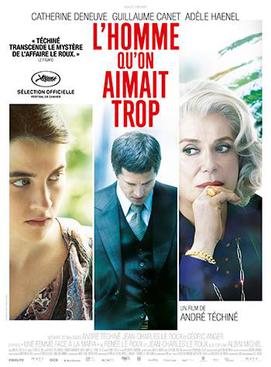
Mother’s Sorrows- Catherine Deneuve’s In The Name Of My Daughter


DVD Review

By Sam Lowell


In The Name Of My Daughter, in French English subtitles, Catherine Deneuve, Guillaume Canet, Adèle Haenel, 2015  

Sometimes stories from real life, like the French film under review In The Name Of My Daughter, about the disappearance and apparent murder of a casino heiress in the 1970s are more baffling than some screenwriter’s fantastic noir-ish detective ideas. What starts out as a rather crude power-play for Madame Le Roux’s casino in the casino wars of the 1970s on the French Rivera by Mafia-connected figures leads to the death of her daughter, probably murdered by a feckless lover, or had been done by parties unknown on his orders. There is in the end just enough doubt about whether the lover was involved with the disappearance to keep this reviewer still scratching his head over the matter. The director of the film has been quoted as saying that he stayed rather close to the real story line as it unfolded over a thirty years period to only add to that feeling about the story line.          

Here is how it played out. French Rivera casino-owner Renee Le Roux (played by Catherine Deneuve whose name was last seen by this reviewer on a river cruise boat on the Seine in Paris and while I admired her films when she was young I did not realize then that she was still alive) was being squeezed out by Mafia-connected men who want to consolidate their hold on the lucrative high-end gambling business there. Madame Le Roux was able to hold out for a while with votes of her adult daughter Agnes and her lawyer/advisor Maurice. Then thing start to go awry. Agnes, unhappy over a failed marriage, seeking some independent from overbearing Mom and seeking her inheritance due her from her late father’s estate, and Maurice, squeezed out by Madame from running the casino become hot, passionate lovers, and with that as a factor decided to side with the Mafia-types in their takeover. The prize for Agnes-the equivalent of her expected inheritance-for Maurice-access to serious dough from a joint account set up by Agnes with him which he never had as a struggling lawyer. Needless to say this betrayal by daughter and advisor put a serious strain on that mother-daughter relationship.

But that is where the “in the name of my daughter” of the title (English title) comes in. All was not well in the Agnes-Maurice relationship for he was a philanderer and she rather than being the independent athletic young woman of the earlier part of the film turned out to be extremely needy. Maurice balked, as was to be expected when she started to make plans for their future, and this indifference led Agnes into doing many rash acts-including a suicide attempt. Maurice still balked. Then one day Agnes was gone from her apartment never to be seen again. A few months later Maurice under the financial arrangements they had worked out in sunnier times, has all of Agnes’ assets transferred to his account and he left for Panama.

Something was certainly wrong with turn of events and Madame Le Roux started what would be a determined, a very focused attempt using all her dwindling resources to have Maurice tried for murder. A lot of things didn’t add up in the French justice system, a system different from the English common law traditions we are more familiar with as allowable circumstantial evidence since no body was found, statements made, guilt and such but Renee did get her day in court. Maurice too, although at the end of the film he was found not guilty. As the credits began to roll we find that he was later found guilty (what about double jeopardy) and is now serving a twenty year sentence for the murder of Agnes. Like I said real life has plenty of twists in it, plenty.                   
***Poet’s Corner- Langston Hughes- I, Too, Sing America 


From The Pen Of Frank Jackman


February is Black History Month


I, Too, Sing America


Langston Hughes, 1902 - 1967

I, too, sing America.
 
I am the darker brother.
They send me to eat in the kitchen
When company comes,
But I laugh,
And eat well,
And grow strong.
 
Tomorrow,
I’ll be at the table
When company comes.
Nobody’ll dare
Say to me,
“Eat in the kitchen,"
Then.
 
Besides, 
They’ll see how beautiful I am
And be ashamed—
 
I, too, am America.


From The Collected Poems of Langston Hughes, published by Knopf and Vintage Books. Copyright © 1994 by the Estate of Langston Hughes. All rights reserved. Used by permission of Harold Ober Associates Incorporated.


…he, black warrior prince proud, sage of the darkened night, spoke, spoke curse and celebration just to keep the record, the historical record straight. He spoke of ancient Spanish conquistador enslavement down in Saint Augustine prison houses. Of ancient Dutchman and Anglo-Saxon slave markets down in fetid Jamestown. Of Middle Passage ocean dumps of human flesh, sold, sold cheap, sold as the overhead price from sweated labors. Of great bustling Atlantic world ports and hectic triangular trade, sugar, rum, slaves, or was it slaves, sugar, and rum, he was not sure of the exact combination but those were the three elements.

He spoke of Cripsus Attucks and Valley Forge fights, black soldierly fights for white freedom all parchment etched, all false, all third-fifths of a man false embedded deep in that founding document. Of compromises, great and small, Missouri 1820, that damn Mex bracero land- eating war against the ghost of those long ago conquistadores, of 1850 compromises, of fugitive slave laws, enforced, enforced and incited. Of Kansas, Kansas for chrissakes, out on the plains all bleeding, and bloody, and no end in sight.

He spoke of righteous push back, of the brothers (and maybe sisters too but they got short shrift in the account books) who made old Mister scream, made him swear in his concubine bed night. Of brave hard-scrabble Nat Turner, come and gone, old Captain Brown and his brave integrated band (one kin to a future poet) at Harpers Ferry fight, and above all of heroic stand-up Massachusetts 54th before Fort Wagner fight. Of Father Abraham and those coming 200, 000 strong what were they, contraband, or men. Of fighting back against the old rascal Mister down in Mississippi goddam, Alabama goddam and the other goddams.

He spoke of rascally push back against the democratic night. Of Mister James Crow and nigra sit here, not there, of get on the back of the bus, or better walk, it’s good for you, eat here, not there, drink here, not there, jesus, breath here, not there. Of race riots and other tumults in northern ghetto cities teeming with those who tired of eat heres, drink theres, stand over theres, and charted breathes.

He spoke of that good night, that push back against black stolen dignity. Of struggle, hard struggle against the 1930s Great Depression Mister night. Of no more backing down the minute Mister said, no, thought to say, get back. Of riding with the king, of the simple act of saying no, no more. Of great heroic figures risen from the squatter farms, the share-cropped farms, the janitor and maid cities, the prisons, above all the prisons. Of Malcolm and the “new negro” and the bust up of that old fogey “talented tenth” white man fetch. Of brothers (again sisters short-shrifted from the account book) from North Carolina, from Louisiana, from Oakland who said defend yourselves-by any means necessary -if you want to hold your head up high.

He spoke of ebb and flow, of hope, and of no hope in the benighted black America land …


Thursday, February 11, 2016

***Poet’s Corner- Langston Hughes -50-50


From The Pen Of Frank Jackman


February is Black History Month


50-50


I’m all alone in this world, she said,
Ain’t got nobody to share my bed,
Ain’t got nobody to hold my hand—
The truth of the matter’s
I ain’t got no man.

Big Boy opened his mouth and said,
Trouble with you is
You ain’t got no head!
If you had a head and used your mind
You could have me with you
All the time.

She answered, Babe, what must I do?

He said, Share your bed—
And your money, too.


Langston Hughes


The whole world knew, or at least the important parts of that world, that summer of 2012 downtown Boston world (near the Common say from the Public Gardens to Newbury Street but also near birth place Columbus Avenue), knew that Larry Johnson was Ms. Loretta Lawrence’s every day man (and it goes without saying her every night man too). Make no mistake, girls, women, even though they didn’t hold hands in public or throw public kisses at each other, they were an an “item.” Loretta at five-ten and rail thin, fashion model day thin and what in the old days was called a very light “high yella,” mixed blood from some old South Mister’s wanting habits and some “passing for white” along the way but in any case very highly sought after just then for coffee table magazine shoots didn’t look like trouble, but anytime a a woman gave Larry a side glance look Loretta’s eyes said keep your hands off. And they did, those in the fashion industry, mostly her fellow models, and maybe a few longing sidewinder guy designers too. But somebody had Larry’s attention and Loretta was going to get to the bottom of it.

It had all started back in February when Larry asked her for a hundred dollars one night, out of the blue. Now Larry had been on a tough stretch ever since the financial collapse in 2008 (although it only bagged him in early 2010) when the markets went crazy and he got caught short, and since business was bad he eventually got that old dreaded pink slip from the big finance company that had hired him straight out of the Harvard Business School MBA program to diversify their employee mix. (Larry found out later that one manager, who had publicly said he was crazy to get him had told a friend of his that he hired Larry to add “color” to his staff). Nobody was hiring so he had just been kind of living off his old time bonuses, and a little of this and that.


Funny, funny now, Larry and Loretta had met at a bar down in the financial district where he had stopped off for a drink after passing his resume around for about the umpteenth time and she had just finished a shoot (for a cosmetic company as they were trying to expand their markets that had keyed on her for her ravishing looks, brown hair, brown eyes, very light brownish high cheek-boned skin which was a plus since whatever diversity there was in the fashion market the hard fact was there was a drop off when dark as Africa black women graced the covers of most magazines or other advertising venues) down near the water at International Place and her photographer had offered to buy her a drink. His eyes met hers, her eyes met his in return and before anyone really knew it he had moved in on her like something out of one of those old time thriller romance novels that you read and at the end can’t believe that you spent your good hard-earned rest reading and cannot believe either that the “she” of the story would be so stupid in the end to have gotten mixed-up with a wacko like that.

Larry had moved in on her too, literally, after a few weeks of downy billow talk and his argument (which she was okay with, she wasn’t saying she wasn’t) that two could live as cheaply as one (which isn’t true but close enough) and he could cut down on expenses during his rough patch. And it was nice, nice to have a man around, with man’s things, a man’s scent, and a man’s silly little vanities that she had not experienced since Phil (she would not use a last name because Phil was well known, too well-known) had left her a few years back. Every once in a while though she would notice a ten here or a twenty there missing from her pocketbook but figured that either she, spendthrift she, had spent it on some forgotten bobble or Larry had taken it for some household thing and didn’t report the fact (although she, they, had insisted on a collective counting of expenses). Then came the night of Larry’s official request. And she gave it to him, a loan, a loan was all it was. The first time.

After a few more requests for dough, and the granting of those requests, Loretta started to try to figure out what the heck he was doing with the dough (he said it was to help get a job, or he needed new shirts, or something, something different each time). Then she thought about Phil, not about the money part (Jesus, he had thrown his dough at her when he was strong for her, called her his little money-machine and laughed) but as he started losing interest in her he stopped showering the money because he was seeing another woman on the side and showering it on her (that “her” being a friend of hers, and not even beautiful, just smart). And so she started thinking that Larry, Larry the guy who was sharing her bed every night (every night so it had to be a daytime dalliance), was having another affair. She resolved that Larry would get no more money, no more loans, as he called them and if she found out that he was two-timing her that woman had better leave town because, two-timer or not, bum-of-the-mouth or not, he was her man and she had told one and all hands off. And she meant it.

Wednesday, February 10, 2016


***Poet’s Corner- Langston Hughes- Mother To Son


From The Pen Of Frank Jackman


February is Black History Month


Mother To Son


Well, son, I'll tell you:
Life for me ain't been no crystal stair.
It's had tacks in it,
And splinters,
And boards torn up,
And places with no carpet on the floor—
Bare.
But all the time
I'se been a-climbin' on,
And reachin' landin's,
And turnin' corners,
And sometimes goin' in the dark
Where there ain't been no light.
So, boy, don't you turn back.
Don't you set down on the steps.
'Cause you finds it's kinder hard.
Don't you fall now—
For I'se still goin', honey,
I'se still climbin',
And life for me ain't been no crystal stair.


Langston Hughes


Clarence Martin knew, knew deep in his bones, that he would now have to talk to his just turned ten son, Lanny (full name Langston, named after the old Harlem Renaissance poet, Langston Hughes, whom he, and the brothers, had learned about and went “max daddy” be-bop hip-hop crazy over in that GED class at Norfolk when he had done his last stretch, that last and no more stretch for that damn liquor store armed robbery), now that he had made that first midget turn toward “the life” with that foolish “clip” he got caught doing over at Mr. Earl’s Jewelry Store in Roxbury Crossing (he would not tell his son, not for the world, that he too had clipped his fair share of jewelry from that very same establishment although he had never gotten caught in those days before every two-bit place had monitors all over the place). He would have to call his ex-wife, Lanny’s mother, Essie, and make arrangements for them to meet in some neutral place and have it out, have it out about the black facts of life in America, and about taking that midget turn back, back to rolling that rock up the mountain like that old Greek guy did.

As Clarence thought about how to approach his son, about how to tell him about his own troubles with the law that he and Essie had kept from him since Lanny had not even been born when, he, young wild buck he, got his wanting habits on and caused his own Mama and Papa some serious hell. He figured that he would just lay it on the line, man to man, even though at ten Lanny might not understand the whole thing. He would try to explain about a boy’s wanting habits, a boy fresh up from deep in the Jim Crow south, a boy born on some Mister’s sharecrop plantation and then early on moved up into a northern ghetto (over on high number Washington Street where his own parents still lived) where it seemed like the streets were paved with gold, although his people had no gold, no gold to satisfy his wanting habits.

So it had started, started simply for him and his corner boys, a hustle here, a jack-roll there, a little time at Morton Street, some street dope, some walking daddy pimp action (of his own girlfriend at the time and her sister for Chrissakes), then his graduate education-armed robberies for quick nickels and dimes to feed a burgeoning coke habit, then the big house. Graduated and done. A normal profile for a couple of generations of black boys, maybe three. He wouldn’t hold back (except that silly clip action at Mister Earl’s because he didn’t want any “like father like son” noise from Lanny, or Essie either).

Then he would point to his own turnaround, his job as head janitor at the John Hancock building in the Back Bay, and the slow and steady rising up of his own life. Nothing big, but he was still alive to talk about it, unlike the five other members of his Uphams Corner jive ass corner boy society who were either six feet under or sitting in some big steel house, mostly the former. He would tell him of Langston Hughes, no not the poet part (although the brother was still the “max daddy” be-bop hip-hop angel high priest) but getting wise in stir, getting wise inside and figuring out after that last stretch that he was either going be dead by thirty or a permanent resident of the underclass either in the big house, or out in some nowhere scene. So he got his GED, picked up some usable trade skills and shook the prison pallor off. And never looked backed, even if the road forward was not going to be blazing guns.

And then he would lay it on the line that ten-year old black boys, Lanny black as the night black boys, were born to die at thirty (maybe earlier), were born to have their wanting habits curtailed, were born to spent time in Mister’s steel boxes, were born to wither and die in some sleepy crack house, were as likely to be blown away just for breathing wrong by some blue-suited bastard or some irate honky, as for anything else. He would leave it at that he thought enough to fill up a grown man’s hurts, to fill up a strong grown man’s hurts and sorrows.

A minute later Clarence Martin, father, black father, black father with a story to tell dialed up Essie’s number on his cellphone and when she answered he said, “Hey, Essie, how’s things, I need to talk to Lanny, I need to talk to my son bad… ’’
***Poet’s Corner- Langston Hughes - Bound No'th Blues


From The Pen Of Frank Jackman


February is Black History Month


Bound No'th Blues


Goin’ down the road, Lawd,
Goin’ down the road.
Down the road, Lawd,
Way,way down the road.
Got to find somebody
To help me carry this load.

Road’s in front o’ me,
Nothin’ to do but walk.
Road’s in front of me,
Walk…an’ walk…an’ walk.
I’d like to meet a good friend
To come along an’ talk.

Hates to be lonely,
Lawd, I hates to be sad.
Says I hates to be lonely,
Hates to be lonely an’ sad,
But ever friend you finds seems
Like they try to do you bad.

Road, road, road, O!
Road, road…road…road, road!
Road, road, road, O!
On the no’thern road.
These Mississippi towns ain’t
Fit fer a hoppin’ toad.

Langston Hughes


… he, Bradley Brim (juke joint, roadside house, rent party stage moniker, Clarksville Slim, but let’s just stick with Bradley until he needs to use that moniker again up north), was sick and tired of, hell, being sick and tired. First off, after last Saturday night, Bradley was sick and tired of every no account jive- ass jackass field hand, cotton field hand, in the great state of Mississippi feeling like he could, like he could as a natural right, all rum brave on Spider Jones’ homemade, feel that he could throw his whiskey jar at the stage when he didn’t like a particular number he (Clarksville Slim, remember) was doing. Damn, go elsewhere. Next off he was sick and tired unto death of every Louella, Bee, Sarah, Selma, and Victoria (those his last four, ah, five girlfriends, for those not in the know, not in the juke joint circuit know), taking what little money he had (and it wasn’t much after expenses, a little reefer, a couple of bucks for some trifle for his girl of the moment) and spending it on her walking daddy, her husband or her pimp. And then at the end of the night saying, sweet purr saying, he was her one and only walking daddy, after he had picked up her tab and they headed to his place, his cabin for what no walking daddy, husband or pimp was giving her. And lastly off, if that was the way to say it, he was just about ready to shake the dust of old Spider Jones’ juke joints (road houses and cafes too, he had a string of them around the southern part of the state), his cornball liquor, the dust of Clarksville, and the dusts of the great state of Mississippi and follow the northern star to the promised land, to Chi town, to legendary Maxwell Street where a man could make himself some money and still come out ahead.

And as he started thinking, thinking once again about shaking that damn dust off, he thought too about how he wouldn’t miss his day job at Mister Baxter’s Lumber Company that was hampering his musical development because he couldn’t practice during the day like he should, wouldn’t miss every Mister James Crow-craving white man, woman and child in the state telling him, sit here, don’t sit there , walk here, don’t walk there, eat here, don’t eat there, drink the water here, don’t drink the water there, even Mister Baxter, wouldn’t miss every cornball white hick, white trash hick, really, eye-balling him anytime he went downtown for Mister Baxter, or on his own hook. Wouldn’t miss a lot of things, except those women who shook loose of their walking daddies and wanted him to be their coffee-grinder when the dawn came up.

He heard, and he thought he heard right, heard it from Mickey Mack’s woman who was waiting for Mickey to send for her to come to Chi town any day now that there were plenty of jobs up there, good paying jobs in steel mills and slaughter houses (he thought about, and laughed too, how in school Miss Parker had read the class a poem by some crusty old white guy who called Chi town“hog-butcher to the world”), the housing wasn’t too bad (some cold- water flats which sounded better than the raggedy ass old Mister Baxter cabin he lived in) and get this, nobody, nobody white on this good green earth cared where you ate, drank, sat on the bus, as long as you didn’t bother them (and maybe didn’t live next door to them).But mainly all he cared about was making it, or breaking it, he held that possibility out too, on Maxwell Street (or starting out on one of the side streets and working his way up) singing his stuff, singing his covers of Robert Johnson that he thought would drive the women wild (especially his version of Dust My Broom) and of Muddy too. Yah, all he cared about was following that northern star to sweet home Chicago.

The Night Captain Crunch Cashed His Check-With Jeanbon Kerouac In Mind


By Bradley Fox

It was a dark, drizzly night the night in October, 2015 when Bart Webber and Sam Lowell heard from their old on the road friend from up in Maine Josh Breslin that Captain Crunch had cashed his check (for those not in the know that was an old-time 1950s and 1960s expression among hipsters, be-boppers, beats and along the edges of hippie-dom to say that somebody had passed on to the great beyond just like among the hobos, tramps and bums out in the great railroad “jungles” of the West the expression that some compadre had “caught the freight train West” meant the same thing). That night, or whenever the old gang still left heard about his demise, there must have been consideration gnashing of teeth among guys, gals too, in places like Sam and Bart’s Carver, Josh’s Olde Saco, North Adamsville, Riverdale, Steubenville, Ohio, Omaha, Saint Louie, and a thousand other places where those who knew the Captain in his prime and their primes wound up. Maybe wept a tear for their lost youth when everything was possible and knowing the Captain made you believe that hard fact even in the face of contrary evidence as the decade of the 1960s moved along. Yeah, that’s it, maybe wept a tear for their lost youth.   

See Captain Crunch, real name Jonathan Fuller, Yale Class of 1957, but always Captain Crunch to all who knew him in that time when everybody and the uncles and aunts were shedding their real names and reinventing, or trying to reinvent themselves, in many cases that was a close thing, had caught the fever caused by the stir of Jeanbon Kerouac’s classic 1950s road novel On The Road (although the events in that book had actually occurred in the late 1940s the vagaries of the publishing industry and Jack’s hubris combined to delay the news of the new dispensation much to his chagrin). That novel had come out the year the Captain had graduated from Yale and having been foot loose and fancy free coming from an old moneyed family and thus unlike many others who graduated that year not in need of a job to set himself up the world headed out to San Francisco to check out the scene there. Took the train out if anybody was wondering if he followed Jack’s hitchhike trail to breathe deeply of the American night.

The scene that was happening in that town, its doings, and its characters would eventually be widely called the “beat generation.” (The genesis of that term “beat” has a checkered history since both John Holmes who used it in an article in the later 1940s and Jack who personified “beat” claimed fatherhood to the idea but in any case Jack made the term more widely known and more interesting.) The Captain had landed in Frisco in late 1957 and headed straight to the City Lights bookstore over on Columbus run by the poet Lawrence Ferlinghetti and a couple of other associates to see what was what. One day a few months thereafter he had met Kerouac who had just come off one of his famous, or infamous, three day drunk-doped up-sexed up binges and looked like hell but who answered his questions about his take on the scene. Jack had told him all the media stuff was all bullshit, all bullshit now not when the events depicted in the novel occurred and that the so-called hipster beatnik clowns (his term according to the Captain) running around with beards, berets, and bennies were all fakers and punks although the girls, especially those all dressed in black including their lingerie and wearing black eyeliner, who were willing to go down for him, or on him, just because he was famous now was okay as long as they didn’t expect anything of him except to get laid. The Captain (who had not taken on that persona then that would come later when he drew his own acolytes around him like Bart and Sam) hung around that scene, the edges of that Frisco beat scene for a few years until it kind of petered out of its own inertia.             

The Captain had said later when a new generation familiar with On The Road and not much else began to ask questions about what happened then that he had learned a lot from the beat poets, artists and performers no question. Knew many of them who were already famous or who would become famous in the folklore of the town Ginsberg, Kerouac, Corso, Snyder, and Cassady or have a local fame like Jake Arbus, Dixie Davis, and Guy Daniels. But as that that movement drifted into dust he had become more interested in expanding his self-consciousness, his karmic being, when he fit in the universe and so he slowly drifted south to La Honda where Ken Kesey was putting together a new dispensation around Jack’s on the road idea and the serious use of drugs to create a new consciousness (or as Kesey would say with some candor before he himself got famous just to get through the fucking horrible day).

The biggest thing that the Captain picked up though as the 1950s drifted forlornly into the 1960s since the drugs could only take him so far was the idea of the road, the road constantly travelled, in the end the idea of being “on the bus” that he grabbed straight off from Kesey and his Merry Pranksters about 1964, 65. Kesey’s bus, a converted real live yellow brick road school bus, the Further On was a combination floating commune for the aimless homeless young who could not deal with the nine to five world, a moving concert hall complete with state of the art sound system that could handle the explosive new music coming out of the Bay area (the uprisings of the Doors, the Dead, Jefferson Airplane and a million other acts which the impresario Bill Graham put on at the Fillmore West and other locales), a dope-infested caravan with every kind of dope from LSD to horse to grass to bennies and back, and a free-lance free sex sex parlor. That idea or series of ideas attracted the Captain and after a short stay on Kesey’s bus he broke out on his own like a lot of people were starting to do and put together his own bus. Whereas say in 1965 Kesey’s bus would have been subject to talk by hipsters and gawks by the tinny tourists by the time the Captain put his bus together named Jade Karma there were many roaming up and down the Coast highway looking, well looking for something. That was the time, after he picked a few acolytes, a few fellow-travelers if you like, grabbed a girlfriend, Mustang Sally (Susan Stein, Bryn Mawr Class of 1960, who gave him all the trouble of heart and mind he ever needed since she was truly a free spirit and free with her love, Jonathan Fuller one night, one laced LSD night, transformed himself into Captain Crunch.          

This is where Bart and Sam (and later others from Carver, Josh from Olde Saco, the late Pete Markin from North Adamsville and many others) enter the story. They like half their freaking generation were restless, bored with what was ahead for them in the nine to five world, worried about draft status and the social situation and decided mostly from what they read in Kerouac, mostly On The Road and Big Sur  and what they heard was happening on the West Coast to hitchhike out. Sam and Bart had gone out together after Frankie Riley also from Carver and a friend of theirs had gone out and had met up with the Captain and the bus in Golden Gate Park one summer day in 1967. So they had gone out, hitched themselves to the bandwagon and travelled with the Captain up and down the coast.

During that Frisco time they had met Josh up on Russian Hill when he came by after hitchhiking from Maine and asked for a joint. Somebody gave him one and that was that. Later Pete Markin came and for a while Bart (known as the Lonesome Cowboy), Sam (Mister Moonbeam), Pete (known as the Scribe), and Josh known as the Prince Of Love) showed up and for a while formed a core of guys who kept things somewhat stable as a ton of other people from all over who would get “on or off the bus” at various points. Of course they all imbibed in the “drugs, sex, rock and roll,” consciousness and some the political stuff although that tended to be discouraged on the bus-the idea being that the nine to five world was there and politics should be left at that door and the denizens of the bus were here so they were on two different universes.       

Bart had not stayed on the bus long, just the summer since he realized after few months of travelling and all the other things that went with it was not for him (he had a girl, Betsy Binstock back in Carver who he eventually married), that while he was not a nine to five guy (then) still he was not built for the road. Some others would follow that same path and eventually all but a remnant would be left to carry on as the 1960s drifted into the ebb tide of the 1970sand the road back to “normalcy.” Sam had stayed longer, a couple of years, had a slew of girlfriends, the longest one an ex-surfer girl Butterfly Swirl that every guy took a shot at, and lovers, did his fair share of dope, learned about lots of things, mind things, dug the music but eventually he saw something coming that looked like a drag, looked like the end of the brave new world experiment they were trying to work out. He would go back East, go to law school and prosper. Josh had stayed even longer about four years since along the way he had realized that he had a writing talent that he could exploit while on the road, got several of his pieces published by the explosion of small and alternative presses created out of the need for their “people of the light” to know something other than the mainstream media pabulum put out daily. Eventually he too saw the writing on the wall and that as the 1970s started drying up everything worthwhile from the 1960s the audience he was trying to reach was disappearing, was going back to whatever they had fled. He would continue to write for small journals and other publications and survive pretty well.

In a lot of ways though the case of Pete Markin kind of wrapped up the ebb tide of the 1960s with a big bow, kind of put a bummer edge on everything since he had stayed on the road the longest, had the most invested in seeing the great generational experiment succeed. He had been bitten hard, had had the Captain’s confidence, had stayed with him for lots of reasons some personal some to have a place to stay against the storms of his life but in the end he too got off the bus. Got off the bus but that is where his childhood growing up wanting habits that had been held in check fell apart. He had been writing but the market for his stuff dried up quicker than Josh’s and he had no backup. No back-up except to get involved in the international drug trade, got involved with the evolving cartels raising their ugly heads down south of the border. Had been blown away by some nasty gunman down in Sonora after some misdirected drug deal went awry. Had as far as anybody got the story right tried to rip the cartel off, go independent. Got a couple of slugs and a potter’s grave in Sonora for his efforts. Josh said he did not know about the others stories, about what happened later to many of those on the bus for a longer or shorter periods of time, how they turned out but probably not much different that the stories he knew, the stories of the ups and downs, the promises and failures of his generation.         

As for the Captain, well until the news came that he had cashed his check he had kind of fallen under the radar, had gotten lost in the mist of time for the Sam, Bart, and Josh. When they had a memorial service for the Captain down at Pfeiffer Beach at Big Sur where he had more or less stayed the last several years of his life and later when some whizzbang kid did a documentary about the Captain it turned out that he had stayed on the road the longest, never really got “off the bus.”   Could be seen driving up and down the Pacific Coast Highway with his increasingly bizarre-looking and funky bus with a couple of graying acolytes and his old-time girlfriend Mustang Sally periodically looking, looking for something. Some of the young who were clueless about what the bus experience meant would come by when they were parked at some campsite and ask batteries of questions about what had happened and sat in awe as the Captain patiently gave them some answers. Yeah, wasn’t that a time though, wasn’t that a time. Captain Crunch, RIP.