Wednesday, November 28, 2012

From The Pen Of Joshua Lawrence Breslin- The Blues Is…, Take One

The blues is, praise be… He had just barely gotten done with his work for the day, his sun up to sun down work helping Brother Barnes shoe the plow horses, a job he had held since his older brother, Ben, had gotten back from the war, the Great War, the war to end all wars, the war for so-called democracy, World War I, if anybody was asking and upon returning had decided to move on to Clarksville and later Memphis, on Mister’s cotton boll massive ten thousand acre delta plantation, than his father took him aside and asked him , really ordered, to wash up and get ready to go over to Lancer Lane. The words Lancer Lane made him jump for joy inside, for this night, this very Saturday night he would finally, finally, get to play his new guitar, well not really new for that instrument had been passed down to his father from who knows when, maybe back to pharaoh times when those old pyramid slaves needed something to take their minds off their back-breaking work on their relax minute, in front of a real crowd at the Lancer Lane juke joint and not just before his father, his siblings, and a few stray cats at Mister’s company store over in Lancersville.
No, he was stepping up in the world, the world that mattered, the world of those rough-hewed, hard drinking walking daddies (and their clinking dressed to the nines, dressed to the soft kitten pillow tumble nines, walked- around women, praise be) that populated the Lancer Lane juke joint on Saturday night (and paid penance, serious penance, at nearby Lancer Lane Lord’s Work Baptist on Sunday morning, many times sliding directly from one site to the other, smoothly if stinking a little of sweat, hard, hard Sonny Boy’s golden liquor, and mussed up pillow tumble sex ), who would decide whether he had the stuff his father thought he had. And decide it in the only way such things were decided, by throwing dollars, real dollars, at him if he was good and broken whisky bottles (or, if tight for dough, as was often the case with tough times as just then, and so bought their whisky by the jar, jars) if he panned. He had asked his father repeatedly since he had turned sixteen to let him accompany him on his journeys to Lancer Lane (the latter as performer and as a, ah, imbiber), but his father maybe knowing the wisdom of sheltering the boy from those whisky bottles and jars if things didn’t work out just like his father, bless him, before him had held off until he was sure, or fairly sure of the night’s outcome.
What sonny boy did not know was that father had relented as much because he was in need of an extra pair of hands in case Big Nig Fingers showed up that night as that he was ready to have dollars thrown at his son. The nature of the dispute between Big Nig Fingers and his father was simply enough explained, a woman, a dressed to the nines pillow tumble woman, Sonny Boy’s woman, Lucille, and her roving eyes, roving eyes that landed, allegedly landed, on his father. Alleged by Sonny Boy although denied, vehemently denied by his father, who had secretly a couple of years back had had an affair with Lucille when Big Nig was trying to take over, well take over something, booze, dope, women, numbers, something in Memphis. So yes, yes indeed, his small-framed father most assuredly and vehemently denied those roving eyes.
A couple of hours later, washed up, dressed up in a clean work shirt and pants he and his father having walked the two dusty miles from their Mister’s plantation-provide quarters, arrived at the juke house, really nothing but a cabin, a log cabin, belonging to Sonny Boy Jackson who used the place as a front for his golden liquor sales as well. (Yes, that Sonny Boy in the days before he went to Clarksville and began the road to some local fame as the best harmonica in 1920s delta Mississippi, even getting a record contract from Bee Records when he was “discovered” by one of the agents that they had sent out scouring the country for talent for their race record division after Mame Smith set the world, the black world and a few hip whites on recorded blues fire.) Now, like most cabins in those parts then, maybe now too, who knows, there was no electricity, hell, nobody practically except Mister (and the Captain, that deduction crazy Captain, docking everybody for his version of not a full bale, for sassing back, for breaking tools, hell, one time for some asthmatic picker just breathing ) had electricity, or a reason to use it just a few chairs, tables, a counter to belly up to for whiskey jar orders (bottles were sold out back away from prying eyes, moneyless prying eyes looking for some cadges swigs), and for the occasion Sonny Boy had a small stage jerry-rigged in the back so the entertainment would not get pushed around too much when things got rowdy, as they always did, later in the evening.
That night he had a surprise coming, or rather two. His father, taking no chances, had arranged to have a few members of the Andersonville Sheiks from up the road, who would later in the decade, some of them anyway, go on to form the Huntsville Sheiks and also get that coveted record contract from Bee Records when sheiks replaced harmonica players and barrelhouse mamas as blues fire among blacks and those few hip whites, to back his son up. So he was going to have a real ensemble, a jug player, a harp player (harmonica, okay) and a washboard man, his father to play banjo (if he was sober enough, and while that was in question most of the night he held up, held up well enough to slide over to Lord’s Work Baptist for the eight o’clock service even if stinking of sweat and liquor). Papa had done right by him, Big Nig Fingers and his Lucille (to his father’s dismay) had decided to take a night off so he would need no cut knife help, and he blasted the place with his strange riffs, riffs going back to some homeland Africa time. Proof: twenty- seven dollars as his share of the house. And no whisky bottles (or jars).
Oh, the second surprise. Miss Lucy, Miss Lucy Barnes, Miss Lucy Barnes, a sweet sixteen going on thirty, and no one needed to explain what that meant when a girl, hell, woman had her wanting habits on, a dark- skinned beauty, all cuddles and curves, the daughter of his” boss,” the plantation blacksmith, had taken notice of him and kept sending small jars of Sonny Boy’s golden liquor his way which just made him play more madly, hell, let’s call it by its right name, he played the devil’s music like he was the devil himself. By the end of the night she was sitting, table sitting, just in front of him, waiting for that last encore. Suddenly she jumped up and started to dance, dance to his encore riff blasted version of Mean, Mistreatin’ Mama shaking her head back and forth furiously indicating that one Miss Lucy Barnes’ was not in that category, at least for that night. They too were seen sneaking into that eight o’clock service at Lord’s Work’s Baptist a little sweaty and stinking of liquor, having spent the previous few hours in the back room of Sonny’s joint, just in case you wanted to know.
***************
The blues ain’t nothing, nothing at all but a good woman on your mind, all curves and cuddles, all be my daddy, daddy, be my walking daddy, build for comfort not for speed just like your daddy, your real daddy, not your long gone daddy (met as you came up river from Lancersville via Memphis and he, he returned from another war to end all wars, this time World War II) just now serving a stretch, a nickel’s worth for armed robbery up in Joliet for some Southside (Southside Chicago, natch)heist that went sour, hell, you told long gone daddy that guns didn’t make the play any better but long gone was just a little too long gone on that twinkle dust and so when Danville Slim called the shots, long gone was long gone, told you about when you were knee high and needing instruction about who, and who not, to mess with when you got your wanting habits on.
Hence, stay away from big women, big-legged, big bosomed, big- lusted, hell, just big everything, like the song, the blue blue blue song says, don’t forget, they will wear you out, wear you out for other women, ditto, long thin gals, hungry girls who have learned man trap tricks in lieu of big appetites , with wanderlust eyes, and twinkle dust noses, itching, checking out every daddy, every daddy that came by her eyes, flashing five dollars bills and another twinkle line, ditto, god’s girls, Sunday morning moaners, smelling of gin, washtub gin, and carrying juke joint slashes, some mean mama cut her up when she wrong- eyed mean mama’s daddy, now Sunday looking for, can you believe it, forgiveness, and trick, getting it, stick with curves and cuddles, an easy rider, a low love easy rider, she’ll treat you right and no heavy overhead, and no damn where have you been daddy questions.
She, Miss Lucy she, all cuddles and curves she, an easy rider, yah, a sweet and low easy rider, to make a man, well, to make a man get his own wanting habits on, so far away, so far from uptown downtown Chi town, far down in sweaty delta Mississippi, maybe still in Clarksville like he left her that night, that moonless 1942 night, when he had to break-out from delta sweats, from working sunup to blasted sundown for no pay, for chits, Christ what are you supposed to do with company chits when you had your Miss Lucy wanting habits on, needed, no craved, some of Sonny Boy’s honey liquor, from the Mister on his ten thousand acre cotton boll plantation (selling every last boll too, good or bad, to the U.S. Army, for, for what else, uniforms), and those damn deductions from the Captain, for, for sassing, and grab that bus, that underground bus, out on Highway 61, and head, yah, head north following the north star, following the migrant trail up-river. A quick stop at Memphis to see if any of the guys, B.B. (no, not the one you are thinking of), Harmonica Slim, Delta Dark, Bobby Be-Bop, Big Joe, Muddy (yes, that Muddy slumming down river and on the low from some Chi town wench whose man was looking, knife looking, for the guy who messed with his baby and left her blue, real blue. True Muddy story.) needed a guitar max daddy player.
Then straight to Chi town and work, work in the hog butcher to the world, work in the Casey steel driving hammering foundry to the world , work in the grain elevator to the world, work in the farm machinery equipment factory to the world , good, steady, sweaty work, five day work and done, five day work, maybe overtime, glad-handed overtime on Saturday, and done, no Captain’s noise , except maybe some rough Irish cop night stick but, mainly, just hell work, and then off to bumbling squalid three- decker hovel, overcrowded, over-priced, under heated, damn, nothing but a cold water flat with about six different nationalities chattering on the fetid Maxwell- connected streets.
Home, home long enough to turn overalls, sweated blue overalls, into Saturday be-bop blues master, all silk shirt, about five colors, blue blue, green green sun yellow, deep magenta, some violent purple, all fancy dance pants, all slick city boy now shoes (against that po’ boy Lancersville no shoe night to make daddy, real daddy cry, and mama too), topped by a feathered soft felt hat, de riguer for Saturday prances. For a while singing and playing, he, mainly playing that on fire(electric) guitar first learned from daddy, real daddy, down the delta when he was from hunger and he and daddy Saturday juked for whiskey drinks (for daddy) and sodas and ribs for him, for nickels and dimes with his long gone daddy (gone daddy previously mentioned tired of nickels and thus plugging an ironic nickel’s worth) out behind Maxwell Street, only the prime guys, the guys Chess, or Ace, or Decca, or, some race label were interested in, for a while, got to play the big street, the big attention, the big sweep, everybody else behind for nickels and maybe an off-hand stray piece, a joy girl they called them, hell he called them when he had his wanting habits on, not all black or mixed either, a few white joys looking for negro kicks, looking for kicks before Forest Lawn stockbrokers, or futures traders made their claims, looking over the new boys in order to say that they had that, had that before they headed out to Maxwell Street glare or sweet home, yah, sweet home Joliet. And Miss Lucy waited, waited down in some lonesome Clarksville crossroad, dust rolling in, sun beginning to rest, watching the daily underground bus heading north, north to her Johnny Blaze, Johnny quick on that amped up guitar and the stuff of dreams.
The blues ain’t nothing, nothing at all but a bad woman on your mind, a woman walking in your place of work, your stage, your Carousel Club, you just trying to get that damn guitar weapon, baby, mama, sugar, main squeeze, in tune, the one just off of Maxwell Street, mecca, with her walking daddy, eyeing you that first minute, big blond blue eyes, and even walking daddy can feel the heat coming off her, animal heat mixed up with some Fifth Avenue perfume bought by the ounce , feel that he was going to spend the night on a knife’s edge. The Carousel Club got a mix, got a mix on Friday nights when the be-bop crazy white girls, not all big blond blue eyes but also mixed, decided that be-bop jazz, their natural stomping grounds, over at places like the Kit Kat Club was just too tame for their flaming 1950s appetites and so they went slumming, slumming with a walking daddy, a black as night walking daddy, make no mistake, in tow just in case, in case knives came into play.
She had her fix on him, her and that damn perfume that he could smell across the room, that and that animal thing that some woman have, have too damn much of like his daddy, his real daddy, told him to watch out for back when he was knee-high and working the jukes for cakes and candies (and daddy for Sonny Boy’s honey liquor). Just what he needed, needed now that he had worked his way up from cheap street playing for nickels and dimes (and, okay, an off-hand piece once the joy girls, some of them white like this girl, looking for negro kicks, badass negro kicks and then back to wherever white town, heard him roar up to heaven on that fret board) to backing up Big Slim, yah, that Big Slim who just signed with Chess and was getting ready to bring the blues back to its proper place now that it looked like that damn rock and roll, that damn Elvis who took all the air out of any other kind of music had run its course. Then it started, she sent a drink his way, a compliment to his superb playing on Look Yonder Wall according to Millie the waitress who played the messenger, then another, ditto on The Sky Is Crying and a Millie watch out remark. Walking daddy was not pleased and she looked like she was getting just drunk enough to make her move (hell, he had seen that enough, and not just with these easy white girls). No sale tonight girlie that bad ass negro really does look bad ass, bad ass like long gone daddy whom he started on these mean streets with and was still finishing up another nickel at Joliet. She made her way to the stage as the first set ended. Pleasant, hell they are all pleasant, in that polite way they have been brought up in for about four or five generations, but still with that come hither perfume and that damn hungry look. No sale, no sale girlie, not with bad ass looking daggers in his eyes. And that night there wasn’t. Next Friday night she came in alone, came in and sat right in front of him. Didn’t say a word at intermission, just sent over a drink for a superb rendition of Mean Mistreatin’Mama , and left it at that.
After work she was waiting for him out in back, he nodded at her, and she pointed at her car, a late model, and they were off. They didn’t surface again for a week.
**************
The blues ain’t nothing but…He, Daddy Fingers (strictly a stage front name, with a no will power Clarence Mark Smith real name needing, desperately needing, cover just like a million other guys trying to reach for the big lights, trying to reach heyday early 1950s Maxwell Street, hell, maybe trying get a record contract, a valued Chess contract, and that first sweet easy credit, no down payment, low monthly payments Cadillac, pink or yellow, with all the trimming and some sweet mama sitting high tit proud in front), had to laugh, laugh out loud sometimes when these white hipsters asked him what the blues were.
He, well behind the white bread fad times, having spent the last twenty years mostly hidden down South, the chittlin’ circuit down South, from Biloxi to Beaumont, working bowling alleys, barbecue joints (the best places where even if the money was short you had your ribs and beer, a few whisky shots maybe, some young brown skin with lonely eyes woman lookin’ for a high-flying brown skin man in need of a woman’s cooking , or at least a friendly bed for a few nights), an odd juke house now electrified, some back road road-side diner converted for an evening into a house of entertainment, hell even a church basement when the good lord wasn’t looking or was out on an off Saturday night had not noticed that these kids asking that august question were not his old Chi town, New Jack City, ‘Frisco Bay hipsters but mostly fresh-faced kids in guy plaid short shirts and chinos and girl cashmere sweaters and floppy skirts were not hip, not black-hearted, black dressed devil’s music hip. For one thing no hipster, and hell certainly no wanna-be hipster, would even pose the question but just dig on the beat, dig on the phantom guitar work as he worked the fret board raw, dig on being one with the note progression. Being, well, beat.).
Plaid and cashmere sweater crowding around some makeshift juke stage, some old corner barroom flop spot or like tonight here on this elegant stage with all the glitter lights at Smokin’ Joe’s Place, Cambridge’s now the home of the blues, the 1970s reincarnation of homeland Africa, sweated pharaoh slave plantations, Mister and Captain’s jim crow plantations, juke joints, sweet home Chicago, for all who were interested in the genealogy of such things came around looking, searching for some explanation like it was some lost code recently discovered like that Rosetta Stone they found a while back to figure out what old pharaoh and his kind said (hell, he could have deciphered that easy enough for those interested- work the black bastards to death and if they slack up, whip them, whip them bad, whip them white, and ain’t it always been so).
So he told them, plaid guy and cashmere bump sweater girl, told them straight lie, or straight amusing thing, that like his daddy, his real daddy who had passed down the blues to him, and who got it from his daddy, and so on back, hell, maybe back to pharaoh times when those slave needed something to keep them working at a steady death-defying pace, that the blues wasn’t nothing but a good woman on your mind. And if some un-cool, or maybe dope addled wanna-be Chi town hipster, or some white bread all glimmering girl from Forest Hills out for negro kicks, had been naïve enough to ask the question that would have been enough but plaid and cashmere wanted more.
Wanted to know why the three chord progression thing was done this way instead of that, or whether the whole blues thing came from the Georgia Sea Islands (by way of ancient homeland Africa) like they had never heard of Mister’s Mississippi cotton boll plantation, Captain’s lashes, broiling suns, their great grandfathers marching through broken down Vicksburg, about Brother Jim Crow, or about trying to scratch two dollars out of one dollar land. Wanted to know if in Daddy Finger’s exalted opinion Mister Charley Patton was the sweet daddy daddy of the blues, wanted to know if Mister Robert Johnson did in fact sell his soul to the devil out on Highway 61, 51, 49 take a number that 1930 take a number night, wanted to know if Mister Mississippi John Hurt was a sweet daddy of an old man (also“discovered” of late) like he seemed to be down in Newport, wanted to know if black-hearted Mister Muddy really was a man-child with man-child young girl appetites, wanted to know if Mister Howlin’ Wolf ever swallowed that harmonica when he did that heated version they had heard about of How Many More Years (not knowing that Wolf was drunk as a skunk, high- shelf whisky not some Sonny Boy’s home brew, when he did that one or that, he Daddy Fingers, had backed Wolf up many a night when Mister Hubert Sumlin was in his cups or was on the outs with the big man). Wanted to know, laugh, if Mister Woody Guthrie spoke a better talking blues that Mister Lead Belly, or Mister Pete Seeger was truer to the blues tradition that Mister Bob Dylan (like he, Daddy Fingers, spent his time thinking about such things rather than trying to keep body and soul together from one back of the bus Mister James Crow bus station to the next in order to get to some godforsaken hidden juke joint to make a couple of bucks, have some of Sonny Boy’s son’s golden liquor, and maybe catch a stray lonesome Saturday woman without a man, or if with a man, a man without the look of a guy who settled his disputes, his woman disputes, at the sharp end of a knife, wanted to know, wanted to know, wanted to know more than the cold hard fact that, truth or lie, the blues wasn’t nothing but a good girl on your mind. Nothing but having your wanting habits on. But that never was good enough for them, and thus the fool questions. And always, tonight included, the fool Hey Daddy Fingers what are the blues. Okay, baby boy, baby girl, the blues is …

Out In The Be-Bop 1950s Night- When Beat Was Neat-A Film Clip From The B-Film Classic “High School Confidential” -Take Two

I ain’t saying that this low budget be-bop B-film’s (although with a solid A on the rock and roll intro with Jerry Lee Lewis sitting at the piano in back of a flat-bed truck flailing, yes, flailing away on his classic rock and roll song, teen angst-busting , teen alienation-busting song, High School Confidential, heralding the hint, just the hint, of a possibility that we of the generation of ’68 might be getting ready for that big jail break we were sitting under some atomic bomb air raid school desk looking for a sign of) “beat” poetess will make you throw away your personally autographed first edition City Lights copy of mad monk om om man Allen Ginsberg’s Howl or even some torn-up paperback copy of Jeanbon (Jack) Kerouac’s Mexico City Blues or even some shotgun version of street gunsel mad poet Gregory Corso’s machine gun sonnets but she was a sister, a sister in the struggle to break out of squaresville, to break out of the void, to break from nine to five, to break from soda fountain giggle girl dreams, to break from seventy-six, count ‘em, forms of teen angst and sixty-six, count ‘em again, forms of teen alienation, to break from same old, same old, to, ah hell, just to break as portrayed by know nothing Hollywood with its angst-less dreams and its alienation-less non-sorrows. So be-bop, be-bop sister, be-bop.


I ain’t, furthermore, saying that everything the sultry sister (1950s sultry don’t touch me just listen tea-head, but what were we to know of that kind of sultry out in Podunk teen land, cashmere sweater, black skirt, maybe devil black stockings not shown, teen boy dreams sultry whatever her message, or even no message but bop) had to say had its head on straight. Or that if we, we meaning those fledgling angst-filled, alienation sorrowed ‘68ers mentioned above, had heard her in some forbidden teenage night club (no liquor allowed, no petting allowed, no, no allowed enforced by burly guys with direct access to parents/priests/teachers/cops/authorities and hence to some mischievous god), a club filled with smoke, cigarette smoke and djinn smoke and weed smoke and maybe hash pipe smoke too although that might have been for more private moments, and maybe too train smoke and dreams, road dreams to see mystic vistas, sitting with some cashmere sweater frill, not quite old enough to do the apparel justice, blonde maybe, red-headed for sure, in ancient landlocked celtic strongholds where some fierce blue-eyed boys stood waiting, holding forth against the squares, against the cubes, against the pentagonals, against the angry young men, against the not angry young men, and ditto women, against the death-dealing old men, against the country club uncertain certainties, against that cold war hot war red scare night, against the break-out blockers as fierce as any New York Giants monster linebacker, that we would have understood half, hell, a quarter of what she said but like some mad dash shaman, oops, shaman-ess, it would have stuck, stuck to be mulled over, stuck for later times and so…be-bop, be-bop sister, be-bop.


And I definitely ain’t saying that even if all she said did have its head on straight that we, we meaning those fledgling ‘68ers mentioned above, had heard her in some forbidden teenage night club, a club filled with smoke, cigarette smoke and djinn smoke and weed smoke and maybe hash pipe smoke too although that might have been for more private moments, and maybe too train smoke and dreams, road dreams to see mystic vistas, sitting with some cashmere sweater frill, not quite old enough to do the apparel justice, blonde maybe, red-headed for sure, in ancient landlocked celtic strongholds where some fierce blue-eyed boys stood waiting, holding forth against the squares, against the cubes, against the pentagonals, against the angry young men, against the not angry young men, and ditto women, against the death-dealing old men, against the country club uncertain certainties, against that cold war hot war red scare night, against the break-out blockers as fierce as any New York Giants monster linebacker, would have dug, yes, dug, in dig beat language dug, exactly what she had to say any more than when our time did come (when we shed teen know nothing-ness, Hollywood know nothing-ness, parent know nothing-ness, cop know nothing-ness, priest know nothing-ness, authorities know nothing-ness), the time when we got our bloody jail break time signal, that we more than echo- listened to om om-antic New Jersey mad monk Allen Ginsberg (tea head, acid head, Buddha head) howl against that evil night, or to Jeanbon (Jack) Kerouac, sweet Lowell mill boy gone sour, sitting in some hell-hole mere florida trailer park (or bungalow, maybe) sweating whiskey and hubris against his children, or to New Jack City Gregory Corso playing the lone ranger against the death night, but it would have stuck, stuck to be mulled over, stuck for later times and so…be-bop, be-bop sister, be-bop.


Monday, November 26, 2012

Pardon Private Manning Stand-Out-Central Square, Cambridge, Wednesday November 28th, 5:00 PM


Stand In Solidarity With The Pre-Trial Events At Fort Meade This Week


Let’s Redouble Our Efforts To Free Private Bradley Manning-President Obama Pardon Bradley Manning -Make Every Town Square In America (And The World) A Bradley Manning Square From Boston To Berkeley to Berlin-Join Us In Central Square, Cambridge, Ma. For A Stand-Out For Bradley- Wednesday November 28 From 5:00-6:00 PM

***********

The Private Bradley Manning case is headed toward a mid- winter trial now scheduled for February 2013. The recent news on his case has centered on the many (since last April) pre-trial motions hearings including defense motions to dismiss for lack of speedy trial (Private Manning’s pre-trial confinement is now entering 900 plus days), dismissal as a matter of freedom of speech and alleged national security issues (issues for us to know what the hell the government is doing either in front of us, or behind our backs) and dismissal based on serious allegations of torturous behavior by the military authorities extending far up the chain of command while Private Manning was detained at the Quantico Marine brig for about a year ending in April 2011. The latest news from the November 2012 pre-trail sessions is the offer by the defense to plead guilty to lesser charges (wrongful, unauthorized use of the Internet, etc.) in order to clear the deck and have the major (with a possibility of a life sentence) espionage /aiding the enemy issue solely before the court-martial judge (a single military judge, the one who has been hearing the pre-trial motions, not a lifer-stacked panel).    


For the past several months there has been a weekly stand-out in Greater Boston across from the Davis Square Redline MBTA stop (renamed Pardon Bradley Manning Square for the stand-out’s duration) in Somerville on Friday afternoons but we have since July 4, 2012 changed the time and day to 4:00-5:00 PM on Wednesdays. This stand-out has, to say the least, been very sparsely attended. We need to build it up with more supporters present. This Wednesday November 28th  at 5:00 PM  in order to broaden our outreach we, in lieu of our regular Davis Square stand-out, are meeting in Central Square , Cambridge, Ma.(small park  at the corner of Massachusetts Avenue  and Prospect Street) for a stand-out for Private Manning. President Obama Pardon Private Manning Now!  


Memoirs of a Revolutionary by Victor Serge – review

A new edition of Victor Serge's life story gives Sheila Fitzpatrick fresh reasons to be moved
Victor Serge
Victor Serge. Courtesy of the Victor Serge Foundation
When you read a biography of Trotsky, you may feel you have encountered the ultimate in tragic revolutionary lives. Not so: Victor Serge's life is worse. Starting from an immensely deprived childhood, it proceeds to a brief heyday of optimistic identification with the Russian revolution and work in the Comintern, followed by decades of persecution, first in the Soviet Union, as an Oppositionist in Leningrad, and then a deportee in Orenburg, and finally outside it. Even the Trotskyites made him an outcast, although Serge retained an admiration for the Old Man, and died, like him (though not by an assassin's hand), in exile in Mexico.
  1. Memoirs of a Revolutionary
  2. by Victor Serge, translated by Peter Sedgwick and George Paizis
  3. Buy it from the Guardian bookshop
  1. Tell us what you think: Star-rate and review this book
This is a republication of the 1963 Oxford University Press edition prepared and translated by Peter Sedgwick from Serge's original French text, and the new edition retains Sedgwick's introduction, along with a post-Soviet essay on Serge by Adam Hochschild, a usefully expanded glossary of short biographies, and a number of charming and accomplished pencil sketches of Serge and his friends by his artist son, Vladimir. Vlady, who survived the travails of Europe and ended up with his father in Mexico, also contributes a moving paragraph on Serge's death (by heart attack in Mexico City in 1947 at the age of 57).
Serge's story is often remembered for the vivid portraits of contemporaries dotted throughout the text – revolutionary leaders such as Lenin, Trotsky and Zinoviev, all of whom he knew well, Comintern figures such as Angelica Balabanova and Georg Lukács, the American anarchists Emma Goldman and Alexander Berkman, French writers such as André Gide and Romain Rolland, and a host of others. Independent non-conformist though he was, Serge knew everyone who was anyone on the European revolutionary and left-intellectual scene in the 1920s. Even awaiting rescue in Spain with other French refugees in 1941, he found himself in the company of Walter Benjamin and shared a villa with Varian Fry (anti-Nazi journalist and director of the American Relief Committee) and the surrealist writer André Breton.
A child of itinerant and impoverished Russian revolutionaries, Serge was born in Belgium in 1890 and spent his adolescence in Paris, doing various manual jobs and consorting with other angry and despairing youths in a "world without possible escape", as Serge characterises Europe on the eve of the first world war. Interned as a foreign revolutionary during the war, Serge was plucked from a French concentration camp in 1919 and sent to Russia – where he had never been – under an exchange negotiated by the new Soviet regime. Though inclined to anarchism and independent judgment, Serge joined the Bolsheviks, becoming close to a number of the leaders, as well as the writer Maxim Gorky, and stayed in the party despite his anguish at the suppression of the Kronstadt rising at the end of 1920. Stalin was never one of Serge's intimates, though he makes a brief early appearance "trying to catch Zinoviev's attention" at a Comintern meeting – "frightening and banal, like a Caucasian dagger", in Serge's memorable phrase.
Inevitably, Serge found himself in Trotsky's Left Opposition faction after Lenin's death, though he was never a true disciple of Trotsky or of any other Opposition leader. Persistence in the use of terror and lack of respect for individual freedom were Serge's basic objections to the Soviet regime, and he did not exempt Trotsky, Zinoviev or Lenin from that criticism. Under Stalin, he experienced Bolshevik terror at first hand, along with other Oppositionists, until an international campaign mounted by influential French literary friends in the mid-1930s rescued him from internal exile and enabled him to leave the Soviet Union.
For all his criticisms, Serge deeply admired the first generation of Bolshevik leaders. This is clearer in the new edition than it was in the old one, which failed to include several such statements. This, no doubt, was largely the result of pressure on Sedgwick from the publisher to reduce his text by an eighth, which he generally did at the expense of redundancy, digression or internal contradiction. The trouble is that Serge's praise for the Bolsheviks is often embedded in a digression or implicitly contradicts other statements: it was an issue on which he was obviously in two minds. Thus, one of Sedgwick's omissions (restored in the new edition, though the editors unfortunately do not flag these passages) is Serge's expression of perplexity about a question that he seems to have answered quite confidently elsewhere in the manuscript as a product of intolerance, mistrust of democracy, and a willingness to solve problems by administrative force: "I still ask myself, having closely observed the probity and intelligence of [the party's] leaders, why it didn't [respect individual liberties]. What psychoses of fear and power prevented it?" Similarly, Serge's clear analysis of the Bolshevik "mistakes" of the civil war period turns out to have been partially subverted in the original text by a ringing assertion of loyalty: "I would support the Bolsheviks because they were doing what was necessary tenaciously, doggedly, with magnificent ardour and a calculated passion; I would be with them because they alone were carrying this out, taking all responsibilities on themselves, all the initiatives, and were demonstrating an astonishing strength of spirit."
When I first read these memoirs, as a young would-be Soviet historian at the time of their first publication in English, the paragraph that struck me most poignantly and remained imprinted was Serge's confession that "the feeling of having so many dead men at my back, many of them my betters in energy, talent, and historical character, has often overwhelmed me, and that this feeling has been for me the source of a certain courage, if that is the right word for it." This remains one of the great lines in the annals of revolutionary memoir. On rereading, however, I found myself equally moved by Serge's rueful meditations on the uses of human reason. "Many times," he writes, "I have felt myself on the brink of a pessimistic conclusion as to the function of thinking, of intelligence, in society", even to the point of wondering whether "the role of critical intelligence", which he had exercised so often and at such costs to himself, might not be "dangerous, and very nearly useless". He banishes such thoughts rather lamely with the remark that societies need critical thinking and "better times will come" – but then adds, with more conviction, that in any case, the use of the critical faculty is "a source of immense satisfactions" to the thinker. Perhaps, after all, we can regard the life of Victor Serge, perennial critic and dissenter, as, in a certain sense, a happy one.
Tear Off the Masks! Identity and Imposture in Twentieth-Century Russia by Sheila Fitzpatrick is published by Princeton.

Monday, October 01, 2012

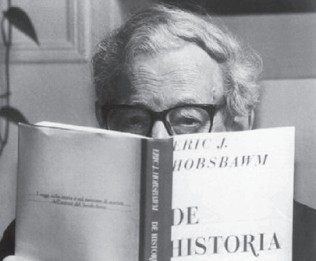
The History Man: Eric Hobsbawm (1917-2012)


This morning, while teaching (a seminar on 'Social Justice and Inequality' appropriately enough), one of my students suddenly interrupted and said 'Could I just make an announcement: Eric Hobsbawm has just died'. I had mixed initial emotions - impressed that a first year politics student knew of Hobsbawm and understood it was a significant enough event to interrupt the class, slight irritation and disappointment that the aforementioned student was clearly not paying full attention to the seminar discussion and was checking his phone - and, above all, I guess sadness that the inevitable had happened and Eric Hobsbawm - one of the greatest Marxist historians of the 'short twentieth century' and a towering figure perhaps almost unique in his range of concerns, breadth and depth of knowledge and command of sources - was no longer with us.

I only met Hobsbawm very briefly on one occasion - when he was speaking alongside Dorothy Thompson and John Saville at the launch of Saville's Memoirs of the Left in London almost a decade ago - but, ever since one of my history teachers at school had kindly photocopied an interview with Hobsbawm from the Guardian c mid-1990s for me because of my interest in Marxism, like many many others, his writings on Marxism, history and the responsibility of historians in society have been a massive influence. The 1978 interview with Hobsbawm by Pat Thane and Elizabeth Lunbeck from Radical History Review provides one of the best short introductions to his life and work. 'It seems to me that it is very important to write history for people other than pure academics', Hobsbawm noted in that interview. 'The tendency in my lifetime has been for intellectual activity to be increasingly concentrated in universities and to be increasingly esoteric, so that it consists of professors talking for other professors and being overheard by students who have to reproduce their ideas or similar ideas in order to pass exams set by professors. This distinctly narrows the intellectual discipline...the kind of people one aims at are, I hope, a fairly large section of the population - students, trade unionists, plain ordinary citizens who are not professionally committed to passing examinations but do want to know how the past turned into the present and what help it is in looking forward to the future'.

This healthy approach was shaped by Hobsbawm's commitment to politics and his leading role in the Communist Party Historians Group (and its successor groups) - which avoided what he saw as the 'danger' of Marxist history being about just labour history in the 19th and 20th centuries and instead 'had people who dealt with everything - classical antiquity, medieval feudalism, the English revolution.' After beginning with the Fabians (on which he did his PhD), Hobsbawm did write some classic works on the modern labour movement like Labouring Men and Worlds of Labour but also wrote an extraordinarily wide range of topics, - from primitive rebels and social bandits like 'Robin Hood', to jazz (under the pseudonym 'Francis Newton') and 'Captain Swing' (an English agricultural workers rebellion), to his famous quartet on modern world history The Age of Revolution, The Age of Capital, The Age of Empire and The Age of Extremes. His orthodox Communism - which led later to an embrace of what was becoming New Labour - and becoming 'Neil Kinnock's favourite Marxist' - meant parodoxically politically he was weak despite his generally outstanding strengths as a historian. As Chris Harman noted in 2002 - reviewing Hobsbawm's autobiography Interesting Times, 'there might be two Eric Hobsbawms. One ended his book on the 20th century, The Age of Extremes, by describing the system as out of control and threatening all of humanity. The other was at that very time praising New Labour’s approach to politics....there is the Hobsbawm who still calls himself a Marxist, who wrote Labouring Men and The Age of Revolution, is scathing about the revisionist and postmodernist historians, is damning about the Blair government, and still insists on left wing political commitment. But there is also the Hobsbawm who backed the Labour right against Tony Benn, told us the poll tax could never be beaten, extolled the Italian Communist Party’s cosying up to the Christian Democrats, and sponsored the Marxism Today gang as they galloped towards a political yuppieland of interviews with Tory ministers and columns in the Murdoch press.'

In particular, if while as a member of the Historians Group of the CPGB, twentieth century history was impossible to write, even when Hobsbawm did come to write the history of the twentieth century in Age of Extremes, his famous thesis about 'The Forward March of Labour Halted' meant he did not focus on the possibilities presented by working class struggles. (There were other surprising omissions in Age of Extremes, such as the lack of mention of the struggles for black liberation in the US and even figures such as Martin Luther King and Malcolm X are absent - and this from a jazz enthusiast and pioneering jazz historian (!) - though this is perhaps understandable given Hobsbawm was writing a quite personal account of the century late on in his career rather than a 'total history'). Yet for all his limitations, ever since Hobsbawm joined the Communist movement in the early 1930s as a young Jewish socialist activist who decided to embrace the future rather than no future as Hitler's Nazis seized power in Germany - at possibly the darkest moment in the history of the century - up until his recent intellectual defence of Marx and Marxism in 'How to Change the World', his voluminous intellectual work over the course of his life represent a colossal, immense contribution to not only historical scholarship in general and Marxist scholarship in particular - but also a resource of hope that future generations can draw upon in the struggle for a socially just and equal world.

I will add obituaries and tributes etc as and when I get time:

Guardian obituary
Ian Birchall in Socialist Worker
Paul Blackledge in Socialist Review
Neil Davidson for New Left Project
Mark Mazower in the Guardian
Mark Steel in the Independent
Ramachandra Guha in ProspectDavid FeldmanEric Foner in The NationMatthew Cole
for Verso.Marc Mulholland in Jacobin
Tristram Hunt in the Telegraph and Guardian
Evan Smith on Hobsbawm and '1956'.
Donald Sassoon on Open Democracy
Keith Flett for the London Socialist Historians Group
David Morgan and the Socialist History Society
See also Daniel Pick, Ishan Cader, Nicholas Jacobs
and Jonathan Derbyshire
Listen to Eric Hobsbawm: A Life in History
Articles in Past and PresentMaking History interview
Edited to add: To take up and challenge all the points raised by the rabid but predictable anti-Communist attacks on Hobsbawm that have appeared over the last day or so from critics ranging from the Right to the 'pro-war Left' would be a true 'labour of Sisyphus', but perhaps the very worst and most disgraceful I have seen so far comes from A.N.Wilson in the Daily Mail. Wilson - who might want to reflect on how his last book about Hitler was received by historians of Nazi Germany (see for example Richard Evans in the New Statesman) before accusing anyone of writing 'badly written' books as he does of Hobsbawm, has penned perhaps the most appalling and insulting attempt at character assassination to date. He does not pause a moment to pay even the most begrudging of respects but launches straight in: 'He hated Britain and excused Stalin's genocide but was hero of the BBC and the Guardian Eric Hobsbawm a TRAITOR too?' Wilson makes the slanderous accusation that Hobsbawm was a Soviet agent on the grounds that 'he was at Cambridge during the thirties and knew Anthony Blunt, Guy Burgess and other Soviet agents', and because he later wanted to read his MI5 file to find out who had 'snitched on him'. This is it in terms of 'evidence', but who needs 'evidence' when you are A.N. Wilson writing in the Daily Mail and so can get away with inferring from this that therefore Hobsbawm must 'have done something of which the authorities were entitled to take a dim view - possibly something actively criminal'. Hobsbawm was a member of the Communist Party of Great Britain - ipso facto the authorities were going to be taking a 'dim view' of anything he did - actively 'criminal' or not. Yet, the fact Hobsbawm was a political refugee in Britain, was a historian, and was a well known member of the CPGB means he would have been possibly the worst and most useless person for the Soviet Union to have had as an agent on lots of counts, and Hobsbawm's remark seems to have been a perfectly innocent inquiry into which individual was spying on him on behalf of the British state. Wilson also accuses Hobsbawm of 'openly hating Britain' - and there are certain things Hobsbawm probably did 'openly hate' about Britain - its Empire and British imperialist crimes abroad for example, or the racism and anti-semitism at home that he would have encountered as a Jewish refugee from Nazism during the 1930s. Such anti-semitism came from groups like the British Union of Fascists and newspapers who supported the Blackshirts like the er, Daily Mail (who were also cheering on Adolf Hitler and Benito Mussolini in this period). Yet one only needs to glance at Hobsbawm's voluminous writings on labour history and working class political traditions and culture to give the lie to the idea that Hobsbawm 'hated' British working class people. As to Wilson's final suggestion that 'Hobsbawm himself will sink without trace...his books will not be read in the future' - well, while historians are not in general in the business of making predictions, I think this is one prediction that almost every historian can safely say will be proved wrong. Whether anyone will read or remember A.N. Wilson after his passing is a far more open question...

Edited to also add: I wrote too soon - you can get even worse than Wilson - see this Spectator piece by the poisonous Douglas Murray.

From The Pen Of Joshua Lawrence Breslin- Rex Harrison’s “Night Train To Munich”


Click on the headline to link to a Wikipediaentry for Carol Reed’s Night Train To Munich.
DVD Review

Night Train To Munich, Rex Harrison, Paul Henreid, Dorothy Lockwood, directed by Carol Reed, 20th Century Fox, 1940

You have to hand it to the British, at least the cinematic British , to be able to both keep a stiff upper lip and to play World War II, European Theater, you know Hitler, Munich, the Third Reich and all hell breaking loose, including the bombing of London, for laughs, or at least in an archly humorous manner. Maybe it was just to keep the home front spirits up but watching this one seventy years later knowing what we know about what happened on all fronts and by most of the parties was a little disconcerting.

Here’s why. The deal had been done in Munich (a place name that stands for sell-out in world politics, rightly or wrongly compared, even today) whereby Czechoslovakia was forthwith handed over to Hitler in order, well, in order to bring “peace in our times.” This little action culminated the veer to war, big time war, after the earlier annexation of Austria and the forming of a German protectorate in Sudetenland section of Czechoslovakia and merely whetted Hitler’s appetite. Serious stuff though, very serious especially for political opponents of the Nazis and those who had some special skills that the Third Reich could make use of in some way, particularly for military purposes. Of course the other players in the war build-up drama, including Great Britain, had that same interest. And that conflicting premise forms the thriller core of this film.

Enter one Czech scientist who is able to escape to London before the Nazis grab him and his clever fetching daughter who wound up left behind, left behind in a concentration camp when the German Army marched into Prague. The Germans were, however, ready to move might and main in order to get the scientist’s services so they sent a loyal Nazi-enflamed officer (played by Paul Henreid last seen in these quarters leading the European resistance, and caught up in a Rick’s Cafe love triangle in Morocco, in the film Casablanca. Go figure.) into the camp to track him down by having him plot an escape for him and the daughter in order to win the daughter’s confidence. He does track the scientist down and brings him and the daughter back to Germany. That in turn triggers British efforts led by an undercover naval officer (played, played archly, very archly by Rex Harrison) who infiltrated the German high command in order to get one important scientist back to the Allied side.

Of course all of this is going on while Germany, in the meantime, has invaded British ally Poland which in the real world might have complicated things a bit. A very big bit. Not to worry though Rex’s plan, and some personal heroics to impress that fetching daughter, to get father and daughter away to neutral Switzerland via various subterfuges (including enlisting a pair of British travelers, arch, very arch, British travelers) in the end gets them away from the grasping clutches of the arch-villain Henreid. So you can see why this one is, well, like I said is disconcerting. This is not director Carol Reed’s best thriller effort, not by a long shot, the classic 1949 thriller The Third Man starring Orson Welles is.

Sunday, November 25, 2012

BOOKS / Jonah Raskin : Daniel Coshnear's 'Occupy' Stories Are as Contemporary as the Latest Tweet

Daniel Coshnear's
'Occupy and Other Love Stories'
As contemporary as the latest tweet, Coshnear’s men, women, and children cry out for the lost soul of America itself.
By Jonah Raskin / The Rag Blog / November 23, 2012

[Occupy and Other Love Stories by Daniel Coshnear; art by Squeak Carnwath (October 2012: Kelly’s Cove Press); Paperback; 135 pp; $20.]

The characters in Daniel Coshnear’s political short stories read Stephen King and Raymond Carver. They smoke Camels and marijuana, drive Sentras, work at Safeways, and as school janitors. Preoccupied and in denial, they’ve survived trauma and now they’re suffering from Post-Traumatic Stress Disorder and a host of social and psychological ills.

As contemporary as the latest tweet, Coshnear’s men, women, and children cry out for the lost soul of America itself.

The 12 stories in Occupy and Other Love Stories take place in Santa Rosa, California, and along the Russian River in Sonoma County, though one is set in New York, and the very last conjures up Berkeley during the Occupy Wall Street Movement last spring. It’s an overtly polemical tale and might well be called revolutionary romanticism.

Coshnear’s heart is with the rebels and the in-your-face citizens who refuse to be silenced or sit still. For the most part, however, his characters don’t give speeches or march in the streets. They’re part of the 99% and too busy dealing with death, divorce, depression, and suicide to be distracted by leaflets, posters, and slogans.

Years from now a Ph.D. student writing about the culture of the Occupy Movement will surely point to Occupy and Other Love Stories as an example of the fiction that emerged from the protests against Wall Street immorality and criminality. It’s also fiction that stands on its own merits without ties to Occupy or any social movement.

Coshnear’s stories are compact with vivid descriptions of people and places and crisp dialogue that’s practically audible. Reading them is like watching a series of video clips that depict domestic life with images of Iraq on TV, and real cops lurking on the sidewalk outside the front door.

Parents and children inhabit “Early Onset” and “Custodian” in which a father and his son disconnect and then reconnect. Love, sex, and relationships animate “Avulsion,” “Borscht on the Ceiling,” which takes place in New York, and “Occupy” -- the title story -- in which a professor finds romance with a student.

The characters play their own roles, and speak their minds independently of the author, though sometimes he analyzes them and even describes the medications they take, as in “You Can Put Your Name on It, If You Want to.”

Pills help the characters, though they long for more than legal and illegal drugs. They want to know the answers to all the big questions, such as “if bad things happen to bad people,” and if their own children might one day inhabit “a better world.”

[Jonah Raskin, professor emeritus at Sonoma State University, is an author and a frequent contributor to The Rag Blog. Read more articles by Jonah Raskin on The Rag Blog.]

The Rag Blog

In The Time Of The 1950s Be-Bop Baby Boom Jail Break-Out- On The Beach


A while back I was on a tear in reviewing individual CDs in an extensive 1950s Birth of Rock ‘n’ Roll retrospective series. A lot of those reviews had been driven by the artwork which graced the covers of each CD, both as catalyst to stir ancient memories and as a reflection on that precise moment in time, the youth time of the now very, very mature (nice sliding over the age issue, right?) baby-boomer generation who lived and died by the music. And who fit in, or did not fit in as the case may have been, to the themes of those artwork scenes. One such 1959 cover showed a case of the latter, not fitting into such a scene by me. On this particular cover, a summer scene (always a nice touch since that was the time, school’s out for the summer, when we had at least the feel of our generational jail breakout before autumn prisons), two sun-bleached, muscular, blondish perfect wave surfer guys, brightly colored surf boards in tow, perfect wave-waiting checking out the scene. The scene, the checking out part, at the beach naturally, and the only scene that mattered whether like them you fit in, or like me, not, involved seeing who was who among the hot bikini-clad girls (also on jail-break time) who to name my beach scene, eternally, sat on their collective blankets between the Olde Saco Yacht Club and the Seal Rock Boat Club waiting, well, waiting to be checked out by those guys, ah, those guy who fit in (all others, all beatniks, nerds, geeks, dweebs, shys, acne-encrusted, call your not fit in shot name, go up to lame Olde Saco Pier or over to Perkins Cove and fish, play skee ball at the amusement park, watch the waves go in and out, or, hey, just disappear).

That scene, that hot bikini-clad girls scene collectively blanketed, although not pictured (except a little background fluff to inform you that you are at the beach, the summer youth beach and no other, certainly not the tortuous family beach scene with its lotions, luggage, lawn chairs, lunches, and longings, longings to be elsewhere in early teen brains at those Olde Saco Pier and Perkins Cove locales of my youth), could, frankly, only mean checking out the babes, girls, chicks, or whatever you called them in that primitive time before we called them sister, and woman. No question too that this whole scene was nothing but a California come hinter scene, as against my hardened eastern seaboard hale winds and hearty fellows scene except about six week in July-August . No way that it had the look of Eastern pale-face beaches, family or youth-driven. This scene was nothing but early days California dreamin’ cool hot days and cooler hot nights with those dreamed bikini girls.

Wait up. These perfect wave –waiting guys, all cool and collected, and maybe already dated up for the next week and just, well, just being perfect-wave-waiting guys staying in practice ,were, however, no question just flat-out “beach bums.” No way that they were serious surfer guys, certainly not Tom Wolfe’s LaJolla Pump House gang where those corn-fed sons and grandsons of Okie/Arkie migrations then with disposable teen incomes and time on their hands surfers lived for the perfect wave, and nothing else better get in the way. For such all day (and all night too if the tides flows dictated) activity one needed rubberized surf suits complete with all necessary gear. And the girls? Well, yah, girls fit in, sitting on that same beach waiting for their surfer guys to find that perfect wave and scream out all oohs, and ahhhs. But also “civilians” don’t even think off talking (although looking was okay, even surfer-sworn girls needed to practice their teaser arts) down at Lookout Point section reserved, strictly reserved, So, in short, these cover guys are “faux” surfers. Whether that was enough, whether the times were desperate enough for the “faux” to have their day, to draw the attention of those bikini-shes not pictured that they are unquestionable checking out I will leave to the reader’s imagination.

As for the music, the 1959 music, that backed up this summer scene we were clearly in a trough, the golden age of rock, with the likes of Jerry Lee Lewis kissing his cousin, with Elvis in the tank, and with Chuck Berry messing with the Mister’s women too much was fading, fading fast into what I can only describe as the age of “bubble gum” music (and the age of “faux” surfers as well, so maybe those guys were onto something). Sure I listened to it, listened to it hard against my ear on my old transistor radio, mainly because that was all that was presented to us. It was to be a while until the folk (folk minute, anyway), folk rock (later and longer), British invasion (read: Beatles and Stones as leaders), and free expression rock (read: drug-induced acid rock, flaming night strobe beam dreams and crashes too) engulfed us. This was the time of our marking time , as the music attested to (and those golden boys made their mickey mouse moves while beautiful black chino pant-flannel shirt-work boot-beret 24/7/365 midnight sunglass clad “beats” were shunted off to not fit in Olde Saco Pier skee ball shoot-out hells).

There were, however, some stick-outs that have withstood the test of time. They included: La Bamba, Ritchie Valens; Dance With Me, The Drifters; You’re So Fine (great harmony),The Falcons; Tallahassee Lassie (a favorite then at the local school dances by an eastern seaboard beach boy who made good), Freddy Cannon; Mr. Blue (another great harmony song and the one, or one of the ones, anyway that you hoped, hoped to distraction, that they would play for the school dance last dance), The Fleetwoods; and, Lonely Teardrops, Jackie Wilson (a much underrated singer, then and now, including by this writer after not hearing that voice for a while).

Note: After a recent trip to the Southern California coast I can inform you that those two cover boy surfer guys are still out there and are still checking out the scene, or the ghost of that scene with those same bikini blankets. Although, reality check, that scene for them now is solely the eternal search for the perfect wave complete with full rubberized suit and gear. No artist would now, or at least I hope no artist would, care to rush up and draw them. For now these brothers have lost a step, or seven, lost a fair amount of that beautiful bongo hair, and have added, added believe me, very definite paunches to bulge those rubberized surfer suits all out of shape. Ah, such are the travails of the baby-boomer generation. Good luck though, brothers.

From The Pen OfJoshua Lawrence Breslin-Rock And Roll Is Here To Stay,Circa 1958


CD Review

The Golden Age Of American Rock ‘n’ Roll: The Follow-Up Hits, Ace Records, 2008

Peter Paul Markin and Frankie Riley had known each other from the days in the old North Adamsville neighborhood where they had met while hugging the walls at the old Sacred Heart (Roman Catholic) Church at the weekly (except Lent of course) “sock hop” held by the parish priest, Monsignor Lally to, well, “keep an eye on the younger portion of his flock,” as he expressed it each Sunday when making the announcement. The real reason, of course, was to keep said young sheep, away from too much heathen (read: Protestant) devils’ music; that rock and roll music that was just then epitomized by that hip-swaying Elvis Presley. And by all means to keep them, those with access to automobiles, from dark seawalls down at Adamsville Beach listening to fogged-up car radios and digging the beat while, well, just while or at the Strand Theater, the exclusive upstairs balcony section for the really young, the car-less young interested in s-x just in case the old bastard is still around.

Although they had known each other for some fifty years now, and were duly standing against the wall at Lucy’s at their fiftieth anniversary high school class reunion not far from the old high school they still remembered the first song that had heard upon meeting at that fateful junior high school sock hop, Danny and the Juniors’ At The Hop. And the reason they remembered that song so vividly was one Clara Murphy. See they both had rushed over to ask her to dance when that number was being played at that fateful dance. And Clara in her Solomonic wisdom turned them both down. Or maybe not so solomonic. Clara Murphy couldn’t, just that moment decide whether she liked Peter Paul or Frankie better and so gave in to her budding feminine wiles and turned them both down.

Naturally that denial enflamed the boyos. So for the next several weeks they
made every mad attempt attempt to win her favors. To no avail because, also exhibiting another aspect of her wiles, she took up with Bill Larkin, their friend and fellow classmate Kenny’s older brother (one year older). Reason: stated Clara reason. Bill had a head on his shoulders and, quote, was not so hung up on silly rock and roll that was just a passing thing, unquote. Both men laughed at the recollection, the bittersweet recollection, since later Clara married Bill, they had drifted west to the coast, formed and unformed a couple of rock and roll bands in the strobe light dreams 1960s, and a few years after that Bill had been killed, face-down killed, down in some dusty town in Mexico, Sonora, they thought, when a major drug deal went south on him. Clara was never heard from again.

Just then some oldies but goodies aficionado, or someone who had seriously misspent his or her youth, putRoll and Rock Is Here To Stay on, and for the life of the two boyos they couldn’t remember until later that Danny and the Juniors had recorded that song as well. They then raised a drink to Clara Murphy, Clara of the sparkling eyes and flaming red hair, and of their youth.