Showing posts with label abraham lincoln. Show all posts

Tuesday, February 12, 2013

We Are Coming Father Abraham 300,000 Strong- In Honor Of Old Abe Lincoln On His Birthday

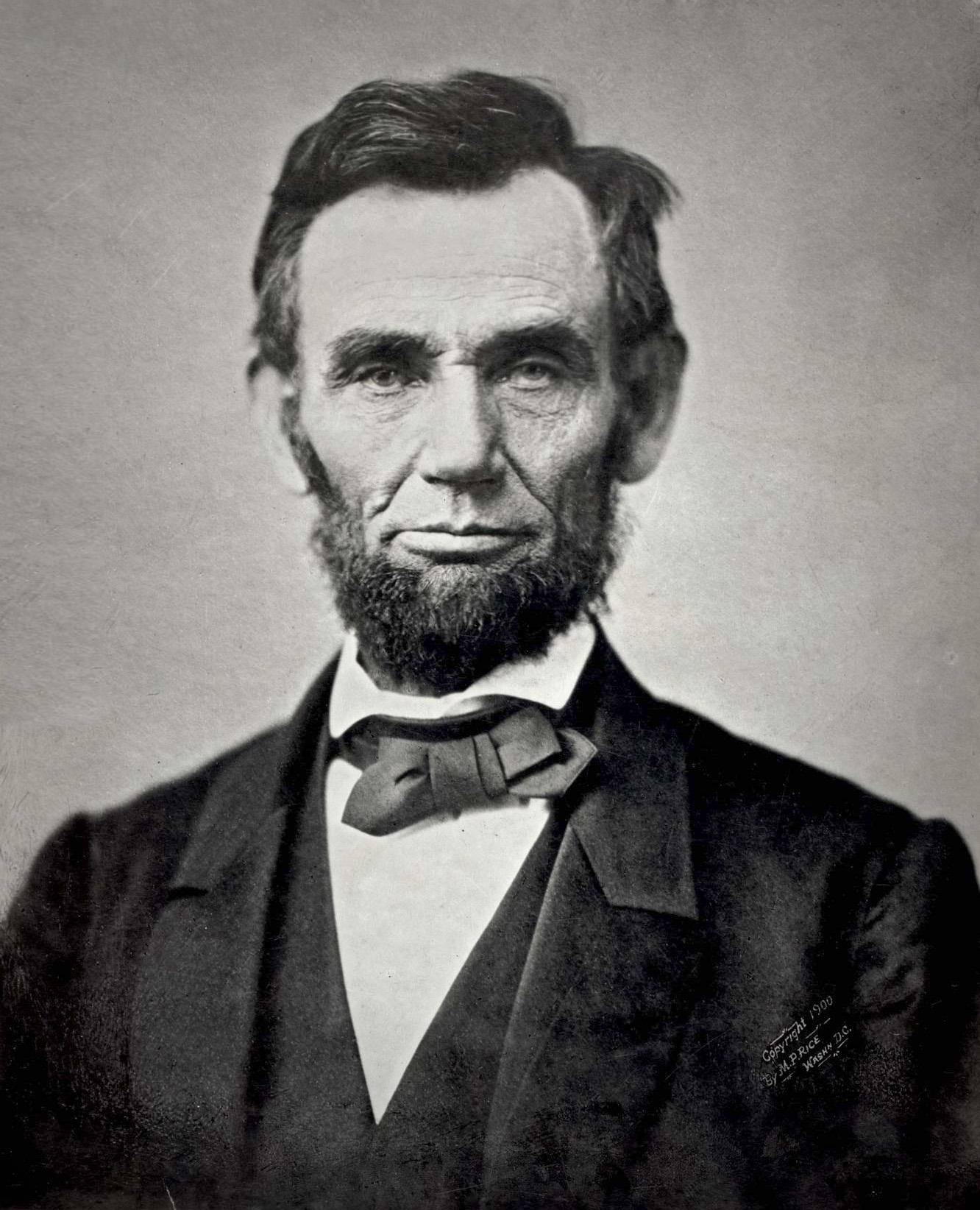
…he, Father Abraham he, pug-ugly he (damn, that age of photography, that Mathew Brady and his merry band, that damn warts and all pre-digital photography, when a painterly touch might have made him, well, just plain), yes, warts and all he (and thus no catch for gentile Kentucky bourbon daughters, or so it seemed), all Kentuck born and Illini-bred (where the best they could do was say nigra when talking about the slave problem. And later, much later the sons and grandsons of poor as dirt mountain boys, Harlan County roughs, picked that up nigra expression too, and went to their graves with that on their lips,jesus.), all keep the races split, let them, the blacks (nigras, remember) go back to Canaan land, go back to Africa, go to some not union place but keep them out ofChi town (sounds familiar) had a conversion, maybe not a conversion so muchas a lining up his beliefs with his walk the walk talk.
So he ran for president, President of the United States, not as a son of William Lloyd Garrison (hell, no, he would still be stuck in Springfield or maybe practicing law in bell-weather podunk Peoria), or a righteous son of Captain John Brown, late of Kansas and Harpers Ferry (he had no desire to share the Captain’s blood-soaked fate), but to hold the union together, and to curb that damn land hunger slavery, that national abyss. And since they ran politics differently in those days (no women, latinos, nigras to fuss over, sounds familiar) and were able to touch up a picture or two he won, barely won but won. And then all hell broke loose, and from day one, from some stormy March day one, he had to bend that big long boney pug-ugly body to the winds, his winds.

And he did, not unequivocally, not John Brown proud to erase the dripping blood and canker sore from his homeland, but in a revolutionary way nevertheless, break down slavery’s house divided, broke it down, no quarter given when the deal went down. More like some latter day Oliver Cromwell (another warts and all man) pushing providence forward with a little kick. More like old Robespierre flaming the masses with the new dispensation, the new word slave freedom. Kept freeing slaves as he went along, kept pushing that freedom envelope, kept pushing his generals south and west and east and tightening , anaconda tightening, the noose on the old ways until Johnny Reb cried uncle, cried his fill when righteous Sherman and his cutthroat bummers got to work too. Yes, old Father Abraham, the last of the revolutionary democrats, the last of the serious ones, who couldn’t say black better that nigra, and never could, but knew the old enlightenment freedom word, knew it good.
…and now he belongs to the ages, and rightfully so, warts and all.
***********

Published by SocialistAlternative.org
Read online at: www.SocialistAlternative.org/news/article21.php?id=2018

Film Review: Steven Spielberg's Lincoln
Jan 3, 2013
Patrick AyersEljeer Hawkins
The theatrical release of Steven Spielberg's Lincoln is situated between important events and anniversaries. This past September 22 marked the 150th anniversary of the preliminary draft of the Emancipation Proclamation, November 6 saw the re-election of the first black president, Barack Obama, to a second term and January 1, 2013 is the 150th anniversary of the final implementation of the Emancipation Proclamation.
Lincoln issued the final Emancipation Proclamation as a war measure. It declared "all persons held as slaves" within the rebel states "are, and henceforward shall be, free."
The Making of Lincoln
Lincoln is based in part on Doris Kearns Goodwin's award-winning biography of Lincoln, Team of Rivals: The Political Genius of Lincoln, adapted for the screen by award-winning playwright Tony Kushner. Lincoln is directed by Steven Spielberg and stars Oscar winners Daniel Day-Lewis and Sally Field. It has already garnered a number of Golden Globe nominations and will certainly get Oscar nominations.
Lincoln focuses on efforts to pass the Thirteenth Amendment toward the end of the Civil War. After winning reelection in 1864, Lincoln took the opportunity in the final days of the outgoing "lame duck" session of Congress to pass the amendment. Passage was not guaranteed, even though the Republicans had a strong majority. Lincoln had to deal with opposition in his Cabinet, his party, and also win support from some Democrats (who had been the main party of the slave owners). The film clearly intends to highlight Lincoln's skills as a political leader in a period of crisis. The film also attempts to humanize Abraham Lincoln, who suffered from bouts of depression not dealt with fully in the film. Lincoln's propensity to tell stories and parables to enforce his point to soldiers and cabinet members is on full display.
Some of the most touching and powerful scenes are with his wife, Mary Todd Lincoln (portrayed by Sally Field), and the profound grief of the passing of their son Willie at the age of 11. These also include moments of play with Lincoln's younger son Tad and his strained relationship with his son Robert Todd Lincoln, who wanted to enlist into the Union Army despite Mary Todd's disapproval. Robert Todd did not join the Union Army until the final weeks of the war.
Great Leaders
Daniel Day-Lewis is absolutely mesmerizing; epitomizing his method approach to acting. Lewis becomes Lincoln in body, spirit and mind. Through the sentimental and grandiose imagery in Spielberg's directing, Lincoln almost appears as a god-like figure. Undoubtedly, the choice by the filmmakers to make a film about Lincoln's character in the limited context of the battle for the Thirteenth Amendment is meant to amplify Lincoln's role in events.
At one point in the film Lincoln asks a soldier in the White House, "Are we fitted to the times we are born into?" And the soldier answers, "I don't know about myself - you maybe." The problem here for those that wish to fully appreciate Lincoln's role in history is that the filmmaker's choice of events don't help paint the full portrait of the "times" that Lincoln had to "fit into."
By almost entirely featuring debates in the halls of power in Washington, the film is not able to explore the role of the masses in the historical process. Without the slaves, small farmers, workers, and others who were radicalized by events leading up to the 1861 outbreak of war - and even more so after - Lincoln would not have had a platform from which to lead. To fully understand the qualities of Lincoln's leadership, it is vital to place his role in the context of the broader historical process. This could have been done in a few minutes at the beginning of the film. But, the choice by the filmmakers of Lincoln to provide a narrow focus, without providing a full historical context, serves to render history as being made by great people ordained by a power greater than themselves.
The Second American Revolution
"The struggle has broken out because the two systems can no longer live peaceably side by side on the North American continent. It can only be ended by the victory of one system (chattel slavery) or the other (free labor)." - Karl Marx
The Civil War ended in a revolutionary war against the slave-owning planters, who had dominated U.S. politics for decades before the war. By abolishing slavery, the material basis of their economic and political power was rooted out. This revolution was necessary because the first American Revolution - the war for Independence from Britain - ended in a compromise between the capitalist ruling class in the North and the slave-owning planters in the South.
Many at that time thought slavery was a dying institution. But, with the invention of the cotton gin and the development of the industrial revolution, demand for cotton led to a rapid growth of slavery - and in a far more brutal form than before capitalism. This strengthened the slave-owning planters, and they dominated politics in the U.S. until 1860 through their two-party system - the Democrats and the Whigs.
Due to the destructive effect of cotton plantations on the soil, planters were constantly in search of new land. This brought them into collision with the rapidly growing population of small farmers in the North who wanted new lands for small "free soil" farms, not large slave plantations. In 1854, small farmers and slave-owners fought a war in Kansas over whether the new state would be a slave state.
With the rapid growth of industrial capitalism in the North, which had its own political agenda, the two social systems - the chattel slave system and the free labor capitalist system - increasingly came into conflict. The refusal of the slave-owning planters to relinquish their power made a revolution absolutely necessary.
The industrialists were in a position to lead a historic movement against the slave owners, but they had to mobilize the masses to do it. The Republican Party was launched in 1854 out of a growing democratic movement against the "slave power." Along with the small farmers and industrialists, the new party brought together abolitionists and workers' organizations that recognized an opportunity to build a powerful movement to crush the "slave power" and open the way for a radical transformation of society. The Republican Party program had a limited goal of stopping the spread of slave lands, but this was enough to herald a death sentence for the slave system.
Added to this opposition in the North, the slave owners constantly lived in fear of slave rebellions in the South. With the growth of slavery to over four million human beings working in bondage, this fear became even greater. The slave-owners were completely dependent upon racist ideology and a state apparatus that ruthlessly enforced its needs, including enforcing fugitive slave laws and repressing abolitionist agitation. Anti-democratic measures against abolitionists spread fears in the North that the "slave power" was a threat to democratic freedoms.
In 1859, John Brown's raid on Harpers Ferry raised alarm bells, not just because it raised the specter of a slave rebellion, but also because John Brown, who had fought in Kansas against the slave owners, was celebrated by many Radical Republicans in the North. When Lincoln was elected president in 1860, the slave-owners had already decided that their only hope for defending their interests was an armed uprising against the North and secession.
This was the broad historical process leading up to Lincoln's election and the outbreak of war. On the basis of two antagonistic social systems, conflict and war were inevitable.
To his credit, Lincoln fulfilled a historical necessary role in the struggle against the class of slave-owning planters. There was a historic need for the abolition of slavery and revolution. Lincoln's determination to abolish slavery before the end of the civil war was essential for the subsequent development of capitalism over the coming decades. This also led to the development of a powerful urban working class, the only class in history capable of establishing a society truly based on equality. For these reasons, Karl Marx and his American allies supported Lincoln and the Union army during the war. They argued against the idea that abolition would lead to greater competition between workers and instead argued how the working class would be strengthened by the freeing of black labor from bondage. "Labor in the white skin can never free itself as long as labor in the black skin is branded," wrote Marx in Capital.
A People’s History and Hollywood
Lincoln wasn't an abolitionist and did not set out to abolish slavery. He also held racist views. Lincoln earlier supported colonization projects for a segment of free ex-slaves given the option to migrate to Africa and the Caribbean. Lincoln was contradictory and cautious. Lincoln would state on September 18, 1858, during the first Lincoln and Stephen Douglas debate, "I will say then that I am not, nor ever have been in favor of bringing about in any way the social and political equality of the white and black races, that I am not, nor ever have been, in favor of making voters or jurors of Negroes, nor of qualifying them to hold office, nor to intermarry with white people... I as much as any man am in favor of the superior position assigned to the white race." -Abraham Lincoln, First Lincoln-Douglas Debate, Ottawa, Illinois, Sept. 18, 1858, in The Collected Works of Abraham Lincoln vol.3, pp. 145-146.
But Lincoln was a supporter of “free labor” which was crucial for mobilizing the northern small farmers, tradesmen and workers, who volunteered to fight in droves. It also drew the ire of the Democratic Party, the main political prop of slavery, who whipped up racist opposition to the "Black Republicans," as they were called by the Democrats.
Lincoln was a talented orator who could connect with an audience from poor farmers to lawyers. We get a glimpse of this at the beginning of Spielberg's film, when Lincoln discusses with two soldiers, one black and one white. Both of them seem inspired, reciting Lincoln's Gettysburg Address by memory.
Lincoln's thinking and actions were pushed by the intensifying social conflict and pressure from below, which were decisive in forcing him to adopt new bold proposals. Slaves themselves put pressure on the Union leaders to abolish slavery as a war measure, as they increasingly fled to northern lines in the course of the war. Termed "contrabands of war," fleeing slaves was seen as striking an important blow to the economic power of the South. Abolitionist sentiments also grew enormously after the outbreak of war, thanks to the agitation of the abolitionists.
The Army represented some of the most radicalized sections of the northern workers and small farmers. It resembled nothing like the U.S. Army today, which is built through a poverty draft. The Civil War was a political war, and the Union Army was politicized. Although there was conscription, there were also thousands of willing volunteers, because they sincerely believed that crushing the "slave power" was important to the struggle for a better society. Members of labor unions, socialists and other radicals played an important role in joining and forming militias to become part of the Union Army. Union soldiers overwhelmingly voted for Lincoln in the 1864 election.
Slaves Struggle for Their Own Emancipation
In the opening scene of Lincoln, a black soldier raises issues about the racist treatment of black soldiers. But, it is merely a token reference to the racial tensions between the white Union leaders and the black soldiers. The movie Glory, released in 1989 and starring Matthew Broderick and Denzel Washington, explores much more the dynamic tension between Union leaders fighting to preserve the Union and further their careers, and black soldiers fighting for social liberation. The struggle by the slaves for their own social liberation was a decisive driving force of events that propelled Lincoln to ultimately abolish slavery.
Unfortunately, the black characters in Lincoln are used as set pieces lacking any real development, dialogue or influence on events. It is greatly troubling that there is no mention or portrayal of important African American leaders like the abolitionist freedom fighter Frederick Douglass or the conductor of the Underground Railroad Harriet Tubman who joined the Union forces. Lincoln in the last year of his life sought Douglass's thoughts on the question of slavery, post-Civil War Reconstruction, and black enfranchisement.
In the film, Mary Todd Lincoln's confidant and seamstress, Elizabeth Keckley, is portrayed by actress Gloria Reuben. Keckley, a former slave herself, headed up the Contraband Relief Association made up of slaves who escaped the Confederacy. The Contraband Relief Association and black abolitionists pressed Lincoln to give up on the colonization project, inviting contraband members to the White House and pressuring Union Army officials to critically examine slavery.
The film also gives the false impression that the Thirteenth Amendment came from Lincoln when in fact the Radical Republicans and abolitionist movement introduced the amendment in January 1864. The Radical Republicans were years ahead of Lincoln by advocating ending slavery with full universal equality among the races and political, economic, and social enfranchisement as the Radical Reconstruction period (1868-1877) illustrates.
Radical Republicans like Thaddeus Stevens are portrayed as compromisers in the film because they downplayed their broader demand for equality for blacks, thus preventing the Democrats from creating a distraction from the central goal of passing the Emancipation Proclamation. But the compromises they made were important to the material destruction of slavery. This sort of compromise advanced the struggle of the oppressed. It had nothing in common with the compromises made before 1860 that helped maintain slavery.
The film Lincoln allows us to re-examine the 16th president of the United States in a critical manner. It provides a background for further exploring the horrendous conditions African-Americans and working people faced following the end of the subsequent period of radical reconstruction, and the speedy rise of the U.S. as an imperial capitalist nation. The massive social struggles around the Civil War bring up important issues that are played out in the continuing battles today to end racial, class, sexual and gender exploitation under U.S. and global capitalism. One hundred and fifty years after abolition of slavery, the working class and poor are still the true agents of revolutionary change on the stage of world history.


We Are Coming Father Abraham 300,000 Strong- In Honor Of Old Abe Lincoln On His Birthday

…he, Father Abraham he, pug-ugly he (damn, that age of photography, that Mathew Brady and his merry band, that damn warts and all pre-digital photography, when a painterly touch might have made him, well, just plain), yes, warts and all he (and thus no catch for gentile Kentucky bourbon daughters, or so it seemed), all Kentuck born and Illini-bred (where the best they could do was say nigra when talking about the slave problem. And later, much later the sons and grandsons of poor as dirt mountain boys, Harlan County roughs, picked that up nigra expression too, and went to their graves with that on their lips,jesus.), all keep the races split, let them, the blacks (nigras, remember) go back to Canaan land, go back to Africa, go to some not union place but keep them out ofChi town (sounds familiar) had a conversion, maybe not a conversion so muchas a lining up his beliefs with his walk the walk talk.
So he ran for president, President of the United States, not as a son of William Lloyd Garrison (hell, no, he would still be stuck in Springfield or maybe practicing law in bell-weather podunk Peoria), or a righteous son of Captain John Brown, late of Kansas and Harpers Ferry (he had no desire to share the Captain’s blood-soaked fate), but to hold the union together, and to curb that damn land hunger slavery, that national abyss. And since they ran politics differently in those days (no women, latinos, nigras to fuss over, sounds familiar) and were able to touch up a picture or two he won, barely won but won. And then all hell broke loose, and from day one, from some stormy March day one, he had to bend that big long boney pug-ugly body to the winds, his winds.

And he did, not unequivocally, not John Brown proud to erase the dripping blood and canker sore from his homeland, but in a revolutionary way nevertheless, break down slavery’s house divided, broke it down, no quarter given when the deal went down. More like some latter day Oliver Cromwell (another warts and all man) pushing providence forward with a little kick. More like old Robespierre flaming the masses with the new dispensation, the new word slave freedom. Kept freeing slaves as he went along, kept pushing that freedom envelope, kept pushing his generals south and west and east and tightening , anaconda tightening, the noose on the old ways until Johnny Reb cried uncle, cried his fill when righteous Sherman and his cutthroat bummers got to work too. Yes, old Father Abraham, the last of the revolutionary democrats, the last of the serious ones, who couldn’t say black better that nigra, and never could, but knew the old enlightenment freedom word, knew it good.
…and now he belongs to the ages, and rightfully so, warts and all.
********
Workers Vanguard No. 946
6 November 2009

On Karl Marx, Abraham Lincoln and the Civil War

(Letter)

Massachusetts
30 August 2009

I had a few thoughts on your article “Honor Abraham Lincoln” (Workers Vanguard, No. 938). I just finished Eric Foner’s Reconstruction: America’s Unfinished Revolution, 1863-1877 and reread some articles by Marx on the US Civil War. One of the things that’s striking is that Marx gave what is basically (critical) political support to a capitalist party, by congratulating Lincoln on re-election (see Karl Marx on Lincoln Re-Election, supra). Fake socialists have a long history of looking to some supposedly progressive wing of the bourgeoisie, so it’s striking when Marx himself seems to support that view, and it needs to be put in perspective.

It was essential to give military support to the North, but political support presumes that a class is performing a historically progressive role that could not be performed by a more progressive class, the proletariat. This is actually a time when the concept of a “two stage revolution” makes sense, even though the term was not used at that time. The US working class was small, unorganized and without the social weight it would possess a generation or more later. Chattel slavery was heinous in itself, but beyond that, as Marx said, “Labor cannot emancipate itself in its white skin, wherein its black it is branded.” It was inconceivable that there would be an advance in the class struggle, in terms of unions, never mind socialist revolution, while slavery existed. The aftermath of the Civil War, in particular Radical Reconstruction, gave birth to labor struggles and a modest rise in socialist consciousness in the US. Reconstruction’s defeat, symbolized by the withdrawal of federal troops to crush the rail strike of 1877, ended capitalism’s progressive role.

Marx was also writing about the US before the experience of the Paris Commune. (I cannot find any writings by Marx or Engels dealing with Reconstruction.) Marx’s writings on the US Civil War, along with radical abolitionists like Frederick Douglass and the whole thrust of Radical Reconstruction, presumed that one could use the capitalist state for progressive ends. The Paris Commune proved that false, or at least put that historical era clearly at an end. That task today can be fulfilled only by the proletariat.

Joel

WV replies:

The Civil War—the Second American Revolution—was the greatest event in U.S. history. By defeating the South, the industrialized system in the North uprooted the nearly 250-year-old institution of chattel slavery and paved the way for the expansion of capitalist property relations from one end of North America to the other.

Joel rightly emphasizes that the Northern ruling class in the Civil War era played a historically progressive role at a time when the small and unorganized working class lacked the social weight to supplant bourgeois rule. He concludes correctly that the class struggle, unionization and the prospect of socialist revolution could not advance as long as slavery existed.

However, Joel intimates that there is a common thread between Karl Marx’s congratulations to Abraham Lincoln for his re-election to the presidency in 1864 and the reformists’ political support for “liberal” bourgeois forces today: “Fake socialists have a long history of looking to some supposedly progressive wing of the bourgeoisie, so it’s striking when Marx himself seems to support that view, and it needs to be put in perspective.”

Marx supported Lincoln because he was a bourgeois revolutionary in a period when, as Joel himself notes, the U.S. bourgeoisie was playing “a historically progressive role that could not be performed by a more progressive class, the proletariat.” Thus, this support has nothing whatsoever in common with the politics of today’s fake socialists, whose pro-Democratic Party program helps chain workers and the oppressed to their capitalist class enemies.

Joel correctly notes that the defeat of Reconstruction “ended capitalism’s progressive role.” Following the Civil War, the U.S. began to play an increasingly bellicose role abroad, waging war against Korea and clashing with its European competitors over Asia, the South Pacific and the Western Hemisphere. While the Republican Party had championed the emancipation of the slaves during the Civil War and supported the great expansion of black rights during Reconstruction, it was quickly becoming the party of the big capitalists, who had little interest in the rights and advancement of black people. The years of the Grant administration saw the creation of new corporations that were, as described by Henry Adams at the time, “more powerful than a sovereign State” (quoted in “On Henry Adams and Democracy,” New York Review of Books, 27 March 2003). Moreover, as we noted in Part One of “The Grant Administration (1869-1877) and the Rise of U.S. Imperialism” (WV No. 938, 5 June), we see in this period “shades of the imperial presidency to come.” By the late 19th century, the U.S. had become an imperialist power, bringing death and destruction to subject countries such as the Philippines.

Joel suggests that the Paris Commune of 1871, the first instance of the dictatorship of the proletariat in history, showed that one could no longer use the capitalist state for progressive ends. Actually, what the Paris Commune confirmed was that the proletariat, victorious in its social revolution, “cannot simply lay hold of the ready-made state machinery and wield it for its own purposes,” as Marx underlined in The Civil War in France (1871). What the Paris Commune showed was that the working class must smash the existing capitalist state apparatus and replace it with its own state, the dictatorship of the proletariat.

The real issue at hand, in the case of the U.S. Civil War, is the question of when the bourgeoisie as a class ceases to play a historically progressive role. For various historical reasons, that question played out differently in Europe and the U.S. In fact, as early as 1848, amid the European revolutions of that year, Marx skewered the conservatism of the German bourgeoisie, writing, “The German bourgeoisie developed so sluggishly, timidly and slowly that at the moment when it menacingly confronted feudalism and absolutism, it saw menacingly confronting it the proletariat and all sections of the middle class whose interests and ideas were related to those of the proletariat” (“The Bourgeoisie and the Counter-Revolution” [1848]).

The 1848 revolutions marked the period when the European bourgeoisies ceased to play a historically progressive role. Indeed, they feared the prospect of revolutionary upheaval more than the dominance of the landed nobility, and allied themselves with the aristocracy against the working and artisan masses in revolt. At the same time, the proletariat was still too weak to immediately vie for power. It was the experience of the betrayals by the bourgeoisies in the 1848 revolutions that led Marx to emphasize the necessity of organizing the proletariat in a party independent of all other classes.

In the case of the U.S., as Joel himself notes, the working class could not play an independent role so long as the institution of slavery continued to exist. The North’s momentous suppression of the slaveholders’ rebellion gave great impetus to the industrialization of the country and fostered the development of the proletariat—capitalism’s gravedigger. The Civil War and Reconstruction represented the last progressive acts of the U.S. bourgeoisie.

Joel asserts that the period of the Civil War—including Marx’s support to Lincoln—“is actually a time when the concept of a ‘two stage revolution’ makes sense, even though the term was not used at that time.” However, this poses the question in an ahistorical manner. Marx was not working within the framework of “two stage revolution.” To the contrary, for Marx, the Civil War was not the first stage of a revolution whose sequel would bring the working class to power but the culmination of the bourgeois revolution. The dogma of “two stage revolution,” as originally developed for tsarist Russia, held that because Russia was a backward country that had not yet undergone a bourgeois-democratic revolution, a bourgeois republic was necessary to achieve modernization and prepare the proletariat for taking power. But by the time the two-stage conception appeared on the scene, capitalism was no longer capable of playing a historically progressive role.

Discussing this stagist strategy, Russian revolutionary Leon Trotsky remarked: “The Menshevik idea of the alliance of the proletariat with the bourgeoisie actually signified the subjection to the liberals of both the workers and the peasants” (“Three Conceptions of the Russian Revolution” [1939]). All manner of Stalinists and fake socialists have sought to justify their “two stage” betrayals of the proletariat by pointing to Marx’s support to Lincoln and other similar instances. From the Mensheviks’ support to bourgeois liberalism during the 1917 Russian Revolution to the defeats of the Second Chinese Revolution in the late 1920s and the Spanish Civil War in the 1930s, the two-stage framework has always been a straitjacket for the working class and a program for bloody counterrevolution.

Everything depends on time, place and circumstance, as Engels was fond of saying. In contrast to the Republican Party of the early 1860s, which fought to uproot black chattel slavery, the capitalist Republican and Democratic Parties today are the gendarmes of world reaction. Imperialism can be put out of business only by a series of working-class revolutions that overthrow capitalism, expropriate the bourgeoisie and prepare the way for a communist future for all of humanity. We struggle to build internationalist revolutionary parties dedicated to that goal.
We Are Coming Father Abraham 300,000 Strong- In Honor Of Old Abe Lincoln On His Birthday

…he, Father Abraham he, pug-ugly he (damn, that age of photography, that Mathew Brady and his merry band, that damn warts and all pre-digital photography, when a painterly touch might have made him, well, just plain), yes, warts and all he (and thus no catch for gentile Kentucky bourbon daughters, or so it seemed), all Kentuck born and Illini-bred (where the best they could do was say nigra when talking about the slave problem. And later, much later the sons and grandsons of poor as dirt mountain boys, Harlan County roughs, picked that up nigra expression too, and went to their graves with that on their lips,jesus.), all keep the races split, let them, the blacks (nigras, remember) go back to Canaan land, go back to Africa, go to some not union place but keep them out ofChi town (sounds familiar) had a conversion, maybe not a conversion so muchas a lining up his beliefs with his walk the walk talk.
So he ran for president, President of the United States, not as a son of William Lloyd Garrison (hell, no, he would still be stuck in Springfield or maybe practicing law in bell-weather podunk Peoria), or a righteous son of Captain John Brown, late of Kansas and Harpers Ferry (he had no desire to share the Captain’s blood-soaked fate), but to hold the union together, and to curb that damn land hunger slavery, that national abyss. And since they ran politics differently in those days (no women, latinos, nigras to fuss over, sounds familiar) and were able to touch up a picture or two he won, barely won but won. And then all hell broke loose, and from day one, from some stormy March day one, he had to bend that big long boney pug-ugly body to the winds, his winds.

And he did, not unequivocally, not John Brown proud to erase the dripping blood and canker sore from his homeland, but in a revolutionary way nevertheless, break down slavery’s house divided, broke it down, no quarter given when the deal went down. More like some latter day Oliver Cromwell (another warts and all man) pushing providence forward with a little kick. More like old Robespierre flaming the masses with the new dispensation, the new word slave freedom. Kept freeing slaves as he went along, kept pushing that freedom envelope, kept pushing his generals south and west and east and tightening , anaconda tightening, the noose on the old ways until Johnny Reb cried uncle, cried his fill when righteous Sherman and his cutthroat bummers got to work too. Yes, old Father Abraham, the last of the revolutionary democrats, the last of the serious ones, who couldn’t say black better that nigra, and never could, but knew the old enlightenment freedom word, knew it good.
…and now he belongs to the ages, and rightfully so, warts and all.

Workers Vanguard No. 1015
11 January 2013

Civil War, Not Compromise, Smashed Slavery

Lincoln

A Review by Jacob Zorn

Lincoln—Steven Spielberg’s new movie based on a screenplay by Tony Kushner—begins with a battle scene that highlights the bravery of black soldiers, some 200,000 of whom fought in the Civil War. Two of them are seen talking to President Lincoln and criticizing the Union Army’s racist policies, paying blacks less than whites and preventing them from advancing to officers. One of the soldiers wonders whether blacks will have the vote in a hundred years. This sequence hints at the crucial role played by black soldiers in the armed struggle that broke the slave power in the South, but the film then entirely switches gears.

The movie’s plot reduces the abolition of slavery to so many parliamentary maneuvers by the wise and clever Lincoln to get the House of Representatives in early 1865 to pass the Thirteenth Amendment to the U.S. Constitution, which abolished slavery. In the process, it distorts the significance of the Amendment and the role of the abolitionists, who were the main force, then and for decades before, pushing for an end to slavery.

To its credit, Lincoln is forthright that the Civil War was about slavery and does depict Lincoln, with all his contradictions and strengths, as devoted to not just winning the war but smashing the Southern slavocracy. The movie is based in part on a chapter in Doris Kearns Goodwin’s Team of Rivals, The Political Genius of Abraham Lincoln (2005). While other historians—particularly James McPherson, who wrote the classic Battle Cry of Freedom (1988), and Eric Foner—present a deeper understanding of the social and political forces at work in the Civil War, Goodwin’s book underscores Lincoln’s political genius and canny leadership in leading the North to victory.

The opening scene is done in a manner to wrongly suggest that racial oppression is a relic of the past long since overcome. The not-too-thinly-disguised goal of the movie is to laud President Obama and to underline how he, supposedly like Lincoln, should seek “bipartisan” compromises with adversaries. By extension, his left critics are expected to give the president a break. When interviewed on NPR, Kushner gushed about what a great president Barack Obama is and what a “blessing” it was to see “the Obama years through a Lincoln lens.” Kushner then rhapsodized about the virtues of compromise and horse trading. This message was not lost on most of the bourgeois commentary on the film—as shown in the L.A. Times (28 November 2012) headline: “Gov. Jerry Brown Could Learn a Lesson From ‘Lincoln’.”

Lincoln is not without entertainment value, with its excellent acting by Daniel Day-Lewis (as Lincoln) and Tommy Lee Jones (as Pennsylvania Republican Congressman and abolitionist Thaddeus Stevens). If the only problem of the movie was simply the narrow focus of its plot, it could be partly alleviated by watching it in conjunction with the superb movie Glory. An inspiring portrayal of the black soldiers in the Massachusetts 54th regiment, Glory gives a sense of what was required for Union victory in a way that Lincoln does not.

But the main weakness of Lincoln is that in trying to show the Lincoln years through the Obama lens the movie distorts history. Barack Obama is Commander-in-Chief of a capitalist system long into its imperialist epoch of decay. The Civil War was the last great progressive act of the American bourgeoisie. To further the consolidation of industrial capitalism, when the exploitation of free labor represented an historical advance, the North was compelled to destroy the system of chattel slavery in the South. Today racist U.S. imperialism continues to carry out what has been more than a century of pillage and war across the globe, brutally exploiting labor at home and abroad while qualitatively arresting wider social and economic development. The American capitalist rulers are the main enemy of the world’s working people and oppressed.

It will serve some good if Lincoln piques interest in the Civil War among its viewers. But it must be understood that the movie obscures the fact that only a social revolution could have uprooted slavery, smashing everything that stood in its way. By the same token, it will take a socialist revolution by the proletariat and its allies to eradicate capitalist wage slavery.

The Thirteenth Amendment

The Thirteenth Amendment, which had its origins in a petition campaign by anti-slavery women suffragettes in early 1864, states: “Neither slavery nor involuntary servitude, except as a punishment for crime whereof the party shall have been duly convicted, shall exist within the United States, or any place subject to their jurisdiction.” The Thirteenth Amendment codified the end of slavery. Lincoln’s insistence that his generals fight to crush the opposing Confederate armies, and not his search for “bipartisanship,” paved the way for the passage of the Amendment.

In July 1862, as slaves were fleeing Southern plantations and seeking freedom behind Union Army lines, Congress authorized the “confiscation”—i.e., emancipation—of Confederates’ slaves. In January 1863, Lincoln issued the Emancipation Proclamation, which he had drafted the previous September. It declared that slaves in Confederate-controlled areas “shall be then, thenceforward, and forever free.” With the Proclamation, the war openly became a social revolution to emancipate an oppressed class, the chattel slaves, and destroy an oppressor class, the slave masters. The Emancipation Proclamation also sanctioned the recruitment of black soldiers, such as those Lincoln visited in the first scene of the movie.

The revolutionary aspect of the war was resisted by many Northerners, especially those in the Democratic Party, which was the party that ran the slave South. These Northern Democrats—the so-called “Copperheads”—were antiwar and opposed abolition. In the movie, their main spokesman is Democratic Congressman Fernando Wood, a former mayor of New York City. The clash of the two parties came to a head in the election of 1864, when the Democrats ran General George B. McClellan—whom Lincoln had fired as the commanding general of the Union Army because he refused to fight to win the war. Meanwhile, with Ulysses S. Grant in charge, the tide of the war had begun to decisively turn, and the Union Army was on an offensive through the South.

In the election, the Democrats’ slogan was “The Constitution As It Is and the Union As It Was.” In other words, end the war and keep slavery. McClellan was decisively defeated, winning only New Jersey and the border states Delaware and Kentucky. Lincoln’s victory signaled support for continuing the war until the slavocracy was defeated, with the Republicans gaining enough seats in Congress to guarantee passage of the Thirteenth Amendment.

From Lincoln’s perspective, the question was not whether slavery would be abolished, but whether the Amendment would be passed by the outgoing Congress in early 1865 or the incoming Congress later that spring. This consideration was not trivial. Rather than wait for the new Republican-dominated Congress to be convened, Lincoln wanted it to pass with some Democratic support. To do so would be a show of national support for abolition and would undercut the Copperheads, making it impossible to conclude peace on any basis except abolition.

The movie shows in detail how Lincoln—mainly acting through his secretary of state, William H. Seward—manipulated, cajoled, flattered and bribed various Democrats to support the Amendment. In the end, he obtained enough support from “lame duck” Democratic Congressmen to get it passed. Rather than the culmination of the Civil War, the drama in Congress represented a sideshow—albeit an important one—to the abolition of slavery. Eric Foner stressed in a letter to the New York Times (26 November 2012) about the movie: “Even as the House debated, [Union general] Sherman’s army was marching into South Carolina, and slaves were sacking plantation homes and seizing land. Slavery died on the ground, not just in the White House and the House of Representatives.”

The viewer would not know from the movie that to become law, amendments must be ratified by three-fourths of the states. When this happened in December 1865, it was because the North had militarily defeated the Confederacy. Among the states that ratified the Thirteenth Amendment were several in the South. James McPherson captured the real lesson of its adoption when he wrote: “Without the Civil War there would have been no confiscation act, no Emancipation Proclamation, no Thirteenth Amendment (not to mention the Fourteenth and the Fifteenth), certainly no self-emancipation, and almost certainly no end of slavery for several more decades at least” (Drawn with the Sword, 1997).

The Abolitionists and Radical Republicans

Radical abolitionism, the first interracial political movement in the United States, had pointed out decades before the Civil War that the slave system could not be reformed but had to be destroyed. At the time, mainstream politicians either essentially ignored slavery (the Whig Party) or supported it (the Democratic Party). For their bravery, the abolitionists were attacked, denounced and belittled.

The more farsighted elements of the capitalist class in the North eventually coalesced into the Republican Party. At the time of the 1860 presidential election, the Republican Party was not an abolitionist party, and Lincoln, its candidate, wanted only to limit slavery from expanding into the West. But both the slavocracy and Republicans understood that if slavery were prevented from expanding, it could not survive, in large part because its agricultural methods demanded ever more virgin soil. Lincoln’s victory prompted the Southern states to secede, provoking the Civil War. From its outset, the abolitionists understood that slavery was the central issue. Former slave and abolitionist leader Frederick Douglass insisted that it was futile to “separate the freedom of the slave from the victory of the government.” He declared: “War for the destruction of liberty must be met with war for the destruction of slavery.”

This was underlined by Karl Marx, who from London agitated among British workers in support of the North. In “The Civil War in the United States” (October 1861), Marx stressed: “The present struggle between the South and North is, therefore, nothing but a struggle between two social systems, the system of slavery and the system of free labour. The struggle has broken out because the two systems can no longer live peacefully side by side on the North American continent. It can only be ended by the victory of one system or the other.” Criticizing Lincoln’s early wavering on emancipation, Marx declared, “Events themselves drive to the promulgation of the decisive slogan—emancipation of the slaves.”

In the early stages of the war, Lincoln was fearful of the reaction of the four pro-Union slave border states as well as the Copperheads. The abolitionists and Radicals pushed Lincoln to grasp the need to smash slavery in order to win the war. Thaddeus Stevens declared: “It is plain that nothing approaching the present policy will subdue the rebels.”

In our article “Honor Abraham Lincoln!” (WV No. 938, 5 June 2009), which elaborates on the evolution of his views on race over the course of the Civil War, we stated:

“The American Civil War was a bourgeois revolution, and Lincoln was both bourgeois and revolutionary at the same time—with all the contradictions this implies.... Borrowing from today’s terminology, one could argue that Lincoln began as a reformist, believing that the reactionary social system in the South could be pressured into change and that the institution of slavery would eventually wither on the vine. But he underwent a radical shift when bloody experience in the crucible of war—combined with the mass flight of the slaves to the Union lines—taught him that the nation could be preserved only by means of social revolution.”

It is hard to say to whom the movie does more injustice, Lincoln or the abolitionists. Lincoln is turned into some Obama-style centrist, and the abolitionists into well-meaning people who couldn’t get the job done. Kushner in his interview with NPR condemned “impatience on the part of very good, very progressive people” as one of the main obstacles Obama faces today. In other words, like Obama, Lincoln’s virtue was that he knew that the way to get what is important is to give as well as take.

One of the most egregious aspects of the film is the lack of even a mention of Frederick Douglass, a powerful advocate for abolition and black rights. It was Douglass who not only urged Lincoln to recruit black troops, but advocated that they be treated fairly and paid the same as whites. Douglass had met and argued with Lincoln on a number of occasions, including at the reception after his second inaugural address, as Goodwin relates in the chapter of her book on the Thirteenth Amendment.

The one abolitionist who factors prominently in the movie is Thaddeus Stevens. Stevens has long been vilified, like many Radicals, as a vindictive fanatic who was likely mad. By portraying Stevens sympathetically, the movie hopefully will spur people to learn more about him and the other radical abolitionists.

Yet the film deals with Stevens one-sidedly. At one point in the movie, during a private conversation, Lincoln lectured Stevens that if matters had been left to the Radicals, emancipation would have failed: “But if I’d listened to you, I’d’ve declared every slave free the minute the first shell struck Fort Sumter; then the border states would’ve gone over to the Confederacy, the war would’ve been lost and the Union along with it, and instead of abolishing slavery, as we hope to do, in two weeks, we’d be watching helpless as infants as it spread from the American South into South America.”

There is a grain of truth to this since Lincoln the politician was mindful of public opinion and tried not to put himself too far ahead of it. But it leaves out how instrumental abolitionists like Stevens were in the fight against slavery. As Stevens’ biographer put it, “Thaddeus Stevens in the House and Charles Sumner in the Senate led the struggle against widespread apathy and fear, pushing through Congress the limited emancipation measures that prepared the nation for general emancipation and the Thirteenth Amendment” (Fawn M. Brodie, Thaddeus Stevens: Scourge of the South, 1959).

A telling example of how the movie tries to fit the abolition of slavery into the mold of compromise and bipartisanship is the dramatic tension over what Stevens would say in the House debate over the Thirteenth Amendment. Stevens was known for his saber-sharp sarcasm. In the movie, Ohio Congressman James Ashley—who sponsored the Amendment—begs Stevens to “compromise” in his advocacy of racial equality, “or you risk it all.” The movie then shows Stevens arguing with Fernando Wood on January 27, i.e., shortly before the final vote. In response to Wood’s badgering, Stevens states that he did not believe everybody was equal, but only should be treated equally before the law.

The drama of the scene is false, concocted in order to bolster the movie’s message of political conciliation. In fact, it was over three weeks before the voting when Stevens said that he advocated only “equality before the laws,” and he did so in response to Ohio Representative Samuel Cox, a Democrat who ended up voting for the Amendment. In any case, Stevens’ supposed “compromise”—civil rights for black people—was not only far ahead of most other politicians but also ahead of the actual Thirteenth Amendment.

Reconstruction

Several times in the movie, Lincoln declares that he was focused only on the task at hand—winning the war and abolishing slavery. He tells Stevens that he refuses to discuss Reconstruction after the war: “We shall oppose one another in the course of time. Now we’re working together.” Fair enough: one cannot fault a movie about Lincoln for not delving into what happened after the president’s assassination. But the movie’s refusal to even touch on what happened after the war serves a purpose. To do so would expose the folly of moderation and compromise with the pro-slavery forces.

After Vice President Andrew Johnson, a Democrat from the mountains of Tennessee, assumed the presidency following Lincoln’s death, remnants of the defeated Confederacy made it clear that, while their military defeat had forced them to accept the end of slavery, they had no intention of accepting black people as genuinely free. Southern states sent former Confederates to Congress and passed “black codes” that all but re-enslaved blacks. Meanwhile, Johnson carried out a policy of conciliating the South and was openly disdainful of black people.

Combating Johnson’s equivocal Reconstruction policy, Stevens and other Radical Republicans carried out what became known as Radical Reconstruction. Refusing to allow the Southern representatives to sit in Congress, they passed laws—overriding Johnson’s repeated vetoes—that protected the rights of former slaves, extended the life of the Freedmen’s Bureau and politically disenfranchised the former slaveowners. The Union Army was stationed in the South to enforce these laws. Meanwhile, black people were asserting their basic rights by voting, standing for office and building schools. Radical Reconstruction was the most democratic period in American history, bringing advances for poor whites, such as public education, as well.

Among the Radicals in Congress, Stevens pushed to extend Reconstruction the furthest. He advocated black suffrage, disenfranchising former Confederates and, most radical of all, seizing the former slaveholders’ plantations and redistributing them to the freedmen. In the movie, Stevens articulates this vision, telling Lincoln: “We’ll build up a land down there of free men and free women and free children and freedom.” Since Johnson tried to subvert Reconstruction at every step, Stevens helped spearhead the drive to impeach him, which failed by one vote in Spring 1868.

One of Stevens’ last acts was to campaign for the ratification of the Fourteenth Amendment. That Amendment extended the rights of citizenship to everybody born in the United States, regardless of race. While Lincoln implies that it was with the Thirteenth Amendment that Stevens compromised, it was in fact over the Fourteenth. He had pushed to give black men the right to vote, but the Amendment instead reduced the number of representatives for states that denied blacks the right to vote. Stevens told Congress that he was going to vote for it “because I live among men and not among angels.” Only in 1870, with the Fifteenth Amendment, did black men gain the right to vote.

As we wrote in our 1966 document “Black and Red—Class Struggle Road to Negro Freedom” (reprinted in Marxist Bulletin No. 9, “Basic Documents of the Spartacist League”): “Capitalist and slave alike stood to gain from the suppression of the planter aristocracy but beyond that had no further common interests.” In other words, even though a section of the bourgeoisie pushed to deepen Reconstruction, as a whole the ruling class had no such interest.

For Reconstruction to have succeeded would have required what Stevens advocated: breaking up the large landed estates and actually giving blacks “40 acres and a mule.” But the promise of black freedom was betrayed when the Northern capitalists formed an alliance with the remnants of the slavocracy in order to exploit Southern resources and the freedmen. Particularly following the Paris Commune of 1871, when the proletariat seized power for two months in the city, the American bourgeoisie saw expropriation and redistribution of private property in the land as a potential threat to themselves.

After the election of 1876, the last federal troops were recalled from the South as part of a compromise between the Republicans and the Democrats. Black freedmen and poor white sharecroppers didn’t have the social weight to defend their gains. With the racist Democrats returned to power in the South, they steadily stripped away the rights that black people had won. By the end of the century, the Southern states had disenfranchised black people and instituted formal Jim Crow segregation. The Fourteenth and Fifteenth Amendments would be dead letters until the civil rights movement of the 1950s and ’60s.

The defeat of Reconstruction was a betrayal of the promise of black equality. To this day, the Civil War remains unfinished business, with black people making up an oppressed race-color caste. They form an integral part of American society but at the same time are overwhelmingly segregated at its bottom. Although the Democrats are no longer the pro-slavery party they once were, they are no less foes of black liberation today, administering along with the Republicans the capitalist system in its death agony. The tasks of the Civil War can be finished only by smashing American capitalism through socialist revolution. 
We Are Coming Father Abraham 300,000 Strong- In Honor Of Old Abe Lincoln On His Birthday

 
 …he, Father Abraham he, pug-ugly he (damn, that age of photography, that Mathew Brady and his merry band, that damn warts and all pre-digital photography, when a painterly touch might have made him, well, just plain), yes, warts and all he (and thus no catch for gentile Kentucky bourbon daughters, or so it seemed), all Kentuck born and Illini-bred (where the best they could do was say nigra when talking about the slave problem. And later, much later the sons and grandsons of poor as dirt mountain boys, Harlan County roughs, picked that up nigra expression too, and went to their graves with that on their lips, jesus.), all keep the races split, let them, the blacks (nigras, remember) go back to Canaan land, go back to Africa, go to some not union place but keep them out of Chi town (sounds familiar) had a conversion, maybe not a conversion so much as a lining up his beliefs with his walk the walk talk.

So he ran for president, President of the United States, not as a son of William Lloyd Garrison (hell, no, he would still be stuck in Springfield or maybe practicing law in bell-weather podunk Peoria), or a righteous son of Captain John Brown, late of Kansas and Harpers Ferry (he had no desire to share the Captain’s blood-soaked fate), but to hold the union together, and to curb that damn land hunger slavery, that national abyss. And since they ran politics differently in those days (no women, latinos, nigras to fuss over, sounds familiar) and were able to touch up a picture or two he won, barely won but won. And then all hell broke loose, and from day one, from some stormy March day one, he had to bend that big long boney pug-ugly body to the winds, his winds.

And he did, not unequivocally, not John Brown proud to erase the dripping blood and canker sore from his homeland, but in a revolutionary way nevertheless, break down slavery’s house divided, broke it down, no quarter given when the deal went down. More like some latter day Oliver Cromwell (another warts and all man) pushing providence forward with a little kick. More like old Robespierre flaming the masses with the new dispensation, the new word slave freedom. Kept freeing slaves as he went along, kept pushing that freedom envelope, kept pushing his generals south and west and east and tightening , anaconda tightening, the noose on the old ways until Johnny Reb cried uncle, cried his fill when righteous Sherman and his cutthroat bummers got to work too. Yes, old Father Abraham, the last of the revolutionary democrats, the last of the serious ones, who couldn’t say black better that nigra, and never could, but knew the old enlightenment freedom word, knew it good.

…and now he belongs to the ages, and rightfully so, warts and all.

Tuesday, January 1, 2013

On The 150th Anniversary Of The Emancipation Proclamation-“We Are Coming Father Abraham 400, 000 Strong”- Honor Abraham Lincoln- A Defense


Workers Vanguard No. 938
5 June 2009

The Civil War: The Second American Revolution

Honor Abraham Lincoln!

By Bert Mason

The following was written as a contribution for a Spartacist League internal educational series.

February 12 marked the bicentennial of Abraham Lincoln’s birth. Since the days of Karl Marx and Friedrich Engels, the founders of scientific socialism, revolutionaries have held Lincoln in high esteem. His world-historic achievement—the single most important event in American history
—was to lead the North in a horrendously bloody civil war that smashed the Southern Confederacy and abolished slavery in the United States. In “Comments on the North American Events” (7 October 1862), Marx wrote with characteristic eloquence:

“Lincoln is a sui generis figure in the annals of history. He has no initiative, no idealistic impetus, no cothurnus [dignified, somewhat stilted style of ancient tragedy], no historical trappings. He gives his most important actions always the most commonplace form. Other people claim to be ‘fighting for an idea,’ when it is for them a matter of square feet of land. Lincoln, even when he is motivated by an idea, talks about ‘square feet.’ He sings the bravura aria of his part hesitatively, reluctantly and unwillingly, as though apologising for being compelled by circumstances ‘to act the lion.’…

“Lincoln is not the product of a popular revolution. This plebeian, who worked his way up from stone-breaker to Senator in Illinois, without intellectual brilliance, without a particularly outstanding character, without exceptional importance—an average person of good will, was placed at the top by the interplay of the forces of universal suffrage unaware of the great issues at stake. The new world has never achieved a greater triumph than by this demonstration that, given its political and social organisation, ordinary people of good will can accomplish feats which only heroes could accomplish in the old world!”

Many opponents of revolutionary Marxism, from black nationalists to reformist leftists, have made a virtual cottage industry out of the slander that “Honest Abe” was a racist or even a white-supremacist. The reformist who impugns Lincoln for his bourgeois conceptions, which in fact reflected his time, place and position, does not hesitate for a moment to ally with unctuous “progressives” today who praise “diversity” while fighting tooth and nail to maintain the racial oppression and anti-immigrant chauvinism that are endemic to this most brutal of imperialist countries.

Take the Revolutionary Communist Party (RCP). In Cold Truth, Liberating Truth: How This System Has Always Oppressed Black People, And How All Oppression Can Finally Be Ended, a pamphlet originally published in 1989 and reprinted in Revolution (17 February 2008), the RCP writes:

“It is a lie that ‘Abraham Lincoln freed the slaves’ because he was morally outraged over slavery. Lincoln signed the Emancipation Proclamation freeing the slaves (and not all the slaves at first, but only those in the states that had joined the southern Confederacy) because he saw that it would be impossible to win the Civil War against that southern Confederacy without freeing these slaves and allowing them to fight in the Union army.

“Lincoln spoke and acted for the bourgeoisie—the factory-owners, railroad-owners, and other capitalists centered in the North—and he conducted the war in their interests” (emphasis in original).

Aside from the scurrilous suggestion that Lincoln was not an opponent of slavery who abhorred that “peculiar institution,” the RCP rejects Marxist materialism in favor of liberal moralizing, denying that against the reactionary class of slaveholders and the antiquated slave system, the Northern capitalists represented a revolutionary class whose victory was in the interests of historical progress. Presenting the goals of the North and South as equally rapacious, the RCP neither sides with the North nor characterizes its victory as the consummation of a social revolution.

Indeed, the Civil War—the Second American Revolution—was the last of the great bourgeois revolutions, which began with the English Civil War of the 17th century and found their culmination in the French Revolution of the 18th. For the RCP, however, there is no contradiction whatsoever in condemning Lincoln as a representative of the 19th-century American bourgeoisie while doing everything in its power to embrace bourgeois liberalism today—from its antiwar coalitions with capitalist spokesmen to its implicit support for the Democratic Party and Barack Obama in the name of “drive out the Bush regime.”

Abraham Lincoln: Bourgeois Revolutionary

In the preface to his 1859 book, A Contribution to the Critique of Political Economy, Karl Marx wrote that in studying the transformation of the whole immense superstructure that arises from revolutionary changes in the economic foundation:

“It is always necessary to distinguish between the material transformation of the economic conditions of production, which can be determined with the precision of natural science, and the legal, political, religious, artistic or philosophic—in short, ideological forms in which men become conscious of this conflict and fight it out. Just as one does not judge an individual by what he thinks about himself, so one cannot judge such a period of transformation by its consciousness, but, on the contrary, this consciousness must be explained from the contradictions of material life, from the conflict existing between the social forces of production and the relations of production. No social formation is ever destroyed before all the productive forces for which it is sufficient have been developed, and new superior relations of production never replace older ones before the material conditions for their existence have matured within the framework of the old society.”

The American Civil War was a bourgeois revolution, and Lincoln was both bourgeois and revolutionary at the same time—with all the contradictions this implies. Because the task of the Second American Revolution was to eradicate an antiquated social system based on chattel slavery and erect in its place the dominion of industrial capitalism based on wage labor from one end of the North American landmass to the other, it could not eradicate every form of class and social oppression—the hallmark of all propertied classes throughout the history of class society. As materialists, Marxists do not judge historical figures primarily based on the ideas in their heads but on how well they fulfilled the tasks of their epoch. While Lincoln had bourgeois conceptions—how could it be otherwise!—he was uniquely qualified to carry out the task before him, and in the last analysis he rose to the occasion as no other. That is the essence of his historical greatness.

While bestowing begrudging praise on Lincoln’s achievements with the left hand, the leftist critic often takes it back with the right. Lincoln, the critic will admit, opposed slavery; he came to see that a hard war was necessary and prepared to issue his Emancipation Proclamation. However, the critic is more concerned with Lincoln’s attitudes than his deeds: Lincoln was not John Brown, he was not Frederick Douglass, he was not Marx and Engels, he was not even as left-wing as his Treasury secretary Salmon P. Chase. For example, while Lincoln agreed with John Brown in thinking slavery wrong, he could not excuse Brown’s violence, bloodshed and “acts of treason” in attempting to seize the arsenal at Harper’s Ferry to spark a slave rebellion on the eve of the Civil War. Finally, the critic will argue, while Marx and Engels from 3,000 miles away knew that the American Civil War was about slavery, Lincoln and the Republicans sought to ignore the root of the problem and wage the conflict on constitutional grounds to save the Union. Such facts are indisputable, but they must be seen in their historical context.

In his Abraham Lincoln (2009), James M. McPherson remarks:

“Only after years of studying the powerful crosscurrents of political and military pressures on Lincoln did I come to appreciate the skill with which he steered between the numerous shoals of conservatism and radicalism, free states and slave states, abolitionists, Republicans, Democrats, and border-state Unionists to maintain a steady course that brought the nation to victory—and the abolition of slavery—in the end. If he had moved decisively against slavery in the war’s first year, as radicals pressed him to do, he might well have fractured his war coalition, driven border-state Unionists over to the Confederacy, lost the war, and witnessed the survival of slavery for at least another generation.”

Facing innumerable pressures when the war broke out in April 1861, Lincoln grappled with how to respond to them. But the pressures—as intense as they were—were not merely strategic in nature. As the president of a constitutional republic, Lincoln believed that it was his duty to uphold the Constitution and the rule of law. While he detested slavery, he believed it was not his right to abolish it. That ideology flowed from the whole bourgeois constitutional framework of the United States.

In the first year of the war, Lincoln pursued a policy of conciliating the four border slave states—Delaware, Maryland, Kentucky and Missouri—in an effort to retain their loyalty to the Union. Marx and Engels criticized this policy because it weakened the Union’s war effort and emboldened the slaveholders. However, did this policy stem from disdain for the enslaved black masses or from a desire on Lincoln’s part to let bygones be bygones—i.e., coexist with the slave South? No. It flowed from the whole previous history of the United States. In 1776, 1800 and even as late as 1820, the North and South had similar values and institutions. With the Industrial Revolution, however, the North surged ahead in virtually every area—railroads, canals, literacy, inventions—while the South stagnated. Yet the two regions remained part of the same nation, setting the stage for compromise after compromise. For a whole historical period, Lincoln was hardly alone in seeking détente. In 1848, even the more left-wing Salmon Chase rejected the view espoused by radicals in his Liberty Party that the Constitution empowered the government to abolish slavery in the states, preferring a bloc with antislavery Whigs and Democrats that would agitate merely for keeping slavery out of the territories.

While he conciliated the border states for a time, Lincoln stood firm against secession, countering his cabinet members’ willingness to compromise in the face of the Confederacy’s belligerence. After his fateful election in 1860, which set the stage for the secession of the Southern states and the Civil War, Lincoln reined in his future secretary of state William H. Seward for advocating support to the Crittenden Compromise, an attempt to allow slavery to flourish anywhere south of 36°30'. Then Lincoln rejected Seward’s proposal to abandon Fort Sumter in the Charleston, South Carolina, harbor. Had it not been for Lincoln’s relentless efforts to goad his officers to fight and his stubborn support for Ulysses S. Grant in the face of substantial Northern opposition, the North might not have vanquished the slavocracy in that time and place. Lincoln’s resoluteness, his iron determination to achieve victory and his refusal to stand down to the Confederacy are hallmarks of his revolutionary role and enduring testaments to his greatness.

Borrowing from today’s terminology, one could argue that Lincoln began as a reformist, believing that the reactionary social system in the South could be pressured into change and that the institution of slavery would eventually wither on the vine. But he underwent a radical shift when bloody experience in the crucible of war—combined with the mass flight of the slaves to the Union lines—taught him that the nation could be preserved only by means of social revolution. In contrast to this remarkable personal transformation, the Great French Revolution required a series of tumultuous stages to reach its revolutionary climax, a protracted process that was marked by the domination of different and antagonistic groupings—from the Girondins to the Montagnards to the Committee of Public Safety. The Mensheviks were also reformists, but they didn’t become revolutionaries but counterrevolutionaries.

Was Lincoln a Racist?

Although it is beyond dispute that Lincoln occasionally appealed to racist consciousness and expressed racist opinions, the record is not as cut-and-dried as the typical liberal moralist or his leftist cousin will assert. Before a proslavery crowd in Charleston, Illinois, during the fourth debate with Stephen A. Douglas on 18 September 1858, Lincoln declared:

“I will say, then, that I am not, nor ever have been, in favor of bringing about in any way the social and political equality of the white and black races; that I am not, nor ever have been, in favor of making voters or jurors of Negroes, nor of qualifying them to hold office, nor to intermarry with white people; and I will say, in addition to this, that there is a physical difference between the white and black races which I believe will forever forbid the two races living together on terms of social and political equality. And in as much as they cannot so live, while they do remain together there must be the position of superior and inferior, and I, as much as any other man am in favor of having the superior position assigned to the white race.”

Yet two months earlier in Chicago, Lincoln had insisted, “Let us discard all this quibbling about this man and the other man, this race and that race and the other race being inferior, and therefore they must be placed in an inferior position; discarding our standard that we have left us. Let us discard all these things, and unite as one people throughout this land, until we shall once more stand up declaring that all men are created equal.”

However, more important than these words were Lincoln’s actions in defense of the slaves, the freedmen and the black troops in the Union Army. For example, in the autumn of 1864, pressure mounted for Lincoln to consummate a prisoner exchange that would exclude black soldiers. Some Republican leaders warned that Union men “will work and vote against the President, because they think sympathy with a few negroes, also captured, is the cause of a refusal” to exchange prisoners. Ignoring these threats, Lincoln’s agent in the exchange negotiations asserted, “The wrongs, indignities, and privations suffered by our soldiers would move me to consent to anything to procure their exchange, except to barter away the honor and the faith of the Government of the United States, which has been so solemnly pledged to the colored soldiers in its ranks” (James M. McPherson, Battle Cry of Freedom [1988]).

That’s not all. Confronting growing defeatist sentiment in the North, the grim prospect of defeat in the impending 1864 presidential elections and a cacophony of demands to abandon the Emancipation Proclamation from Democrats and even staunch Republicans, Lincoln stood firm. In response to fulminations such as “Tens of thousands of white men must yet bite the dust to allay the negro mania of the President,” Lincoln responded, “If they [the black soldiers] stake their lives for us they must be prompted by the strongest motive—even the promise of freedom. And the promise being made, must be kept.” Emphasizing the point, he maintained, “There have been men who have proposed to me to return to slavery the black warriors of Port Hudson & Olustee to their masters to conciliate the South. I should be damned in time & in eternity for so doing. The world shall know that I will keep my faith to friends & enemies, come what will.”

In the last months of the war, the emancipation of the slaves began to raise broader political and economic questions. When reports filtered northward of General William Tecumseh Sherman’s indifference toward the thousands of freedmen that had attached themselves to his army, Lincoln’s war secretary Edwin Stanton traveled to Savannah, Georgia, in January 1865 to talk with Sherman and consult with black leaders. As a result of Stanton’s visit, Sherman issued “Special Field Orders, No. 15,” which granted the freed slaves rich plantation land belonging to former slaveholders.

Indignantly protesting that Lincoln valued the restoration of the Union over the emancipation of the slaves, the RCP cites his famous letter to Horace Greeley of 22 August 1862, which declared: “My paramount object in this struggle is to save the Union, and is not either to save or to destroy slavery. If I could save the Union without freeing any slave I would do it, and if I could save it by freeing all the slaves I would do it; and if I could save it by freeing some and leaving others alone I would also do that.” The RCP neglects to add that a month later, on September 22, Lincoln issued the Preliminary Emancipation Proclamation. Commenting on this momentous event, Marx called Lincoln’s manifesto abolishing slavery “the most important document in American history since the establishment of the Union, tantamount to the tearing up of the old American Constitution.”

What was more important for Lincoln’s cause, Union or emancipation? The very question betrays a subjective idealist approach that ignores the objective reality of the time. The two tasks had become inextricably intertwined in the reality of a war that pitted a modern industrial capitalist mode of production in the North against an archaic agrarian slave system in the South. Restoration of the Union required emancipation, and emancipation required a Union victory. For embodying and melding those two great tasks, Lincoln will forever occupy an honored place in history.

Much Ado About Colonization

An oft-repeated theme among Lincoln’s detractors is that the 16th president—a racist to his bones, they assert—was dedicated above all else to deporting the freed black slaves to distant shores. The most caustic purveyor of this timeworn slander is Lerone Bennett Jr., executive editor emeritus of Ebony and the author of Forced into Glory: Abraham Lincoln’s White Dream (2000). Bennett shrieks that “Abraham Lincoln’s deepest desire was to deport all black people and create an all-white nation. It’s—sounds like a wild idea now and it is a wild idea, but from about 1852 until his death, he worked feverishly to try to create deportation plans, colonization plans to send black people either to Africa or to...South America, or to the islands of the sea” (interview with Brian Lamb, 10 September 2000, www.booknotes.org/transcript/?programID=1581).

Lincoln did not invent the idea of colonization. Schemes to remove black people from the United States went back to the American Colonization Society, which was founded in 1816. Very much a product of his times, Lincoln was long a supporter of colonization because he believed that the ideal of racial harmony in America was impossible. Although reprehensible and misguided, Lincoln’s colonization schemes were motivated not by racist antipathy toward black people but by his perceptions of enduring white racism in America. In the course of meeting with black leaders at the White House on 14 July 1862, Lincoln declared:

“You and we are different races. We have between us a broader difference than exists between almost any other two races. Whether it is right or wrong I need not discuss, but this physical difference is a great disadvantage to us both, as I think your race suffer very greatly, many of them by living among us, while ours suffer from your presence. In a word, we suffer on each side. If this is admitted, it affords a reason at least why we should be separated….

“Your race are suffering, in my judgment, the greatest wrong inflicted on any people. But even when you cease to be slaves, you are yet far removed from being placed on an equality with the white race. You are cut off from many of the advantages which the other race enjoy. The aspiration of men is to enjoy equality with the best, when free; but on this broad continent not a single man of your race is made the equal of a single man of ours. Go where you are treated the best, and the ban is still upon you.”

— cited in “Report on Colonization and Emigration, Made to the Secretary of the Interior, by the Agent of Emigration” (1862)

It is therefore not surprising that Lincoln advocated colonization most strenuously at the very moment that he was preparing his Provisional Emancipation Proclamation following the watershed Union victory at Antietam, which Marx said “decided the fate of the American Civil War.” With his colonization proposals, Lincoln sought to sweeten what many whites considered the bitter pill of black emancipation.

However indefensible the idea of colonization was, Lincoln insisted that it must be voluntary. Even then, blacks overwhelmingly rejected colonization as both racist and impractical, holding anticolonization meetings in Chicago and Springfield to protest it. Indeed, Frederick Douglass declared in September 1862: “Mr. Lincoln assumes the language and arguments of an itinerant Colonization lecturer, showing all his inconsistencies, his pride of race and blood, his contempt for Negroes and his canting hypocrisy.” One of the administration’s two concrete moves to implement colonization, the Île à Vache fiasco, led to the deaths of dozens of freed blacks. However, when Lincoln learned of the disaster, he did the honorable thing and ordered the Navy to return the survivors to the United States.

Besides free blacks and Radical Abolitionists, many other contemporaries of Lincoln were incensed at his colonization efforts. Publications like Harper’s Weekly considered the proposal to resettle millions of people to distant shores insane. In Eric Foner’s words, “For what idea was more utopian and impractical than this fantastic scheme?” (“Lincoln and Colonization,” in Our Lincoln: New Perspectives on Lincoln and His World, ed., Eric Foner [2008]).

By the waning days of the war, Lincoln’s utterances on colonization—if not his attitude—had evolved. In a diary entry dated 1 July 1864, Lincoln’s secretary John Hay remarked, “I am glad that the President has sloughed off the idea of colonization.” But much more to the point than attempts to decipher Lincoln’s attitudes is the indisputable fact that Lincoln’s policies on the ground were progressively rendering his colonization schemes a dead letter. Foner writes that in 1863 and 1864, Lincoln began to consider the role that blacks would play in a post-slavery America. He showed particular interest in efforts that were under way to establish schools for blacks in the South Carolina Sea Islands and in how former slaves were being put to work on plantations in the Mississippi Valley. In August 1863, he instructed General Nathaniel P. Banks to establish a system in Louisiana during wartime Reconstruction in which “the two races could gradually live themselves out of their old relation to each other, and both come out better prepared for the new.”

Historian Richard N. Current wrote, “By the end of war, Lincoln had abandoned the idea of resettling free slaves outside the United States. He had come to accept the fact that Negroes, as a matter of justice as well as practicality, must be allowed to remain in the only homeland they knew, given education and opportunities for self-support, and started on the way to complete assimilation into American society” (cited at “Mr. Lincoln and Freedom,” www.mrlincolnandfreedom.org). Indeed, on 11 April 1865, following Lee’s surrender at Appomattox, Lincoln gave a speech in which he declared that literate blacks and black Union Army veterans should have the right to vote in a reconstructed Union—an early step toward the 14th Amendment and citizenship for the freed slaves.

A dishonest charlatan that considers Lincoln no better than Hitler, Lerone Bennett brings the very concept of scholarship into disrepute. In disgust at Bennett’s diatribes, one critic, Edward Steers Jr., sarcastically titled his review, “Great Emancipator or Grand Wizard?” And McPherson wrote that while Lincoln “was not a radical abolitionist, he did consider slavery morally wrong, and seized the opportunity presented by the war to move against it. Bennett fails to appreciate the acuity and empathy that enabled Lincoln to transcend his prejudices and to preside over the greatest social revolution in American history, the liberation of four million slaves” (“Lincoln the Devil,” New York Times, 27 August 2000).

Honor Lincoln— Finish the Civil War!

At times, Frederick Douglass was highly critical of Lincoln’s moderation and his relegation of black people to the status of what he called “step-children.” But Douglass also saw another side of the 16th president. In his autobiography, Life and Times of Frederick Douglass (1882), the great abolitionist wrote of his meeting with Lincoln at the White House in 1864:

“The increasing opposition to the war, in the North, and the mad cry against it, because it was being made an abolition war, alarmed Mr. Lincoln, and made him apprehensive that a peace might be forced upon him which would leave still in slavery all who had not come within our lines. What he wanted was to make his proclamation as effective as possible in the event of such a peace.… What he said on this day showed a deeper moral conviction against slavery than I had ever seen before in anything spoken or written by him. I listened with the deepest interest and profoundest satisfaction, and, at his suggestion, agreed to undertake the organizing of a band of scouts, composed of colored men, whose business should be somewhat after the original plan of John Brown, to go into the rebel States, beyond the lines of our armies, and carry the news of emancipation, and urge the slaves to come within our boundaries.”

Rather than weigh the “good” Lincoln against the “bad” in search of the golden mean, Marxists must seek to understand that he was a bourgeois politician in a time of war and revolution—“a big, inconsistent, brave man,” in the words of W.E.B. Du Bois (cited in Henry Louis Gates Jr., “Was Lincoln a Racist?” The Root, available at www.theroot.com/views/was-lincoln-racist).

With the election of Barack Obama as America’s first black president, bourgeois media pundits are acting as if he is the reincarnation of Abraham Lincoln. Billboards show a huge portrait of Lincoln with Obama’s face superimposed on it. Obama takes the presidential oath on Lincoln’s Bible. Liberal students go a step further, preferring Obama over Lincoln because Lincoln, they assert, was a racist who would have disapproved of a black president. In fact, U.S. imperialism’s current Commander-in-Chief has as much in common with the bourgeois revolutionary Abraham Lincoln as British prime minister Gordon Brown has with the great English revolutionary Oliver Cromwell or French president Nicolas Sarkozy has with the French revolutionary Maximilien Robespierre.

In condemning Lincoln as a racist and besmirching his supreme role in the liquidation of slavery, fake leftists like the RCP surely must have a hard time with Marx’s November 1864 letter to Lincoln on behalf of the First International congratulating the American people for his re-election as president (see accompanying box). By declaring that the European workers saw the star-spangled banner as carrying the destiny of their class, was Marx forsaking the red flag of communism? Not at all. For Marx and the workers of the Old World, Lincoln’s re-election guaranteed the irreversibility of the Emancipation Proclamation; it meant that the Union Army—first and foremost its “black warriors”—did not fight in vain. And they understood that with the demise of the slave power, the unbridled growth of capitalism would lay the foundation for the growth of the American proletariat—capitalism’s future gravedigger.

At bottom, the impulse to denounce Lincoln and to minimize his monumental role in history denies that political people—even great ones—are constrained by objective reality. If only poor Lincoln had not lacked the necessary will to eradicate all forms of racial oppression! As Marx explained, “Mankind thus inevitably sets itself only such tasks as it is able to solve, since closer examination will always show that the problem itself arises only when the material conditions for its solution are already present or at least in the course of formation” (A Contribution to the Critique of Political Economy [1859]). The elimination of racial oppression in all its forms was not possible in 1861 or 1865 because the objective means to accomplish it were not yet present—the unfettered growth of industrial capitalism in America and the development of the working class.

Lincoln accomplished the task placed before him by history: the abolition of slavery. He could do so despite, and because of, the conceptions in his head. The task of Trotskyists—revolutionary Marxists—is different. Our aim is proletarian revolution. Our perspective is revolutionary integrationism. While opposing every manifestation of racist oppression, we underline that liberating black people from racial oppression and poverty—conditions inherent to the U.S. capitalist system—can be achieved only by establishing an egalitarian socialist society. Building such a society requires the overthrow of the capitalist system by the working class and its allies. This is possible only by forging a revolutionary, internationalist working-class party that champions the rights of all the oppressed and declares war on all manifestations of social, class and sexual oppression. That task will be fulfilled by a third American revolution—a workers revolution.