Showing posts with label Charles II. Show all posts

Sunday, March 3, 2013

Out In The English Revolution Night-The “Crowd” In Restoration England-London Crowds In The Reign Of Charles II

Book Review

London Crowds In The Reign Of Charles II: Propaganda and politics from the Restoration until the exclusion crisis, Tim Harris, Cambridge University Press, 1987
One of the virtues of historical studies over the past several decades has been the full-fledged efforts by various groups of historians to bring “the people,” those below the level of great actors, their entourages, and those who control the throttles of power to get their day in the sun. The tension between that view, and the previously dominant prevailing view that looking from the top down was the only justified way to see things in history, earlier history anyway, continues to this day and will probably always continue. Even in my own mind after reading some of the accounts of more plebeian actions on other subjects I am not sure that the voices from below as they affected policy are not sometimes overblown. That does not appear to be the case here with Professor Harris’s analysis of the crowd in his The London Crowd In The Reign Of Charles II which highlights various plebeian-inspired political actions in that town during the restoration of the monarchy via the ascension of Charles II shortly after the death of Oliver Cromwell in 1660.

Of coursewhen one speaks of revolutionary periods, at least modern revolutionary periods, and the English Revolution of the 1640-1660 counts in many ways as the first modern European revolution, the crowd, small merchants, town workers, artisans, masters, and as here in this period apprentices, are almost automatically have a role in the agitation, for good or evil. Professor Harris has taken the lead from such renowned “crowd-followers” as Professor Georges Rude and Professor Thompson and their studies of later periods to put some light on the role of the crowd, what motivated those crowds under certain circumstances, and more importantly to the Professor whose political lead were they responding to, or being manipulated by. No question the period of the 1640s the London crowds were in motion from Levelers to army agitators too every known religious sect, mostly Protestant-derived, that had something to say. And also no question that the period from 1659-60 also had the crowd in motion will some of the same actors who had previously defended the commonwealth now crying for restoration. Those of us who have tracked revolutions are familiar with such ebbs and flows.

What makes Professor Harris’ study of interest is that during the restoration itself the crowd shifted several different ways and not always, as one would have presumed, toward what he called the Whiggish direction, the liberal direction. In short the crowd could respond (and be organized by) the Tory element favorable to the crown. (Whig and Tory are in this period convenient terms of art for what would become more concrete organizational and governmental tendencies later.) Of course the subject that drove most of the action (although not all of it as the economic downturn protests and other events of that nature testify to) was Charles II’s toleration, or non-toleration, of religious dissenters, especially Catholics. And in the 1680s closer to home the various exclusion crises over what to do about the avowedly Catholic James II (his brother) the presumptive heir to the throne upon his death. So during this period we have a plethora of anti-Pope bonfires, anti-dissenter marches and parades, and anti- James II actions as well as actions by the other side on these issues to test his thesis. Needless to say with a Cambridge University Press imprimatur there are many footnotes and a solid bibliography here to be used by those who want to pursue this subject further.


Saturday, July 23, 2011

In The Time Of The English Counter-Revolution- Professor Jones’ “Country and Court- England, 1658-1714"

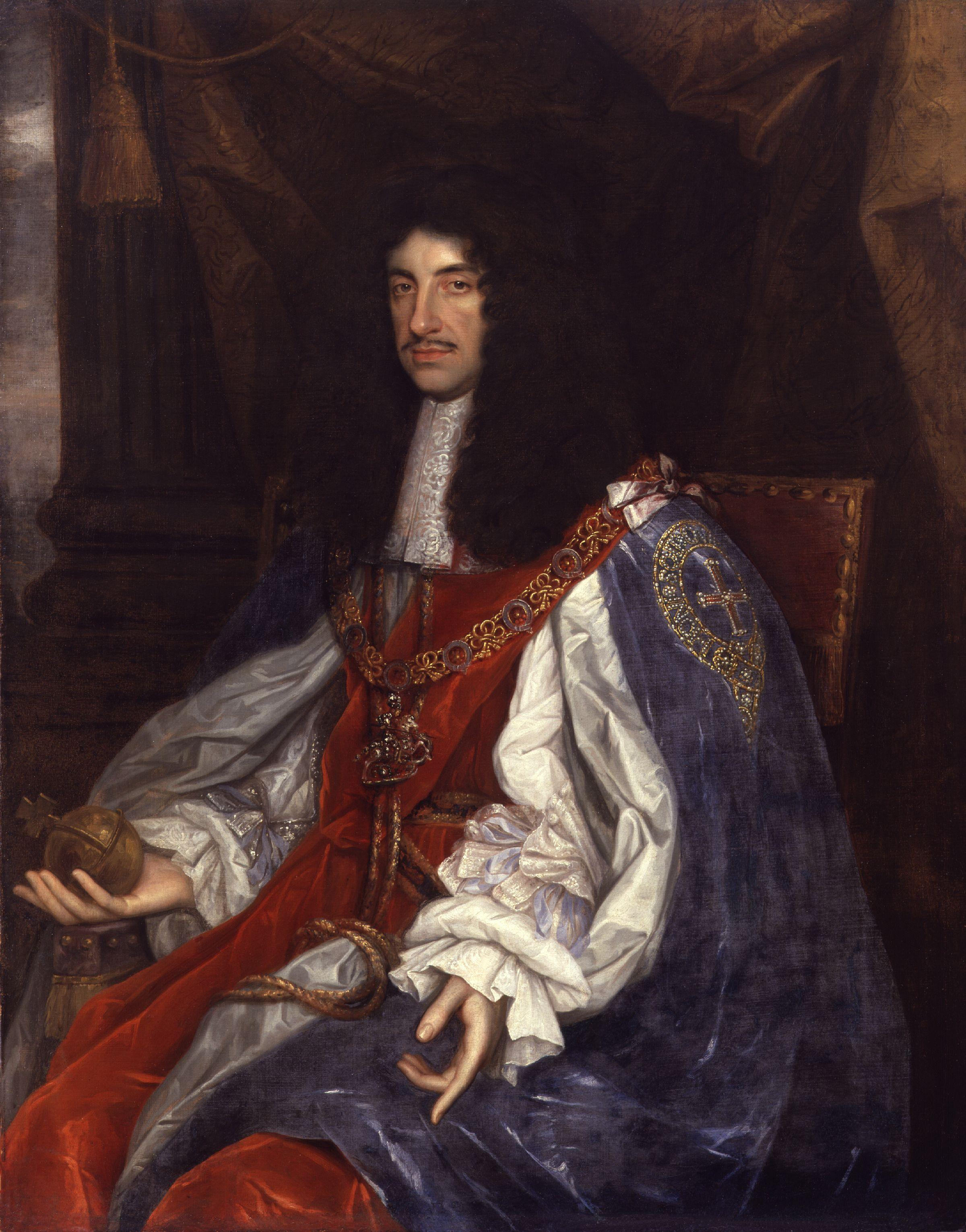
Click on the headline to link to a Wikipedia entry for Charles II of England for a brief overview of the period in question in this review.
Book Review

Country and Court- England, 1658-1714, J.R. Jones, Harvard University Press, Cambridge, Ma., 1978


I am writing this review of the counter-revolutionary period in the English Revolution, Country and Court-England, 1968-1714 on July 14, 2011 a date important in the world revolutionary calendar as the start 222 years ago of the great French Revolution. There are many similarities, although perhaps more differences, between those two revolutions but a common thread, and a generally common thread through most revolutions in that period after the flames of revolution have died down a bit and more conservative forces come to power, is some form of counter-revolutionary period. Although, with the recent exception of the Russian revolution, not going fully back to the ways of the previous old regime.

Of course, in the context of the English revolution in the mid-17th century the key battle was the struggle against monarchical absolutism and arbitrary rule by a just emerging bourgeois society. And the struggle for parliamentary supremacy and the rule of law, not unimportant developments in the course of human progress. The democratic republic under early the Cromwell regime, and I would argue even under the protectorate broke that divine right principle for a while in the face of European-wide fear, fear for the incumbent monarch's head. In that sense the period from 1658 to 1660 when, under General Monck’s momentary political and military leadership, monarchy returned with a vengeance following the return of Charles II represented a victory for the forces of counter-revolution as seen from a leftist perspective. Revolutionary poet and propagandist John Milton (and others) rightly feared the consequences of that return. Professor Jones does an excellent job of detailing those events and the period of the next twenty years or so as well when Charles and Parliament locked horns over money, how it was appropriated, and who foot the bill.

The period from about 1680 to the end of King William's reign is also well done although, as usual in British academic circles (and not just those circles either), much effort is spent on pumping up the notion of 1688-89 as the “Glorious Revolution.” While we of the left positively accept the limited democratic rights associated with that struggle(slightly extended franchise, the right to party formation, and slightly greater relgious freedom from persecution) as accruing to the gains in the democratic struggle in comparison with that earlier democratic republic it pales, pales sadly. The big issues here concerning the protestant-ness of the monarch, the consolidation of the early capitalist methods of production, the rights of religious dissidents, and the development of distinct (and rowdy) political parties (Whigs and Tories) get a full explanation.

The period of Queen Anne’s rule and the Hanoverian succession are less satisfying. Perhaps because the issues, the key issues of who reigns, where the money comes from, who decides where the money comes from, and who formed part of the political nation and hence civil society were pretty firmly entrenched by then. And the plebeian masses, active in the mid-century fights, that interest me were then clearly out of the picture. First read a book on the rise of the English Revolution (Christopher Hill and others have done tons of work in this area)for that "glorious revolution" and then read Professor Jones’ work about the period after the music was over. Well worth the time and effort.