Showing posts with label V.I. Lenin. Show all posts

Wednesday, November 14, 2012

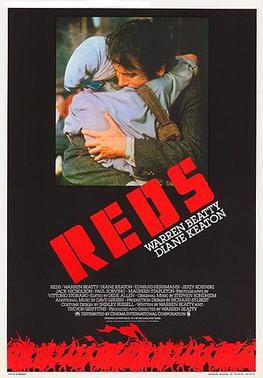
In Honor Of John Reed -Harvard Class of 1910- Warren Beatty's "Reds"


The important contribution of John Reed to the revolutionary movement here in America before World War I and later during the Russian revolution and its aftermath has never been fully appreciated. Thus, Warren Beatty, whatever his personal motives, has done a great service in filming the life of this “traitor to his class” (and his Harvard Class of 1910) and partisan of the international working class.

As usual with such commercial enterprises the order of things gets switched in the wrong direction. The love affair between Reed (played by Beatty) and budding writer and early feminist Louise Bryant (and a little third party intervention by playwright Eugene O’Neill, played by Jack Nicholson) is set against the backdrop of the Russian Revolution not the other way around, but such is cinematic license. More than most film depictions this one mainly gets the story straight; the early free-lance journalism tied to the Mexican Revolution; the bohemian life of pre-World War I Greenwich Village in New York City including their patrons; the socialist fight against American participation in World War I; the fight among socialist (and anarchists) over support to the Russian Revolution; and, an interesting segment on the in-fighting in the early communist movement between the foreign language federations and the Reed-led “Natives” which was ‘resolved’ in at Communist International headquarters. Those ‘natives’  who in the course of events would form the leadership of the party through most of the twenties when the cadre still wanted to make a revolution here and not just cheer on the Russian Revolution from afar. A nice touch in the film is the interplaying of commentaries by those, friend and foe, who knew or knew of Reed or were around during this time. See this movie.    

Wednesday, November 7, 2012

Songs To While Away The Class Struggle By-In Honor Of The 95th Anniversary Of The Russian October Revolution-The International Working Class Anthem “The Internationale”

Click on the headline to link to a YouTube film clip of a performance of the classic international working class song of struggle, The Internationale.

Markin comment:

In this series, presented under the headline Songs To While Away The Class Struggle By, I will post some songs that I think will help us get through the “dog days” of the struggle for our communist future. I do not vouch for the political thrust of the songs; for the most part they are done by pacifists, social democrats, hell, even just plain old ordinary democrats. And, occasionally, a communist, although hard communist musicians have historically been scarce on the ground. Thus, here we have a regular "popular front" on the music scene. While this would not be acceptable for our political prospects, it will suffice for our purposes here.
*****
Markin comment November 1, 2011:

Whether we can successfully close down Oakland on November 2, 2011 we have taken the offensive, maybe a long- term offensive, but an offensive reflecting our new-found understanding that the actions of the past few weeks have shown us that unless we are willing to fight, and fight hard, we will get nothing from the bourgeoisie, or their hangers-on. Call November 2nd Liberation Day One and that will put things proper prospective. Many of we older leftist militants did not think we would live long enough to hear the words- General Strike-uttered in more than some old-time historical sense. And yet here we are. Stay calm and steady-All out November 2, 2011 in solidarity with the Oakland General Strike! This is our John Brown moment! Light the spark! Forward!
***********
The Internationale [variant words in square brackets]

Arise ye workers [starvelings] from your slumbers
Arise ye prisoners of want
For reason in revolt now thunders
And at last ends the age of cant.
Away with all your superstitions
Servile masses arise, arise
We'll change henceforth [forthwith] the old tradition [conditions]
And spurn the dust to win the prize.

So comrades, come rally
And the last fight let us face
The Internationale unites the human race.
So comrades, come rally
And the last fight let us face
The Internationale unites the human race.

No more deluded by reaction
On tyrants only we'll make war
The soldiers too will take strike action
They'll break ranks and fight no more
And if those cannibals keep trying
To sacrifice us to their pride
They soon shall hear the bullets flying
We'll shoot the generals on our own side.

No saviour from on high delivers
No faith have we in prince or peer
Our own right hand the chains must shiver
Chains of hatred, greed and fear
E'er the thieves will out with their booty [give up their booty]
And give to all a happier lot.
Each [those] at the forge must do their duty
And we'll strike while the iron is hot.


________________________________________

L'Internationale

Debout les damnés de la terre
Debout les forçats de la faim
La raison tonne en son cratère
C'est l'éruption de la fin
Du passe faisons table rase
Foules, esclaves, debout, debout
Le monde va changer de base
Nous ne sommes rien, soyons tout

C'est la lutte finale
Groupons-nous, et demain (bis)
L'Internationale
Sera le genre humain

Il n'est pas de sauveurs suprêmes
Ni Dieu, ni César, ni tribun
Producteurs, sauvons-nous nous-mêmes
Décrétons le salut commun
Pour que le voleur rende gorge
Pour tirer l'esprit du cachot
Soufflons nous-mêmes notre forge
Battons le fer quand il est chaud

L'état comprime et la loi triche
L'impôt saigne le malheureux
Nul devoir ne s'impose au riche
Le droit du pauvre est un mot creux
C'est assez, languir en tutelle
L'égalité veut d'autres lois
Pas de droits sans devoirs dit-elle
Egaux, pas de devoirs sans droits

Hideux dans leur apothéose
Les rois de la mine et du rail
Ont-ils jamais fait autre chose
Que dévaliser le travail
Dans les coffres-forts de la bande
Ce qu'il a crée s'est fondu
En décrétant qu'on le lui rende
Le peuple ne veut que son dû.

Les rois nous saoulaient de fumées
Paix entre nous, guerre aux tyrans
Appliquons la grève aux armées
Crosse en l'air, et rompons les rangs
S'ils s'obstinent, ces cannibales
A faire de nous des héros
Ils sauront bientôt que nos balles
Sont pour nos propres généraux

Ouvriers, paysans, nous sommes
Le grand parti des travailleurs
La terre n'appartient qu'aux hommes
L'oisif ira loger ailleurs
Combien, de nos chairs se repaissent
Mais si les corbeaux, les vautours
Un de ces matins disparaissent
Le soleil brillera toujours.


________________________________________

Die Internationale

Wacht auf, Verdammte dieser Erde,
die stets man noch zum Hungern zwingt!
Das Recht wie Glut im Kraterherde
nun mit Macht zum Durchbruch dringt.
Reinen Tisch macht mit dem Bedranger!
Heer der Sklaven, wache auf!
Ein nichts zu sein, tragt es nicht langer
Alles zu werden, stromt zuhauf!

Volker, hort die Signale!
Auf, zum letzten Gefecht!
Die Internationale
Erkampft das Menschenrecht

Es rettet uns kein hoh'res Wesen
kein Gott, kein Kaiser, noch Tribun
Uns aus dem Elend zu erlosen
konnen wir nur selber tun!
Leeres Wort: des armen Rechte,
Leeres Wort: des Reichen Pflicht!
Unmundigt nennt man uns Knechte,
duldet die Schmach langer nicht!

In Stadt und Land, ihr Arbeitsleute,
wir sind die starkste Partei'n
Die Mussigganger schiebt beiseite!
Diese Welt muss unser sein;
Unser Blut sei nicht mehr der Raben
und der machtigen Geier Frass!
Erst wenn wir sie vertrieben haben
dann scheint die Sonn' ohn' Unterlass!


________________________________________

(The English version most commonly sung in South Africa. )
The Internationale

Arise ye prisoners of starvation
Arise ye toilers of the earth
For reason thunders new creation
`Tis a better world in birth.

Never more traditions' chains shall bind us
Arise ye toilers no more in thrall
The earth shall rise on new foundations
We are naught but we shall be all.

Then comrades, come rally
And the last fight let us face
The Internationale
Unites the human race.


________________________________________

(Zulu) i-Internationale

n'zigqila zezwe lonke
Vukan'ejokwen'lobugqili
Sizokwakh'umhlaba kabusha
Siqed'indlala nobumpofu.

lamasik'okusibopha
Asilwise yonk'incindezelo
Manj'umhlab'unesakhiw'esisha
Asisodwa Kulomkhankaso

Maqaban'wozan'sihlanganeni
Sibhekene nempi yamanqamu
I-Internationale
Ibumb'uluntu lonke

From The Film Archives-In Honor Of The Birthday Anniversary Of Bolshevik Leader Leon Trotsky

Click on title to link to part one (of five, just click from part one) of YouTube's film clips detailing the highlights (and lows) of the life and death of the great Bolshevik leader, Leon Trotsky. In Honor Of His Birthday Anniversary.

From The Archives Of Marxism- Leon Trotsky On The Lessons Of The Russian Revolution- On The 94th Anniversary Of The Russian Revolution

From The Archives Of Marxism- Leon Trotsky On The Lessons Of The Russian Revolution- On The 94th Anniversary Of The Russian Revolution

Workers Vanguard No. 968
5 November 2010

In Honor of the 1917 Bolshevik Revolution

For New October Revolutions!

(From the Archives of Marxism)

November 7 (October 25 by the calendar used in Russia at the time) marks the 93rd anniversary of the Russian Revolution. Led by the Bolshevik Party of V.I. Lenin and Leon Trotsky, the workers’ seizure of power in Russia gave flesh and blood reality to the Marxist understanding of the dictatorship of the proletariat. Despite the subsequent Stalinist degeneration of the Soviet workers state, culminating in its counterrevolutionary destruction in 1991-92, the October Revolution was and is the international proletariat’s greatest victory; its final undoing, a world-historic defeat. The International Communist League (Fourth Internationalist) fought to the bitter end in defense of the Soviet Union and the bureaucratically deformed workers states of East Europe, while calling for workers political revolutions to oust the parasitic nationalist Stalinist bureaucracies that ruled these states. This is the same program we uphold today for the remaining workers states of China, North Korea, Vietnam and Cuba.

Having been expelled from the USSR in 1929 by Stalin, Trotsky spent the remainder of his life in exile. In November 1932, he gave a speech to a Danish social-democratic student group in Copenhagen. He outlined the political conditions and the social forces that drove the Russian Revolution, stressing the decisive role of the Bolshevik Party. Illuminating the worldwide impact of the Russian Revolution and its place in history, Trotsky underlined the necessity of sweeping away the decaying capitalist order and replacing it with a scientifically planned international socialist economy that will lay the material basis for human freedom.

The ICL fights to forge workers parties modeled on Lenin and Trotsky’s Bolsheviks to lead the struggle for new October Revolutions around the globe.

* * *

Revolution means a change of the social order. It transfers the power from the hands of a class which has exhausted itself into those of another class, which is on the rise....

Without the armed insurrection of November 7, 1917, the Soviet state would not be in existence. But the insurrection itself did not drop from Heaven. A series of historical prerequisites was necessary for the October revolution.

1. The rotting away of the old ruling classes—the nobility, the monarchy, the bureaucracy.

2. The political weakness of the bourgeoisie, which had no roots in the masses of the people.

3. The revolutionary character of the peasant question.

4. The revolutionary character of the problem of the oppressed nations.

5. The significant social weight of the proletariat.

To these organic pre-conditions we must add certain conjunctural conditions of the highest importance:

6. The Revolution of 1905 was the great school, or in Lenin’s words, the “dress rehearsal” of the Revolution of 1917. The Soviets, as the irreplaceable organizational form of the proletarian united front in the revolution, were created for the first time in the year 1905.

7. The imperialist war sharpened all the contradictions, tore the backward masses out of their immobility and thereby prepared the grandiose scale of the catastrophe.

But all these conditions, which fully sufficed for the outbreak of the Revolution, were insufficient to assure the victory of the proletariat in the Revolution. For this victory one condition more was needed:

8. The Bolshevik Party....

In the year 1883 there arose among the emigres the first Marxist group. In the year 1898, at a secret meeting, the foundation of the Russian Social-Democratic Workers’ Party was proclaimed (we all called ourselves Social-Democrats in those days). In the year 1903 occurred the split between Bolsheviks and Mensheviks. In the year 1912 the Bolshevist fraction finally became an independent Party.

It learned to recognize the class mechanics of society in struggle, in the grandiose events of twelve years (1905-1917). It educated cadres equally capable of initiative and of subordination. The discipline of its revolutionary action was based on the unity of its doctrine, on the tradition of common struggles and on confidence in its tested leadership.

Thus stood the Party in the year 1917. Despised by the official “public opinion” and the paper thunder of the intelligentsia press, it adapted itself to the movement of the masses. Firmly it kept in hand the control of factories and regiments. More and more the peasant masses turned toward it. If we understand by “nation,” not the privileged heads, but the majority of the people, that is, the workers and peasants, then Bolshevism became in the course of the year 1917 a truly national Russian Party.

In September 1917, Lenin, who was compelled to keep in hiding, gave the signal, “The crisis is ripe, the hour of the insurrection has approached.” He was right. The ruling classes had landed in a blind alley before the problems of the war, the land and national liberation. The bourgeoisie finally lost its head. The democratic parties, the Mensheviks and social-revolutionaries, wasted the remains of the confidence of the masses in them by their support of the imperialist war, by their policy of ineffectual compromise and concession to the bourgeois and feudal property-owners. The awakened army no longer wanted to fight for the alien aims of imperialism. Disregarding democratic advice, the peasantry smoked the landowners out of their estates. The oppressed nationalities at the periphery rose up against the bureaucracy of Petrograd. In the most important workers’ and soldiers’ Soviets the Bolsheviki were dominant. The workers and soldiers demanded action. The ulcer was ripe. It needed a cut of the lancet.

Only under these social and political conditions was the insurrection possible. And thus it also became inevitable. But there is no playing around with the insurrection. Woe to the surgeon who is careless in the use of the lancet! Insurrection is an art. It has its laws and its rules.

The Party carried through the October insurrection with cold calculation and with flaming determination. Thanks to this, it conquered almost without victims. Through the victorious Soviets the Bolsheviki placed themselves at the head of a country which occupies one sixth of the surface of the globe....

Let us now in closing attempt to ascertain the place of the October Revolution, not only in the history of Russia but in the history of the world. During the year 1917, in a period of eight months, two historical curves intersect. The February upheaval—that belated echo of the great struggles which had been carried out in past centuries on the territories of Holland, England, France, almost all of Continental Europe—takes its place in the series of bourgeois revolutions. The October Revolution proclaims and opens the domination of the proletariat. It was world capitalism that suffered its first great defeat on the territory of Russia. The chain broke at its weakest link. But it was the chain that broke, and not only the link.

Capitalism has outlived itself as a world system. It has ceased to fulfill its essential mission, the increase of human power and human wealth. Humanity cannot stand still at the level which it has reached. Only a powerful increase in productive force and a sound, planned, that is, Socialist organization of production and distribution can assure humanity—all humanity—of a decent standard of life and at the same time give it the precious feeling of freedom with respect to its own economy. Freedom in two senses—first of all, man will no longer be compelled to devote the greater part of his life to physical labor. Second, he will no longer be dependent on the laws of the market, that is, on the blind and dark forces which have grown up behind his back. He will build up his economy freely, that is, according to a plan, with compass in hand. This time it is a question of subjecting the anatomy of society to the X-ray through and through, of disclosing all its secrets and subjecting all its functions to the reason and the will of collective humanity. In this sense, Socialism must become a new step in the historical advance of mankind. Before our ancestor, who first armed himself with a stone axe, the whole of nature represented a conspiracy of secret and hostile forces. Since then, the natural sciences, hand in hand with practical technology, have illuminated nature down to its most secret depths. By means of electrical energy, the physicist passes judgment on the nucleus of the atom. The hour is not far when science will easily solve the task of the alchemists, and turn manure into gold and gold into manure. Where the demons and furies of nature once raged, now rules ever more courageously the industrial will of man.

But while he wrestled victoriously with nature, man built up his relations to other men blindly, almost like the bee or the ant. Belatedly and most undecidedly he approached the problems of human society. He began with religion, and passed on to politics. The Reformation represented the first victory of bourgeois individualism and rationalism in a domain which had been ruled by dead tradition. From the church, critical thought went on to the state. Born in the struggle with absolutism and the medieval estates, the doctrine of the sovereignty of the people and of the rights of man and the citizen grew stronger. Thus arose the system of parliamentarism. Critical thought penetrated into the domain of government administration. The political rationalism of democracy was the highest achievement of the revolutionary bourgeoisie.

But between nature and the state stands economic life. Technology liberated man from the tyranny of the old elements—earth, water, fire and air—only to subject him to its own tyranny. Man ceased to be a slave to nature, to become a slave to the machine, and, still worse, a slave to supply and demand. The present world crisis testifies in especially tragic fashion how man, who dives to the bottom of the ocean, who rises up to the stratosphere, who converses on invisible waves with the Antipodes, how this proud and daring ruler of nature remains a slave to the blind forces of his own economy. The historical task of our epoch consists in replacing the uncontrolled play of the market by reasonable planning, in disciplining the forces of production, compelling them to work together in harmony and obediently serve the needs of mankind. Only on this new social basis will man be able to stretch his weary limbs and—every man and every woman, not only a selected few—become a full citizen in the realm of thought.

—“Leon Trotsky Defends the October Revolution” (Militant, 21 January 1933)

Monday, November 7, 2011

*From The Film Archives-In Honor Of The Birthday Anniversary Of Bolshevik Leader Leon Trotsky

Click on title to link to part one (of five, just click from part one) of YouTube's film clips detailing the highlights (and lows) of the life and death of the great Bolshevik leader, Leon Trotsky. In Honor Of His Birthday Anniversary.

*From The Archives Of Marxism- Leon Trotsky On The Lessons Of The Russian Revolution- On The 94th Anniversary Of The Russian Revolution

From The Archives Of Marxism- Leon Trotsky On The Lessons Of The Russian Revolution- On The 94th Anniversary Of The Russian Revolution

Workers Vanguard No. 968
5 November 2010

In Honor of the 1917 Bolshevik Revolution

For New October Revolutions!

(From the Archives of Marxism)

November 7 (October 25 by the calendar used in Russia at the time) marks the 93rd anniversary of the Russian Revolution. Led by the Bolshevik Party of V.I. Lenin and Leon Trotsky, the workers’ seizure of power in Russia gave flesh and blood reality to the Marxist understanding of the dictatorship of the proletariat. Despite the subsequent Stalinist degeneration of the Soviet workers state, culminating in its counterrevolutionary destruction in 1991-92, the October Revolution was and is the international proletariat’s greatest victory; its final undoing, a world-historic defeat. The International Communist League (Fourth Internationalist) fought to the bitter end in defense of the Soviet Union and the bureaucratically deformed workers states of East Europe, while calling for workers political revolutions to oust the parasitic nationalist Stalinist bureaucracies that ruled these states. This is the same program we uphold today for the remaining workers states of China, North Korea, Vietnam and Cuba.

Having been expelled from the USSR in 1929 by Stalin, Trotsky spent the remainder of his life in exile. In November 1932, he gave a speech to a Danish social-democratic student group in Copenhagen. He outlined the political conditions and the social forces that drove the Russian Revolution, stressing the decisive role of the Bolshevik Party. Illuminating the worldwide impact of the Russian Revolution and its place in history, Trotsky underlined the necessity of sweeping away the decaying capitalist order and replacing it with a scientifically planned international socialist economy that will lay the material basis for human freedom.

The ICL fights to forge workers parties modeled on Lenin and Trotsky’s Bolsheviks to lead the struggle for new October Revolutions around the globe.

* * *

Revolution means a change of the social order. It transfers the power from the hands of a class which has exhausted itself into those of another class, which is on the rise....

Without the armed insurrection of November 7, 1917, the Soviet state would not be in existence. But the insurrection itself did not drop from Heaven. A series of historical prerequisites was necessary for the October revolution.

1. The rotting away of the old ruling classes—the nobility, the monarchy, the bureaucracy.

2. The political weakness of the bourgeoisie, which had no roots in the masses of the people.

3. The revolutionary character of the peasant question.

4. The revolutionary character of the problem of the oppressed nations.

5. The significant social weight of the proletariat.

To these organic pre-conditions we must add certain conjunctural conditions of the highest importance:

6. The Revolution of 1905 was the great school, or in Lenin’s words, the “dress rehearsal” of the Revolution of 1917. The Soviets, as the irreplaceable organizational form of the proletarian united front in the revolution, were created for the first time in the year 1905.

7. The imperialist war sharpened all the contradictions, tore the backward masses out of their immobility and thereby prepared the grandiose scale of the catastrophe.

But all these conditions, which fully sufficed for the outbreak of the Revolution, were insufficient to assure the victory of the proletariat in the Revolution. For this victory one condition more was needed:

8. The Bolshevik Party....

In the year 1883 there arose among the emigres the first Marxist group. In the year 1898, at a secret meeting, the foundation of the Russian Social-Democratic Workers’ Party was proclaimed (we all called ourselves Social-Democrats in those days). In the year 1903 occurred the split between Bolsheviks and Mensheviks. In the year 1912 the Bolshevist fraction finally became an independent Party.

It learned to recognize the class mechanics of society in struggle, in the grandiose events of twelve years (1905-1917). It educated cadres equally capable of initiative and of subordination. The discipline of its revolutionary action was based on the unity of its doctrine, on the tradition of common struggles and on confidence in its tested leadership.

Thus stood the Party in the year 1917. Despised by the official “public opinion” and the paper thunder of the intelligentsia press, it adapted itself to the movement of the masses. Firmly it kept in hand the control of factories and regiments. More and more the peasant masses turned toward it. If we understand by “nation,” not the privileged heads, but the majority of the people, that is, the workers and peasants, then Bolshevism became in the course of the year 1917 a truly national Russian Party.

In September 1917, Lenin, who was compelled to keep in hiding, gave the signal, “The crisis is ripe, the hour of the insurrection has approached.” He was right. The ruling classes had landed in a blind alley before the problems of the war, the land and national liberation. The bourgeoisie finally lost its head. The democratic parties, the Mensheviks and social-revolutionaries, wasted the remains of the confidence of the masses in them by their support of the imperialist war, by their policy of ineffectual compromise and concession to the bourgeois and feudal property-owners. The awakened army no longer wanted to fight for the alien aims of imperialism. Disregarding democratic advice, the peasantry smoked the landowners out of their estates. The oppressed nationalities at the periphery rose up against the bureaucracy of Petrograd. In the most important workers’ and soldiers’ Soviets the Bolsheviki were dominant. The workers and soldiers demanded action. The ulcer was ripe. It needed a cut of the lancet.

Only under these social and political conditions was the insurrection possible. And thus it also became inevitable. But there is no playing around with the insurrection. Woe to the surgeon who is careless in the use of the lancet! Insurrection is an art. It has its laws and its rules.

The Party carried through the October insurrection with cold calculation and with flaming determination. Thanks to this, it conquered almost without victims. Through the victorious Soviets the Bolsheviki placed themselves at the head of a country which occupies one sixth of the surface of the globe....

Let us now in closing attempt to ascertain the place of the October Revolution, not only in the history of Russia but in the history of the world. During the year 1917, in a period of eight months, two historical curves intersect. The February upheaval—that belated echo of the great struggles which had been carried out in past centuries on the territories of Holland, England, France, almost all of Continental Europe—takes its place in the series of bourgeois revolutions. The October Revolution proclaims and opens the domination of the proletariat. It was world capitalism that suffered its first great defeat on the territory of Russia. The chain broke at its weakest link. But it was the chain that broke, and not only the link.

Capitalism has outlived itself as a world system. It has ceased to fulfill its essential mission, the increase of human power and human wealth. Humanity cannot stand still at the level which it has reached. Only a powerful increase in productive force and a sound, planned, that is, Socialist organization of production and distribution can assure humanity—all humanity—of a decent standard of life and at the same time give it the precious feeling of freedom with respect to its own economy. Freedom in two senses—first of all, man will no longer be compelled to devote the greater part of his life to physical labor. Second, he will no longer be dependent on the laws of the market, that is, on the blind and dark forces which have grown up behind his back. He will build up his economy freely, that is, according to a plan, with compass in hand. This time it is a question of subjecting the anatomy of society to the X-ray through and through, of disclosing all its secrets and subjecting all its functions to the reason and the will of collective humanity. In this sense, Socialism must become a new step in the historical advance of mankind. Before our ancestor, who first armed himself with a stone axe, the whole of nature represented a conspiracy of secret and hostile forces. Since then, the natural sciences, hand in hand with practical technology, have illuminated nature down to its most secret depths. By means of electrical energy, the physicist passes judgment on the nucleus of the atom. The hour is not far when science will easily solve the task of the alchemists, and turn manure into gold and gold into manure. Where the demons and furies of nature once raged, now rules ever more courageously the industrial will of man.

But while he wrestled victoriously with nature, man built up his relations to other men blindly, almost like the bee or the ant. Belatedly and most undecidedly he approached the problems of human society. He began with religion, and passed on to politics. The Reformation represented the first victory of bourgeois individualism and rationalism in a domain which had been ruled by dead tradition. From the church, critical thought went on to the state. Born in the struggle with absolutism and the medieval estates, the doctrine of the sovereignty of the people and of the rights of man and the citizen grew stronger. Thus arose the system of parliamentarism. Critical thought penetrated into the domain of government administration. The political rationalism of democracy was the highest achievement of the revolutionary bourgeoisie.

But between nature and the state stands economic life. Technology liberated man from the tyranny of the old elements—earth, water, fire and air—only to subject him to its own tyranny. Man ceased to be a slave to nature, to become a slave to the machine, and, still worse, a slave to supply and demand. The present world crisis testifies in especially tragic fashion how man, who dives to the bottom of the ocean, who rises up to the stratosphere, who converses on invisible waves with the Antipodes, how this proud and daring ruler of nature remains a slave to the blind forces of his own economy. The historical task of our epoch consists in replacing the uncontrolled play of the market by reasonable planning, in disciplining the forces of production, compelling them to work together in harmony and obediently serve the needs of mankind. Only on this new social basis will man be able to stretch his weary limbs and—every man and every woman, not only a selected few—become a full citizen in the realm of thought.

—“Leon Trotsky Defends the October Revolution” (Militant, 21 January 1933)

Songs To While Away The Class Struggle By-In Honor Of The 94th Anniversary Of The Russian October Revolution-The International Working Class Anthem “The Internationale”

Click on the headline to link to a YouTube film clip of a performance of the classic international working class song of struggle, The Internationale.

Markin comment:

In this series, presented under the headline Songs To While Away The Class Struggle By, I will post some songs that I think will help us get through the “dog days” of the struggle for our communist future. I do not vouch for the political thrust of the songs; for the most part they are done by pacifists, social democrats, hell, even just plain old ordinary democrats. And, occasionally, a communist, although hard communist musicians have historically been scarce on the ground. Thus, here we have a regular "popular front" on the music scene. While this would not be acceptable for our political prospects, it will suffice for our purposes here.
*****
Markin comment November 1, 2011:

Whether we can successfully close down Oakland on November 2, 2011 we have taken the offensive, maybe a long- term offensive, but an offensive reflecting our new-found understanding that the actions of the past few weeks have shown us that unless we are willing to fight, and fight hard, we will get nothing from the bourgeoisie, or their hangers-on. Call November 2nd Liberation Day One and that will put things proper prospective. Many of we older leftist militants did not think we would live long enough to hear the words- General Strike-uttered in more than some old-time historical sense. And yet here we are. Stay calm and steady-All out November 2, 2011 in solidarity with the Oakland General Strike! This is our John Brown moment! Light the spark! Forward!
***********
The Internationale [variant words in square brackets]

Arise ye workers [starvelings] from your slumbers
Arise ye prisoners of want
For reason in revolt now thunders
And at last ends the age of cant.
Away with all your superstitions
Servile masses arise, arise
We'll change henceforth [forthwith] the old tradition [conditions]
And spurn the dust to win the prize.

So comrades, come rally
And the last fight let us face
The Internationale unites the human race.
So comrades, come rally
And the last fight let us face
The Internationale unites the human race.

No more deluded by reaction
On tyrants only we'll make war
The soldiers too will take strike action
They'll break ranks and fight no more
And if those cannibals keep trying
To sacrifice us to their pride
They soon shall hear the bullets flying
We'll shoot the generals on our own side.

No saviour from on high delivers
No faith have we in prince or peer
Our own right hand the chains must shiver
Chains of hatred, greed and fear
E'er the thieves will out with their booty [give up their booty]
And give to all a happier lot.
Each [those] at the forge must do their duty
And we'll strike while the iron is hot.


________________________________________

L'Internationale

Debout les damnés de la terre
Debout les forçats de la faim
La raison tonne en son cratère
C'est l'éruption de la fin
Du passe faisons table rase
Foules, esclaves, debout, debout
Le monde va changer de base
Nous ne sommes rien, soyons tout

C'est la lutte finale
Groupons-nous, et demain (bis)
L'Internationale
Sera le genre humain

Il n'est pas de sauveurs suprêmes
Ni Dieu, ni César, ni tribun
Producteurs, sauvons-nous nous-mêmes
Décrétons le salut commun
Pour que le voleur rende gorge
Pour tirer l'esprit du cachot
Soufflons nous-mêmes notre forge
Battons le fer quand il est chaud

L'état comprime et la loi triche
L'impôt saigne le malheureux
Nul devoir ne s'impose au riche
Le droit du pauvre est un mot creux
C'est assez, languir en tutelle
L'égalité veut d'autres lois
Pas de droits sans devoirs dit-elle
Egaux, pas de devoirs sans droits

Hideux dans leur apothéose
Les rois de la mine et du rail
Ont-ils jamais fait autre chose
Que dévaliser le travail
Dans les coffres-forts de la bande
Ce qu'il a crée s'est fondu
En décrétant qu'on le lui rende
Le peuple ne veut que son dû.

Les rois nous saoulaient de fumées
Paix entre nous, guerre aux tyrans
Appliquons la grève aux armées
Crosse en l'air, et rompons les rangs
S'ils s'obstinent, ces cannibales
A faire de nous des héros
Ils sauront bientôt que nos balles
Sont pour nos propres généraux

Ouvriers, paysans, nous sommes
Le grand parti des travailleurs
La terre n'appartient qu'aux hommes
L'oisif ira loger ailleurs
Combien, de nos chairs se repaissent
Mais si les corbeaux, les vautours
Un de ces matins disparaissent
Le soleil brillera toujours.


________________________________________

Die Internationale

Wacht auf, Verdammte dieser Erde,
die stets man noch zum Hungern zwingt!
Das Recht wie Glut im Kraterherde
nun mit Macht zum Durchbruch dringt.
Reinen Tisch macht mit dem Bedranger!
Heer der Sklaven, wache auf!
Ein nichts zu sein, tragt es nicht langer
Alles zu werden, stromt zuhauf!

Volker, hort die Signale!
Auf, zum letzten Gefecht!
Die Internationale
Erkampft das Menschenrecht

Es rettet uns kein hoh'res Wesen
kein Gott, kein Kaiser, noch Tribun
Uns aus dem Elend zu erlosen
konnen wir nur selber tun!
Leeres Wort: des armen Rechte,
Leeres Wort: des Reichen Pflicht!
Unmundigt nennt man uns Knechte,
duldet die Schmach langer nicht!

In Stadt und Land, ihr Arbeitsleute,
wir sind die starkste Partei'n
Die Mussigganger schiebt beiseite!
Diese Welt muss unser sein;
Unser Blut sei nicht mehr der Raben
und der machtigen Geier Frass!
Erst wenn wir sie vertrieben haben
dann scheint die Sonn' ohn' Unterlass!


________________________________________

(The English version most commonly sung in South Africa. )
The Internationale

Arise ye prisoners of starvation
Arise ye toilers of the earth
For reason thunders new creation
`Tis a better world in birth.

Never more traditions' chains shall bind us
Arise ye toilers no more in thrall
The earth shall rise on new foundations
We are naught but we shall be all.

Then comrades, come rally
And the last fight let us face
The Internationale
Unites the human race.


________________________________________

(Zulu) i-Internationale

n'zigqila zezwe lonke
Vukan'ejokwen'lobugqili
Sizokwakh'umhlaba kabusha
Siqed'indlala nobumpofu.

lamasik'okusibopha
Asilwise yonk'incindezelo
Manj'umhlab'unesakhiw'esisha
Asisodwa Kulomkhankaso

Maqaban'wozan'sihlanganeni
Sibhekene nempi yamanqamu
I-Internationale
Ibumb'uluntu lonke

Wednesday, August 17, 2011

In Honor Of The “Old Man”- On The 71st Anniversary Of The Death Of Leon Trotsky-How it Happened-Natalia Sedova Trotsky

bolsheviks, COMMUNIST INTERNATIONAL, Fourth International, leon trotsky, russian revolution, theroy of permanent revolution, V.I. Lenin

Click on the headline to link to a review of the early life of Leon Trotsky in his political memoir, My Life.

Markin comment:

Every year at this time we honor the memory of the great Russian revolutionary leader, Leon Trotsky, a man who not only was able theoretically to articulate the arc of the Russian Revolution of 1917 (the theory of permanent revolution) but personally led the defend of that revolution against world imperialism and its internal Russian White Guard agents. Oh yes, and also wrote a million pro-communist articles, did a little turn at literary criticism, acted in various Soviet official capacities, led the Communist International, led the opposition first in Russia and then internationally to the Stalinist degeneration of that revolution, and created a new revolutionary international (the Fourth International) to rally the demoralized international working class movement in the face of Hitlerite reaction. To speak nothing of hunting, fishing, raising rabbits, collecting cactii and chasing Frida Kahlo around Mexico (oops, on that last one). In short, as I have characterized him before, the closest that this sorry old world has come to producing a complete communist man within the borders of bourgeois society (except that last thing, that skirt-chasing thing, although maybe not). All honor to his memory. Forward to new Octobers!

Usually on this anniversary I place a selection of Trotsky’s writings on various subjects in this space. This year, having found a site that has material related to his family life, the effect of his murder on that family, and other more personal details of his life I am placing that material here in his honor. The forward to new Octobers still goes, though.
******
Markin comment on this article:

Of course Natalia Sedova was Trotsky's "wife" for most of their lives and suffered the many exiles, imprisonments, privations and other unsettling problems that confronted the great revolutionary. She, unlike Lenin's wife, Krupskaya, was not intensely political but more a steadfast companion and rock solid force behind the big man of history. Her later turning away from the work of the Fourth International and her husband's defense of the Soviet experience in reaction to her personal tragedies and an impressionistic view of the post-World War Cold War situation does not negate the earlier critical support she gave to his efforts.
********
Natalia Sedova Trotsky
How it Happened


Written:1940
First Published:1941 (English translation)
Source: Fourth International
Online Version: Natalia Sedova Internet Archive, December 2001
Transcribed/HTML Markup: Mike Bessler (original markup by ETOL)

(Tuesday, August 20, 1940; 7 o'clock in the morning)


"You know, I feel fine today, at all events, this morning; it's a long time since I felt so well... Last night I took a double dose of the sleeping drug. I noticed that it does me good."

"Yes. I recall that we observed this in Norway when you used to feel run-down much more often... But it isn't the drug itself that does you good, it's sound sleep, complete rest."

"Why yes, of course."

As he opened in the morning or closed at night the massive steel shutters built in our bedroom by our friends after the attack of May 24 on our home, L. D. would occasionally remark: "Well, now no Siqueiros can get at us." And upon awakening he would greet me and himself by saying, "You see, they didn't kill us last night after all, and yet you are still dissatisfied." I defended myself as best I could... Once, after such a "greeting," he added pensively: "Yes, Natasha, we received a reprieve."

As far back as 1928, when we were being exiled to Alma-Ata, where the unknown awaited us, we had a talk one night in the compartment of the train which was taking us into exile... We could not sleep, after the tumult of the last weeks, and especially the last days, in Moscow. In spite of our extreme fatigue, the nervous excitement persisted. I recall that Lev Davidovich said to me then: "it's better this way (exile). I am not in favor of dying in a bed in the Kremlin."

But this morning he was far from all such thoughts. Physical well-being made him look forward eagerly to a "really good" day's work. Vigorously he walked out into the patio to feed his rabbits, after performing swiftly his morning toilet and dressing just as quickly. When his health was poor, the feeding of the rabbits was a strain on him; but he couldn't give it up, as he pitied the little animals. It was difficult to do it as he wanted to, as was his custom--thoroughly. Besides, he had to be on guard; his strength had to be conserved for another, different kind of work--work at his desk. Taking care of the animals, cleaning their cages, etc., provided him, on the one band, with relaxation and a distraction, but, on the other hand, it fatigued him physically; and this, in turn, reflected on his general ability to work. He became completely absorbed in everything he did, regardless of the task.

I recall that in 1933 we departed from Prinkipo for France, where we lived in a lonely villa not far from Royan, by the shores of the Atlantic. Our son together with our friends had arranged for this villa which was called "Sea-Spray." The waves of the turbulent ocean came into our garden, and salt spray would fly in through the open windows. Surrounded by our friends, we lived under semi-legal conditions. We would have on occasion as many as twenty people. Eight or nine lived on the premises. In view of our position, it was out of the question to call in a housekeeper or someone to help in the kitchen. The whole burden fell on Jeanne, my son's wife, and on Vera Molinier, and I also helped. The young comrades washed the dishes. Lev Davidovich, too, wanted to help with the housework and began washing dishes. But our friends protested: "He should rest after dinner. We can manage ourselves." Besides, my son Leva told me: "Papa insists on using a scientific method of dish-washing, and this eats up too much of our time." In the end, L. D. had to retire from this occupation.

The middle way, the lackadaisical attitude, the semi-indifferent manner, these he knew not. That is why nothing tired him so much as casual or semi-indifferent conversations. But with what enthusiasm did he go to pick cacti with a view to transplanting them in our garden. He was in a frenzy, being the first on the job and the last to leave. Not one of the young people surrounding him on our walks into the country and working with him outdoors could keep pace with him; they tired more quickly, and fell behind one after the other. But he was indefatigable. Looking at him, I often marveled. Whence did he draw his energy, his physical endurance? Neither the unbearably hot sun, the mountains nor descents with cacti heavy as iron bothered him. He was hypnotized by the consummation of the task at hand. He found relaxation in changing his tasks. This also provided him with a respite from the blows which mercilessly fell upon him. The more crushing the blow the more ardently he forgot himself in work.

Our walks, which were really war-expeditions for cacti, became more and more rare because of "circumstances beyond our control." However, every now and then, having had his fill of the monotony of his daily routine, Lev Davidovich would say to me: "This week we ought to take a whole day off for a walk, don't you think so?"

"You mean a day for penal labor?" I would twit him.

"All right, let's go, to be sure."

"It would be best to get an early start. Shouldn't we leave around six in the morning?"

"Six is all right with me, but won't you get too tired?"

"No, it will only refresh me, and I promise not to overdo it."

Usually Lev Davidovich fed his fondly-watched rabbits and chickens, from a quarter past seven (sometimes 7:20) till nine o'clock in the morning. Sometimes he would interrupt this work to dictate into the dictaphone some order or some idea which occurred to him. That day he worked in the patio without interruption. After breakfast he assured me that he felt fine and spoke of his desire to begin dictating an article on conscription in the United States. And he actually did start to dictate.

At one o'clock Rigault, our attorney in the case of the May 24th attack, came to see us. After his departure, Lev Davidovich looked into my room to tell me, not without regret, that he would have to postpone work on the article and to resume preparing the material for the trial in connection with the attack upon us. He and his attorney had decided that it was necessary to answer El Popular in view of the fact that L. D. had been accused of defamation at a banquet given by that publication.

"And I will take the offensive and will charge them with brazen slander." he said defiantly.

"Too bad, you won't be able to write about conscription."

"Yes, it can't be helped. I have to postpone it for two or three days. I have already asked for all the available materials to be placed on my desk. After dinner, I shall start going over them. I feel fine," he once again assured me.

After a brief siesta, I saw him sitting at his desk, which was already covered with items relating to the El Popular case. He continued to be in good spirits. And it made me feel more cheerful. Lev Davidovich had of late been complaining of enervation to which he succumbed occasionally. He knew that it was a passing condition, but lately he seemed to be in greater doubt about it than ever before; today seemed to us to mark the beginning of improvement in his physical condition. He looked well too. Every now and then I opened the door to his room just a trifle, so as not to disturb him, and saw him in his usual position, bent over his desk, pen in hand. I recalled the line, "One more and final story and my scroll is at an end." Thus speaks the ancient monk-scribe Pimen in Pushkin's drama "Boris Godounov," as he recorded the evil deeds of Czar Boris.

Lev Davidovich led a life close in semblance to that of a prisoner or a hermit, with this difference that in his solitude he not only kept a chronological record of events but waged an indomitably passionate struggle against his ideological enemies.

Brief as that day was, Lev Davidovich had until five in the afternoon dictated into the dictaphone several fragments of his contemplated article on conscription in the United States and about fifty short pages of his exposure of El Popular, i.e. of Stalin's machinations. It was a day of physical and spiritual equanimity for him.

Jacson Appears

At five, the two of us had tea, as usual. At twenty minutes past five, perhaps at half past, I stepped out on the balcony and saw L. D. in the patio near an open rabbit hutch. He was feeding the animals. Beside him was an unfamiliar figure. Only when he removed his hat and started to approach the balcony did I recognize him. It was "Jacson."

"He's here again," it flashed through my mind. "Why has he begun to come so often?" I asked myself.

"I'm frightfully thirsty, may I have a glass of water?" he asked, upon greeting me.

"Perhaps you would like a cup of tea?"

"No no. I dined too late and feel that the food is up here," he answered, pointing at his throat. "it's choking me." The color of his face was gray-green. His general appearance was that of a very nervous man.

"Why are you wearing your hat and topcoat?" (His topcoat was hanging over his left arm, pressed against his body.) "It's so sunny today."

"Yes, but you know it won't last long, it might rain." I wanted to argue that "today it won't rain" and of his always boasting that he never wore a hat or coat, even in the wont weather, but somehow I became depressed and let the subject drop. Instead I asked:

"And how is Sylvia feeling?"

He did not appear to understand me. I had upset him by my previous question about his topcoat and hat. And he was completely lost in his own thoughts, and very nervous. Finally, as if rousing himself from a deep sleep, he answered me: "Sylvia?... Sylvia?..." And catching himself, he added casually: "She's always well."

He began to retrace his steps towards Lev Davidovich and the rabbit hutches. I asked him as he walked away: "Is your article ready?"

"Yes, it's ready."

"Is it typed?"

With an awkward movement of his hand, while he continued to press against his body his topcoat in the lining of which were sewn in, as it was later revealed, a pickaxe and a dagger, he produced several typewritten pages to show me.

"It's good that your manuscript is not written by hand. Lev Davidovich dislikes illegible manuscripts."

Two days earlier he had called on us, also wearing a topcoat and a hat. I did not see him then as, unfortunately, I was not at home. But Lev Davidovich told me that "Jacson" had called and had somewhat surprised him by his conduct Lev Davidovich mentioned it in a way which indicated that he had no desire to elaborate upon the matter, but at the same time he felt that he had to mention it to me, sensing some new feature about the man.

"He brought an outline of his article, in reality a few phrases--muddled stuff. I made some suggestions to him. We shall see." And Lev Davidovich added, "Yesterday he did not resemble a Frenchman at all. Suddenly he sat down on my desk and kept his hat on all the while."

"Yes, it's strange" I said in wonderment. "He never wears a hat."

"This time he wore a hat," answered Lev Davidovich and pursued this subject no further. He spoke casually. But I was taken aback: it seemed to me that on this occasion he had perceived something new about "Jacson" but had not yet reached, or rather was in no hurry to draw conclusions. This brief conversation of ours occurred on the eve of the crime.

Wearing a hat.. topcoat on his arm... sat himself down on the table--wasn't this a rehearsal on his part? This was done so that he would be more certain and precise in his movements on the morrow.

Who could have suspected it then? It stirred us to embarrassment, nothing more. Who could have foretold that the day of August 20, so ordinary, would be so fateful? Nothing bespoke its ominousness. From dawn the sun was shining, as always here, the whole day brightly. Flowers were blooming, and grass seemed polished with lacquer... We went about our tasks each in his own way, all of us trying in whatever we did to facilitate Lev Davidovich's work. How many times in the course of that day did he mount the little steps of this same balcony, and walk into this, his room, and sit down on this very same chair beside the desk... All this used to hem ordinary and is now by its very ordinariness so terrible and tragic. No one, none among us, not he himself was able to sense the impending disaster. And in this inability a kind of abyss yawns. On the contrary, the whole day was one of the most tranquil. When L. D. stepped out at noon into the patio and I perceived him standing there bareheaded beneath the scorching sun, I hastened to bring him his white cap to protect his head against the merciless hot rays. To protect from the sun... but even at that very moment he was already threatened with a terrible death. At that hour we did not sense his doom, an outburst of despair did not convulse our hearts.

I recall that when the alarm system in the house, the garden and the patio was being installed by our friends and guard posts were being assigned, I drew L. D.'s attention to the fact that a guard should also be posted at his window. This seemed to me at the time so palpably indispensable. But L. D. objected that to do so it would be necessary to expand the guard, increase it to ten which was beyond our resources both in point of money and of available people at the disposal of our organization. A guard outside the window could not have saved him in this particular instance. But the absence of one worried me. L. D. was likewise very touched by a present given him by our American friends after the attack of May 24. It was a bullet proof vest, something like an ancient shirt of mail. As I examined it one day, I happened to remark that it would be good to get something for the head. L. D. insisted that the comrade assigned to the most responsible post wear the vest each time. After the failure suffered by our enemies in the May 24 attack, we were absolutely certain that Stalin would not halt, and we were making preparations. We also knew that a different form of attack would be used by the G.P.U. Nor did we exclude a blow on the part of a "solitary individual" sent secretly and paid by the G.P.U. But neither the bullet-proof vest nor a helmet could have served as safeguards. To apply these methods of defense from day to day was impossible. It was impossible to convert one's life solely into self-defense--for in that case life loses all its value.

The Assassination

As "Jacson" and I approached Lev Davidovich the latter addressed me in Russian, "You know, he is expecting Sylvia to call on us. They are leaving tomorrow." It was a suggestion on his part that I should invite them to tea, if not supper.

"I didn't know that you intend leaving tomorrow and are expecting Sylvia here."

"Yes...yes... I forgot to mention it to you."

"It's too bad that I didn't know, I might have sent a few things to New York."

"I could call tomorrow at one."

"No, no, thank you. It would inconvenience both of us."

And turning to Lev Davidovich, I explained in Russian that I had already asked "Jacson" to tea but that he refused, complaining about not feeling well, being terribly thirsty and asked me only for a glass of water. Lev Davidovich glanced at him attentively, and said in a tone of light reproach, "Your health is poor again, you look ill... That's not good."

There was a pause. Lev Davidovich was loath to tear himself away from the rabbits and in no mood to listen to an article. However, he controlled himself and said, "Well, what do you say, shall we go over your article?"

He fastened the hutches methodically, and removed his working gloves. He took good care of his hands, or rather his fingers inasmuch as the slightest scratch irritated him, interfered with his writing. He always kept his pen like his fingers in order. He brushed off his blue blouse and slowly, silently started walking towards the house accompanied by "Jacson" and myself. I came with them to the door of Lev Davidovich's study; the door closed, and I walked into the adjoining room....

Not more than three or four minutes had elapsed when I heard a terrible, soul-shaking cry and without so much as realizing who it was that uttered this cry, I rushed in the direction from which it came. Between the dining room and the balcony, on the threshold, beside the door post and leaning against it stood... Lev Davidovich. His face was covered with blood, his eyes, without glasses, were sharp blue, his hands were hanging.

"What happened? What happened?"

I flung my arms about him, but he did not immediately answer. It flashed through my mind. Perhaps something had fallen from the ceiling--some repair work was being done there--but why was he here?

And he said to me calmly, without any indignation, bitterness or irritation, "Jacson." L.D. said it as if he wished to say, "It has happened." We took a few steps and Lev Davidovich, with my help, slumped to the floor on the little carpet there.

"Natasha, I love you.'" He said this so unexpectedly, so gravely, almost severely that, weak from inner shock, I swayed toward him.

"0...0... no one, no one must be allowed to see you without being searched."

Carefully placing a pillow under his broken head, I held a piece of ice to his wound and wiped the blood from his face with cotton...

"Seva must be taken away from all this..."

He spoke with difficulty, unclearly, but was--so it seemed to me--unaware of it.

"You know, in there--" his eyes moved towards the door of his room--"I sensed... understood what he wanted to do.... He wanted to strike me... once more... but I didn't let him," he spoke calmly, quietly, his voice breaking.

"But I didn't let him." There was a note of satisfaction in these words. At the same time Lev Davidovich turned to Joe, and spoke to him in English. Joe was kneeling on the floor as I was, on the other side, just opposite me. I strained to catch the words, but couldn't make them out. At that moment I saw Charlie, his face chalk-white, revolver in hand, rush into Lev Davidovich's room.

"What about that one" I asked Lev Davidovich. "They will kill him."

"No... impermissible to kill, he must be forced to talk," Lev Davidovich replied, still uttering the words with difficulty, slowly.

A kind of pathetic whining suddenly broke upon our ears. I glanced in a quandary at Lev Davidovich. With a barely noticeable movement of his eyes, he indicated the door of his room and said condescendingly, "It's he"... "Has the doctor arrived yet?"

"He'll be here any minute now... Charlie has gone in a car to fetch him."

The doctor arrived, examined the wound and agitatedly stated that it was "not dangerous." Lev Davidovich accepted this calmly, almost indifferently as though one could not expect any other pronouncement from a physician in such a situation. But, turning to Joe and indicating his heart, he said in English, "I feel it here... This time they have succeeded." He was sparing me.

The Last Hours

Through the roaring city, through its vain tumult and human din, through its garish evening lights, the emergency ambulance sped, weaving through traffic, passing cars, with the siren incessantly wailing, with the cordon of police motorcycles shrilly whistling. We were bearing the wounded man unbearable anguish in our hearts, and with an alarm that increased with every passing minute. He was conscious. One hand remained quietly extended along the body. It was paralyzed.

Dr. Dutren told me this after the examination at home, in the dining room, on the floor. For the other hand, the right, he couldn't find a place, describing circles with it all the time, touching me, as if seeking a comfortable place for it. He found it more and more difficult to talk. Bending very low I asked him how he felt.

"Better now," answered Lev Davidovich.

"Better now." This quickened the heart with keen hopes. The ear-splitting tumult, the whistles and the siren continued to wail but the heart pulsed with hope. "Better now."


The ambulance pulled up at the hospital. It stopped. A crowd milled around us. "There may be enemies," it flashed through my mind, as was always the case in similar situations. "Where are our friends? They must surround the stretcher..."

Now he was lying on the cot. Silently the doctors examined the wound. On their instructions, a "sister" began shaving his hair. I stood at the head of the cot. Smiling imperceptibly, Lev Davidovich said to me, "See, we found a barber too..."

He was still sparing me. That day we had talked about the necessity of calling a barber to give him a hair-cut, but did not get around to it. He was now reminding me of it. Lev Davidovich called Joe, who was standing right there, a few feet away from me and asked him, as I learned later, to jot down his farewell to life. When I inquired what Lev Davidovich had said to him, Joe replied, "He wanted me to make a note about French statistics." I was greatly surprised that it was something related to French statistics at such a time. It seemed strange. Unless perhaps his condition was beginning to improve...

I remained standing at the head of the cot, holding a piece of ice to the wound and listening attentively. They began to undress him. So as not to disturb him, his working blouse was cut with scissors; the doctor politely exchanged glances with the "sister" as if to encourage her; next came the knitted vest, then the shirt. The watch was unstrapped from his wrist. They then began to remove the remaining garments without cutting them, and he said to me then, "I don't want them to undress me... I want you to do it." He said this quite distinctly, only very sadly and gravely.

These were the last words he spoke to me. When I finished I bent over him and touched his lips with mine. He answered me. Again... And again he answered. And once again. It was our final farewell. But we were not aware of it.

The patient fell into a state of coma. The operation did not bring him out of this condition. Without removing my eyes, I watched over him all that night, waiting for the "awakening." The eyes were closed, but the breathing, now heavy, now even and calm, inspired hope. The following day passed the same way. By noon, according to the judgment of the doctors, there was an improvement. But toward the end of the day, a sharp change in the sick man's breathing suddenly took place. It became rapid, more and more rapid, instilling mortal fear. The physicians, the hospital staff surrounded the cot of the sick man. They were obviously agitated. Losing my self-control, I asked what this meant, but only one among them, a more cautious man answered. "it would pass," he said. The others remained silent. I understood how false was all consolation and how hopeless everything really was.

They lifted him up. His head slumped on one shoulder. The hands dangled like those in Titian's crucifixion: "The Removal from the Cross." Instead of a crown of thorns, the dying man wore a bandage. The features of his countenance retained their purity and pride. It seemed as if at any moment now he would straighten up and take charge himself. But the wound had penetrated the brain too deeply. The awakening so passionately awaited never came. His voice was also stilled. Everything was ended. He is no longer among the living.

Retribution will come to the vile murderers. Throughout his entire heroic and beautiful life, Lev Davidovich believed in the emancipated mankind of the future. During the last years of his life his faith did not falter, but on the contrary became only more mature, more firm than ever.

Future mankind, emancipated from all oppression will triumph over coercion of all sorts. He taught me to believe in this too.

November, 1940
Coyoacan, Mexico