Showing posts with label russian revolution. Show all posts

Wednesday, March 13, 2013

In Honor Of Women’s History Month- In Nana Kamkov’s Time- For All The Red Emmas

 
From The Pen Of Frank Jackman
Frank Jackman was not sure where or when he first heard the term “Red Emma” applied to the old- time revolutionary women who came of age around the turn of the 20th century and who blossomed in the time of the Russian revolution, particularly its Bolshevik phase and of the time of the defense of the revolution in the few year period of the civil war against the national and international White Guards. He did know that Emma Goldman the old bomb-throwing (at least in her mind) firebrand anarchist and early defender (and early non-defender) of the Bolshevik experiment bore that sobriquet and so that might have been the genesis of the term but in any case here is the story, or really sketch of a story since a lot was unknown about her exploits, of one such Red Emma, Nana Kamkov, who held her own in the dark days of the Russian revolution of the eve of the decisive battle for Kazan… 

Nana Kamkov’s name first became known to revolutionary history indirectly through her membership in the remnants of a red peasant brigade fighting the Whites in the Russian Civil War around 1919 , a bare platoon at that point whose core were five peasant soldiers from Omsk who had been conscripted and fought together for the Czar in the disastrous World War I battles, gone home at the time of the Bolshevik Revolution, farmed their newly Soviet-provided land, were subsequently dispossessed of that land by Orlov the previous owner when the White Guards came through Omsk , and in reaction they had joined the Reds in 1919 to get that land back. After several engagements crisscrossing Central Russia they, the remnant anyhow, found themselves in soon to be besieged Kazan. Nana had been assigned to their unit in the crush of organizational tangles preparing for the defense of Kazan. Nana had also been caught inside Kazan at a time when that locale was being besieged by White Guard forces, particularly the feared Czech Legion that was running amok from Siberia to the Urals in their attempts to get home. Previously Nana’s story, the story of a mere slip of girl of sixteen, had been submerged as part of  the story of this unit, a unit now led by one of the peasant soldiers, Vladimir Suslov, but further research found that she deserved, more than deserved,  additional recognition in her own right        
Yes, Nana Kamkov, deserved  a better fate that to written off as some play thing for some loutish peasant boy, Grunsha  Zanoff by name, no matter how Red Army brave he was just that moment and no matter how peasant handsome he was, and he was, to Nana’s eyes. Nana had come off the land as a child, land in Omsk and as fate would have it also Orlov’s land, when after the last revolution, the one in 1905, the government encouraged capitalist exploitation of the land in order to break down the backward-looking peasant communes. Her parents had abandoned the land and had travelled to live in Kazan and her father had set up shop as a locksmith, a good one. Nana had gone school and had been an outstanding student if somewhat socially backward, she had not been like the other girls boy-crazy, although she confessed in one girlish moment to a classmate that she thought some Prince Charming would see her on the Kazan streets, be immediately smitten by her purposeful carriage and carry her off to some golden palace but that was just a moment’s thought.  Nana though desperately wanted to become an engineer although the family resources precluded such a fate.  

One day in the summer of 1917 at the height of the revolutionary fervor she ran across a Bolshevik agitator in the central square of Kazan (later killed in Kiev fighting off some White Guards in that location) who told her, young impressionable her, aged fourteen, no more, that if the Soviets survived she would be able to pursue her engineering career, hell, the Bolsheviks would encourage it.

From that time Nana had been a single-minded Red Guard soldier performing many dangerous tasks (involving setting off explosives, some espionage work and so on, the specifics unfortunately have been lost despite further inquiry) until the Whites threatened Kazan and she was trapped in the city and had joined Vladimir’s remnants as a result of various organizational tangles. And there she spied Grunsha among his soldiers, loutish, foolish Grunsha, although handsome she admitted. Perhaps it was the time of her time, perhaps she still had a little foolish schoolgirl notion to be with a man, to be a woman, just in case things didn’t work out and she was killed, or worse, executed but one cold night she snuggled up to the sleeping Grunsha and that was that. And she was not sorry although she blushed, blushed profusely when Grunsha’s comrades from home would see them together and knowingly laugh they knew had happened. She had thereafter taken him under her wing and was teaching him to read and to think about things, big idea things, how to work that land back in Omsk better, more scientifically, just in case they weren’t killed, or worse executed. Practical young woman, very practical. And so young Nana entered the red pantheon, and maybe she would drag young Grunsha along too.

Just as she was instructing Grunsha in some Gogol short story a messenger came to their line, a messenger from the river in front of Kazan, from the wind- swept Volga. The message said that Trotsky himself , Trotsky of the phantom armored train rushing to this and that front, seemingly everywhere at the same time, a man that put fear in the hearts of whites and reds alike, had decided to fight and die before Kazan if necessary to save the revolution, to save their precious land. Vladimir and his comrades, including our Red Emma, Red Emma who if the truth be told despite her tender years of sweet sixteen was the best soldier of the lot, and should have been the commissar except those lumpish peasants would not have listened to her, reaffirmed their blood oath. They were not sure of Lenin, thinking him a little too smart, and maybe he had something up his sleeve, maybe he was just another Jew, he looked the part with that bald head of his, but stout-hearted Trotsky, if he was willing to die then what else could they do but stand.   If they must die they would die in defense of Kazan, and maybe just maybe somebody would hear of their story, the story of five peasant boys and a pretty red-hearted city girl as brave as they, and lift their heads and roar back too.    
And so young Nana entered the red pantheon, and maybe she would drag young Grunsha along too...

And hence this Women’s History Month contribution.               


Wednesday, November 14, 2012

In Honor Of John Reed -Harvard Class of 1910- Warren Beatty's "Reds"


The important contribution of John Reed to the revolutionary movement here in America before World War I and later during the Russian revolution and its aftermath has never been fully appreciated. Thus, Warren Beatty, whatever his personal motives, has done a great service in filming the life of this “traitor to his class” (and his Harvard Class of 1910) and partisan of the international working class.

As usual with such commercial enterprises the order of things gets switched in the wrong direction. The love affair between Reed (played by Beatty) and budding writer and early feminist Louise Bryant (and a little third party intervention by playwright Eugene O’Neill, played by Jack Nicholson) is set against the backdrop of the Russian Revolution not the other way around, but such is cinematic license. More than most film depictions this one mainly gets the story straight; the early free-lance journalism tied to the Mexican Revolution; the bohemian life of pre-World War I Greenwich Village in New York City including their patrons; the socialist fight against American participation in World War I; the fight among socialist (and anarchists) over support to the Russian Revolution; and, an interesting segment on the in-fighting in the early communist movement between the foreign language federations and the Reed-led “Natives” which was ‘resolved’ in at Communist International headquarters. Those ‘natives’  who in the course of events would form the leadership of the party through most of the twenties when the cadre still wanted to make a revolution here and not just cheer on the Russian Revolution from afar. A nice touch in the film is the interplaying of commentaries by those, friend and foe, who knew or knew of Reed or were around during this time. See this movie.    

Wednesday, November 7, 2012

In Honor Of The 95th Anniversary Of The Russian Revolution-From The Pen Of Leon Trotsky- The Dress Rehearsal To The Bolshevik-Led October 1917 Russian Revolution- “1905”- A Book Review

Click on the headline to link to the Leon Trotsky Internet Archive online copy of his CHAPTER 22-Summing Up from 1905 as background for the review below.

Book Review

1905, Leon Trotsky, translated by Anya Bostock, Random House, New York, 1971

The author of this book, a central Soviet leader of the Russian Revolution of 1905 and of the Bolshevik-led revolution in 1917 as well as one of the 20th century’s larger-than-life revolutionary figures, Leon Trotsky, noted, as have others, that the unsuccessful 1905 revolution acted as a “dress rehearsal” for the Bolshevik-led October 1917 revolution. And thus this book was intended to, and does, give a bird’s eye view from a key participant about the lessons to be drawn from the failure of that first revolution, both the strategic and tactical military and political lessons. And from reading many histories of the October of 1917 revolution from all kinds of political perspectives, Trotsky and Lenin at least, learned those lessons very well.

The presentations in this book actually were written in several different periods, the central part was written while Trotsky was in European exile in 1908(after a harrowing escape from the hazards of a court-imposed internal Siberian exile). Trotsky first hones in on a sociological, political, economic and cultural overview of the trends leading up to the 1905 events. He also analyzes the key “sparking” event, the January 9th march (old calendar) by the hat-in-hand workers to petition the Tsar for the redress of pressing grievances that turned into a massacre, the subsequent months long waves of political and economic strikes that forced some timid Tsarist constitutional innovations in October, the creation of the soviets (workers councils) in that period and its subsequent arrest as a body, and the pivotal, although unsuccessful, Moscow insurrection that ended the period of active revolutionary upheaval. Other parts of the book include polemics against various liberal and social democratic opponents (more on those below), the trial of the Soviet deputies, including Trotsky’s stellar use of the courtroom as a platform to defend the Soviet’s actions from strikes to insurrection. The very last part, which kind of puts paid to the period, is a detailed description of his Siberian escape, the stuff of legend.

A quick summary of the basic strategic concepts of the Russian revolution is in order here to make sense of what the various working class organizations (and others) were trying to achieve in the 1905 revolution. It comes down to three concepts: the Menshevik social-democratic view (also essentially shared by the liberal capitalists, the peasant-based social-revolutionaries, and most of the radical intelligentsia) that economically backward (compared to European capitalist and imperialist development), peasant-dominated (including vast peasant-dominated national minorities), and autocratic Russia was ripe for a bourgeois revolution of the Western-type led by the bourgeois before any thought of socialism could be projected; the Bolshevik social-democratic view which also argued for a bourgeois revolution of a more or less short duration but with the understanding that the Russian bourgeois was too tied to world imperialism to lead such a movement and also argued that it would be led by an alliance of the urban workers carrying the bulk of the peasantry with them (especially on the long unresolved land question); and, the Trotsky radical social-democratic view that the urban workers (and urban allies) also including that Russia mandatory peasant alliance would not only fight for the historic gains associated with the bourgeois revolution (quench land hunger, create a unified nation-state, form some kind of popular government with wide representation) but, of necessity, also form a workers and peasants government to start on the road to socialist construction. That is the core of his theory of permanent revolution (later, in the late 1920s, extended to other countries of belated capitalist development) associated thereafter with his name.

This thumbnail sketch does not do justice to all the intricacies of each position but, after reading this book one should understand those positions better and note, at least in passing, that Trotsky seems even in 1908 to have the better of the argument after having seriously drawn the lesson of his own experience and observed that the Russian bourgeoisie, for many reasons, had no heart to lead a revolution and were quite comfortable making its peace with Tsarist society. He also noted that the peasantry was too amorphous, too driven by its land hunger, and too scattered in the countryside to lead a modern revolution. But that is music for the future. Certainly even in 1908 (or earlier) as he was fighting a rear-guard action against his various political opponent, including Lenin) to defend his political perspectives he earned the title bestowed on him by George Bernard Shaw as the “prince of pamphleteers.” Even one hundred years later I am glad, glad as hell, that I am not the one that he is polemizing against with his pen. The wounds still would not have healed.

Of course the theory of permanent revolution, recognized as such or codified in full or not later by the Bolsheviks, turned out to be the fighting formula for the Bolshevik-led October revolution. The liberal bourgeoisie (led by the Kadet Party) turned out to be even more venal that it had been in 1905; the Mensheviks tried to pass a camel through the eye of a needle to try to keep giving power to the bourgeoisie, including taking part in their provisional government; and the social revolutionary-led peasantry turned to the Bolsheviks (at least important elements, including the peasant soldiers) when the latter supported land seizures by the poorer peasants. An attentive reader will see that scenario develop in embryo after reading this important eye witness work.

Note: There is no where else that this observation fits comfortably above so I will place it here. Those familiar with Trotsky’s role in the Bolshevik revolution as the military organizer of the Petrograd insurrection and later, under conditions of civil war, as War Commissar, where he led the red armies against the whites will be surprised to find that he was very perspective about the military necessities of the class struggle even in 1905. If one looks at the fastidiously dressed Trotsky in the famous picture taken of him in his prison cell while awaiting trial along with the other 1905 Soviet deputies one would not take him for a future class struggle warrior. Make that fact an added factor in my characterization of him as one of the 20th century's larger-than-life revolutionary figures.

Songs To While Away The Class Struggle By-In Honor Of The 95th Anniversary Of The Russian October Revolution-The International Working Class Anthem “The Internationale”

Click on the headline to link to a YouTube film clip of a performance of the classic international working class song of struggle, The Internationale.

Markin comment:

In this series, presented under the headline Songs To While Away The Class Struggle By, I will post some songs that I think will help us get through the “dog days” of the struggle for our communist future. I do not vouch for the political thrust of the songs; for the most part they are done by pacifists, social democrats, hell, even just plain old ordinary democrats. And, occasionally, a communist, although hard communist musicians have historically been scarce on the ground. Thus, here we have a regular "popular front" on the music scene. While this would not be acceptable for our political prospects, it will suffice for our purposes here.
*****
Markin comment November 1, 2011:

Whether we can successfully close down Oakland on November 2, 2011 we have taken the offensive, maybe a long- term offensive, but an offensive reflecting our new-found understanding that the actions of the past few weeks have shown us that unless we are willing to fight, and fight hard, we will get nothing from the bourgeoisie, or their hangers-on. Call November 2nd Liberation Day One and that will put things proper prospective. Many of we older leftist militants did not think we would live long enough to hear the words- General Strike-uttered in more than some old-time historical sense. And yet here we are. Stay calm and steady-All out November 2, 2011 in solidarity with the Oakland General Strike! This is our John Brown moment! Light the spark! Forward!
***********
The Internationale [variant words in square brackets]

Arise ye workers [starvelings] from your slumbers
Arise ye prisoners of want
For reason in revolt now thunders
And at last ends the age of cant.
Away with all your superstitions
Servile masses arise, arise
We'll change henceforth [forthwith] the old tradition [conditions]
And spurn the dust to win the prize.

So comrades, come rally
And the last fight let us face
The Internationale unites the human race.
So comrades, come rally
And the last fight let us face
The Internationale unites the human race.

No more deluded by reaction
On tyrants only we'll make war
The soldiers too will take strike action
They'll break ranks and fight no more
And if those cannibals keep trying
To sacrifice us to their pride
They soon shall hear the bullets flying
We'll shoot the generals on our own side.

No saviour from on high delivers
No faith have we in prince or peer
Our own right hand the chains must shiver
Chains of hatred, greed and fear
E'er the thieves will out with their booty [give up their booty]
And give to all a happier lot.
Each [those] at the forge must do their duty
And we'll strike while the iron is hot.


________________________________________

L'Internationale

Debout les damnés de la terre
Debout les forçats de la faim
La raison tonne en son cratère
C'est l'éruption de la fin
Du passe faisons table rase
Foules, esclaves, debout, debout
Le monde va changer de base
Nous ne sommes rien, soyons tout

C'est la lutte finale
Groupons-nous, et demain (bis)
L'Internationale
Sera le genre humain

Il n'est pas de sauveurs suprêmes
Ni Dieu, ni César, ni tribun
Producteurs, sauvons-nous nous-mêmes
Décrétons le salut commun
Pour que le voleur rende gorge
Pour tirer l'esprit du cachot
Soufflons nous-mêmes notre forge
Battons le fer quand il est chaud

L'état comprime et la loi triche
L'impôt saigne le malheureux
Nul devoir ne s'impose au riche
Le droit du pauvre est un mot creux
C'est assez, languir en tutelle
L'égalité veut d'autres lois
Pas de droits sans devoirs dit-elle
Egaux, pas de devoirs sans droits

Hideux dans leur apothéose
Les rois de la mine et du rail
Ont-ils jamais fait autre chose
Que dévaliser le travail
Dans les coffres-forts de la bande
Ce qu'il a crée s'est fondu
En décrétant qu'on le lui rende
Le peuple ne veut que son dû.

Les rois nous saoulaient de fumées
Paix entre nous, guerre aux tyrans
Appliquons la grève aux armées
Crosse en l'air, et rompons les rangs
S'ils s'obstinent, ces cannibales
A faire de nous des héros
Ils sauront bientôt que nos balles
Sont pour nos propres généraux

Ouvriers, paysans, nous sommes
Le grand parti des travailleurs
La terre n'appartient qu'aux hommes
L'oisif ira loger ailleurs
Combien, de nos chairs se repaissent
Mais si les corbeaux, les vautours
Un de ces matins disparaissent
Le soleil brillera toujours.


________________________________________

Die Internationale

Wacht auf, Verdammte dieser Erde,
die stets man noch zum Hungern zwingt!
Das Recht wie Glut im Kraterherde
nun mit Macht zum Durchbruch dringt.
Reinen Tisch macht mit dem Bedranger!
Heer der Sklaven, wache auf!
Ein nichts zu sein, tragt es nicht langer
Alles zu werden, stromt zuhauf!

Volker, hort die Signale!
Auf, zum letzten Gefecht!
Die Internationale
Erkampft das Menschenrecht

Es rettet uns kein hoh'res Wesen
kein Gott, kein Kaiser, noch Tribun
Uns aus dem Elend zu erlosen
konnen wir nur selber tun!
Leeres Wort: des armen Rechte,
Leeres Wort: des Reichen Pflicht!
Unmundigt nennt man uns Knechte,
duldet die Schmach langer nicht!

In Stadt und Land, ihr Arbeitsleute,
wir sind die starkste Partei'n
Die Mussigganger schiebt beiseite!
Diese Welt muss unser sein;
Unser Blut sei nicht mehr der Raben
und der machtigen Geier Frass!
Erst wenn wir sie vertrieben haben
dann scheint die Sonn' ohn' Unterlass!


________________________________________

(The English version most commonly sung in South Africa. )
The Internationale

Arise ye prisoners of starvation
Arise ye toilers of the earth
For reason thunders new creation
`Tis a better world in birth.

Never more traditions' chains shall bind us
Arise ye toilers no more in thrall
The earth shall rise on new foundations
We are naught but we shall be all.

Then comrades, come rally
And the last fight let us face
The Internationale
Unites the human race.


________________________________________

(Zulu) i-Internationale

n'zigqila zezwe lonke
Vukan'ejokwen'lobugqili
Sizokwakh'umhlaba kabusha
Siqed'indlala nobumpofu.

lamasik'okusibopha
Asilwise yonk'incindezelo
Manj'umhlab'unesakhiw'esisha
Asisodwa Kulomkhankaso

Maqaban'wozan'sihlanganeni
Sibhekene nempi yamanqamu
I-Internationale
Ibumb'uluntu lonke

From The Film Archives-In Honor Of The Birthday Anniversary Of Bolshevik Leader Leon Trotsky

Click on title to link to part one (of five, just click from part one) of YouTube's film clips detailing the highlights (and lows) of the life and death of the great Bolshevik leader, Leon Trotsky. In Honor Of His Birthday Anniversary.

From The Archives Of Marxism- Leon Trotsky On The Lessons Of The Russian Revolution- On The 94th Anniversary Of The Russian Revolution

From The Archives Of Marxism- Leon Trotsky On The Lessons Of The Russian Revolution- On The 94th Anniversary Of The Russian Revolution

Workers Vanguard No. 968
5 November 2010

In Honor of the 1917 Bolshevik Revolution

For New October Revolutions!

(From the Archives of Marxism)

November 7 (October 25 by the calendar used in Russia at the time) marks the 93rd anniversary of the Russian Revolution. Led by the Bolshevik Party of V.I. Lenin and Leon Trotsky, the workers’ seizure of power in Russia gave flesh and blood reality to the Marxist understanding of the dictatorship of the proletariat. Despite the subsequent Stalinist degeneration of the Soviet workers state, culminating in its counterrevolutionary destruction in 1991-92, the October Revolution was and is the international proletariat’s greatest victory; its final undoing, a world-historic defeat. The International Communist League (Fourth Internationalist) fought to the bitter end in defense of the Soviet Union and the bureaucratically deformed workers states of East Europe, while calling for workers political revolutions to oust the parasitic nationalist Stalinist bureaucracies that ruled these states. This is the same program we uphold today for the remaining workers states of China, North Korea, Vietnam and Cuba.

Having been expelled from the USSR in 1929 by Stalin, Trotsky spent the remainder of his life in exile. In November 1932, he gave a speech to a Danish social-democratic student group in Copenhagen. He outlined the political conditions and the social forces that drove the Russian Revolution, stressing the decisive role of the Bolshevik Party. Illuminating the worldwide impact of the Russian Revolution and its place in history, Trotsky underlined the necessity of sweeping away the decaying capitalist order and replacing it with a scientifically planned international socialist economy that will lay the material basis for human freedom.

The ICL fights to forge workers parties modeled on Lenin and Trotsky’s Bolsheviks to lead the struggle for new October Revolutions around the globe.

* * *

Revolution means a change of the social order. It transfers the power from the hands of a class which has exhausted itself into those of another class, which is on the rise....

Without the armed insurrection of November 7, 1917, the Soviet state would not be in existence. But the insurrection itself did not drop from Heaven. A series of historical prerequisites was necessary for the October revolution.

1. The rotting away of the old ruling classes—the nobility, the monarchy, the bureaucracy.

2. The political weakness of the bourgeoisie, which had no roots in the masses of the people.

3. The revolutionary character of the peasant question.

4. The revolutionary character of the problem of the oppressed nations.

5. The significant social weight of the proletariat.

To these organic pre-conditions we must add certain conjunctural conditions of the highest importance:

6. The Revolution of 1905 was the great school, or in Lenin’s words, the “dress rehearsal” of the Revolution of 1917. The Soviets, as the irreplaceable organizational form of the proletarian united front in the revolution, were created for the first time in the year 1905.

7. The imperialist war sharpened all the contradictions, tore the backward masses out of their immobility and thereby prepared the grandiose scale of the catastrophe.

But all these conditions, which fully sufficed for the outbreak of the Revolution, were insufficient to assure the victory of the proletariat in the Revolution. For this victory one condition more was needed:

8. The Bolshevik Party....

In the year 1883 there arose among the emigres the first Marxist group. In the year 1898, at a secret meeting, the foundation of the Russian Social-Democratic Workers’ Party was proclaimed (we all called ourselves Social-Democrats in those days). In the year 1903 occurred the split between Bolsheviks and Mensheviks. In the year 1912 the Bolshevist fraction finally became an independent Party.

It learned to recognize the class mechanics of society in struggle, in the grandiose events of twelve years (1905-1917). It educated cadres equally capable of initiative and of subordination. The discipline of its revolutionary action was based on the unity of its doctrine, on the tradition of common struggles and on confidence in its tested leadership.

Thus stood the Party in the year 1917. Despised by the official “public opinion” and the paper thunder of the intelligentsia press, it adapted itself to the movement of the masses. Firmly it kept in hand the control of factories and regiments. More and more the peasant masses turned toward it. If we understand by “nation,” not the privileged heads, but the majority of the people, that is, the workers and peasants, then Bolshevism became in the course of the year 1917 a truly national Russian Party.

In September 1917, Lenin, who was compelled to keep in hiding, gave the signal, “The crisis is ripe, the hour of the insurrection has approached.” He was right. The ruling classes had landed in a blind alley before the problems of the war, the land and national liberation. The bourgeoisie finally lost its head. The democratic parties, the Mensheviks and social-revolutionaries, wasted the remains of the confidence of the masses in them by their support of the imperialist war, by their policy of ineffectual compromise and concession to the bourgeois and feudal property-owners. The awakened army no longer wanted to fight for the alien aims of imperialism. Disregarding democratic advice, the peasantry smoked the landowners out of their estates. The oppressed nationalities at the periphery rose up against the bureaucracy of Petrograd. In the most important workers’ and soldiers’ Soviets the Bolsheviki were dominant. The workers and soldiers demanded action. The ulcer was ripe. It needed a cut of the lancet.

Only under these social and political conditions was the insurrection possible. And thus it also became inevitable. But there is no playing around with the insurrection. Woe to the surgeon who is careless in the use of the lancet! Insurrection is an art. It has its laws and its rules.

The Party carried through the October insurrection with cold calculation and with flaming determination. Thanks to this, it conquered almost without victims. Through the victorious Soviets the Bolsheviki placed themselves at the head of a country which occupies one sixth of the surface of the globe....

Let us now in closing attempt to ascertain the place of the October Revolution, not only in the history of Russia but in the history of the world. During the year 1917, in a period of eight months, two historical curves intersect. The February upheaval—that belated echo of the great struggles which had been carried out in past centuries on the territories of Holland, England, France, almost all of Continental Europe—takes its place in the series of bourgeois revolutions. The October Revolution proclaims and opens the domination of the proletariat. It was world capitalism that suffered its first great defeat on the territory of Russia. The chain broke at its weakest link. But it was the chain that broke, and not only the link.

Capitalism has outlived itself as a world system. It has ceased to fulfill its essential mission, the increase of human power and human wealth. Humanity cannot stand still at the level which it has reached. Only a powerful increase in productive force and a sound, planned, that is, Socialist organization of production and distribution can assure humanity—all humanity—of a decent standard of life and at the same time give it the precious feeling of freedom with respect to its own economy. Freedom in two senses—first of all, man will no longer be compelled to devote the greater part of his life to physical labor. Second, he will no longer be dependent on the laws of the market, that is, on the blind and dark forces which have grown up behind his back. He will build up his economy freely, that is, according to a plan, with compass in hand. This time it is a question of subjecting the anatomy of society to the X-ray through and through, of disclosing all its secrets and subjecting all its functions to the reason and the will of collective humanity. In this sense, Socialism must become a new step in the historical advance of mankind. Before our ancestor, who first armed himself with a stone axe, the whole of nature represented a conspiracy of secret and hostile forces. Since then, the natural sciences, hand in hand with practical technology, have illuminated nature down to its most secret depths. By means of electrical energy, the physicist passes judgment on the nucleus of the atom. The hour is not far when science will easily solve the task of the alchemists, and turn manure into gold and gold into manure. Where the demons and furies of nature once raged, now rules ever more courageously the industrial will of man.

But while he wrestled victoriously with nature, man built up his relations to other men blindly, almost like the bee or the ant. Belatedly and most undecidedly he approached the problems of human society. He began with religion, and passed on to politics. The Reformation represented the first victory of bourgeois individualism and rationalism in a domain which had been ruled by dead tradition. From the church, critical thought went on to the state. Born in the struggle with absolutism and the medieval estates, the doctrine of the sovereignty of the people and of the rights of man and the citizen grew stronger. Thus arose the system of parliamentarism. Critical thought penetrated into the domain of government administration. The political rationalism of democracy was the highest achievement of the revolutionary bourgeoisie.

But between nature and the state stands economic life. Technology liberated man from the tyranny of the old elements—earth, water, fire and air—only to subject him to its own tyranny. Man ceased to be a slave to nature, to become a slave to the machine, and, still worse, a slave to supply and demand. The present world crisis testifies in especially tragic fashion how man, who dives to the bottom of the ocean, who rises up to the stratosphere, who converses on invisible waves with the Antipodes, how this proud and daring ruler of nature remains a slave to the blind forces of his own economy. The historical task of our epoch consists in replacing the uncontrolled play of the market by reasonable planning, in disciplining the forces of production, compelling them to work together in harmony and obediently serve the needs of mankind. Only on this new social basis will man be able to stretch his weary limbs and—every man and every woman, not only a selected few—become a full citizen in the realm of thought.

—“Leon Trotsky Defends the October Revolution” (Militant, 21 January 1933)

Monday, January 2, 2012

From #Ur-Occupied Boston (#Ur-Tomemonos Boston)-General Assembly-The Embryo Of An Alternate Government-Learn The Lessons Of History-True Levellers Standard Advanced (1649)-Gerrard Winstanley and the Diggers

Click on the headline to link to updates from the Occupy Boston website. Occupy Boston started at 6:00 PM, September 30, 2011. I will post important updates as they appear on that site.
****
An Injury To One Is An Injury To All!-Defend All The Occupation Sites And All The Occupiers! Drop All Charges Against All Protesters Everywhere!

********
Fight-Don’t Starve-We Created The Wealth, Let's Take It Back! Labor And The Oppressed Must Rule!
********
A Five-Point Program As Talking Points

*Jobs For All Now!-“30 For 40”- A historic demand of the labor movement. Thirty hours work for forty hours pay to spread the available work around. Organize the unorganized- Organize the South- Organize Wal-Mart- Defend the right for public and private workers to unionize.

* Defend the working classes! No union dues for Democratic (or the stray Republican) candidates. Spent the dough on organizing the unorganized and other labor-specific causes (example, the November, 2011 anti-union recall referendum in Ohio).

*End the endless wars!- Immediate, Unconditional Withdrawal Of All U.S./Allied Troops (And Mercenaries) From Afghanistan! Hands Off Pakistan! Hands Off Iran! Hands Off The World!

*Fight for a social agenda for working people!. Quality Healthcare For All! Nationalize the colleges and universities under student-teacher-campus worker control! Forgive student debt! Stop housing foreclosures!

*We created the wealth, let’s take it back. Take the struggle for our daily bread off the historic agenda. Build a workers party that fights for a workers government to unite all the oppressed.

Emblazon on our red banner-Labor and the oppressed must rule!
******
Below I am posting, occasionally, comments on the Occupy movement as I see or hear things of interest, or that cause alarm bells to ring in my head. The first comment directly below from October 1, which represented my first impressions of Occupy Boston, is the lead for all further postings.
*******
Markin comment October 1, 2011:

There is a lot of naiveté expressed about the nature of capitalism, capitalists, and the way to win in the class struggle by various participants in this occupation. Many also have attempted to make a virtue out of that naiveté, particularly around the issues of effective democratic organization and relationships with the police (they are not our friends, no way, when the deal goes down). However, their spirit is refreshing, they are acting out of good subjective anti-capitalist motives and, most importantly, even those of us who call themselves "reds" (communists), including this writer, started out from liberal premises as naive, if not more so, than those encountered at the occupation site. We can all learn something but in the meantime we must defend the "occupation" and the occupiers. More later as the occupation continues.
**********
Markin comment October 22, 2011

As part of my comment, dated October 20, 2011, I noted the following:

“… The idea of the General Assembly with each individual attendee acting as a “tribune of the people” is interesting and important. And, of course, it represents, for today anyway, the embryo of what the “new world” we need to create might look like at the governmental level.”

A couple of the people that I have talked to were not quite sure what to make of that idea. The idea that what is going on in Occupy Boston at the governmental level could, should, would be a possible form of governing this society in the “new world a-borning” with the rise of the Occupy movement. Part of the problem is that there was some confusion on the part of the listeners that one of the possible aims of this movement is to create an alternative government, or at least provide a model for such a government. I will argue here now, and in the future, that it should be one the goals. In short, we need to take power away from the Democrats and Republicans and their tired old congressional/executive/judicial form of governing and place it at the grassroots level and work upward from there rather than, as now, have power devolve from the top. (And stop well short of the bottom.)

I will leave aside the question (the problem really) of what it would take to create such a possibility. Of course a revolutionary solution would, of necessity, have be on the table since there is no way that the current powerful interests, Democratic, Republican or those having no named politics, is going to give up power without a fight. What I want to pose now is the use of the General Assembly as a deliberative executive, legislative, and judicial body all rolled into one. In that sense previous historical models come to mind; the short-lived but heroic Paris Commune of 1871 that Karl Marx tirelessly defended against the reactionaries of Europe as the prototype of a workers government; the early heroic days of the Russian October Revolution of 1917 when the workers councils (soviets in Russian parlance) acted as a true workers' government; and the period in the Spanish Revolution of 1936-39 where the Central Committee of the Anti-Fascist Militias acted, de facto, as a workers government. All the just mentioned examples had their problems and flaws, no question. However, merely mentioning the General Assembly concept in the same paragraph as these great historic examples should signal that thoughtful leftists and other militants need to investigate and study these examples.

**********
Markin comment October 26, 2011:

Recently (see October 22, 2011 comment above) I noted the following while arguing for the General Assembly concept as a form of alternate government using historic examples like the Paris Commune (1871), the early Soviets in Russia (1905 and 1917), and early antifascist militias in the Spanish Civil War (1936-37:

“However, merely mentioning the General Assembly concept in the same paragraph as these great historic examples should signal that thoughtful leftists and other militants need to investigate and study these examples.”

In order to facilitate the investigation and study of those examples I will, occasionally, post works in this space that deal with these forbears from several leftist perspectives (rightist perspectives were clear- crush all the above examples ruthlessly, and with no mercy- so we need not look at them now). I started the series with Karl Marx’s classic defense and critique of the Paris Commune, The Civil War In France and today’s presentation noted in the headline continues on in that same vein.
*********
The True Levellers Standard Advanced (1649)-Gerrard Winstanley and the Diggers


Note on the e-text: this Renascence Editions text was transcribed by Sandra Jones from the text of the 1649 tract. This edition is in the public domain. Content unique to this presentation is copyright © 2002 The University of Oregon. For nonprofit and educational uses only. Send comments and corrections to the Publisher.

The True Levellers Standard A D V A N C E D :O R,The State of Community opened, and Presented to the Sons of Men.

By
William Everard,
Iohn Palmer,
Iohn South,
Iohn Courton.
William Taylor,
Christopher Clifford,
Iohn Barker. Ferrard Winstanley,
Richard Goodgroome,
Thomas Starre,
William Hoggrill,
Robert Sawyer,
Thomas Eder,
Henry Bickerstaffe,
Iohn Taylor, &c.

Beginning to Plant and Manure the Waste land upon
George-Hill, in the Parish of Walton, in the
County of Surrey.
____________________________________
L O N D O N,
Printed in the Yeer, M D C X L I X.
____________________________________


--------------------------------------------------------------------------------

To all my fellow Creatures that shall view these ensuing Lines.

HE God of this world blinding the eyes of the men of the world, have taken possession of them and their Lives, Rules and Raigns, and in a high measure opposeth the everlasting spirit, the King of Righteousness; both in them, and on the whole Creation, bending all its Wit and power to destroy this spirit, and the persons in whom it lives, rules and governs; making Lawes under specious pretences, yea and penalties too, that all Nations, Tongues and Languages, shall fall down and worship this god, become subject, yea in slavery to it, and to the men in whom it dwels: But the god of this world is Pride and Covetousness, the rootes of all Evil, from whence flowes all the Wickedness that is acted under the Sun, as Malice, Tyranny, Lording over, and despising their fellow Creatures, killing and destroying those that will not, or cannot become subject to their Tyranny, to uphold their Lordly Power, Pride and Covetousness. I have had some Conversation with the Authour of this ensuing Declaration, and the Persons Subscribing, and by experience find them sweetly acted and guided by the everlasting spirit, the Prince of Peace, to walk in the paths of Righteousness, not daring to venture upon any acts of injustice, but endeavouring to do unto all, as they would have done to them, having Peace and Joy in themselves, knit together and united in one Spirit of Glory and Truth, Love to their fellow Creatures, Contentation with Food and Rayment, shewing much Humility and Meekness of spirit; such as these shall be partakers of the Promise.
Blessed are the Meek, for they shall inherit the Earth.
Secondly, For this action of theirs, in labouring to Manure the wast places of the Earth, it is an action full of Iustice and Righteousnesse, full of Love and Charity to their fellow Creatures; nothing of the god of this world, Pride and Covetousnesse seen in it, no self seeking, or glorying in the Flesh.
Vouchsafe to reade, or view over these ensuing Lines yee Powers of the Earth; Oh that Reason might sit upon the throne of your hearts as Iudge; I am confident there is nothing written in anger or hatred to your persons, but in love to them as fellow Creatures; but against that which have bound up your own Spirits in slavery; if you could speak impartially, your own Consciences can bear me witnesse, and only bears sway in your forcing you to exercise Tyranny, scourging and trampling underfoot your fellow Creatures, especially those whose eyes are opened and can cleerly discover the great Devil, Tyranny, Pride and Covetousnesse working to and fro upon your Spirits, and raigning in you, which will prove your own destruction: The Angels that kept not their first Estate, are reserved under Chains of darknesse unto the Iudgment of the great day.
The whole Creation are the Angels of the everlasting Spirit of Righteousnesse, they are all ministring spirits, speaking every Creature in its kind the Will of the Father. The Chariots of God are 20000 thousands of Angels, Psal.&c.
But yee the great ones of the Earth, the Powers of this world, yee are the Angels that kept not your first estate; and now remain under Chains of darknesse: Your first Estate was Innocency and Equallity with your fellow Creatures, but your Lordly power over them, both Persons and Consciences, your proud fleshly imaginations, lofty thoughts of your selves, are the fruits of darknesse which you are kept under: The whole Creation groaneth and is in bondage, even until now, waiting for deliverance, and must wait till he that with-holdeth be taken away, that man of sin, that Antichrist which sits on the throne, in the hearts of the men of this world, the Powers of the Earth, above all that is called God.
I know you have high thoughts of your selves, think you know much, and see much, but the Light that is in you is Darknesse; and how great is that darknesse? They that live in the light of the Spirit can discover that to be the blacknesse of darknesse which you count light. And truly, a great Light, a bright Morning Star which will flourish and spread it self, shining in Darknesse, and darknesse shall not be able to comprehend it, though you Spurn never so much against it.
I expect nothing but opposition, mockings, deridings from Lord Esau the man of Flesh: I know it will be counted in the eye of Flesh, a foolish undertaking, an object of scorn and laughter; but in this is their Comfort and incouragement, That the power of Life and Light, the Spirit by whom they are commanded, will carry them on, strengthen and support them, rescuing them from the Jaw of the Lyon and Paw of the Bear; For great is the work which will shortly be done upon the Earth. Despise not Visions, Voyces and Revelations; examine the Scriptures, Prophecies are now fulfilling; be not like Josephs Brethren, speak not evil of things you know not: For whatsoever is of God will stand, do what you can, though you may crush it for a time, the time is neer expired it will spring up again and flourish like a green Bay tree:What is not of the Father will fall to the ground, though you bend all your wit, power and policy to keep it up; but of that will be no Resurrection. That the eternal Spirit may enlighten you, that Reason may dwel in you, and act accordingly, is the desire of your Loving Friend, and Fellow Creature,

April 20,
1649 J O H N T A Y L O R.


--------------------------------------------------------------------------------

A Declaration to the Powers of England, and to all the Powers of the World, Shewing the Cause why the Common People of England have begun, and gives Consent to Digge up, Manure, and Sowe Corn upon George-Hill in Surrey; by these that have Subscribed, and thousands more that gives Consent.

N the beginning of Time, the great Creator Reason, made the Earth to be a Common Treasury, to preserve Beasts,Birds,Fishes, and Man, the lord that was to govern this Creation; for Man had Domination given to him, over the Beasts, Birds, and Fishes; but not one word was spoken in the beginning, That one branch of mankind should rule over another.
And the Reason is this, Every single man, Male and Female, is a perfect Creature of himself; and the same Spirit that made the Globe, dwels in man to govern the Globe;so that the flesh of man being subject to Reason, his Maker, hath him to be his Teacher and Ruler within himself, therefore needs not run abroad after any Teacher and Ruler without him, for he needs not that any man should teach him, for the same Anoynting that ruled in the Son of man, teacheth him all things.
But since humane flesh (that king of Beasts) began to delight himself in the objects of the Creation, more then in the Spirit Reason and Righteousness, who manifests himself to be the indweller in the Five Sences, of Hearing, Seeing, Tasting, Smelling, Feeling; then he fell into blindness of mind and weakness of heart, and runs abroad for a Teacher and Ruler: And so selfish imaginations taking possession of the Five Sences, and ruling as King in the room of Reason therein, and working with Covetousnesse, did set up one man to teach and rule over another; and thereby the Spirit was killed, and man was brought into bondage, and became a greater Slave to such of his own kind, then the Beasts of the field were to him.
And hereupon, The Earth (which was made to be a Common Treasury of relief for all, both Beasts and Men) was hedged in to In-closures by the teachers and rulers, and the others were made Servants and Slaves: And that Earth that is within this Creation made a Common Store-house for all, is bought and sold, and kept in the hands of a few, whereby the great Creator is mightily dishonored, as if he were a respector of persons, delighting in the comfortable Livelihood of some, and rejoycing in the miserable povertie and straits of others. From the beginning it was not so.
But this coming in of Bondage, is called A-dam, because this ruling and teaching power without, doth dam up the Spirit of Peace and Liberty; First within the heart, by filling it with slavish fears of others. Secondly without, by giving the bodies of one to be imprisoned, punished and oppressed by the outward power of another. And this evil was brought upon us through his own Covetousnesse, whereby he is blinded and made weak, and sees not the Law of Righteousnesse in his heart, which is the pure light of Reason, but looks abroad for it, and thereby the Creation is cast under bondage and curse, and the Creator is sleighted; First by the Teachers and Rulers that sets themselves down in the Spirits room, to teach and rule, where he himself is only King. Secondly by the other, that refuses the Spirit, to be taught and governed by fellow Creatures, and this was called Israels Sin, in casting off the Lord, and chusing Saul, one like themselves to be their King, when as they had the same Spirit of Reason and government in themselves, as he had, if they were but subject. And Israels rejecting of outward teachers and rulers to embrace the Lord, and to be all taught and ruled by that righteous King, that Jeremiah Prophesied shall rule in the new Heavens and new Earth in the latter dayes, will be their Restauration from bondage, Jer.23.5,6
But for the present state of the old World that is running up like parchment in the fire, and wearing away, we see proud Imaginary flesh, which is the wise Serpent, rises up in flesh and gets dominion in some to rule over others, and so forces one part of the Creation man, to be a slave to another; and thereby the Spirit is killed in both. The one looks upon himself as a teacher and ruler, and so is lifted up in pride over his fellow Creature:The other looks upon himself as imperfect, and so is dejected in his Spirit, and looks upon his fellow Creature of his own Image, as a Lord above him.
And thus Esau, the man of flesh, which is Covetousness and Pride, hath killed Jacob, the Spirit of meeknesse, and righteous government in the light of Reason, and rules over him: And so the Earth that was made a common Treasury for all to live comfortably upon, is become through mans unrighteous actions one over another, to be a place, wherein one torments another.
Now the great Creator, who is the Spirit Reason, suffered himself thus to be rejected, and troden under foot by the covetous proud flesh, for a certain time limited; therefore saith he, The Seed out of whom the Creation did proceed, which is my Self, shall bruise this Serpents head, and restore my Creation again from this curse and bondage; and when I the King of Righteousnesse raigns in every man, I will be the blessing of the Earth, and the joy of all Nations.
And since the coming in of the stoppage, or the A-dam, the Earth hath been inclosed and given to the Elder brother Esau, or man of flesh, and hath been bought and sold from one to another; and Jacob, or the yonger brother, that is to succeed or come forth next, who is the universal spreading power of righteousnesse that gives liberty to the whole Creation, is made a servant.
And this Elder Son, or man of bondage, hath held the Earth in bondage to himself, not by a meek Law of Righteousnesse, But by subtle selfish Councels, and by open and violent force; for wherefore is it that there is such Wars and rumours of Wars in the Nations of the Earth? and wherefore are men so mad to destroy one another? But only to uphold Civil propriety of Honor, Dominion and Riches one over another, which is the curse the Creation groans under, waiting for deliverance.
But when once the Earth becomes a Common Treasury again, as it must, for all the Prophesies of Scriptures and Reason are Circled here in the Community, and mankind must have the Law of Righteousnesse once more writ in his heart, and all must be made of one heart, and one mind.
Then this Enmity in all Lands will cease, for none shall dare to seek a Dominion over others, neither shall any dare to kill another, nor desire more of the Earth then another; for he that will rule over, imprison, oppresse, and kill his fellow Creatures, under what pretence soever, is a destroyer of the Creation, and an actor of the Curse, and walks contrary to the rule of righteousnesse: (Do, as you would have others do to you; and love your Enemies, not in Words, but in actions).
Therefore you powers of the Earth, or Lord Esau, the Elder brother, because you have appeared to rule the Creation, first take notice, That the power that sets you to work, is selfish Covetousnes, and an aspiring Pride, to live in glory and ease over Jacob, the meek Spirit, that is, the Seed that lies hid, in & among the poor Common People, or yonger Brother, out of whom the blessing of Deliverance is to rise and spring up to all Nations.
And Reason, the living king of righteousnesse, doth only look on, and lets thee alone,That whereas thou counts thy self an Angel of Light, thou shalt appear in the light of the Sun, to be a Devil, A- dam and the Curse that the Creation groans under; and the time is now come for thy downfal, and Jacob must rise, who is the universal Spirit of love and righteousnesse, that fils, and will fill all the Earth.
Thou teaching and ruling power of flesh, thou hast had three periods of time, to vaunt thy self over thy Brother; the first was from the time of thy coming in, called A-dam, or a stopage, till Moses came; and there thou that wast a self-lover in Cain, killed thy brother Abel, a plain-hearted man that loved righteousnesse: And thou by thy wisdom and beastly government, made the whole Earth to stinck, till Noah came, which was a time of the world, like the coming in of the watery Seed into the womb, towards the bringing forth of the man child.
And from Noah till Moses came, thou still hast ruled in vaunting, pride, and cruel oppression; Ishmael against Isaac, Esau against Jacob; for thou hast still been the man of flesh that hath ever persecuted the man of righteousnesse, the Spirit Reason.
And Secondly, From Moses till the Son of Man came, which was a time of the world, that the man child could not speak like a man, but lisping, making signs to shew his meaning; as we see many Creatures that cannot speak do. For Moses Law was a Language lapped up in Types, Sacrifices, Forms and Customs, which was a weak time. And in this time likewise, O thou teaching and ruling power, thou wast an oppressor; for look into Scriptures and see if Aaron and the Priests were not the first that deceived the people; and the Rulers, as Kings and Governors, were continually the Ocean-head, out of whose power, Burdens, Oppressions, and Poverty did flow out upon the Earth: and these two Powers still hath been the Curse, that hath led the Earth, mankind, into confusion and death by their imaginary and selfish teaching and ruling, and it could be no otherwise; for while man looks upon himself, as an imperfect Creation, and seeks and runs abroad for a teacher and a ruler, he is all this time a stranger to the Spirit that is within himself.
But though the Earth hath been generally thus in darknesse, since the A-dam rise up, and hath owned a Light, and a Law without them to walk by, yet some have been found as watchmen, in this night time of the world, that have been taught by the Spirit within them, and not by any flesh without them, as Abraham, Isaac, Jacob, and the Prophets: And these, and such as these, have still been the Butt, at whom, the powers of the Earth in all ages of the world, by their selfish Laws, have shot their fury.
And then Thirdly from the time of the Son of man, which was a time that the man-child began to speak like a child growing upward to manhood, till now, that the Spirit is rising up in strength. O thou teaching and ruling power of the earthy man, thou hast been an oppressor, by imprisonment, impoverishing, and martyrdom; and all thy power and wit, hath been to make Laws, and execute them against such as stand for universal Liberty, which is the rising up of Jacob; as by those ancient enslaving Laws not yet blotted out; but held up as weapons against the man-child.
O thou Powers of England, though thou hast promised to make this People a Free People, yet thou hast so handled the matter, through thy self-seeking humour, That thou hast wrapped us up more in bondage, and oppression lies heavier upon us; not only bringing thy fellow Creatures, the Commoners, to a morsel of Bread, but by confounding all sorts of people by thy Government, of doing and undoing.
First, Thou hast made the people to take a Covenant and Oaths to endeavour a Reformation, and to bring in Liberty every man in his place; and yet while a man is in pursuing of that Covenant, he is imprisoned and oppressed by thy Officers, Courts and Justices, so called.
Thou hast made Ordinances to cast down Oppressing, Popish, Episcopal, Self-willed and Prerogative Laws; yet we see, That Self- wil and Prerogative power, is the great standing Law, that rules all in action, and others in words.
Thou hast made many promises and protestations to make the Land a Free Nation: And yet at this very day, the same people, to whom thou hast made such Protestations of Liberty, are oppressed by the Courts, Sizes, Sessions, by thy Justices and Clarks of the Peace, so called, Bayliffs, Committees, are imprisoned, and forced to spend that bread, that should save their lives from Famine.
And all this, Because they stand to maintain an universal Liberty and Freedom, which not only is our Birthright, which our Maker gave us, but which thou hast promised to restore unto us, from under the former oppressing Powers that are gone before, and which likewise we have bought with our Money, in Taxes, Free- quarter, and Bloud-shed; all which Sums thou hast received at our hands, and yet thou hast not given us our bargain.
O thou A-dam, thou Esau, thou Cain, thou Hypocritical man of flesh, when wilt thou cease to kill thy yonger Brother? Surely thou must not do this great Work of advancing the Creation out of Bondage; for thou art lost extremely, and drowned in the Sea of Covetousnesse, Pride and hardness of heart. The blessing shall rise out of the dust which thou treadest under foot, Even the poor despised People, and they shall hold up Salvation to this Land, and to all Lands, and thou shalt be ashamed.
Our bodies as yet are in thy hand, our Spirit waits in quiet and peace, upon our Father for Deliverance; and if he give our Bloud into thy hand, for thee to spill, know this, That he is our Almighty Captain: And if some of you will not dare to shed your bloud, to maintain Tyranny and Oppression upon the Creation, know this, That our Bloud and Life shall not be unwilling to be delivered up in meekness to maintain universal Liberty, that so the Curse on our part may be taken off the Creation.
And we shall not do this through force of Arms, we abhorre it, For that is the work of the Midianites to kill one another; But by obeying the Lord of Hosts, who hath Revealed himself in us, and to us, by labouring the Earth in righteousness together, to eate our bread with the sweat of our brows, neither giving hire, nor taking hire, but working together, and eating together, as one man, or as one house of Israel restored from Bondage; and so by the power of Reason, the Law of righteousness in us, we endeavour to lift up the Creation from that bondage of Civil Propriety, which it groans under.
We are made to hold forth this Declaration to you that are the Great Councel, and to you the Great Army of the Land of England, that you may know what we would have, and what you are bound to give us by your Covenants and Promises; and that you may joyn with us in this Work, and so find Peace. Or else, if you do oppose us, we have peace in our Work, and in declaring this Report: And you shall be left without excuse.
The work we are going about is this, To dig up Georges Hill and the waste Ground thereabouts, and to Sow Corn, and to eat our bread together by the sweat of our brows. And the First Reason is this, That we may work in righteousness, and lay the Foundation of making the Earth a Common Treasury for All, both Rich and Poor, That every one that is born in the Land, may be fed by the Earth his Mother that brought him forth, according to the Reason that rules in the Creation. Not Inclosing any part into any particular hand, but all as one man, working together, and feeding together as Sons of one Father, members of one Family; not one Lording over another, but all looking upon each other, as equals in the Creation; so that our Maker may be glorified in the work of his own hands, and that every one may see, he is no respecter of Persons, but equally loves his whole Creation, and hates nothing but the Serpent, which is Covetousness, branching forth into selfish Imagination, Pride, Envie, Hypocrisie, Uncleanness; all seeking the ease and honor of flesh, and fighting against the Spirit Reason that made the Creation; for that is the Corruption, the Curse, the Devil, the Father of Lies; Death and Bondage that Serpent and Dragon that the Creation is to be delivered from.
And we are moved hereunto for that Reason, and others which hath been shewed us, both by Vision, Voyce and Revelation.
For it is shewed us, That so long as we, or any other, doth own the Earth to be the peculiar Interest of Lords and Landlords, and not common to others as well as them, we own the Curse, and holds the Creation under bondage; and so long as we or any other doth own Landlords and Tennants, for one to call the Land his, or another to hire it of him, or for one to give hire, and for another to work for hire; this is to dishonour the work of Creation; as if the righteous Creator should have respect to persons, and therefore made the Earth for some, and not for all: And so long as we, or any other maintain this Civil Propriety, we consent still to hold the Creation down under that bondage it groans under, and so we should hinder the work of Restoration, and sin against Light, that is given into us, and so through the fear of the flesh man, lose our peace.
And that this Civil Propriety is the Curse, is manifest thus, Those that Buy and Sell Land, and are landlords, have got it either by Oppression, or Murther, or Theft; and all landlords lives in the breach of the Seventh and Eighth Commandments, Thou shalt not steal, or kill.
First by their Oppression. They have by their subtle imaginary and covetous wit, got the plain-hearted poor, or yonger Brethren to work for them, for small wages, and by their work have got a great increase; for the poor by their labour lifts up Tyrants to rule over them; or else by their covetous wit, they have out- reached the plain-hearted in Buying and Selling, and thereby inriched themselves, but impoverished others: or else by their subtile wit, having been a lifter up into places of Trust, have inforced people to pay Money for a Publick use, but have divided much of it into their private purses; and so have got it by Oppression.
Then Secondly for Murther; They have by subtile wit and power, pretended to preserve a people in safety by the power of the Sword; and what by large Pay, much Free-quarter, and other Booties, which they call their own, they get much Monies, and with this they buy Land, and become landlords; and if once Landlords, then they rise to be Justices, Rulers and State Governours, as experience shewes: But all this is but a bloudy and subtile Theevery, countenanced by a Law that Covetousness made; and is a breach of the Seventh Commandement, Thou shalt not kill.
And likewise Thirdly a breach of the Eighth Commandment, Thou shalt not steal; but these landlords have thus stoln the Earth from their fellow Creatures, that have an equal share with them, by the Law of Reason and Creation, as well as they.
And such as there rise up to be rich in the objects of the Earth; then by their plausible words of flattery to the plain-hearted people, whom they deceive, and that lies under confusion and blindness: They are lifted up to be Teachers, Rulers and Law makers over them that lifted them up; as if the Earth were made peculiarly for them, and not for others weal: If you cast your eye a little backward, you shall see, That this outward Teaching and Ruling power, is the Babylonish yoke laid upon Israel of old, under Nebuchadnezzar; and so Successively from that time, the Conquering Enemy, have still laid these yokes upon Israel to keep Jacob down: And the last enslaving Conquest which the Enemy got over Israel, was the Norman over England; and from that time, Kings, Lords, Judges, Justices, Bayliffs, and the violent bitter people that are Free-holders, are and have been Successively. The Norman Bastard William himself, his Colonels, Captains, inferiour Officers, and Common Souldiers, who still are from that time to this day in pursuite of that victory, Imprisoning, Robbing, and killing the poor enslaved English Israelites.
And this appears cleer, For when any Trustee or State Officer is to be Chosen, The Free-holders or Landlords must be the Chusers, who are the Norman Common Souldiers, spred abroad in the Land; And who must be Chosen? but some very rich man, who is the Successor of the Norman Colonels or high Officers. And to what end have they been thus Chosen ? but to Establish that Norman power the more forcibly over the enslaved English, and to beat them down again, when as they gather heart to seek for Liberty.
For what are all those Binding and Restraining Laws that have been made from one Age to another since that Conquest, and are still upheld by Furie over the People? I say, What are they? but the Cords, Bands, Manacles, and Yokes that the enslaved English, like Newgate Prisoners, wears upon their hands and legs as they walk the streets; by which those Norman Oppressors, and these their Successors from Age to Age have enslaved the poor People by, killed their yonger Brother, and would not suffer Iacob to arise.
O what mighty Delusion, do you, who are the powers of England live in! That while you pretend to throw down that Norman yoke, and Babylonish power, and have promised to make the groaning people of England a Free People; yet you still lift up that Norman yoke, and slavish Tyranny, and holds the People as much in Bondage, as the Bastard Conquerour himself, and his Councel of War.
Take notice, That England is not a Free People, till the Poor that have no land, have a free allowance to dig and labour the Commons, and so live as Comfortably as the Landlords that live in their Inclosures. For the People have not laid out their Monies, and shed their Bloud, that their Landlords, the Norman power, should still have its liberty and freedom to rule in Tyranny in his Lords, landlords, Judges, Justices, Bayliffs, and State Servants; but that the Oppressed might be set Free, Prison doors opened, and the Poor peoples hearts comforted by an universal Consent of making the Earth a Common Treasury, that they may live together as one House of Israel, united in brotherly love into one Spirit; and having a comfortable livelihood in the Community of one Earth their Mother.
If you look through the Earth, you shall see, That the landlords, Teachers and Rulers, are Oppressors, Murtherers, and Theeves in this manner; But it was not thus from the Beginning. And this is one Reason of our digging and labouring the Earth one with another, That we might work in righteousness and lift up the Creation from bondage: For so long as we own Landlords in this Corrupt Settlement, we cannot work in righteousness; for we should still lift up the Curse, and tread down the Creation, dishonour the Spirit of universal Liberty, and hinder the work of Restauration.
Secondly, In that we begin to Digge upon George-Hill, to eate our Bread together by righteous labour, and sweat of our browes; It was shewed us by Vision in Dreams, and out of Dreams, That that should be the Place we should begin upon. And though that Earth in view of Flesh, be very barren, yet we should trust the Spirit for a blessing. And that not only this Common, or Heath should be taken in and Manured by the People, but all the Commons and waste Ground in England and in the whole World, shall be taken in by the People in righteousness, not owning any Propriety; but taking the Earth to be a Common Treasury, as it was first made for all.
Thirdly, It is shewed us, That all the Prophecies, Visions and Revelations of Scriptures, of Prophets, and Apostles, concerning the calling of the Jews, the Restauration of Israel and making of that People, the Inheritors of the whole Earth doth all seat themselves in this Work of making the Earth Common Treasury; as you may read Ezek.24.26,27& Jer.33.7. to 12. Esay. 49.17,18, &c. Zach. 8. from 9 to 12. Dan.2.44,45. Dan. 7.27. Hos.14.5,6,7. Joel 2.26,27. Amos 9. from 8 to the end, Obad.17.18.21. Mic.5. from 7 to the end, Hab. 2.6,7,8.13,14. Gen.18.18. Rom.11.15. Zeph. 3. & Zach.14.9.
And when the Son of man, was gone from the Apostles, his Spirit descended upon the Apostles and Brethren, as they were waiting at Ierusalem; and the Rich men sold their Possessions and gave part to the Poor; and no man said, That ought that he possessed was his own, for they had all things Common, Act. 4. 32. Now this Community was supprest by covetous proud flesh, which was the powers that ruled the world; and the righteous Father suffered himself thus to be suppressed for a time, times and dividing of time, or for 42 months, or for three dayes and half, which are all but one and the same term of time: And the world is now come to the half day; and the Spirit of Christ, which is the Spirit of universal Community and Freedom is risen, and is rising, and will rise higher and higher, till those pure waters of Shiloe, the Well Springs of Life and Liberty to the whole Creation, do over-run A-dam, and crown those banks of Bondage, Curse, and Slavery.
Fourthly, This work to make the Earth a Common Treasury, was shewed us by Voice in Trance, and out of Trance, which words were these,
Work together, Eate Bread together, Declare this all abroad.
Which Voice, was heard Three times: And in Obedience to the Spirit, Wee have Declared this by Word of mouth, as occasion was offered. Secondly, We have declared it by writing, which others may reade. Thirdly, We have now begun to declare it by Action, in Diging up the Common Land, and casting in Seed, that we may eat our Bread together in righteousness. Anbd every one that comes to work, shall eate the Fruit of their own labours, one having as much Freedom in the Fruit of the Earth as another. Another Voice that was heard was this,
Israel shall neither take Hire, not give Hire.
And if so, the certainly none shall say, This is my Land, work for me, and I'le give you Wages: For The Earth is the Lords, that is, Mans, who is Lord of the Creation, in every branch of mankind; for as divers members of our human bodies, make but one body perfect; so every particular man is but a member or branch of mankind; and mankind living in the light and obedience to Reason, the King of righteousness, is thereby made a fit and compleat Lord of the Creation. And the whole Earth is this Lords Man, subject to the Spirit. And not the Inheritance of covetous proud F(l)esh, that is selfish, and enmity to the Spirit.
And if the Earth be not peculiar to any one branch, or branches of mankind, but the Inheritance of all; Then is it Free and Common for all, to work together, and eate together.
And truly, you Counsellors and Powers of the Earth, know this, That wheresoever there is a People, thus united by Common Community of livelihood into Oneness, it will become the strongest Land in the World, for then they will be as one man to defend their Inheritance; and Salvation (which is Liberty and Peace) is the Walls and Bulwarks of that Land or City.
Wheras on the otherside, pleading for Propriety and single Interest, divides the People of a land, and the whole world into Parties, and is the cause of all Wars, and Bloud-shed, and Contention everywhere.
Another Voice that was heard in a Trance, was this,

Whosoever labours the Earth for any Person or Persons, that are lifted up to rule over others, and doth not look upon themselves, as Equal to others in the Creation: The hand of the Lord shall be upon that Labourer: I the Lord have spoke it, and I will do it.
This Declares likewise to all Laborers, or such as are called Poor people, that they shall not dare to work for Hire, for any Landlord, or for any that is lifted up above others; for by their labours, they have lifted up Tyrants and Tyranny; and by denying to labor for Hire, they shall pull them down again. He that works for another, either for Wages, or to pay him Rent, works unrighteously, and still lifts up the Curse; but they that are resolved to work and eat together, making the Earth a Common Treasury, doth joyn hands with Christ, to lift up the Creation from Bondage, and restores all things from the Curse.
Fiftly, That which does incourage us to go on in this work, is this; We find the streaming out of Love in our hearts towards all; to enemies as well as friends; we would have none live in Beggery, Poverty, or Sorrow, but that every one might enjoy the benefit of his creation: we have peace in our hearts, and quiet rejoycing in our work, and filled with sweet content, though we have but a dish of roots and bread for our food.
And we are assured, that in the strength of this Spirit that hath manifested himself to us, we shall not be startled, neither at Prison nor Death, while we are about his work; and we have bin made to sit down and count what it may cost us in undertaking such a work, and we know the full sum, and are resolved to give all that we have to buy this Pearl which we see in the Field.
For by this work we are assured, and Reason makes it appear to others, that Bondage shall be removed, Tears wiped away, and all Poor people by their righteous Labours shall be relieved, and freed from Poverty and Straits; For in this work of Restoration, there will be no beggar in Israel: For surely, if there was no Beggar in literal Israel, there shall be no Beggar in Spiritual Israel the Anti- type, much more.
Sixtly, We have another encouragement that this work shall prosper, Because we see it to be the fulness of Time: For whereas the Son of Man, the Lamb, came in the Fulness of Time, that is, when the Powers of the World made the Earth stink every where, by oppressing others, under pretence of worshiping the Spirit rightly, by the Types and Sacrifices of Moses law; the Priests were grown so abominably Covetous and Proud, that they made the People to loath the Sacrifices, and to groan under the Burden of their Oppressing Pride.
Even so now in this Age of the World, that the Spirit is upon his Resurrection, it is likewise the Fulness of Time in a higher measure. For whereas the People generally in former times did rest upon the very observation of the Sacrifices and Types, but persecuted the very name of the Spirit; Even so now, Professors do rest upon the bare observation of Forms and Customs, and pretend to the Spirit; and as it was then, so it is now: All places stink with the abomination of Self-seeking Teachers and Rulers: For do not I see that every one Preacheth for money, Counsels for money, and fights for money to maintain particular Interests? And none of these three that pretend to give liberty to the Creation, do give liberty to the Creation; neither can they, for they are enemies to universal liberty; So that the earth stinks with their Hypocrisie, Covetousness, Envie, sottish Ignorance, and Pride.
The common People are filled with good words from Pulpits and Councel Tables, but no good Deeds; For they wait and wait for good, and for deliverances, but none comes; While they wait for liberty, behold greater bondage comes insteed of it, and burdens, oppressions, taskmasters, from Sessions, Lawyers, Bayliffs of Hundreds, Committees, Impropriators, Clerks of Peace, and Courts of Justice, so called, does whip the People by old Popish weather- beaten Laws, that were excommunicate long ago by Covenants, Oaths, and Ordinances; but as yet are not cast out, but rather taken in again, to be standing pricks in our eys, and thorns in our side; Beside Free-quartering, Plundering by some rude Souldiers, and the abounding of Taxes; which if they were equally divided among the Souldiery, and not too much bagd up in the hands of particular Officers and Trustees, there would be less complaining: Besides the horrible cheating that is in Buying and Selling, and the cruel Oppression of Landlords, and lords of Mannours, and quarter Sessions; Many that have bin good House-keepers (as we say) cannot live, but are forced to turn Souldiers, and so to fight to uphold the Curse, or else live in great straits and beggery : O you A-dams of the Earth, you have rich clothing, full Bellies, have your Honors and Ease, and you puffe at this; But know thou stout- hearted Pharoah, that the day of Judgement is begun, and it will reach to thee ere long; Jacob hath bin very low, but he is rising, and will rise, do the worst thou canst; and the poor people whom thou oppresses, shall be the Saviours of the land; For the blessing is rising up in them, and thou shalt be ashamed.
And thus you Powers of England, and of the whole World, we have declared our Reasons, why we have begun to dig upon George hill in Surrey. One thing I must tell you more, in the close, which I received in voce likewise at another time; and when I received it, my ey was set towards you. The words were these: Let Israel go free.
Surely, as Israel lay 430. yeers under Pharaohs bondage, before Moses was sent to fetch them out: Even so Israel (the Elect Spirit spread in Sons and Daughters) hath lain three times so long already, which is the Anti-type, under your Bondage, and cruel Task-masters: But now the time of Deliverance is come, and thou proud Esau, and stout-hearted Covetousness, thou must come down, and be lord of the Creation no longer: For now the King of Righteousness is rising to Rule In, and Over the Earth.
Therefore, if thou wilt find Mercy, Let Israel go Free; break in pieces quickly the Band of particular Propriety, dis-own this oppressing Murder, Oppression and Thievery of Buying and Selling of Land, owning of landlords, and paying of Rents, and give thy Free Consent to make the Earth a Common Treasury, without grumbling; That the yonger Brethren may live comfortably upon Earth, as well as the Elder: That all may enjoy the benefit of their Creation.
And hereby thou wilt Honour thy Father, and thy Mother: Thy Father, which is the Spirit of Community, that made all, and that dwels in all. Thy Mother, which is the Earth, that brought us all forth: That as a true Mother, loves all her Children. Therefore, do not thou hinder the Mother Earth, from giving all her Children suck, by thy Inclosing it into particular hands, and holding up that cursed Bondage of Inclosure by thy Power. And then thou wilt repent of thy Theft, in maintaining the breach of the eight Commandment, by Stealing the Land as I say from thy fellow-creatures, or yonger Brothers: which thou and all thy landlords have, and do live in the breach of that Commandment. Then thou wilt Own no other God, or Ruling Power, but One, which is the King of Righteousness, ruling and dwelling in everyone, and in the whole; whereas now thou hast many gods: For Covetousness is thy God, Pride, and an Envious murdering Humor (to kill one by Prison or Gallows, that crosses thee, though their cause be pure, sound and good reason) is thy God, Self-love and slavish Fear (lest others serve thee as thou hast served them) is thy god Hypocrisie, Fleshly Imagination, that keeps no Promise, Covenant, nor Protestation, is thy God: love of Money, Honor and Ease, is thy God : And all these, and the like Ruling Powers, makes thee Blind, and hard-hearted, that thou does not, nor cannot lay to heart the affliction of others, though they dy for want of bread, in that rich City, undone under your eys.
Therefore once more, Let Israel go Free, that the poor may labour the Waste land, and suck the Brests of their mother Earth, that they starve not: And in so doing, thou wilt keep the Sabbath day, which is a day of Rest; sweetly enjoying the Peace of the Spirit of Righteousness; and find Peace, by living among a people that live in peace; this will be a day of Rest which thou never knew yet.
But I do not entreat thee, for thou art not to be intreated, but in the Name of the Lord, that hath drawn me forth to speak to thee; I, yea I say, I Command thee, To let Israel go Free, and quietly to gather together into the place where I shall appoint; and hold them no longer in bondage.
And thou A-dam that holds the Earth in slavery under the Curse: If thou wilt not let Israel go Free; for thou being the Antitype, will be more stout and lusty then the Egyptian Pharoah of old, who was thy Type; Then know, That whereas I brought Ten Plagues upon him, I will Multiply my Plagues upon thee, till I make thee weary, and miserably ashamed: And I will bring out my People with a strong hand, and stretched out arme.
Thus we have discharged our Souls in declaring the Cause of our Digging upon George-Hill in Surrey, that the Great Councel and Army of the Land may take notice of it, That there is no intent of Tumult or Fighting, but only to get Bread to eat, with the sweat of our brows; working together in righteousness, and eating the blessings of the Earth in peace.
And if any of you that are the great Ones of the Earth, that have been bred tenderly, and cannot work, do bring in your Stock into this Common Treasury, as an Offering to the work of Righteousness; we will work for you, and you shall receive as we receive. But if you will not, but Pharoah like, cry, Who is the Lord that we should obey him? and endeavour to Oppose, then know, That he that delivered Israel from Pharoah of old, is the same Power still, in whom we trust, and whom we serve; for this Conquest over thee shall be got, not by Sword or Weapon, but by my Spirit saith the Lord of Hosts.
--------------------------------------------------------------------------------


William Everard,
Iohn Palmer,
Iohn South,
Iohn Courton.
William Taylor,
Christopher Clifford,
Iohn Barker. Ferrard Winstanley,
Richard Goodgroome,
Thomas Starre,
William Hoggrill,
Robert Sawyer,
Thomas Eder,
Henry Bickerstaffe,
Iohn Taylor, &c.

F I N I S.
Renascence
Editions

World Public Library and Project Gutenberg Consortia Center,
bringing the world's eBook Collections together.

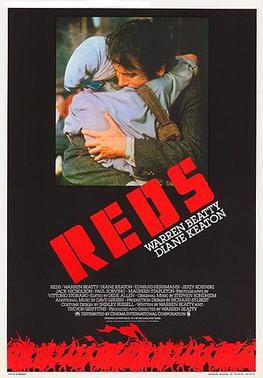
Monday, December 5, 2011

From The Pages Of Workers Vanguard-Black Struggle, the Vietnamese Revolution and the Working Class-From 1960s New Left to Trotskyism-Recollections of a Participant

Click on the headline to link to the International Communist League (ICL) website.

Markin comment on this article:

The subject matter of this article details one leftist militant’s evolution from liberalism, the main starting place for virtually all militant leftists, including this writer (I have seen very few such “conversions” from those who started at the right-wing of the political spectrum), to revolutionary political back in the time of the great 1960s radical jail break-out from Cold War, red scare, white picket fence existence. While the particulars of her story may vary from mine, and others who came of political age during those heady times, the main points are very familiar. That is more evident today as, with the recent emergence of the Occupy movement, some old leftists have “risen from the grave” to show up at the various encampments to tell their “tales” of the struggle back in the day. I do note that there is something of a direct correlation between the distance from those long ago struggles and the size of the heroic role of the speaker in his or her “attic” memories. Worst many, while touting their exploits, have failed, and it can only be a conscious failure, to learn anything from our defeats and, in the end, we were defeated, defeated where it counted in the struggle for state power in order to create the “newer world” we were seeking.

A few other points. Certainly, unlike the speaker in this article, not all of us had a leg up as “red diaper babies” and grew up in a household, a Communist Party household, where the class struggle was articulated at a high level. However I have noted elsewhere when discussing my own youthful leftward political trajectory that I came out of a household that paid more than lip service to the tenets of the radical, plebeian, rank and file Catholic Worker movement of Dorothy Day and Peter Maurras. I have further noted that the way that I found out about the very first political demonstration that I participated in, against nuclear weapons proliferation, at the age of 14 at the Boston Common was one called in the fall of 1960 by SANE that I learned about from an announcement in the Catholic Worker newspaper. Someone once said that lapsed Catholics make the best communists. Maybe there is something to that. However the more germane point is that some spark, some distance memory forgotten spark got each of us going. And that unspoken spark has sustained those of us who are still struggling for these many years so it must have been very powerful.

It can be written down as almost a truism that those of us who came of age in what I call the “generation of ’68,” almost to a person, cut our teeth on the black civil rights movement, or some aspect of the black liberations struggle. In my own case it was through a project to get books to black school children in Alabama sponsored by the local NAACP chapter in the very early 1960s. From there we moved on to aid the sit-in movement in the South and some of us, like the speaker, headed south. A key, a key for everyone who moved off dead-center and did not rest self-satisfied on their laurels, or Martin Luther King’s laurels, after various pieces of legislation were enacted granting black voting rights, was the rise of the Black Panthers, black nationalism in its various guises, and also the break from placid, turn the other cheek non-violence in the struggle for black liberation. Even today that divide among older political activists is apparent between those whose political development never advanced beyond fawning over King’s memory and those who went mano y mano with the black revolutionaries.

To a certain extent the division between liberal and radical perspectives over the black question found it’s parallel in the rise of the anti-Vietnam War movement. (I feel compelled to name the war rather than use the generic “anti-war” so no reader gets confused about which of the myriad wars of the last half century I am referring to.). Those, including so-called revolutionaries, who opted for a mere attempt (unsuccessful) to stop that war rather than to stand in anti-imperialist solidarity with the Vietnamese can be directly held accountable for the lack of a serious anti-imperialist movement today when the American monster is ranging over the planet. It is almost a mantra among older radicals that “we stopped the war.” But, as on the black liberation question, some people refuse, consciously, refuse to learn the lessons of history. As the speaker correctly points out the way that war was stopped was when (finally and not without hesitation and political misdirection) the North Vietnamese/National Liberation Front forces swooped down Highway One in 1975.

The speaker makes many more germane points and tells some nice anecdotes (especially about that GM auto plant “invasion”) about some of the silly stuff we did and many mistakes we made before we got serious about the central role of the working class in the struggle for that “newer world.” Although I do not know if her talk was timed to take advantage of the ferment of the Occupy movement or not but the “lessons” from back in the day that we learned the hard way are ones that movement faces-if it ever gets off its porous dead-center populist collective butt.
********
Workers Vanguard No. 990
11 November 2011

Black Struggle, the Vietnamese Revolution and the Working Class-From 1960s New Left to Trotskyism-Recollections of a Participant

Part One

We print below the first part of a presentation, slightly edited for publication, by Spartacist League speaker Diana Coleman at an October 15 forum in Los Angeles.

I’ve noticed that there is quite a bit of interest in and nostalgia for the activism and struggle of the 1960s. Well, that’s understandable. In the last few years, the world has plunged into an economic crisis unrivaled since the days of the Great Depression. The con men on Wall Street whose financial swindles were central to this collapse were bailed out to the tune of trillions of dollars by the Democratic Party administration of Barack Obama, following in the steps of George W. Bush. The working class, black people, Latinos and the growing mass of the poor have been made to foot the bill, losing their jobs, homes, pensions and virtually anything else that makes life remotely livable.

Every day you read of some new attack on the unions. Every day the fees go up for a college education. U.S. imperialism rampages around the world from Iraq to Afghanistan to Libya, leaving death and destruction in its wake. And particularly here in the U.S., there has been precious little class struggle, social struggle, even student struggle, in response—with the notable exception of the longshore union in Longview, Washington. We are now seeing a little action from these “Occupy Wall Street” protesters, who are basically frustrated young liberals. But the bottom line is: capitalism cannot be reformed. What is needed is a Marxist perspective of international socialist revolution.

What I am going to do today is talk about the 1960s—the last time there was serious social struggle in the U.S.—and why some of us concluded that struggle, even quite militant struggle, is not enough. You need a Marxist working-class perspective and a Leninist vanguard party that can lead the working class forward to seize state power and establish socialized, collectivized property systems around the whole world.

After that long introduction, I’m going to play you an early Phil Ochs song, “I’m Going to Say It Now.” This was probably written not long after the 1964 Free Speech Movement (FSM) at UC Berkeley. It has a lot of the themes of that period—alienation, opposition to “in loco parentis,” etc. It’s a very liberal protest song, but it foreshadows things to come:

“Oh you’ve given me a number and you’ve taken off my name,
To get around this campus why you almost need a plane,
And you’re supporting Chang Kai-Shek, while I’m supporting Mao.
So when I’ve got something to say, sir, I’m gonna say it now....

“I’ve read of other countries where the students take a stand,
Maybe even help to overthrow the leaders of the land
Now I wouldn’t go so far to say we’re also learnin’ how,
But when I’ve got something to say, sir, I’m gonna say it now.”

From the 1960s up to the early ’70s, there developed a distinct generation of American leftists whose experiences were quite different from the preceding generation of leftists, whose main experiences were the Great Depression and the labor struggles of the 1930s. This generation called itself the New Left as opposed to the “old left,” which had been dominated by the pro-Moscow Stalinist Communist Party (CP). This New Left generation, of which I’m a part, makes up a lot of the cadre and leadership of not only the Spartacist League but also our left opponents: the Progressive Labor Party (PL), Revolutionary Communist Party, International Socialist Organization (ISO), Party for Socialism and Liberation (PSL) and Workers World Party (WWP).

Let me first say a word about the 1950s. What a nasty period—the intensely anti-Communist climate after the Korean War, blacklisting, reds driven out of the unions, the Smith Act trials of CP members, deadening conformity, women forced back into the home after World War II. My parents were in the CP, and I remember when I was seven years old the execution of Julius and Ethel Rosenberg, American Communists executed for supposedly betraying the “secret” of the atom bomb to the Soviet Union. When I asked my parents why this was happening, they said it was because the Rosenbergs were “progressives” (a code word for CPers) and Jews. Even then I knew that this described my parents, too. Later, my mother told me that if they, my parents, were arrested, my grandparents would take care of my brother and me. Luckily, it never came to that, but this was my first encounter with the U.S. “justice system,” and I never forgot it.

The Left, Old and New

Under the immense pressure of Cold War anti-Communism, the old left—both the reformist CP and the then-revolutionary Socialist Workers Party (SWP)—suffered major right-wing defections. The SWP lost 20 percent of its membership in the Cochran-Clarke faction fight and the CP lost three-quarters of its membership in 1956-57. These ex-CPers didn’t mostly become right-wingers. Rather they mostly became liberals—they had been voting Democrat for years, anyhow. The hardcore Stalinists later became Maoists and influenced the New Left in the late ’60s, but I’ll get to that later.

These losses were heavily concentrated among the parties’ active trade unionists. This purging and defection of reds from the labor movement in the ’50s was the single most important negative factor shaping the outlook of what would become the New Left. When young political activists, white and black, entered the political scene during the civil rights movement, they encountered a labor movement with no left wing sharing their views on racial oppression or U.S. militarism. The labor bureaucrats were militant anti-Communists who had gotten their posts by working hand in glove with the government in driving the reds out of the unions and were gung ho for all of U.S. imperialism’s dirty wars.

No surprise there, but it was not just the bureaucracy. When I got a union job in the late ’60s after the New Left finally became interested in the working class, there wasn’t anybody older than me in the unions who had ever been a leftist. So what developed among the New Left was a real petty-bourgeois, anti-working-class elitism. For them, “those workers” were all “bought off” with their high wages, good union jobs, fancy pensions. Today that seems like a joke, but that was the view at the time.

Two things really brought the McCarthy period to an end: the civil rights movement and the Cuban Revolution. Castro and Che were not seen as hardline Stalinists. Well, originally they weren’t—they were petty-bourgeois nationalists. And, indeed, young would-be leftists often identified with them against the U.S. on a democratic basis of “national liberation” rather than on the basis of socialism and the dictatorship of the proletariat.

On the home front, in the American South black people faced legal segregation and were deprived of basic rights—a fact well-publicized by the Soviet Union. The Southern Jim Crow system was based on police/Klan terror against atomized rural sharecroppers, and it had become increasingly outmoded as industrialization in the South around World War II drew blacks into the working class and the Southern cities. By the late 1950s, black anger at Jim Crow segregation had given birth to the civil rights movement, shattering the climate of Cold War McCarthyism and increasingly polarizing American society. It’s not as well known, but by the early ’60s there were huge demos in the North, too: boycotts of segregated schools, rent strikes against ghetto slumlords, protests against segregated housing and racist police brutality. These culminated in the late ’60s in a series of massive ghetto rebellions.

Radicalization of Civil Rights Militants

The first group I ever joined was the Congress of Racial Equality (CORE) in 1963-64 in San Francisco. I participated in various mass demos protesting job discrimination against black people—at the Sheraton Palace, at Lucky’s (now Albertsons) and on Auto Row. In retrospect, that last one seems kind of weird—for the right of blacks to be car salesmen? But these demos were huge, drawing thousands. The following summer, I decided to go down South for the second Student Nonviolent Coordinating Committee (SNCC) Freedom Summer. This was the year after civil rights activists Michael Schwerner, Andrew Goodman and James Chaney had been killed, but being 19 I wasn’t as fearful as I probably should have been.

When they tell the official story of the civil rights movement, Martin Luther King was the undisputed leader whom everyone loved and followed. It’s not so! King’s vaunted nonviolence was really a way of trying to keep the movement liberal, respectable, reformist. His whole strategy was to appeal to the liberal Northern establishment to, please, help out black people. Pressuring the Democrats was to remain King’s consistent strategy throughout his life.

Seeking to refurbish its image, the bourgeoisie eventually acquiesced to the demand for legal equality in the South. At the same time, the federal government sought to restrain the most militant elements of the civil rights movement and usually did little to prevent the violent suppression of civil rights activists by Southern authorities, often collaborating in that suppression. This could not help but bring the question of the class nature of the capitalist state, as an organ of repression, to the fore. SNCC was formed under the auspices of MLK’s Southern Christian Leadership Conference. After some hard experiences in the South with the cops, Klan and Democrats (who ran the South, after all), SNCC moved to the left, increasingly frustrated with and eventually hostile to the Northern liberal establishment—and King himself.

When I was there in the summer of 1965, the Los Angeles Watts upheaval broke out. Martin Luther King said that “as powerful a police force as possible” should be brought to L.A. to stop it. SNCC activists on my project cursed King for that. SNCC had broken with mainstream liberalism but had not yet definitely latched onto black nationalism. I could see that SNCC was having a total political identity crisis, but I sure didn’t have the answers. By this time, I hated the Democrats and was convinced that racial oppression was integral to the capitalist system and wasn’t going to go away just because black people could ride at the front of the bus. So I decided I should spend some time in Berkeley checking out the socialist groups.

The early years of the 1960s in the South were a key moment. If the SWP, which had been the Trotskyist party, had remained a revolutionary party and concentrated its forces in the Southern civil rights movement, it may well have won to Trotskyism a large fraction of those young black militants who eventually became black nationalists. That would have really changed the political scene. But by the early 1960s, the SWP had lost its revolutionary bearings and tailed non-proletarian class forces. Domestically, it abstained from the Southern civil rights movement. Internationally, the SWP was uncritically cheerleading for the petty-bourgeois radical-nationalist leadership of the Cuban Revolution.

Trotskyists should have been calling for the unconditional military defense of the Cuban deformed workers state and, at the same time, calling on the Cuban proletariat to establish a regime of workers democracy by sweeping away the Castroite bureaucracy through a political revolution. But the SWP refused to criticize Castro. These two questions—Cuba and the black question—which had decisively broken open the McCarthy period, were exactly the two questions the SWP couldn’t deal with. In the process, they abandoned the centrality of the working class and the necessity of building Trotskyist parties in every country.

It is during this period that the Spartacist League originated as the Revolutionary Tendency (RT) opposition within the SWP, fighting on these two questions. In an August 1963 document, “The Negro Struggle and the Crisis of Leadership,” the RT wrote: “We must consider non-intervention in the crisis of leadership a crime of the worst sort.” After being expelled from the SWP, the small Spartacist forces intervened in the civil rights movement in both the South and North. Look at Spartacist Bound Volume No. 1—the SL, founded in 1966, was intervening on the black question all the time and calling on militants to break with the Democratic Party, no less than the Republicans a capitalist party. The call for a Freedom Labor Party was an axis to link the exploding black struggle to the power of labor, North and South. In the mid ’60s, Spartacists were arguing the right line but lacked the numbers and, more importantly, the acquired political authority to decisively influence the internal factional struggles in SNCC. So the crucial moment was lost.

The Rise of Students for a Democratic Society

I could say a lot more about the civil rights movement, but I want to talk about how this massive ferment influenced the student movement. The most organized expression of the New Left was Students for a Democratic Society (SDS). Of course, that sentence is sort of a contradiction in terms given how deliberately disorganized SDS was: participatory democracy, every chapter going its own way, etc. Restarted in 2006, the new SDS is a liberal campus group that combines parochial campus activism with Democratic Party lesser-evilism. We have an excellent article about SDS headlined “From Tepid Liberalism to Radicalism and Back Again” (WV No. 927, 2 January 2009). The original SDS went from liberalism to radicalism; the new group is running the film in reverse.

In well-publicized interviews, leaders of the new SDS push the myth that Communism destroyed the first SDS and call for such leftists to stay out of SDS. WWP and Freedom Road Socialist Organization (FRSO) work in SDS anyway, but this says less about SDS’s “non-sectarianism” and more about these reformists’ toothless politics and their own lesser-evilism. Here in L.A., during the 2008 election we saw FRSO as part of SDS busily holding a “no to McCain” campaign rally at UCLA, which in plain English meant “yes to Obama.” The new SDS’s “democratic” and “anti-authoritarian” rhetoric recapitulates the Cold War anti-Communism that the first SDS broke from.

The original SDS began as the Student League for Industrial Democracy (SLID), the student affiliate of the League for Industrial Democracy (LID). Moribund by 1960, the LID had served as a handmaiden of the U.S. government in the left and labor movement. Populated by “State Department socialists,” such as Norman Thomas and Michael Harrington, the LID also counted among its members Victor and Walter Reuther—the labor traitors who rode to power in the United Auto Workers by purging Communists from the union in the 1940s—and Sidney Hook. Once close to the CP, Hook turned repentant and became a staunch supporter of American “democracy.” Hook was a leading light in the Congress for Cultural Freedom—a CIA-funded operation devoted to counteracting the appeal of Communism and the Soviet Union. These types are the ones for whom the term “CIA socialist” or “State Department socialist” was invented.

But the youth were getting a little restive. In 1960, the Student League for Industrial Democracy changed its name to Students for a Democratic Society and began to grow. In 1962, in response to Kennedy’s Bay of Pigs invasion of Cuba—a failed attempt to overthrow the Cuban Revolution—SDSers posed the question: “Whether our foreign policy had really changed from its old imperialist ways?” Obviously not! The SDS 1962 Port Huron Statement took tiny steps away from anti-Communism, opining that “the American Military response has been more effective in deterring the growth of democracy than communism.”

Even these small steps away from McCarthyism were too much for the LID elders, who hauled the SDS leadership into a trial for not being anti-Communist enough, then cut all funds to SDS and changed the locks on the SDS office. I recommend Kirkpatrick Sale’s book SDS (1973) if you want to know all the details. After much organizational wrangling, SDS and the LID patched things up. Although moving away from the dried-up LID social democrats, SDS had not fundamentally broken from lesser-evil Democratic Party pressure politics, drawing disaffected youth back into the two-party shell game and perpetuating illusions in bourgeois democracy. In the 1964 elections, a wing of SDS campaigned to go “part of the way with LBJ” (a reference to Lyndon Johnson) instead of the official Democratic Party slogan: “All the way with LBJ.”

But the times they were a-changin’, as the song by Bob Dylan said. In 1964 at UC Berkeley, the Free Speech Movement broke out in response to the administration’s attempts to censor political life on campus by barring reds and other civil rights activists (“outside agitators”) and restricting the activities of student organizations. What happened was that a young activist from CORE, Jack Weinberg, had set up an unauthorized literature table in Sproul Plaza. For this terrible crime, he was arrested. I will just comment here that considering all the trouble and hassle the SL has these days in setting up literature tables on campuses for our sub drive, one has to conclude that not too much has changed!

In this case, 3,000 students converged on Sproul Plaza and blocked in the police car. For the next 32 hours, the police car served as an impromptu podium for those defending the right of students to “free speech.” Facing reprisals from both the liberal campus administration and Democratic governor Pat Brown—the father of the current governor—FSM activists defended their right to “hear any person speak in any open area of the campus at any time on any subject” (see “The Student Revolt at Berkeley,” Spartacist No. 4, May-June 1965). The FSM’s victory fueled further student radicalization across the country and undermined illusions in the good offices of campus administrations and the Democratic Party.

A funny addendum here: Jack Weinberg, the guy in the police car, was the one who said, “Don’t trust anyone over 30.” I don’t know if right then, but certainly within a few years, he was in the International Socialists (the predecessor to the thoroughly reformist ISO). And by 1984 on the 20th anniversary of the FSM, the SF Chronicle reported that Weinberg and Mario Savio, the best-known leader of the FSM, were both registered Democrats. So they sure weren’t trustworthy when they got older.

The Impact of the Vietnam War on the Left

Meanwhile, the escalation of the imperialist war in Vietnam meant more youth were being drafted, adding a direct material interest to the moral outrage felt by student activists opposing American imperialist aims. In 1965, SDS initiated the first nationwide protest against the Vietnam War. To many LID liberals, protesting a war against Communism was as bad as supporting the Communists outright. Furthermore, SDS’s call for the march included no anti-Communist exclusion clause. With a rush of new members and continued radicalization, SDS would abolish its anti-Communist exclusion clause at its 1965 summer convention, and soon afterward it split from LID entirely.

Now, I didn’t go to Berkeley from ’64 to ’68. Maybe I should have, but when I had to make my choice in ’62, Berkeley was politically dead as a doornail. I viewed Berkeley as huge and soulless, so I went to a small liberal arts school in New Mexico instead. But this did give me a sense of how quickly things can change, especially among the petty bourgeoisie. One minute Berkeley was all bouffant hairdos and “frat rats.” The next time I went there on summer vacation, it was a hotbed of student activism and everybody looked like a hippie. And the people were all the same, I could see that.

That first SDS-organized national antiwar march took place in Washington, D.C., in the spring of 1965. It got 20-25,000 people, which totally amazed SDS. At the invitation of the SDS leaders, the rally was addressed by two liberal U.S. Senators. One of them denounced the “expansionist” policies of Communist China and called for a negotiated settlement in Vietnam. A few years later, it would be inconceivable for SDS to invite Democratic Senators to their antiwar protests, and anyone who spoke of Chinese expansionism would have been booed off the stage.

Let me comment first that many leftists and liberals claim that the Vietnam antiwar movement ended the war in Vietnam. No way! The Vietnamese won on the battlefield—that’s what ended the war. But this kind of liberal-pacifist antiwar movement has nevertheless become the model for all of the reformist left’s subsequent antiwar demos. If you don’t believe me, go to any PSL/ANSWER demo, where you will find exactly these same reformist politics.

We stand for the military defense of the peoples of Iraq and Afghanistan against the brutal U.S. imperialist occupiers. As revolutionary Marxists, we side with oppressed countries against the predatory imperialist powers. But unlike in Iraq, Afghanistan and Libya, there was another element at work during the Vietnam War: there was a socially progressive character to those who fought against the imperialist butchers. The heroic Vietnamese had carried out a social revolution, albeit bureaucratically deformed, overturning capitalism in the North, and they were fighting to extend it to the South. We demanded the immediate and unconditional withdrawal of U.S. forces and called for the military defense of the National Liberation Front (NLF) and North Vietnamese forces, raising revolutionary slogans such as “Victory for the Vietnamese Revolution! No negotiations!” and “All Indochina must go Communist!”

The Split in the Antiwar Movement

As opposition to the war grew, more and more young activists stopped chanting for “peace” and began calling for “Victory to the NLF!” After all, the liberal establishment, including the Democratic president Johnson, backed the imperialist adventure in Vietnam. This drove the radical student movement to the left and opened it to revolutionary politics. Soon those who had been calling for “part of the way with LBJ” were chanting: “Hey, Hey, LBJ, how many kids did you kill today?”

Here is a description of SDS circa 1967 from the novel Vida by Marge Piercy, who had been in SDS and is a bourgeois feminist. She refers to the group SAW, but I believe what she is describing is SDS:

“Every person in SAW had their own politics—anarchist, liberal, communist, democratic-socialist, syndicalist, Catholic-worker, Maoist, Schactmanite [sic], Spartacist—but what mattered was the politics of the act.… Everyone was accommodated in the vast lumbering movement. Vida was content to be of the New Left, without a fancier label. All that hairsplitting—that was what the poor Old Lefties had sat around doing in dreary meetings in the fifties nobody else attended while the resident FBI agent took notes. Now they knew that everything must be done and they must speak to everyone, through the poetry of the act, through the theatre of the streets,… SAW was a fiercely, totally democratic organization, open to anyone with or without the low dues, with an elected leadership usually galloping in one direction while the members marched in another. Chapters did as they pleased and projects happened because enough people did them. Program was hotly debated and then often coldly ignored, unless it really was up from the grass roots. SAW was uncontrollable and lush as a vacant-lot jungle.”

Spartacists sporadically intervened into SDS in the mid ’60s, and all I can say is I don’t envy the comrade trying to do an intervention into that “lush jungle.”

Now, there was a left-right split in the antiwar movement just as there had been in the civil rights movement, where MLK had been the right wing. SDS was the left here, and the right wing was the CP and the once-Trotskyist SWP. While the CP continued to preach its class-collaborationist program of electoral support to lesser-evil Democrats, the SWP became the main organizer of peace crawls designed to cater to liberal bourgeois spokesmen—that is, popular-frontist, class-collaborationist formations based on a liberal bourgeois program. One thing that the SWP was adamant on was that these rallies and demos absolutely could not call for the Vietnamese’s military victory. Oh no, that would upset the Democrats—so the slogans had to be kept to “Out now” or “Bring our boys home!”

As the war dragged on, there were some Democrats who thought the U.S. was spending too much on napalm and Agent Orange for Vietnam when it should be building its nuclear arsenal to fight the real danger, the Soviet Union. So Democrats became a regular feature of these antiwar rallies. Often these now-antiwar Democrats (bourgeois defeatists) were viciously anti-labor. You can easily imagine how violently anti-Spartacist the SWP would get when the SL called for “Bourgeoisie out of the antiwar movement” and “Labor strikes against the war!”

This came to a head at a 1971 conference in New York City. SL comrades attempted to put forward a motion to exclude ruling-class politicians from the conference. They said, this is an antiwar conference—how can you have representatives of the ruling class that’s prosecuting the war? When the SWP would not entertain the motion, our comrades together with supporters of PL and SDS heckled Democratic Senator Vance Hartke during his speech. Comrades chanted, “Labor strikes against the war” when Victor Reuther began his speech. The SL didn’t attempt to drive them off the stage or anything like that. In response, the SWP went ballistic and sent their goon squad on a vicious assault against the protesters, some of whom were beaten, with one PL member reportedly thrown through a glass door. Assisting the SWP thugs were the minions of Tim Wohlforth’s Workers League, now the Socialist Equality Party.

But it wasn’t just the SL versus the SWP. Literally thousands of radicalized students were repelled by the SWP’s reformism and pacifism. I came back to the Bay Area in late 1968, and for one of those Spring Mobilizations (in ’69 or ’70) I heard that New Leftists in Berkeley were setting up an “anti-imperialist coalition” to march in the SWP-initiated peace demo. This sounded great to me. Like many others, I hated the “give peace a chance,” liberal, pro-American quality of these demos. I had decided that “our boys” were the ones fighting on the other side, and I was rooting for them. When this anti-imperialist contingent marched up, it looked like the SWP marshals were going to physically exclude us. But I guess that they decided that the contingent was too large and doing so would create too much of a scene.

The SWP sure gave Trotskyism a bad name. I identified Trotskyism with the worst kind of liberal reformism. They were always chanting to keep it “peaceful, legal.” My friends and I were chanting, “Ho, Ho, Ho Chi Minh, the NLF is going to win!” This was a two-edged development, though, because let’s be clear that we were calling not only for military but also political support to the Stalinist bureaucracy in Vietnam.

By 1968, SDS had hundreds of campus chapters around the country. There was massive ferment on the campuses, particularly after the student strike, building occupation and massive arrests at Columbia University protesting racism and the Vietnam War in the spring of 1968. In his book, Sale gives a quote from the bourgeois press of this time on SDS:

“These youngsters, organized in the Students for a Democratic Society, (S.D.S.), are acting out a revolution—not a protest, and not a rebellion, but an honest-to-God revolution. They see themselves as the Che Guevaras of our society, and their intention is to seize control of the university, destroy its present structure, and establish the ‘liberated’ university as the redoubt from which to storm and overthrow ‘bourgeois’ America. This is what they say they are doing—they are the least conspiratorial and most candid of revolutionists—and this is what in fact they are doing.”

Noting that this gave SDS a whole lot of credit, Sale goes on to say: “The most ardently resistant SDSer couldn’t have put it better—and even he wouldn’t have been so convinced.”

Then there was the Democratic National Convention in fall 1968. Most of the protesters opposed the Democratic Party as a capitalist party presiding over social injustice. As Sale describes, SDS activists rejected “as usual the idea of mass marches but [were] doubly scornful of any project mired in electoral politics.” SDS members propagandized and organized actions against the Democratic Party and raised general hell in the city. For that, they were arrested, savagely beaten and one young man was shot to death, all under the aegis of the Democratic Party city administration of the infamous Daley machine. It had a huge impact nationally.
********
Workers Vanguard No. 991
25 November 2011

Black Struggle, the Vietnamese Revolution and the Working Class-From 1960s New Left to Trotskyism-Recollections of a Participant

Part Two

We print below the second part of a presentation, slightly edited for publication, by Spartacist League speaker Diana Coleman at an October 15 forum in Los Angeles. Part One appeared in WV No. 990 (11 November).

At the same time that Students for a Democratic Society (SDS) was growing, the ghettos were exploding. With the civil rights movement unable to change the hellish conditions of black life in the North, there was a rising level of frustrated expectations. There were a whole series of ghetto upheavals in the mid to late ’60s that were repressed with extreme police/National Guard violence. Young militants were breaking from the Democratic Party and the liberal pacifism of MLK. The Black Panthers (BPP) were the best of a generation of young black activists who courageously stood up to the racist ruling class and its kill-crazy cops. Unfortunately, the Panthers, along with most of the New Left, rejected the organized working class as the agent of black freedom and socialist revolution. The Panthers looked to black ghetto youth as the vanguard of black struggle.

The underlying ideology of the Panthers was that the most oppressed are the most revolutionary. But in fact the lumpenproletariat in the ghetto, removed from the means of production, has no real social power. The Panthers’ glorification of ghetto rage and rejection of the Marxist understanding of the role of the working class left them more vulnerable to state repression. They faced a systematic government campaign of assassination, police provocations, frame-ups and imprisonment, including through the FBI’s notorious Counter-Intelligence Program. Mumia Abu-Jamal, a former Panther and talented journalist known as the “voice of the voiceless,” has been on death row on frame-up charges for decades now. In the face of this repression, the Panthers turned to the right, into the orbit of the reformist Communist Party (CP), its lawyers and concomitantly the Democratic Party.

But let me give some quotes from Black Panther leader David Hilliard’s speech to an antiwar demo in San Francisco in the fall of 1969. It says something that by ’69 and ’70 the speakers at these mass marches included a Black Panther and the Democratic mayor of SF. Hilliard says he had been warned by the BPP leadership not to curse and not to get mad because that would alienate the white liberals, but as you can see he did both. Like Hilliard, I usually try not to curse in speeches, but I will read this quote as it appeared in Phil Foner’s The Black Panthers Speak (1995):

“There’s too many American flags out here and our Minister of Information, Eldridge Cleaver, says that the American flag and the American eagle are the true symbols of fascism.…

“So then, we would like to ask the American people do they want peace in Vietnam. Well, do you? (audience) ‘Yes.’ Do you want peace in the Black communities? (audience) ‘Yes.’ Well you goddamned sure can’t get it with no guitars, you sure can’t get it demonstrating. The only way you’re going to get peace in Vietnam is to withdraw the oppressive forces from the Black communities right here in Babylon.”

As the crowd became restive and some started to boo, Hilliard got mad:

“We say down with the American fascist society. Later for Richard Milhous Nixon, the m-----f----r. Later for all the pigs of the power structure. Later for all the people out here that don’t want to hear me curse.… Because Richard Nixon is an evil man. This is the m-----f----r that unleashed the counter-insurgent teams upon the BPP.… This is the man that sends his vicious murderous dogs out into the Black community.… We will kill Richard Nixon. We will kill any m-----f----r that stands in the way of our freedom. We ain’t here for no goddamned peace, because we know that we can’t have no peace because this country was built on war. And if you want peace you got to fight for it.”

While the liberals were booing, my friends and I were cheering his opposition to pacifism. The Panthers had become broadly popular. There was a real convergence between the white left and the black left. Black people are not a separate nation but an integral part of American class society while at the same time forcibly segregated at the bottom as a race-color caste. Hilliard was subsequently brought up on charges for threatening the life of the president. Later the charges were dropped—perhaps because it was obvious that no one plans an assassination attempt in a speech in front of upward of 150,000 people in Golden Gate Park!

The Limits of Student Radicalism

Just as the Panthers came up against the dead end of their lumpen vanguard strategy, SDS came up against the dead end of student vanguardism. As I said earlier, the New Left had been very anti-working-class. Trotsky’s biographer Isaac Deutscher, who considered himself a classical Marxist, toured the U.S. in 1966, speaking at Vietnam antiwar protests. He was appalled by the intellectual elitism he found among young radicals who considered themselves anti-capitalist. Deutscher said:

“Do you really take such a contemptuous view of your working classes that you think that you alone are so sensitive or so noble as to be dissatisfied with this degrading society and that they cannot find it in themselves to be dissatisfied? Do you really believe that they are so much more prone, and by nature conditioned, to be corrupted by the meretricious advantages of this war-flourishing capitalism than you are?”

Well, that is pretty much what many did think. Deutscher also said something to the effect that he would exchange all the peace marches for one good dockworkers strike. Most of the New Left didn’t understand that, either.

What happened was that the very success of the student strikes demonstrated their impotence. In the spring of 1970, President Nixon ordered American troops in South Vietnam into neighboring Cambodia. In the ensuing campus protests, the Ohio National Guard killed four students at Kent State. Ten days later, cops killed two black students at Jackson State. Of course, the second murderous assault didn’t get as much coverage, black life being cheap for the bourgeoisie, then as now. These events triggered protests involving four and a half million students—half the U.S. student population—and many colleges remained shut through the rest of the semester. But this did not stop the Vietnam War.

If this protest demonstrated the impotence of “student power,” the May-June 1968 events in France demonstrated the actual power of the working class. Leftist student protest there triggered a workers general strike that shook the de Gaulle regime to its core. France was engulfed in a pre-revolutionary crisis that the French CP barely managed to stabilize and sell out. The incipient workers revolution in France reaffirmed in real life the revolutionary potential of the working class. This made a lot of us think twice, especially since there was a strike wave in the U.S. in ’69 and ’70—a General Electric strike, a nationwide postal wildcat strike (the first major strike against the federal government), a Midwest Teamsters wildcat and a General Motors strike.

Needless to say, this was not news to the Spartacist League. As Marxists, the SL understands that the motor force of history is the class struggle—today between the capitalist class and the proletariat. The capitalists own the means of production like the land, mines and factories, while the workers have nothing but their labor power, which they sell to the capitalists in order to live. Because the working class turns the wheels of production, it has the social power and the organization to overthrow the capitalist rulers. But the working class has to understand its power in order to use it. For that you need a revolutionary vanguard party that can bring communist consciousness to the proletariat.

A key prop of capitalism is to keep the working class divided along ethnic and racial lines, which in this country means foremost the segregation of black people. The SL fights for black freedom on the program of revolutionary integrationism: the working class must fight against all instances of racist oppression and discrimination, while at the same time genuine equality for black people in the U.S. will only come about through socialist revolution that smashes capitalism. There will be no socialist revolution without the working class taking up the fight for black freedom.

Our model is the Bolshevik Party of V.I. Lenin and Leon Trotsky, which led the October Revolution in Russia in 1917. This was the greatest victory for the working people of the world: it gave the program of proletarian revolution flesh and blood. The proletariat seized power and created a workers state based on collectivized property and soviets (workers councils). The young workers state eliminated laws discriminating against women and homosexuals and recognized the right to self-determination of the many nations oppressed under tsarist/capitalist rule. The Soviet government proclaimed the right of working people to jobs, health care, housing and education.

The Russian Revolution was not made solely for Russia but was seen as the opening shot of a necessarily international struggle of labor against the rule of capital. It was an inspiration to the oppressed masses of the world and had a direct impact on the struggle of black people in the U.S. The American rulers have always seen a connection between the Russian Revolution and the struggles of black people in the U.S.—and rightly so. The Bolshevik Revolution was popular among wide layers of urban blacks and even among moderate black newspapers and organizations of the time. “Black and Red” is the American bourgeoisie’s greatest fear.

The SL attempted to convey some of this understanding in various leaflets written at the time and in sporadic interventions into SDS. In 1967, as young radicals turned to confrontation with the cops, the SL wrote: “Personal sacrifice can never substitute for a mass movement…this does not mean reverting to the simple pacifist humanitarianism of the official peace movement in order to get middle-class liberals on the picket line. What it does mean is tapping the fundamental discontent and conflicts in American society; the black ghetto uprisings and rash of militant strikes indicate the depth and explosiveness of this discontent.”

The SL fought for a one-day general strike and raised the slogan: “Labor strikes against the war!” The SL also controversially opposed the draft resistance campaign and insisted that if drafted, young radicals should go. In a position paper put forward in SDS, we argued that the voluntary purging of radicals from the army would only strengthen the ideological purity and political reliability of the army. We said that young militants should go with working-class and minority youth and continue their political agitation in the army.

Stalinism Versus Trotskyism

Another question that the SL took up in this period was the question of Maoism-Stalinism. The New Left didn’t want to deal with these old, musty debates, but these questions come after you. Stalinism versus Trotskyism, the nature of the workers states—these questions cannot be avoided. SDS liberals of the mid 1960s were poring over Mao’s “Little Red Book” of quotations by 1968.

One thing that caused this change was the tremendous authority of the Vietnamese Stalinists. They looked like they were going to and then did beat U.S. imperialism, and they made no bones about being old-line Stalinists. Since Ho Chi Minh didn’t claim to have his own ideology, it was Maoism that was the beneficiary of New Leftists looking for some kind of “new” Marxism that would be more radical than old-line Soviet Stalinism and its practice of “peaceful coexistence” with U.S. imperialism, which meant betraying social and class struggles internationally. China was under the gun of U.S. imperialism, so the Chinese Communist Party leadership was talking more left at that moment.

On a sociological level, some of the Stalinists in the American Communist Party who hadn’t simply quit to become liberals became Maoists—for example, Progressive Labor (PL)—and influenced the New Left. Maoism did not represent a break from Stalinist class collaboration but rather was what we called “Khrushchevism under the gun.” (Khrushchev was the Soviet premier at the time.) Seeking to win young radicals to a Trotskyist program, the SL exposed the repeated attempts by the Chinese Maoists to form a reactionary anti-Soviet bloc with U.S. imperialism at the expense of social struggles around the world. This alliance was sealed by Mao’s 1972 meeting with U.S. war criminal Richard Nixon in Beijing as American warplanes were raining death and destruction on Vietnam.

In the article “NLF Program: Fetter on Victory” (Spartacist supplement, May 1968) about the National Liberation Front (NLF) the SL wrote:

“There has been an understandable but nevertheless unfortunate tendency on the part of the American left to idealize Ho Chi Minh and the leadership of the NLF, and for radicals to turn their correct demands for military victory against imperialism and its puppets into uncritical political support for these leaders and their politics. This is a grave error, for not only do these would-be revolutionaries not understand the deformities of those they support—and are extremely likely to feel personally betrayed when the inevitable occurs—but are likely to carry over the Stalinist hallmarks of class-collaboration and murderous opportunism into the American revolutionary movement. It is vitally necessary to keep in mind that Ho Chi Minh and his co-thinkers have already sold out the Vietnamese revolution twice before.”

This article also presciently predicted that in the best of circumstances the “NLF will simply bypass its program and will then set out to make a limited, distorted and bureaucratic revolution from the top.” That is exactly what they did. And this is also why the SL began to raise my favorite slogan of all time: “All Indochina Must Go Communist!” This slogan cut not only against liberal pacifism at home but also against the limits of Vietnamese Stalinism. Uniquely on the left, today we uphold the same Trotskyist program of unconditional military defense and proletarian political revolution for the remaining bureaucratically deformed workers states of China, North Korea, Vietnam, Cuba and Laos.

And that point from the Spartacist article, about the carrying over of class collaborationism and opportunism into the American movement, was so true. One of my old friends went to a conference in Vancouver in ’67 or ’68 and met with Vietnamese women, not only women in the CP of Vietnam but also women combatants in the NLF of South Vietnam. Of course, she was very impressed by the presence of these women who were actually fighting U.S. imperialism with gun in hand. And, of course, the Americans wanted advice on how to build an American revolutionary movement.

But the Vietnamese kept steering the conversation away from that subject. Instead, all the Americans got were reformist clichés about building the biggest possible movement on the broadest possible basis—watch out when people start telling you that, it’s code for class collaboration—and helping elect whomever would help end the war, i.e., the Democrats, who else. My friend was very disappointed by this, as were the people like myself whom she told this to. We couldn’t figure it out and filed it away as one of those things that you better not think about too hard.

The New Left Turns to the Working Class

I do want to give one example of the New Left meets the working class from my own history. In 1969, I was in a women’s liberation group, and we were so impressed by the working-class struggle in France and so frustrated by student struggles and peace marches that we decided that we had to get out of Berkeley and organize the workers. We got together a group of men and women, husbands, boyfriends, friends in the movement (as it was called). We were planning on organizing white workers because we were very much imbued with the black nationalist idea of polyvanguardism—that blacks should organize blacks, whites should organize whites, and so on.

We did a demographic study of the Bay Area and decided that the place where we could find the most young white workers was Hayward. What a boring suburb, but we all moved there, 20 or 30 of us. Later, one of our people got a job at the General Motors auto plant in Fremont, and we decided that we would start a radical caucus there. We thought you had to do something flashy to get working people’s attention, start off with a bang. So we printed up a leaflet about the birthday of BPP leader Huey Newton, which we thought was very appropriate to jolt white people out of their racism. And there were a lot of blacks working there, too, who probably did know who Huey Newton was.

We took the plant’s tour train with the leaflets stuffed under our coats. At a pre-arranged moment, we leapt off and ran around like maniacs, handing out leaflets and throwing them in the cars. Whether the workers were convinced by our politics, I don’t know, but they thought it was wild. The bosses stopped every assembly line in the plant and proceeded to chase us around. Workers hid us and showed us where to go. They figured that as long as we were there the lines would stay down. Assembly line work is hard and boring, and we were an interesting diversion that had never been seen before. It took a long time before management could round us up. They didn’t even think to stop us when we announced that we were leaving and walked out and got in our cars.

Meanwhile, during this exact period in ’69, SDS was splitting due to the real inadequacy of New Left politics in the face of the general social crisis of the late 1960s. In the summer of 1969 at the SDS National Convention in Chicago, facing the prospect of PL’s positions gaining a majority, a clique within the SDS National Collective (NC), including Bernardine Dohrn and Mike Klonsky, engineered a split, lining up Black Panthers and others to race-bait PL supporters. When this didn’t work, the NC splitters led their followers out of the conference.

The SL remained with the PL-led Worker-Student Alliance wing of SDS due to its orientation, however crude, to the proletariat. The SL referred to PL, more leftist at this time than now, as “Trotskyists with a prefrontal lobotomy.” The SL issued position papers within SDS, arguing for a Leninist vanguard party to bring the power of the working class to bear in the interests of all the oppressed (reprinted in “‘Racial Oppression and Working-Class Politics’,” WV No. 897, 31 August 2007, and “‘The Fight for Women’s Liberation’,” WV No. 910, 14 March 2008). PL was vulnerable to our Trotskyist criticism, but ultimately they clung to their “minimum/maximum program,” combining “communist” rhetoric with reformist practice.

The SL’s Trotskyist program won a hearing within SDS, and the forebear of today’s Spartacus Youth Clubs was founded as the Revolutionary Marxist Caucus (RMC) in SDS in early 1970. The RMC sought to win radical students to a revolutionary, internationalist and proletarian communist program. This included fighting for an understanding of the lessons of the 1917 Russian Revolution and Trotsky’s understanding of the material roots of its bureaucratic degeneration.

The Futile Strategy of the Weathermen

Even in Hayward, we felt the effects of the SDS split. We had been organizing the working class for at least six months and had put out a ton of leaflets. Actually, there was more interest in our politics than you might imagine, the working class being very restive. We did some high school organizing at a working-class high school in Hayward. After passing out some leaflets protesting the war in Vietnam, we stood outside the school with a bullhorn and shouted: “Come out of your prisons!” The most surprising part was that several hundred did, and we led a march all over Hayward.

But some of the people in the Hayward Collective began to feel that the working class just wasn’t responding sufficiently. So they got ahold of the Weathermen, who were part of the anti-PL side of the split in SDS. The Weathermen—named, I believe, after a Bob Dylan song which includes the line: “You don’t need a weatherman to know which way the wind blows”—had a policy of confrontation with the armed forces of the state. They practiced terrorism in the name of Third World nationalism.

Lacking a proletarian strategy, and desperate to do something, the Weather Underground would conduct acts of individual terrorism that were self-defeating and, more times than not, far more dangerous to themselves than to the bourgeoisie. Such a program was no break from liberalism but a logical conclusion, in extremis, of the liberal program of bearing “moral witness” to government crimes. The Weathermen’s strategy was futile. At the same time, their targets were representatives of imperialism and capitalist oppression. While politically opposing the Weathermen, the SL fought for their defense, insisting that they were “an integral part of the radical movement.” The rest of the left turned its back on them.

The Weathermen came to visit the Hayward Collective to win us to their variety of Third World nationalism, arguing that the American working class was totally bought off and could never make a socialist revolution. They presented their views, and then they sang us some songs. You think I’m kidding. Believe me, I’m not. First they sang, “We all live in a Weatherman machine” to the tune of “Yellow Submarine.” Then they sang “Bad Moon Rising” by Creedence Clearwater Revival. “Looks like we’re in for nasty weather” sort of captured their perspective. Those of us who believed in the revolutionary potential of the American working class decided maybe our theme song should be the Creedence song “Lodi” about the small, remote California town, as in “stuck in Lodi again” boring. This forum seems to include a lot of discussion about music—maybe it should have a soundtrack to go with it.

Since there was a minority of us who were not convinced, several others from our collective and I went to meet Bernardine Dohrn, a leader of the Weathermen who was on the “Ten Most Wanted” list in the U.S. I had seen her “Wanted” picture up in the local post office. We were supposed to meet on Telegraph Avenue in front of Cody’s Bookstore. Dohrn was late, and everyone was worried. She claimed that she had been up the street stealing a pair of earrings. Meeting in such a public place as Telegraph Avenue was dumb enough, but even I thought that was crazy when you were underground. But it was all a part of the “outlaw” image.

Finally, we sat down to meet, and she asked me what I was going to do when the North Koreans sailed in to Puget Sound, presumably to take over since the American working class was supposed to be so bought off. Perhaps not answering this on a very deep level—and I was kind of intimidated since she was a big shot—I just said that I didn’t think that was going to happen. She said that just showed what an American-chauvinist racist I was. So I didn’t join the Weathermen, and Dohrn and her hubby Bill Ayers eventually went back to Chicago, where they hang out in liberal circles and know such unsavory people as Barack Obama.

Breaking with Feminism

The women, two others and myself, who didn’t join the Weathermen then began a sort of feminist working-class organizing collective in East Oakland together with women we had known from the Berkeley Women’s Liberation group and others. Why we became more feminist, since the Hayward Collective certainly did not split along gender lines, I’m not quite sure. In any case, we had our East Oakland Women’s Collective, and we worked with other women to set up a citywide Oakland Women’s Liberation Group, which probably included a couple hundred women over the years. I was among those who went to work in a glass-bottle-blowing factory in East Oakland, and others went to work as operators at the phone company. There are a million more ridiculous stories from this period—“socialist feminists meet the working class”—but you don’t want to be here until midnight.

At the phone company, we saw in living color where feminism led—that is, right across the class line. We were radical feminists with a working-class bent, but the bottom line is that Marxism and feminism are counterposed. Feminism is a bourgeois ideology that asserts that the main division in society is between men and women rather than class versus class. Its logic is that all women have more in common with each other than they do with men, regardless of class. Feminism is politically incapable of resolving the most basic aspects of women’s oppression because it functions entirely within the framework of bourgeois rule. In contrast, Marxism looks to the power of the working class as the motor force for social progress. The private property system, backed by the capitalist state, and the family are the most basic and deeply intertwined aspects of class society. They cannot be “reformed” away. The inescapable conclusion is that the entire capitalist system must go.

Our collective was working through the Operators Defense Committee, which featured an eclectic combination of New Left, Maoist and workerist politics, with a heavy overlay of feminism and male exclusionism. But we were quite shaken up when there was a strike of electrical workers, who were mostly men, at the phone company. We saw that many of the women whom we had helped to recruit to women’s consciousness were recruiting others to cross the picket lines, using all the feminist arguments we had told them. “Well, we’re more oppressed, what have they ever done to fight for women’s rights? So, therefore, it’s OK to cross the picket line.” We were horrified. We were somewhat ambiguous on unions, but we knew one thing: you never cross a picket line. We had been following a feminist strategy of organizing women around their own oppression, and it didn’t lead them to a broader understanding or socialist consciousness. It led to strikebreaking.

There was a Spartacist-supported caucus in the Communications Workers of America (CWA) called the Militant Action Caucus (MAC). The MAC was based on class-struggle politics and a series of transitional demands, which are designed to link current consciousness to the necessity of the conquest of power by the proletariat. Over a period of a couple of years, culminating in the 1971 national CWA strike, we were able to test out in action our feminist strategy versus the revolutionary strategy of the SL and the class-struggle politics of the MAC. Having had some negative experiences with other groups like PL and the Revolutionary Union (predecessor of the Revolutionary Communist Party), I came grudgingly to the conclusion that only the Trotskyists of the SL seemed to know how to do working-class organizing.

Finally, even in the feminist Oakland Women’s Liberation Group, the dreaded question of Maoism versus Trotskyism came up when we helped set up what was essentially a Marxist study group. With some push from women around the SL, Trotskyist works like The Tragedy of the Chinese Revolution by Harold Isaacs were included as readings. What an eye-opener! Stalinism led to the bloody defeat of the Chinese Revolution of the late 1920s and betrayed many other revolutionary opportunities, as did Maoism. All that Maoist class collaborationism, the belief that in the underdeveloped countries you should work with your own bourgeoisie—whether called the “bloc of four classes” or the “united front against imperialism”—could no longer be ignored. Trotsky’s program of permanent revolution really is the only alternative to placing confidence in the backward, imperialist- dependent bourgeoisie of an oppressed country as the vehicle for liberation.

A bunch of us East Oakland women, after hard, sometimes bruising, political discussions with the SL, decided in the summer of 1972 that we needed to join an internationalist Leninist vanguard party, embodied, at least in its nucleus, in the SL. Our eclectic wanderings on the path to Leninism are mainly important in the context of the SL’s call in 1969 for revolutionary regroupment. Here the Spartacist League called for “political and theoretical polarization of the ostensibly revolutionary groupings, leading ultimately to a left-communist regroupment of all organizations, factions, tendencies and individuals who stand on an anti-revisionist Marxist program, toward the formation of a Leninist vanguard party.”

What was proposed was not a non-aggression pact but, if anything, an intensification of political struggle. This perspective embodied the Leninist conception that a party is built through a series of splits and fusions. It worked. The SL tripled in size between 1971 and 1974, regrouping with subjectively revolutionary elements breaking from Maoism, Socialist Workers Party (SWP) reformism and New Leftism: for example, the Communist Working Collective of L.A., the Buffalo Marxist Caucus, elements of the Leninist Faction of the SWP and the Mass Strike group in Boston, as well as assorted feminists and former black nationalists, among others.

Today is not 1972, and there aren’t many subjectively revolutionary organizations or groupings around. I don’t think we are going to regroup with “Occupy Wall Street,” and there don’t seem to be any inchoate revolutionary tendencies in the International Socialist Organization or Workers World Party. Recruitment of thoughtful, unusual individuals is the order of the day, and it is hard mental work. But things change, capitalism breeds class struggle. However, the precondition for a socialist revolution is a party. As Trotsky said in Lessons of October (1924): “Without a party, apart from a party, over the head of a party, or with a substitute for a party, the proletarian revolution cannot conquer.” We urge you to join us in the struggle to build the party necessary to lead international proletarian revolution.